Quick answer
A genuine leather camera skin like the Black Snipe offers superior scratch resistance, impact absorption, and a refined feel, while synthetic skins are lighter and more affordable but may wear faster.
Why material choice matters for camera protection
A camera skin is your gear's first line of defense against scuffs, bumps, and minor drops. The material determines how well it absorbs shock, how long it lasts, and how it feels in your hand. Genuine leather and synthetic materials each have distinct strengths and trade-offs that affect day-to-day protection.
Genuine leather: rugged durability with a refined touch
Full-grain leather, like the 2mm thickness used in the Black Snipe skin, provides a dense, shock-absorbing layer that synthetic materials often struggle to match. The natural grain resists tearing and conforms to the camera body over time, offering a custom fit. A water-repellent finish adds weather resistance without making the skin stiff.
Synthetic skins: lightweight and budget-friendly
Synthetic camera skins are typically made from polyurethane or silicone. They are lighter than leather and can be produced in a wide range of colors. However, they lack the natural density of leather, so impact protection is generally lower. Over time, synthetic materials may peel, crack, or lose elasticity, especially in hot or humid conditions.
Genuine leather vs synthetic: key trade-offs
- Scratch and impact protection: Genuine leather's dense grain and 2mm thickness absorb more force from bumps and drops. Synthetic materials are thinner and offer less shock absorption. If you frequently shoot in rough conditions, genuine leather provides noticeably better protection.
- Durability over time: Full-grain leather develops a patina and lasts for years with basic care. Synthetic skins can peel, crack, or lose shape after a few seasons, especially with sun exposure. Leather is the longer-lasting investment for daily carry.
- Weight and feel: Synthetic skins are lighter and add minimal bulk. Genuine leather feels more substantial and premium but adds a few grams to your setup. Choose synthetic if every gram matters; choose leather for a more confident grip and tactile quality.
- Weather resistance: Genuine leather with a water-repellent finish sheds light moisture. Most synthetic skins are water-resistant by nature but can become slippery when wet. Both handle light rain, but leather offers a more secure hold in wet conditions.
Product spotlight
-
Black Snipe Genuine Leather Protective Camera Skin: Made from premium 2mm full-grain leather with a soft microfiber lining and water-repellent finish. The thick leather and microfiber lining absorb impacts and prevent scratches, while the water-repellent coating keeps your camera dry during light rain or splashes.
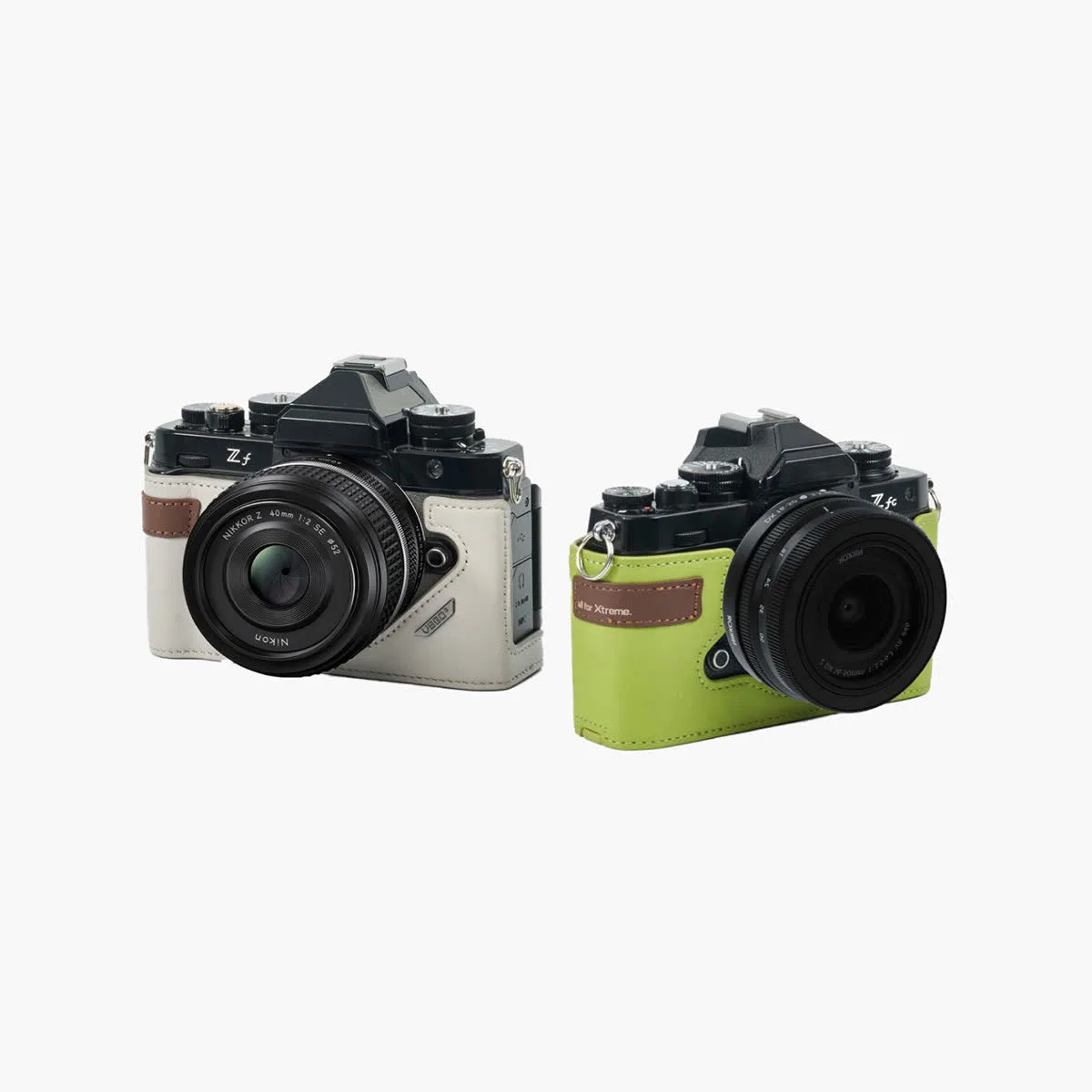
Black Snipe Genuine Leather Protective Camera Skin
Which camera skin fits you?
Best for
- Photographers who want maximum scratch and impact protection for daily or outdoor use
- Users who prefer a premium feel and are willing to pay a bit more for long-term durability
Not for
- Budget-conscious buyers looking for the lowest-cost option
- Those who need an ultra-light skin and don't mind replacing it more often