Quick answer
A geography puzzle is a jigsaw that teaches map skills, state or country names, landmarks, and natural features. For map-loving kids, it turns screen-free play into a global or national adventure.
Why a geography puzzle works better than a standard jigsaw
Standard puzzles build spatial reasoning but rarely teach facts. Geography puzzles layer on location names, capital cities, state shapes, and iconic landmarks. A child who assembles a map puzzle repeatedly absorbs geographic knowledge without drills or flashcards.
The main trade-off is piece count. Most geography puzzles for children have 70–78 pieces, which suits ages 5–10. If your child is younger or easily frustrated, look for a simpler 48-piece puzzle instead.
USA vs. world map: which to start with
A USA puzzle helps a child learn their own country first—state names, shapes, capitals, and nicknames. A world map puzzle introduces continents, countries, animals, and landmarks. There is no wrong answer, but starting with a familiar country builds confidence before tackling global geography.
If your child already knows the 50 states, a world map puzzle keeps the challenge fresh. If they are just beginning, a USA puzzle gives a clear, manageable framework.
Special-shaped pieces add engagement
Many geography puzzles include pieces shaped like animals, monuments, or vehicles. These act as memory anchors—a child who places the Eiffel Tower piece in France will remember that landmark. The trade-off is that shaped pieces can be harder to fit, so they work best for kids who already enjoy puzzles and have good fine-motor control.
How to choose the right geography puzzle
- Start with familiarity: Choose a USA puzzle if your child is still learning their home country. Choose a world map puzzle if they already know the states or show interest in other countries.
- Match piece count to skill level: Most geography puzzles have 70–78 pieces. For a child under 5 or a beginner, look for a 48-piece geography puzzle. For a confident 7+ year-old, 100+ pieces offer more challenge. Check the piece count on the box before buying.
- Look for learning extras: Double-sided puzzles (state names on one side, nicknames on the other) and special-shaped pieces (landmarks, animals) add educational value. Standard rectangular pieces are fine for pure geography practice.
- Consider the theme: A national parks puzzle teaches natural landmarks and wildlife. A world map puzzle covers countries, animals, and human-made icons. Pick the theme that matches your child’s current curiosity.
Geography puzzles at a glance
-
Map Of The U.S.A. Geography Puzzle: This double-sided 70-piece puzzle includes pieces shaped like each state, with state nicknames on the back. Kids learn state shapes and nicknames in one activity, and the double-sided design adds replay value.
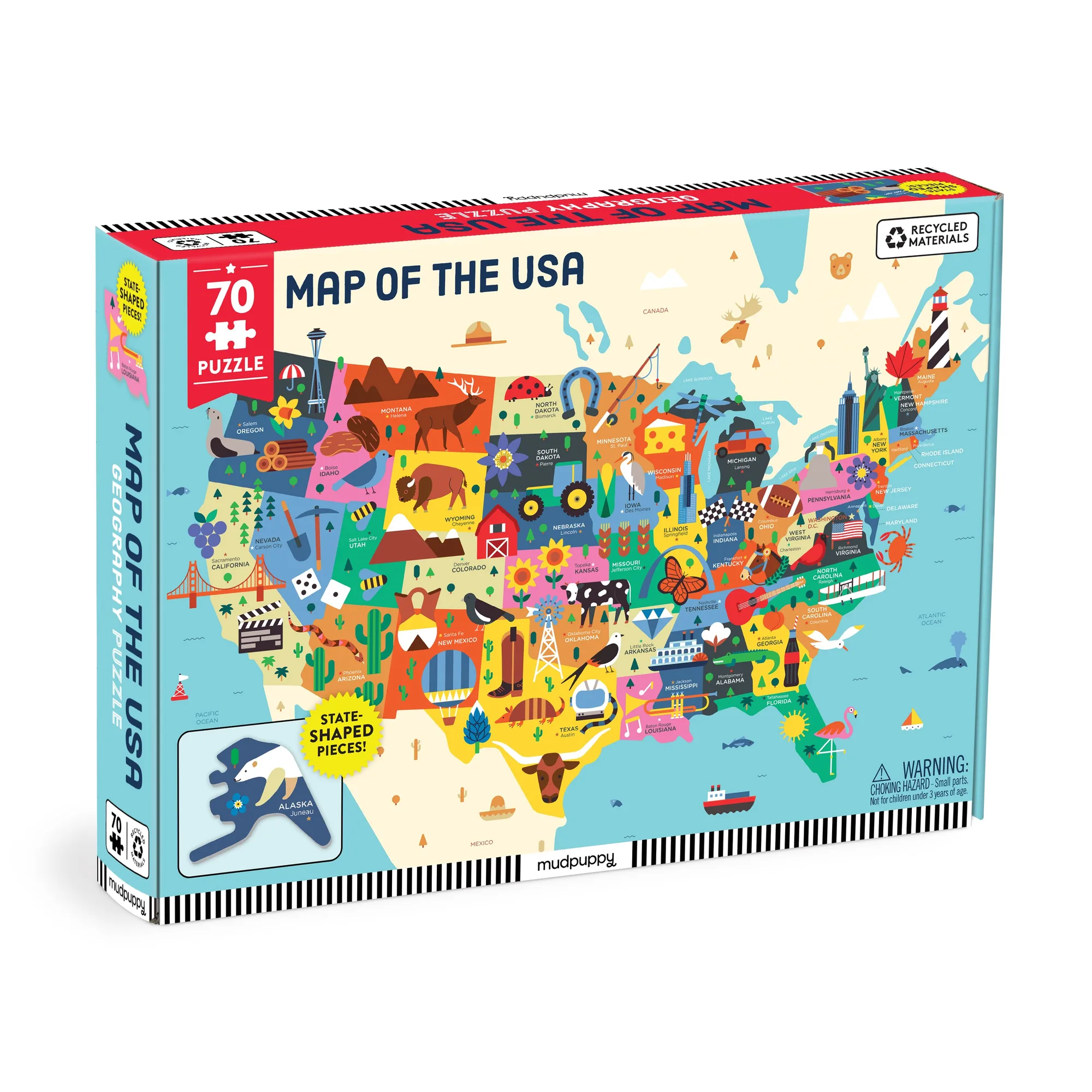
Map Of The U.S.A. Geography Puzzle
-
Map of the World Geography Puzzle: This 78-piece puzzle includes 17 special puzzle pieces shaped like icons such as the Eiffel Tower and the Taj Mahal. The landmark-shaped pieces make world geography tangible and memorable for young explorers.
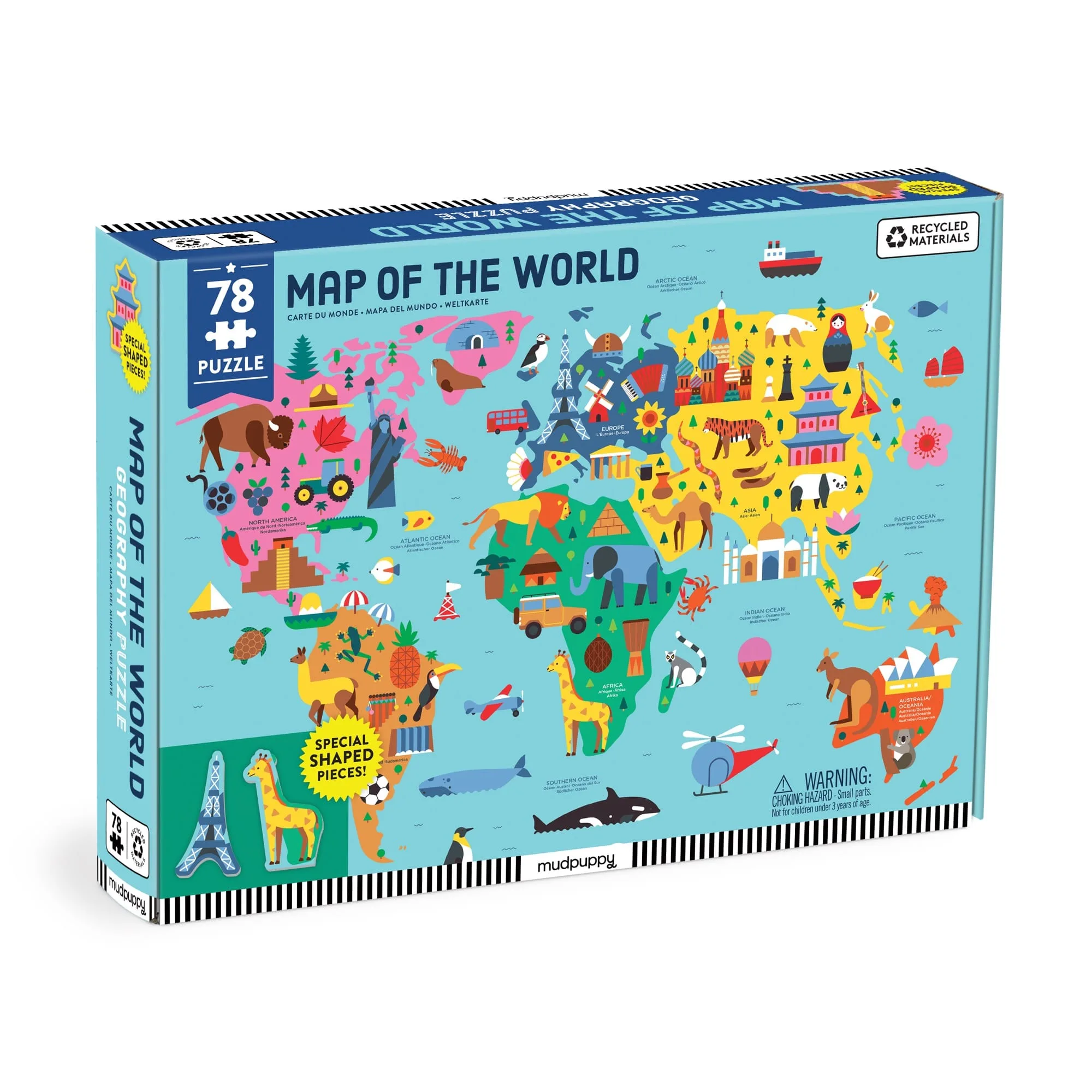
Map of the World Geography Puzzle
Which puzzle fits your child?
Best for
- A child who loves maps and wants to learn state names, capitals, and shapes
- A family looking for a screen-free way to introduce world geography with landmark recognition
Not for
- A toddler or preschooler who needs larger, simpler pieces (under 48 pieces)
- A child who prefers open-ended building or imaginative play over structured puzzles