Quick answer
Start with two or three shapes from the Geometric Shapes Deluxe Jumbo Peg Puzzle, name each one as your toddler holds it, and guide the piece back with hand-over-hand help only when needed. Keep sessions short and repeat the same shapes across several days before adding more.
Why the jumbo knobs make this puzzle easier for small hands
Toddlers are still refining their pincer grasp, so a standard peg can be frustrating. The jumbo wooden knobs on this puzzle give a full-hand grip that lets your child focus on matching the shape rather than fighting the piece. That extra thickness also means the pieces are less likely to be dropped or mouthed, which keeps the activity moving.
The eight shapes—circle, square, rectangle, octagon, triangle, diamond, oval, and pentagon—are brightly colored with bold outlines. Those outlines act as visual cues, so your toddler can see the shape's edges even before they can name it. Use that contrast to your advantage: point to the outline and trace it with a finger before handing over the piece.
When to introduce the full set versus a few pieces
Eight pieces can overwhelm a young toddler. Begin with the circle and square—the most familiar shapes—and keep the others out of sight. Add one new shape only after your child consistently places the first two with little help. The full set is best saved for a child who already matches shapes confidently or for supervised play with an older sibling.
If your child loses interest after a few minutes, that is normal. Put the puzzle away and try again another day. Forced repetition backfires; brief, successful sessions build more skill than long ones.
A step-by-step shape-teaching routine
- Set up with only two or three shapes: Place the circle and square pieces on the table next to the puzzle board, leaving the other pieces out of reach. Sit beside your child so you can guide without taking over. Check that the pieces are within easy reach and the board is stable.
- Name and trace each shape together: Hold up one piece and say its name clearly: 'This is a circle.' Trace the outline of the shape on the board with your finger, then hand the piece to your child and say, 'Can you put the circle here?' Avoid quizzing; simply repeat the name as they handle the piece.
- Guide the first attempts hand-over-hand: If your child struggles, place your hand over theirs and guide the piece into the well. Gradually reduce your help as they gain control. Celebrate each placement with a simple 'You did it!' Stop guiding as soon as they start pushing the piece themselves.
- Add one new shape at a time: Once your child places the first two shapes with minimal help, introduce a third shape such as the triangle. Keep the previous shapes in play so they can review. Only add a shape when the current ones are placed without hand-over-hand help.
- End on a successful note and repeat later: After two or three successful placements, put the puzzle away even if your child wants to continue. Short, positive sessions are more effective than long ones. Aim for 5–10 minutes per session, two or three times a week.
Product facts
-
Geometric Shapes Deluxe Jumbo Peg Puzzle - 8 Pieces: Each piece is made of extra-thick, durable wood and has a jumbo wooden knob. The thicker pieces and large knobs are easier for toddler hands to grasp and place, reducing frustration during early shape practice.
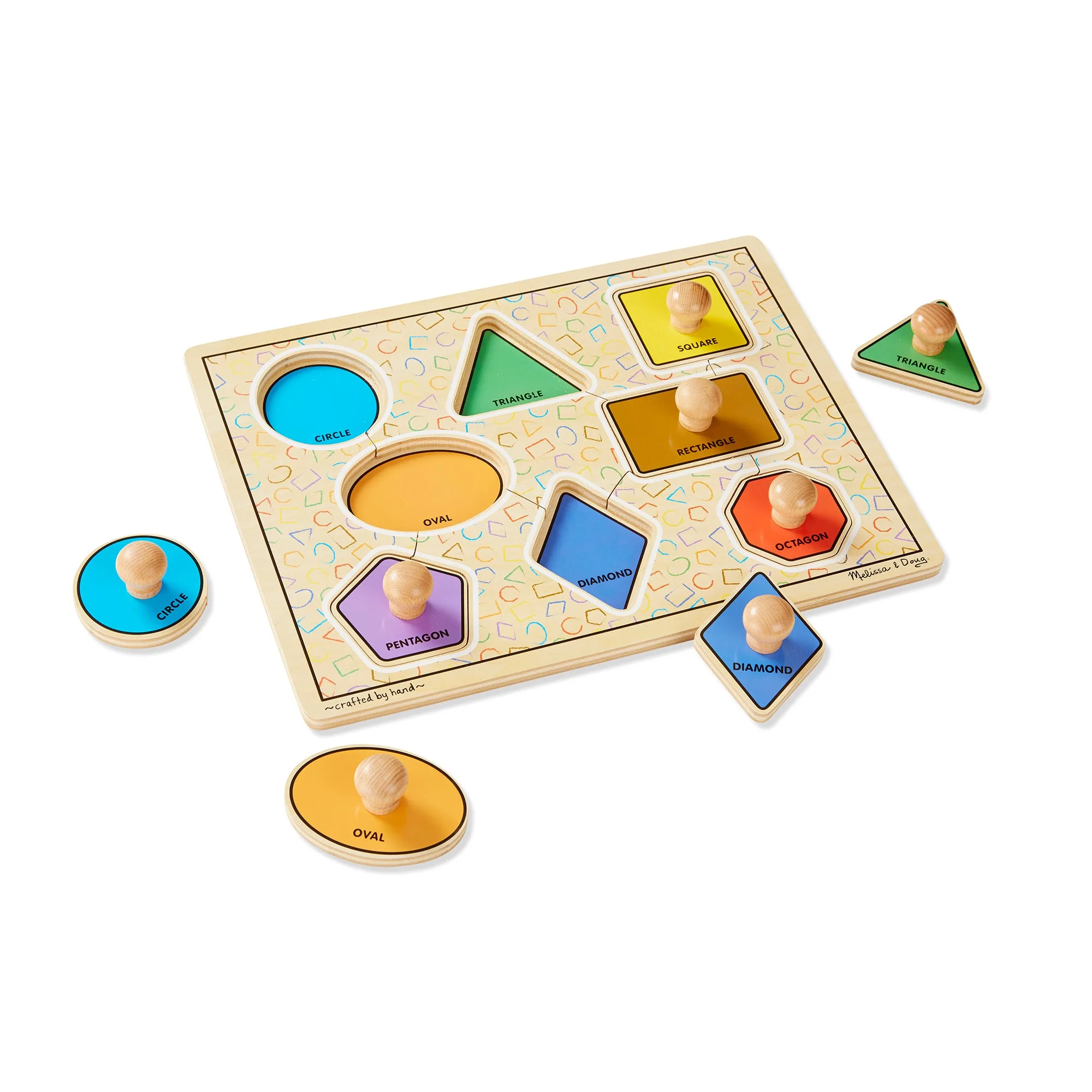
Geometric Shapes Deluxe Jumbo Peg Puzzle - 8 Pieces