Quick answer
Use a rotary cutter for long straight strips, squares, and multiple layers on a mat, and keep Gingher shears for curves, small notches, and fabric that shifts under a blade. If you cut quilt pieces often, the rotary cutter is your daily driver; if you sew garments or clip tight curves, the shears earn their place. Most sewists end up owning both because neither tool covers every cut cleanly.
Ask ten sewists which fabric cutting tool they reach for first and you will get two camps: the rotary cutter crowd and the shears loyalists. The truth is that each tool is built for a different kind of cut, and the right answer depends on what you are cutting, how many layers, and how much control you need at the edge.
This comparison looks at where Gingher-style dressmaker shears and rotary cutters each shine, where they fall short, and how to decide which one to buy first. We will also cover presser feet and accessories that make each tool work better in real projects.
How each tool actually cuts
A rotary cutter is a rolling circular blade that slices through fabric against a self-healing mat. Because the blade rolls rather than opens and closes, it keeps constant contact with the fabric, which is why it handles long straight lines and multiple layers with less distortion. The trade-off is that you need a mat, a ruler, and a flat surface, and the blade dulls over time.
Gingher shears are a pair of precision-ground scissors with a bent handle that lets the lower blade glide along the table while the upper blade cuts. They give you direct feedback through the handles, which makes them excellent for curves, tight corners, and trimming seam allowances. The trade-off is that scissors lift the fabric slightly with each cut, so long strips can drift.
- Rotary cutter: best for straight lines, multiple layers, and speed.
- Shears: best for curves, notches, and cutting where a mat will not fit.
Speed and accuracy on straight cuts
For strip cutting and squaring up quilt blocks, a rotary cutter wins on speed. You can stack four to six layers of quilting cotton and cut them in one pass with a ruler as a guide. That is why jelly roll and layer cake projects move so quickly. The catch is that accuracy depends on your ruler technique, not just the blade.
Shears are slower on long straight cuts because you have to open and close the blades and reposition your hand. If you are cutting one layer of fabric for a garment pattern, shears are perfectly accurate and often faster to set up because there is no mat to clear. For repetitive straight cuts, though, the rotary cutter saves real time.
- Use a rotary cutter when you need identical strips or squares.
- Use shears when you are cutting a single pattern piece and want to see the line.
Curves, corners, and detailed shapes
This is where shears pull ahead. A rotary cutter can cut curves, but the blade wants to straighten out, and tight inside curves are difficult to follow without lifting and pivoting. Gingher shears let you rotate the fabric smoothly and stop exactly at a notch or dot. For garment sewing, doll clothes, or applique shapes, that control matters.
If you do use a rotary cutter on curves, slow down and take shallow passes rather than trying to turn the blade sharply. A smaller blade diameter helps, but the tool still prefers gentle arcs. For anything tighter than a dinner plate, reach for shears.
- Shears handle inside curves and 90-degree corners more cleanly.
- Rotary cutters work for gentle curves if you pivot the mat, not the blade.
Safety and maintenance differences
Rotary cutters are unforgiving if you forget to close the blade guard. The blade is extremely sharp and can cut you before you feel it. Always retract the guard between cuts, and keep your fingers behind the ruler. Shears are less likely to cause a serious slice, but the points can still poke, and dull blades make you push harder, which is when accidents happen.
Maintenance is simple for both. Replace rotary blades when they start skipping threads instead of slicing cleanly. Wipe lint from the blade housing. For shears, reserve them for fabric only, because cutting paper dulls the edge quickly. A drop of oil at the pivot screw keeps them opening smoothly.
- Never leave a rotary cutter open on the table.
- Label your fabric shears so no one uses them on paper.
Accessories that improve each tool
A rotary cutter is only as good as the mat and ruler under it. A warped mat or a ruler with a worn edge will ruin your accuracy faster than a dull blade. If you sew garments and want cleaner seam allowances, a patchwork foot with a guide helps you sew the pieces you just cut. The #57 BERNINA Patchwork Foot with Guide (1/4 Foot) is made for 3 mm or 6 mm seam allowances and has three notches for precise guidance on 5.5 mm and 9 mm machines.
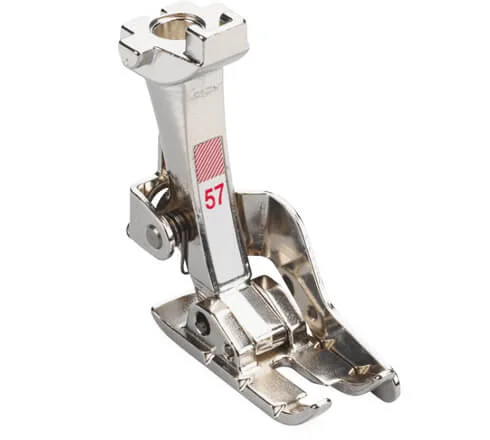
#57 BERNINA Patchwork Foot with Guide (1/4 Foot)
For shears, the main accessory is a sharpening service or a good sharpener. If you also sew piping or cording, a double-cord foot can sew two parallel cords at once, which pairs well with bias strips you cut by hand. The #59C BERNINA Double-Cord Foot 4-6mm handles cords 4–6 mm in diameter and fits 9 mm machines. These are not cutting tools, but they finish the edges you cut.
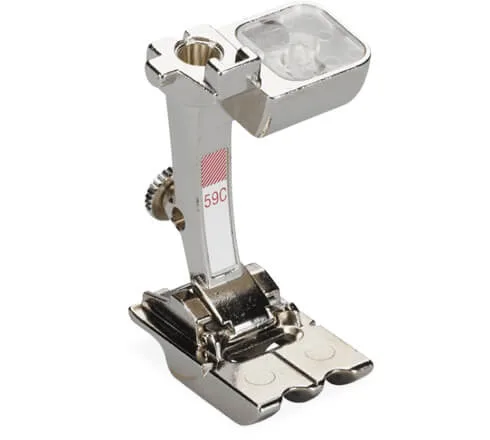
#59C BERNINA Double-Cord Foot 4-6mm
- Match your rotary blade size to the mat and ruler you own.
- Keep a dedicated seam ripper and small snips near your machine.
Fabric types and how they behave
Quilting cotton is the friendliest fabric for both tools. It stacks well under a rotary cutter and does not slide much under shears. Flannel and minky are trickier: they shed lint, which clogs rotary blade housings, and they shift under scissors. Cut those with a rotary cutter on a fresh mat and clean the blade often.
Slippery fabrics like satin, lining, and rayon are easier to cut with shears because you can pin the pattern and cut one layer at a time. A rotary cutter can work if you tape the fabric to the mat or use a temporary spray adhesive, but that is extra setup. For knits, shears with a serrated edge or a rotary cutter with a wavy blade can help, though a standard blade works if you cut slowly.
- Rotary cutter: quilting cotton, flannel, denim, multiple layers.
- Shears: slippery fabrics, single layers, curves, and pattern pieces.
Trade-offs to weigh before you buy
- Speed vs. setup: A rotary cutter is faster on long straight cuts and multiple layers, but you need a mat, ruler, and clear table space. Shears are ready instantly and need no mat, but they are slower on repetitive cuts. If you cut quilt strips weekly, the rotary cutter setup pays for itself. If you sew once a month, shears may be enough.
- Control vs. fatigue: Shears give you direct control on curves and notches, but squeezing the handles for a full garment can tire your hand. A rotary cutter needs less hand strength but more attention to blade safety and ruler alignment. Try both on a small project before committing to a large one.
- Blade cost vs. sharpening: Rotary blades are consumables: they dull and get replaced. Quality shears cost more upfront but can be sharpened many times. Neither is free to maintain. Budget for blades if you rotary cut often, and for sharpening if you rely on shears.
- Safety habits: A rotary cutter demands a closed guard every time you set it down. Shears demand that you never cut toward your body and that you keep them sharp so you do not force the cut. Pick the tool whose safety routine you will actually follow.
Product facts that affect your choice
- #57 BERNINA Patchwork Foot with Guide (1/4 Foot): For patchwork projects with seam allowances of 3 mm (1/8”) or 6 mm (1/4”); three notches on the side for precise guidance; the guide allows perfectly straight lines to be sewn; for 5.5 mm and 9 mm machines. If you cut strips and squares with a rotary cutter, this foot helps you sew them back together with consistent seam allowances, which is where accuracy is won or lost.
- #59C BERNINA Double-Cord Foot 4-6mm: For simultaneously sewing on two parallel cords; for cords with a diameter of 4–6 mm; for creating piping; for 9 mm machines. Piping and cording often start as bias strips you cut by hand with shears. This foot lets you sew two cords in one pass, which saves time on home decor and garment projects.
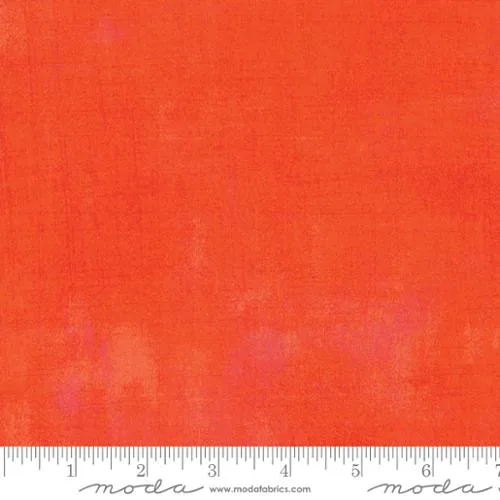
- Grunge – Tangerine 1/2 Yard: Grunge – Tangerine by BasicGrey for Moda Fabrics is a vivid orange blender with the signature Grunge mottled texture; 100% cotton, quilting weight, 44/45” wide, sold as a 1/2 yard cut. Blender fabrics like this are easy to cut with either tool, but the mottled texture hides small cutting wobbles, which makes it a forgiving choice for practicing rotary cutter accuracy.
Which cutting tool fits your sewing?
Choose this if
- You cut quilting cotton into strips, squares, and multiple layers and want speed with a ruler and mat.
- You sew garments or applique and need to follow curves, notches, and pattern lines closely.
- You want one tool that handles both straight and curved cuts without switching setups.
Skip this if
- You only sew occasional repairs and do not want to store a mat and ruler.
- You refuse to replace rotary blades or maintain a sharp edge.
- You need to cut slippery fabrics and cannot pin or stabilize them first.
Gingher shears and rotary cutters are not rivals so much as specialists. Buy the rotary cutter first if your projects are quilts and straight cuts, and buy the shears first if you sew garments or detailed shapes. Most sewists eventually keep both within reach, because the best fabric cutting tool is the one that matches the cut in front of you.