Start with a stable, contained feeding zone
A glass baby bottle is heavier and less forgiving than plastic, so a dedicated mat under it does two jobs: it gives the bottle a defined spot and it catches the small drips that happen during pauses and refills. The HEVEA Natural Rubber Placemat is built for exactly that kind of mealtime support.
Its four integrated suction cups help keep the mat securely in place on smooth surfaces, so the feeding area stays put while you manage the bottle. The raised edge is designed to help contain spills, which means less wiping down the high chair tray or table between feeds.
What the HEVEA placemat is designed to do
-
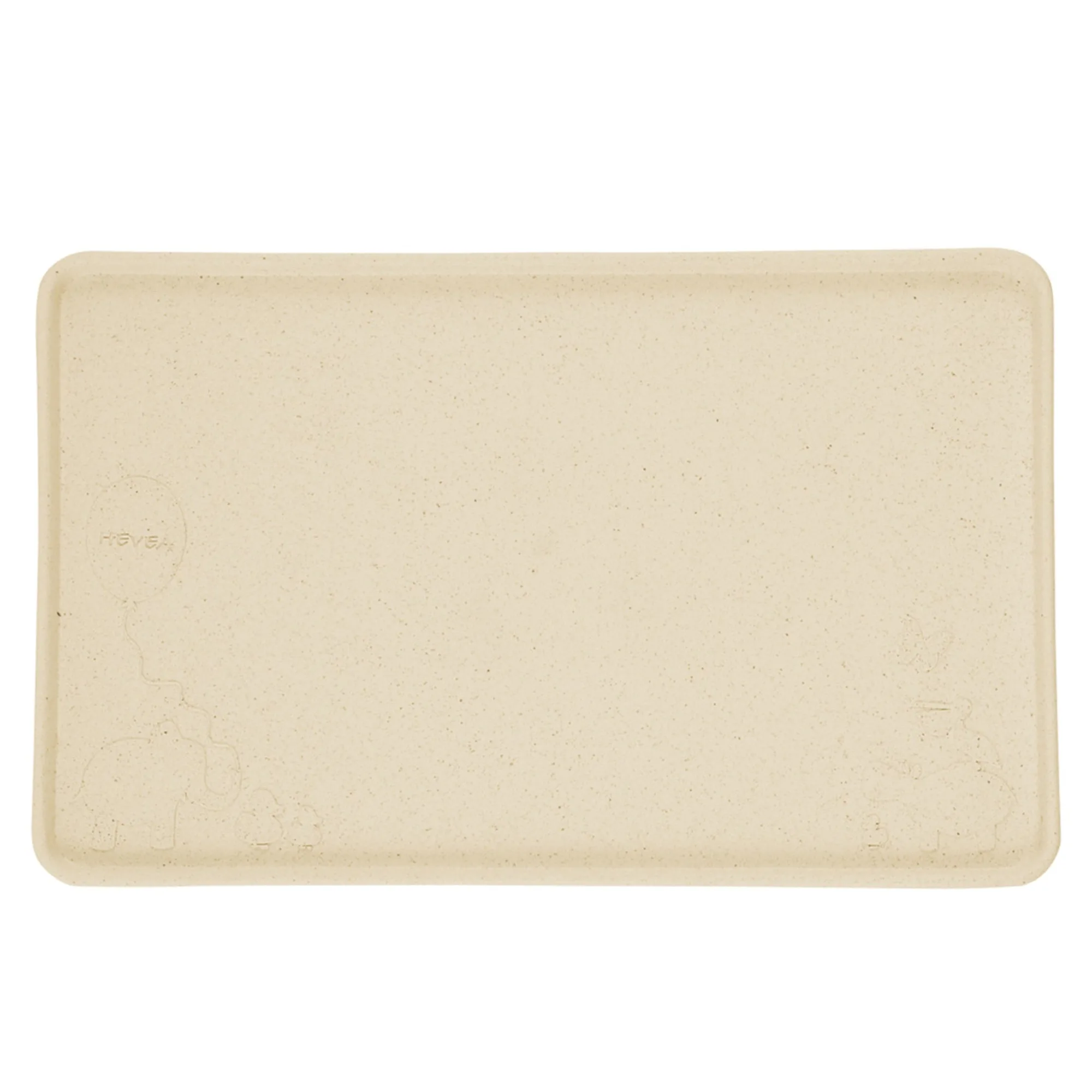
Placemat: Made from upcycled natural rubber from the Hevea brasiliensis tree, with four integrated suction cups that help keep it securely in place on smooth surfaces. A stable base is the first step toward a tidier feeding setup, especially when you are setting down a glass bottle.
Placemat
-
Placemat: The raised edge is designed to help contain spills. Containment means less cleanup on the tray and floor after feeding.
-
Placemat: The flexible natural rubber surface is suitable for direct food contact and can be wiped clean after use. You can use the same mat for bottle feeds and early finger foods, and a quick wipe is all the routine care it needs.
How to set up the placemat for bottle feeding
These steps focus on using the mat as a stable base for a glass bottle. They do not cover feeding amounts, bottle safety, or any use beyond what the supplied product information describes.
- 1. Choose a smooth, flat surface: The suction cups are designed to grip smooth surfaces, so a high chair tray or table works best. Check that the surface is clean and dry before placing the mat.
- 2. Press the mat down evenly: Set the mat in place and press around the edges so the four suction cups engage. A gentle tug will tell you whether it feels secure.
- 3. Position the bottle on the mat: Set your glass bottle down on the mat between feeding pauses. The raised edge gives you a visual boundary for the feeding zone.
- 4. Wipe clean after use: The natural rubber surface can be wiped clean after feeding. For deeper cleaning, follow the care instructions supplied with the product; the supplied information does not list specific cleaning agents or temperatures.
Why a mat under the bottle helps with glass
Glass bottles are a popular choice for families who prefer a non-porous feeding vessel, but they do not bounce. A placemat does not make a glass bottle unbreakable, and the supplied information does not claim any impact protection. What it does is reduce the chance of the bottle sliding or tipping on a hard tray by giving it a textured, slightly cushioned surface to sit on.
The mat also defines a feeding zone. When you are holding a bottle and reaching for a burp cloth at the same time, having a consistent spot to set the bottle down makes the whole routine feel less scattered.
Feeding cleanup tips that work with the mat
The placemat handles containment, but a few habits make cleanup even quicker.
- Wipe the mat after each feed: A quick wipe of the natural rubber surface prevents milk residue from drying on. The supplied information confirms the surface can be wiped clean after use.
- Keep a cloth within reach: Place a burp cloth or wipe near the feeding station so you can catch drips before they reach the mat edge.
- Check the seal before feeding: Press the mat down each time you set up. If the suction cups do not hold on your surface, try a different smooth spot; the supplied information does not specify which surface materials work best.
- Use the mat for early finger foods too: The flexible surface is suitable for direct food contact, so the same mat can support messy self-feeding once your baby is ready. The illustrated animal and number designs encourage interaction during mealtimes.
Placemat vs no placemat: a simple trade-off
A placemat adds one more item to clean, but it can reduce the area you need to wipe down. Here is how the two approaches compare for bottle feeding.
- With the HEVEA placemat: The mat provides a defined, suctioned base with a raised edge to help contain spills. Cleanup is focused on wiping the mat rather than the whole tray.
- Without a placemat: The bottle sits directly on the tray or table. There is no raised edge to contain drips, and the bottle may slide more easily on a smooth surface.
Choosing a color and what to check before buying
The HEVEA Natural Rubber Placemat comes in Marble, Peach, and Sand. Color is the only option listed, so the choice is purely visual; pick the one that suits your feeding space.
Before you buy, consider your surface: the suction cups are designed for smooth surfaces, and the supplied information does not confirm how they perform on textured or fabric-covered trays. Also note that the supplied information does not list a specific age range for the placemat, so use your judgment for your child's stage and always supervise feeding. If you need a mat that doubles as a plate with compartments, this is not that product; it is a flat mat with a raised edge.