Quick answer
Choose a glass baby bottle if you prioritize durability and zero microplastic leaching; choose a BPA-free PP bottle if you need a lightweight, shatterproof option for on-the-go feeding.
Why material matters for baby feeding
The bottle material affects how you warm, clean, and carry it every day. Glass bottles resist heat and don't absorb odors, but they are heavier and can break if dropped. BPA-free plastic bottles are lighter and unbreakable, but they may scratch over time and require more frequent replacement.
Both materials are safe when used as directed. The choice comes down to your daily routine and how much weight and fragility you are comfortable managing.
When glass is the better choice
A glass baby bottle is ideal for home use, especially if you warm bottles frequently. Borosilicate glass, like the kind used in the BIBS Baby Glass Bottle Set 120ml, is thermal shock-resistant and extremely durable. It does not release microplastics into milk, which gives many parents peace of mind.
The main trade-off is weight and breakability. Glass bottles are heavier, and while borosilicate glass is tough, it can still shatter if dropped on a hard surface. They are best for stationary feeding sessions.
When BPA-free PP is the better choice
BPA-free polypropylene (PP) bottles are lightweight and virtually unbreakable, making them perfect for travel, daycare, or feeding on the move. The BIBS Baby BPA-Free PP Bottle 150 ml 4 Pack Silicone is a convenient set that gives you multiple bottles without adding weight to your diaper bag.
The trade-off is that plastic can scratch with repeated scrubbing and may need replacement sooner than glass. Some parents also prefer to avoid any plastic contact with warm liquids, even when BPA-free.
How to decide: glass or BPA-free PP
- Where will you feed most often?: If you primarily feed at home, a glass baby bottle is a solid choice. If you feed on the go, at daycare, or while traveling, choose a BPA-free PP bottle.
- How important is weight?: Glass bottles are noticeably heavier. If you carry multiple bottles in a diaper bag, the weight difference adds up. BPA-free PP bottles keep the load light.
- Do you warm bottles frequently?: Glass handles heat well and doesn't leach chemicals. Plastic is safe for warming but may degrade faster with repeated heat exposure. Glass is better for frequent warming. If you use a bottle warmer daily, glass may last longer.
- How concerned are you about breakage?: If you have tile floors or a very active toddler who grabs bottles, BPA-free PP is unbreakable. Glass can break, so consider a silicone sleeve or stick to supervised feeding.
Product facts at a glance
-
Baby Glass Bottle Set 120ml Latex - Baby Blue: Made of borosilicate glass which is extremely durable and heat resistant; does not emit microplastics into the milk. This glass bottle stays safe through repeated warming cycles and gives you confidence that no plastic particles enter your baby's milk.
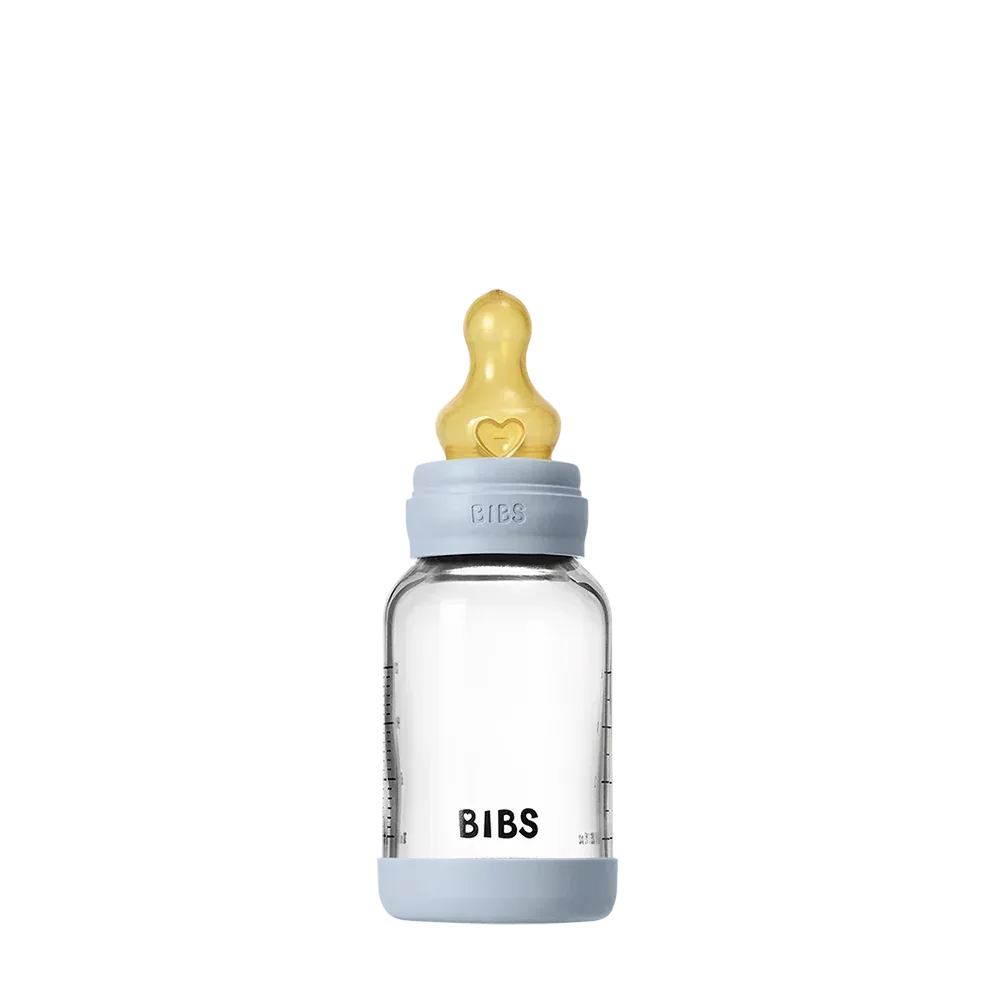
Baby Glass Bottle Set 120ml Latex - Baby Blue
-
Baby BPA-Free PP Bottle 150 ml 4 Pack Silicone - Ivory: BPA-free polypropylene construction with a silicone sleeve for added grip and protection. The lightweight, shatterproof design makes this bottle easy to carry and less likely to break during drops, ideal for busy parents.
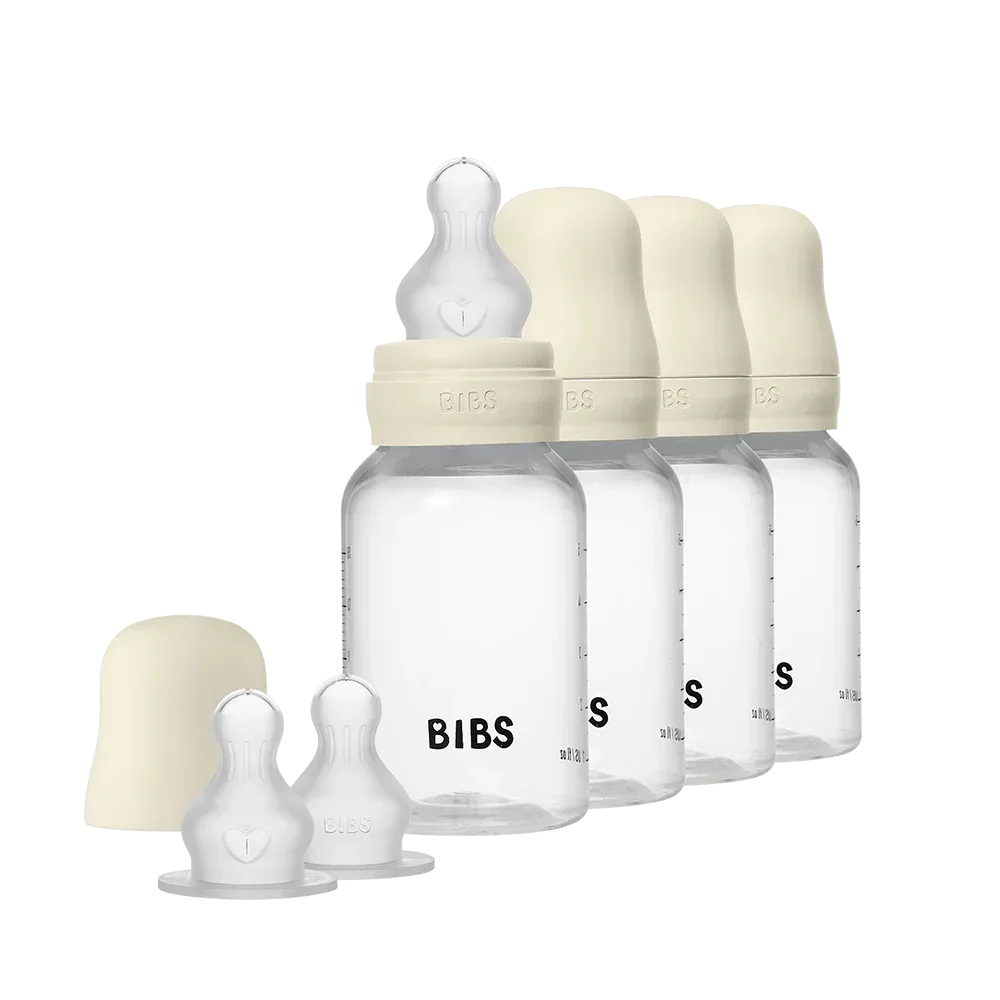
Baby BPA-Free PP Bottle 150 ml 4 Pack Silicone - Ivory
Which bottle fits your routine?
Best for
- Parents who feed mostly at home and want a durable, heat-resistant bottle that won't leach microplastics
- Parents who prefer a lightweight, shatterproof bottle for travel, daycare, or on-the-go feeding
Not for
- Parents who need a single bottle for both home and heavy travel use — consider buying one of each material instead