Quick Answer
Choose glass if you prioritize durability, thermal resistance, and eco-friendliness; choose silicone if you need a lightweight, shatterproof option with a familiar breast-like feel.
Durability and Safety
Glass bottles are made from borosilicate glass, which is extremely durable and heat resistant. They can withstand temperature changes without cracking and do not emit microplastics into the milk, making them a safe choice for daily feeding.
Silicone bottles, like the NUK First Choice+, are BPA-free and designed with an anti-colic vent to reduce air swallowing. They are lightweight and virtually unbreakable, ideal for babies who drop or throw bottles.
Feeding Comfort and Convenience
Silicone bottles often feature orthodontic teats that mimic breastfeeding, which can ease the transition between breast and bottle. The NUK bottle's extra-wide lip support and soft zone are designed to fit a baby's palate comfortably.
Glass bottles, such as the BIBS Baby Glass Bottle, come with a natural rubber latex nipple that is soft and flexible. However, they are heavier and require careful handling, especially when warming milk.
Environmental Impact
Glass is infinitely recyclable and does not degrade, making it a more sustainable long-term choice. Silicone is not biodegradable, but it is durable and can be recycled at specialized facilities.
If eco-friendliness is a priority, glass bottles have a clear advantage. However, silicone bottles are lighter and may be more practical for on-the-go use.
Trade-Offs to Consider
- Weight and Handling: Glass bottles are heavier and can break if dropped. Silicone bottles are lightweight and shatterproof, making them safer for baby-led feeding.
- Temperature Sensitivity: Glass heats quickly and cools slowly, but can be too hot to handle. Silicone is less heat-conductive, but the NUK bottle includes a temperature control indicator to prevent overheating. Always test milk temperature on your wrist before feeding, regardless of bottle material.
- Eco-Friendliness: Glass is 100% recyclable and does not degrade, while silicone is not biodegradable. If sustainability is a key factor, glass wins. Consider the long-term environmental impact when choosing between glass and silicone.
Product Facts
-
NUK First Choice+ Temperature Control Silicone Bottles 300ml (x4) 0-6m: The NUK First Choice+ bottle features an orthodontic teat with a soft zone that moulds gently to the palate and an anti-colic vent to reduce air swallowing. This makes it a good choice for combination feeding, helping babies switch between breast and bottle comfortably.
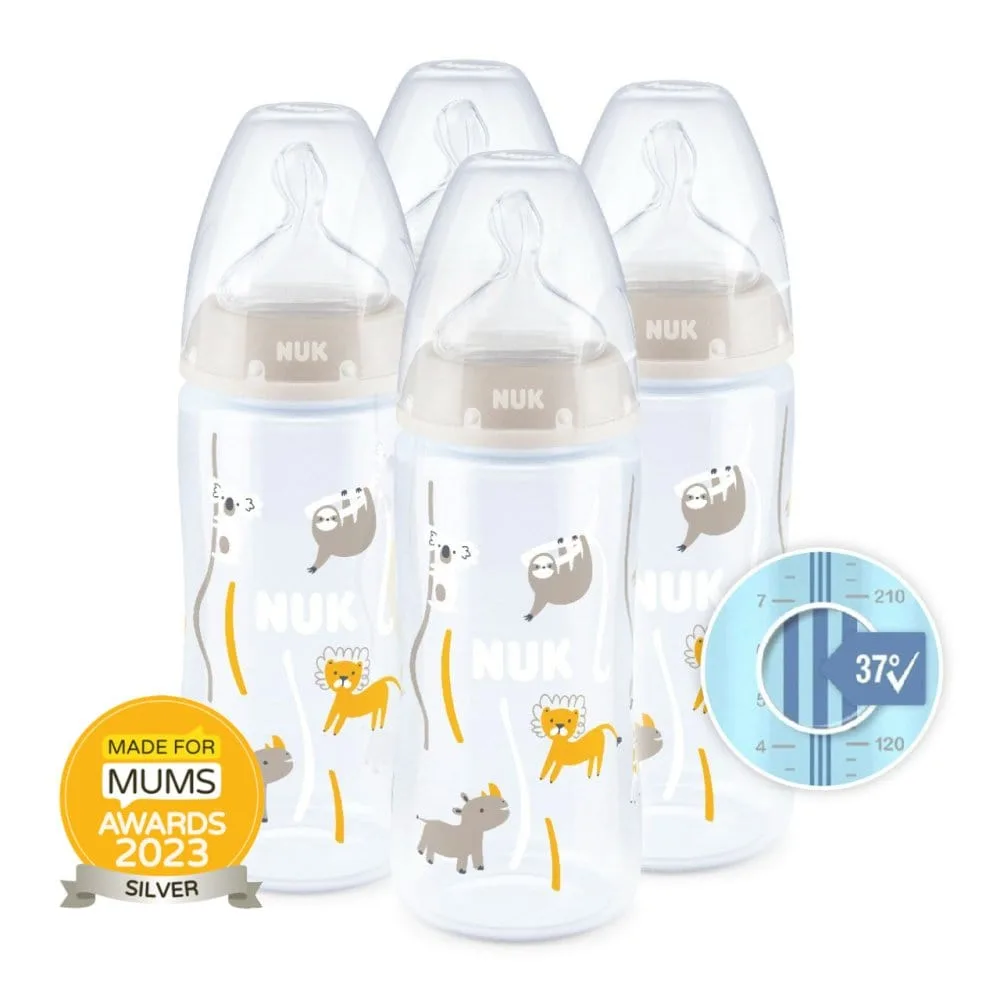
NUK First Choice+ Temperature Control Silicone Bottles 300ml (x4) 0-6m
-
BIBS Baby Glass Bottle Complete Set (225ml) - Ivory: The BIBS Baby Glass Bottle is made of borosilicate glass, which is temperature- and thermal shock-resistant, and does not emit microplastics into the milk. It offers peace of mind for parents concerned about plastic exposure and is durable enough for daily use.
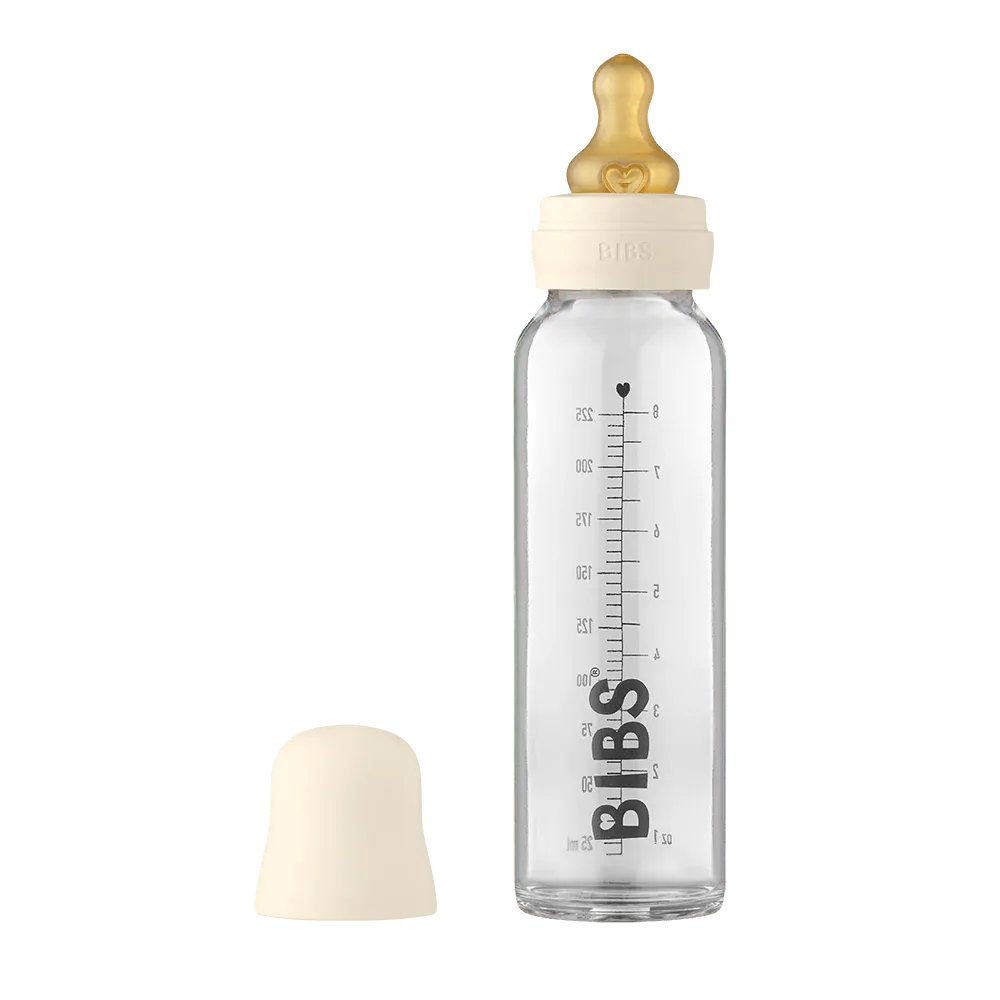
BIBS Baby Glass Bottle Complete Set (225ml) - Ivory
Which Bottle Fits Your Lifestyle?
Best For
- Parents who prioritize eco-friendliness and durability: choose glass bottles like the BIBS Baby Glass Bottle.
- Parents who need a lightweight, shatterproof option for on-the-go feeding: silicone bottles like the NUK First Choice+ are ideal.
Not For
- Glass bottles are not for parents who need a drop-proof bottle for travel or baby-led feeding.
- Silicone bottles are not for parents who want a fully biodegradable or recyclable option.