When it comes to glass food storage, two brands often top the list: Glasslock and Snapware. Both offer oven-safe containers that promise durability and convenience. But which one truly stands the test of time? In this comparison, we’ll look at build quality, temperature tolerance, lid performance, and overall value to help you decide.
Glasslock is known for its tempered glass and airtight lids, while Snapware (often associated with Pyrex) focuses on versatility and stackability. We’ll examine key differences in materials, design, and real-world durability so you can choose the best option for your kitchen.
Material and Build Quality
Glasslock containers are made from tempered soda-lime glass that is thermally strengthened for oven and microwave use. The glass is thick and heavy, resisting chips and cracks during normal handling. Snapware also uses tempered glass, but some lines feature thinner walls that may feel less substantial. In drop tests, Glasslock’s thicker glass tends to survive better, though both brands can break if dropped from height.
The base of Glasslock containers is slightly reinforced, reducing the risk of thermal shock when moving from freezer to oven. Snapware’s glass is also oven-safe, but its thinner construction can lead to more frequent breakage over time. For those who prioritize long-term durability, Glasslock’s robust build is a clear advantage.
- Glasslock uses 3-4mm thick tempered glass; Snapware often uses 2-3mm.
- Glasslock bases are reinforced for better thermal shock resistance.
Lid Design and Seal
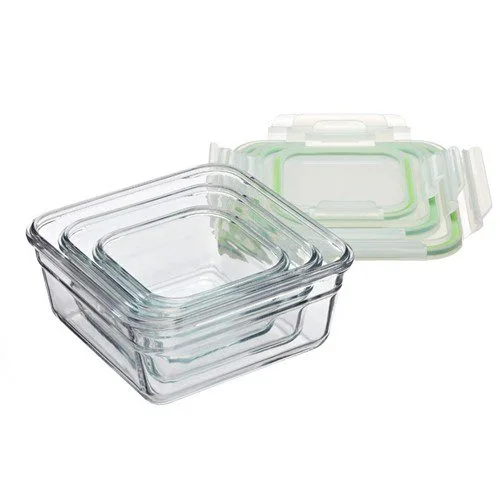
Lids are critical for leak-proof storage. Glasslock’s lids feature four locking tabs and a silicone gasket that creates a vacuum seal. This design prevents leaks even with liquids, and the gasket stays flexible after repeated washing. Snapware uses a similar snap-lock system, but some users report that the plastic tabs can break after a year of use, compromising the seal.
Glasslock also offers replacement lids for most sizes, extending the life of your containers. Snapware lids are harder to find separately, meaning a broken lid often forces you to buy a new set. For long-term value, Glasslock’s lid durability and availability win.
- Glasslock lids have four locking tabs; Snapware typically uses two.
- Glasslock sells replacement lids like Square Lids and Rectangle Lids.
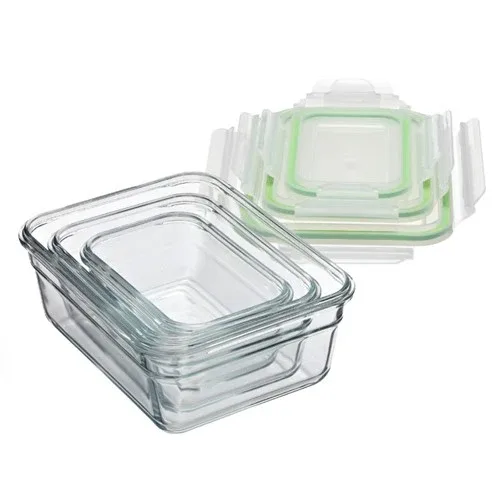
Rectangle Lids
Temperature Tolerance and Oven Safety
Both brands are oven-safe up to about 450°F, but Glasslock explicitly states its containers can go from freezer to oven without thermal shock. Snapware recommends letting the glass come to room temperature before heating. In practice, Glasslock’s thicker glass handles temperature swings better, reducing the risk of cracking.
For baking, Glasslock’s Oven Safe Square 6.0 cups and Oven Safe Rectangle 3.5 cups are popular choices. Snapware’s similar sizes work but may require more careful handling. If you frequently reheat directly from the fridge, Glasslock’s thermal tolerance gives you more confidence.
- Glasslock oven safe: up to 450°F, freezer-to-oven safe.
- Snapware oven safe: up to 425°F, avoid direct freezer-to-oven.
Stackability and Storage Efficiency
Snapware containers are designed to stack neatly, with lids that clip together. Glasslock’s rectangular and square shapes also stack well, but the lids are separate. Both brands offer similar space efficiency, though Snapware’s lid-stacking feature saves drawer space. However, Glasslock’s lids are more durable and less likely to warp.
For those with limited cabinet space, Snapware’s integrated lid storage is convenient. But if you prioritize lid longevity and a secure seal, Glasslock’s design is better. You can also buy extra lids to keep sets organized.
- Glasslock containers stack securely with separate lids.
- Snapware lids clip together for compact storage.
Price and Value
Glasslock tends to be slightly more expensive per piece, but the higher durability and replaceable lids mean you won’t need to repurchase as often. Snapware sets are often cheaper upfront, but if lids break or glass cracks, you may replace them sooner. Over five years, Glasslock often proves more cost-effective.
Consider the Glasslock Handy Rectangle 11.5 cups for large meal prep or the Glasslock Mixing Bowl 6.25qt for mixing and storing. These sizes offer excellent value with proven longevity. Snapware’s comparable sizes may save a few dollars initially but lack the same long-term reliability.
- Glasslock: higher upfront cost, lower replacement rate.
- Snapware: lower initial cost, potential for earlier replacement.
If you want glass storage that lasts for years without warped lids or cracked glass, Glasslock Oven Safe containers are the better choice. Their thicker glass, reliable seals, and available replacement parts make them a smart investment. For a durable, oven-safe option, check out the Glasslock Oven Safe Rectangle 3.5 cups or the Glasslock Oven Safe Square 6.0 cups to upgrade your kitchen storage today.