Quick answer
Choose the Godox Lux Senior Retro Camera Flash if you want a dial-driven manual flash with an Auto Mode that defaults to f/2.8 at ISO 100 and S1/S2 optical triggering. Choose a simpler retro-style flash only if you shoot a single camera brand and never need optical slave modes. For most film and street shooters, the Lux Senior covers more situations for about the same money.
What the Lux Senior dial actually controls
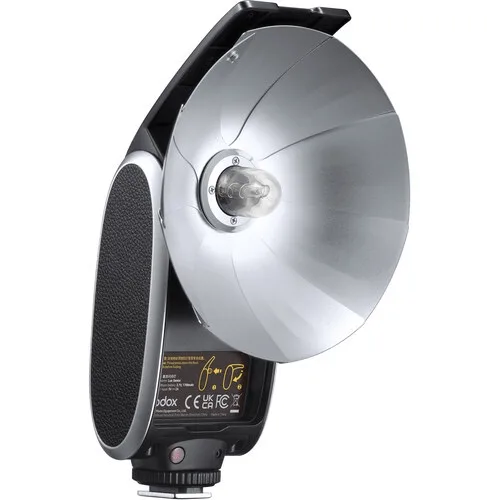
The Lux Senior uses a single dial to set ISO, aperture, power level, and shooting distance. That matters because on a manual flash you are doing the exposure math yourself, and a dial that groups those four values lets you match a film box speed and a chosen aperture without a separate calculator. The Auto Mode defaults to f/2.8 at ISO 100, which gives you a starting point when you do not want to think through the dial on every frame.
Optical S1 and S2: the feature that separates them
The Lux Senior offers optical mode with S1 and S2 settings. S1 fires the flash when it sees another flash fire, which is useful when you want a second light without a radio trigger. S2 is designed to ignore a pre-flash, so it works alongside a camera or master flash that emits a metering pre-flash. A basic retro-style flash without these settings will fire on the first burst it sees, which can throw off your timing in multi-light setups.
Camera compatibility and where the retro look helps
The Lux Senior is listed for use with Fujifilm, Canon, Nikon, Olympus, and Sony cameras. That multi-brand coverage is the practical advantage over a brand-specific retro flash, especially if you rotate between a film body and a digital body. The retro styling is not just cosmetic: a small, low-profile flash draws less attention on the street and balances better on a compact film camera than a full-size speedlight.
Where a plain retro flash still wins
If you only ever shoot one camera brand, never use a second flash, and want the fewest possible controls, a simpler retro flash can be faster to operate because there is less to set. The trade-off is flexibility. You give up the S1/S2 optical modes and the grouped ISO, aperture, power, and distance dial, so any change in lighting distance means recalculating exposure yourself.
Trade-offs to weigh before you buy
- Manual control vs speed: The Lux Senior makes you set ISO, aperture, power, and distance on the dial. That is slower than TTL, but it is predictable and repeatable once you know your settings. Pick manual dial control if you want consistent results across a roll of film.
- Optical S1/S2 vs radio triggering: S1 and S2 let the flash fire from another flash without a trigger, but optical triggering needs line of sight and can be blocked outdoors or by other shooters. Choose optical if you shoot indoors or in controlled setups; go radio if you need reliable off-camera triggering at distance.
- Multi-brand fit vs brand-specific simplicity: The Lux Senior covers Fujifilm, Canon, Nikon, Olympus, and Sony, while a brand-specific retro flash may offer fewer decisions but locks you to one system. If you own more than one brand, the multi-brand flash saves you from buying twice.
Key product facts
- Godox Lux Senior Retro Camera Flash: The Godox Lux Senior Retro Camera Flash uses a simple dial to adjust ISO, aperture, power level, and shooting distance, and has an Auto Mode that defaults to f/2.8 at ISO 100. One dial handles the whole exposure calculation, so you can move between film speeds and apertures without a separate chart.
- Godox Lux Senior Retro Camera Flash: The Lux Senior is designed for use with Fujifilm, Canon, Nikon, Olympus, and Sony cameras, and its optical mode offers S1 and S2 settings. You can move the same flash between a film body and a digital body, and use S1 or S2 to trigger it optically instead of buying a radio trigger.
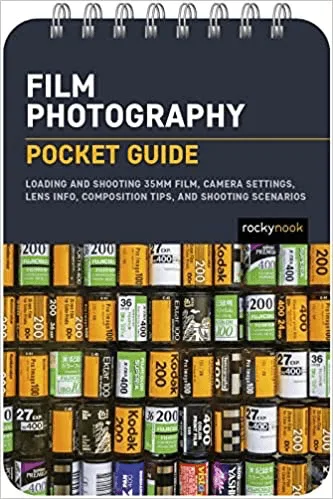
- Rocky Nook Film Photography: Pocket Guide: Loading and Shooting 35mm Film, Camera Settings, Lens Info, Composition Tips, and Shooting Scenarios (The Pocket Guide Series for Photographers): Rocky Nook Film Photography: Pocket Guide covers loading and shooting 35mm film, camera settings, lens information, composition tips, and shooting scenarios. A compact reference for dialing in film exposure, which pairs directly with the manual settings you choose on a retro flash.
Who should buy which
Best for
- Film and street shooters who want one manual flash that works across Fujifilm, Canon, Nikon, Olympus, and Sony bodies
- Photographers who want optical S1/S2 triggering without adding a radio trigger
- Shooters who prefer a dial-based exposure workflow over menu diving
Not for
- Photographers who need TTL metering and automatic exposure in fast-changing light
- Users who only shoot one brand and want the absolute simplest single-control flash
- Off-camera shooters who need reliable radio triggering at long distances or around corners