Quick answer
Look for polarized lenses, UV400 protection, and a no-slip frame design that grips your head without pressure points. Goodr's golf models deliver this combination at a fair price.
Why frame stability matters more than lens tint
On the course, your sunglasses have one job: stay put. A loose frame forces you to adjust after every tee shot, breaking your focus. Meanwhile, a frame that clamps too tightly causes headaches by the back nine. The sweet spot is a lightweight, non-slip design that grips through your swing without discomfort.
Lens tint matters for contrast and glare reduction, but if the frame slides down your nose the moment you rotate your shoulders, the best lens technology is useless. Prioritize fit first, then choose a tint that suits your typical lighting conditions.
Trade-off: price vs. durability
You can spend over $200 on a pair of golf-specific sunglasses, but you don't have to. Goodr's golf line sits around $20–$25, which means you can afford a backup pair for cloudy days or a different color for style. The trade-off is that the frame materials are polycarbonate rather than metal or acetate—lighter on your face, but less premium in feel.
For most recreational golfers, the weight savings and grip performance outweigh the lack of metal hinges. If you play 100+ rounds a year, you might wear out a pair in two seasons, but at this price point replacement is painless.
How to choose golf sunglasses that stay put
- Rule 1: Check the grip: Look for rubberized temple tips or a wrap-around frame design that contacts your head at multiple points. Goodr's no-slip, no-bounce claim comes from a lightweight frame that hugs your head without needing constant adjustment.
- Rule 2: Verify polarization and UV400: Polarized lenses cut reflected glare from sand traps and water hazards. UV400 blocks 99.9% of UVA/UVB rays. Both goodr golf models include these features, so you don't have to sacrifice eye protection for style. If a pair lacks either feature, skip it for golf.
- Rule 3: Match the tint to your course conditions: Brown/copper tints boost contrast on green grass and are ideal for partly cloudy or overcast rounds. Gray or blue tints reduce overall brightness without distorting colors, which works best under full sun. Choose based on the weather you play in most often. If you play in variable light, a brown tint is more versatile.
Two proven options from goodr
-
Three Parts Tee: Gradient frames with polarized non-reflective brown lenses and no-slip, no-bounce design. The brown tint enhances green contrast on fairways and rough, while the non-slip grip keeps them steady through your full swing.
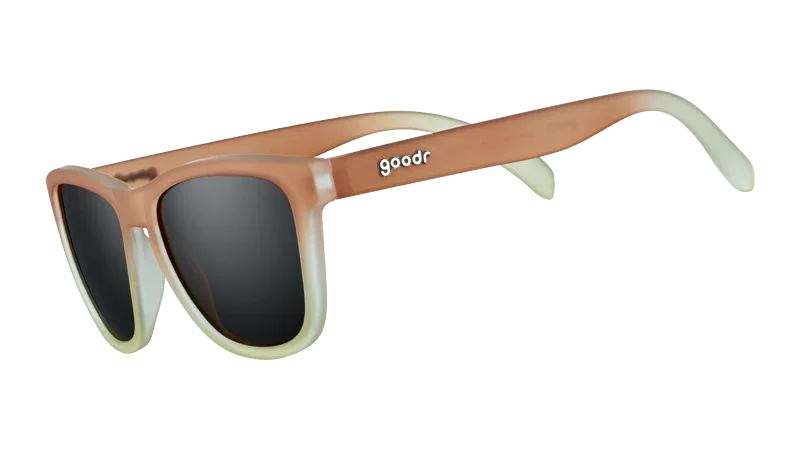
Three Parts Tee
-
Swedish Meatball Hangover: Yellow and blue frames with blue reflective polarized lenses and full UV400 protection. The blue reflective coating cuts harsh glare on sunny days, and the bright frame makes them easy to spot if you set them down between holes.
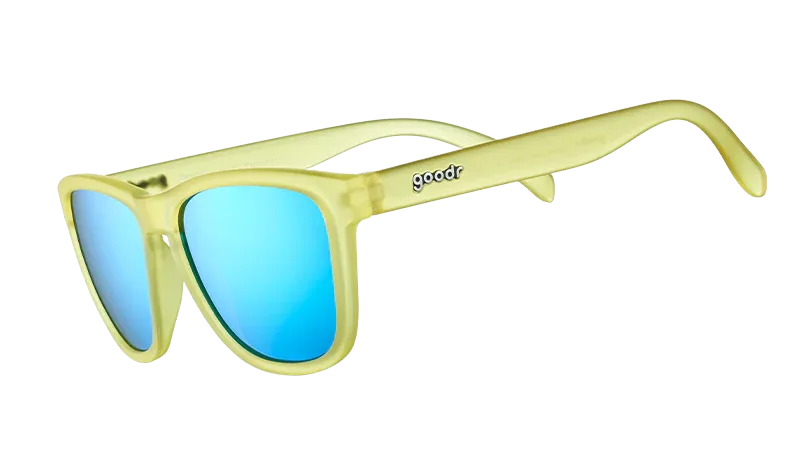
Swedish Meatball Hangover
Who should buy these?
Best for
- Recreational golfers who want a reliable, affordable pair of non-slip sunglasses for weekend rounds
- Players who prefer a lightweight frame that won't bounce or slide during a full swing
Not ideal for
- Golfers who need prescription lenses (these are non-prescription only)
- Competitive players who demand premium frame materials like titanium or acetate