Quick answer
Neither granola nor cereal wins outright. Granola usually delivers more protein, fiber, and healthy fats per bite because it is built from oats, nuts, seeds, and sweeteners, but it also carries more calories and sugar per serving. Standard cereal is lighter and often fortified with vitamins, yet many boxes are mostly refined grains and added sugar. For everyday eating, portion control matters more than the label on the box.
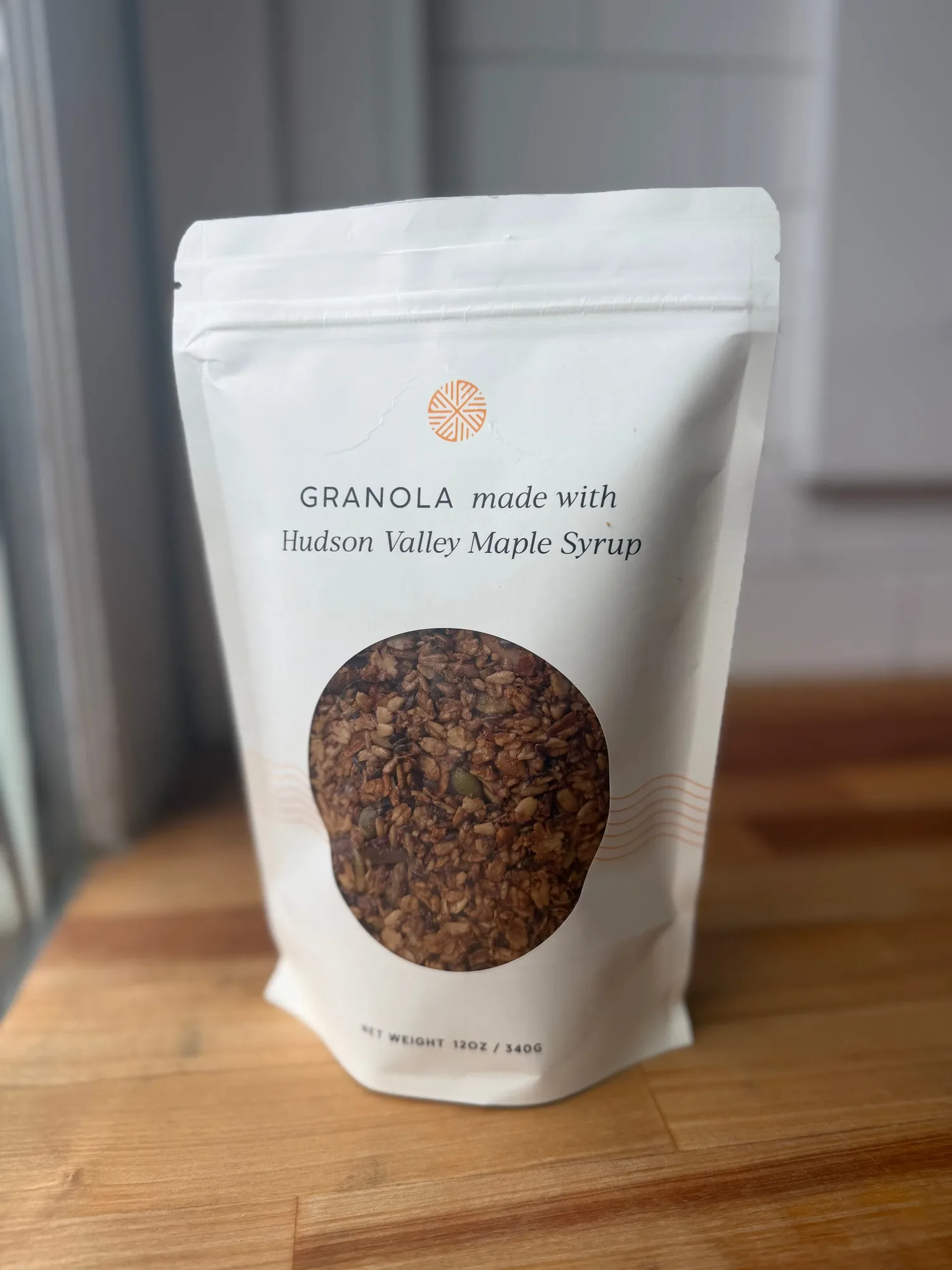
granola
Granola and cereal both live in the breakfast aisle, but they behave very differently in a bowl. Granola is a baked mixture of oats, nuts, seeds, and a sweetener such as honey or syrup, so it is calorie-dense and satisfying in small amounts. Cereal covers a wide range from frosted flakes to plain bran, which means the nutrition label changes dramatically from box to box.
That range is exactly why the granola vs cereal debate rarely has one answer. The better choice depends on your goals, your appetite, and how much time you have in the morning. This comparison breaks down the real trade-offs so you can pick the option that fits your routine, and it highlights a couple of store products that make either path easier.
Nutrition: what each one actually delivers
Granola nutrition leans toward whole ingredients. Oats, nuts, and seeds bring fiber, plant protein, and unsaturated fats, and the fat content helps you feel full longer. The catch is density: a typical granola serving is a quarter cup, and it can carry 120 to 200 calories with several grams of added sugar. Eat a full cup and you have effectively eaten a meal's worth of calories in a few minutes.
Cereal nutrition depends entirely on the grain and the coating. Plain shredded wheat or bran flakes can be low in sugar and high in fiber, while frosted or honey-coated cereals can match granola's sugar per serving without the protein and fat. Many cereals are fortified with iron and B vitamins, which is a genuine advantage if your diet is low in those nutrients. Read the label rather than trusting the category.
- Compare by weight, not by volume: a dense granola serving looks tiny next to a bowl of flakes.
- Check added sugar per serving and multiply by how many servings you actually pour.
- Look for at least 3 grams of fiber per serving in either option.
Cost, convenience, and serving size
Granola usually costs more per ounce because nuts and seeds are expensive ingredients. Cereal is cheaper per calorie, which matters for large households and tight budgets. On the convenience side, cereal wins on speed: pour and eat. Granola often gets used as a topping for yogurt or as a snack, which stretches a bag further than you might expect.
Serving size is where most breakfast choices quietly go wrong. A granola label might list a quarter cup, while a cereal label lists one cup. If you fill the same bowl with each, you are comparing very different amounts of food. Weigh your typical pour once, and you will know whether your breakfast is 250 calories or 600.
- Use a measuring cup for the first week to calibrate your normal pour.
- Mix granola into cereal to get crunch and volume with less density.
- Store opened granola in an airtight container so it stays crisp.
Where ready-made options fit
If you want granola without measuring or baking, a prepared kit removes the guesswork. The Yogurt and Granola Kit from Kneads combines Hawthorne Valley yogurt, apple compote, and granola as a Breakfast Catering item with 8 servings. That format suits offices, classrooms, and family mornings where everyone assembles their own bowl and controls the ratio.
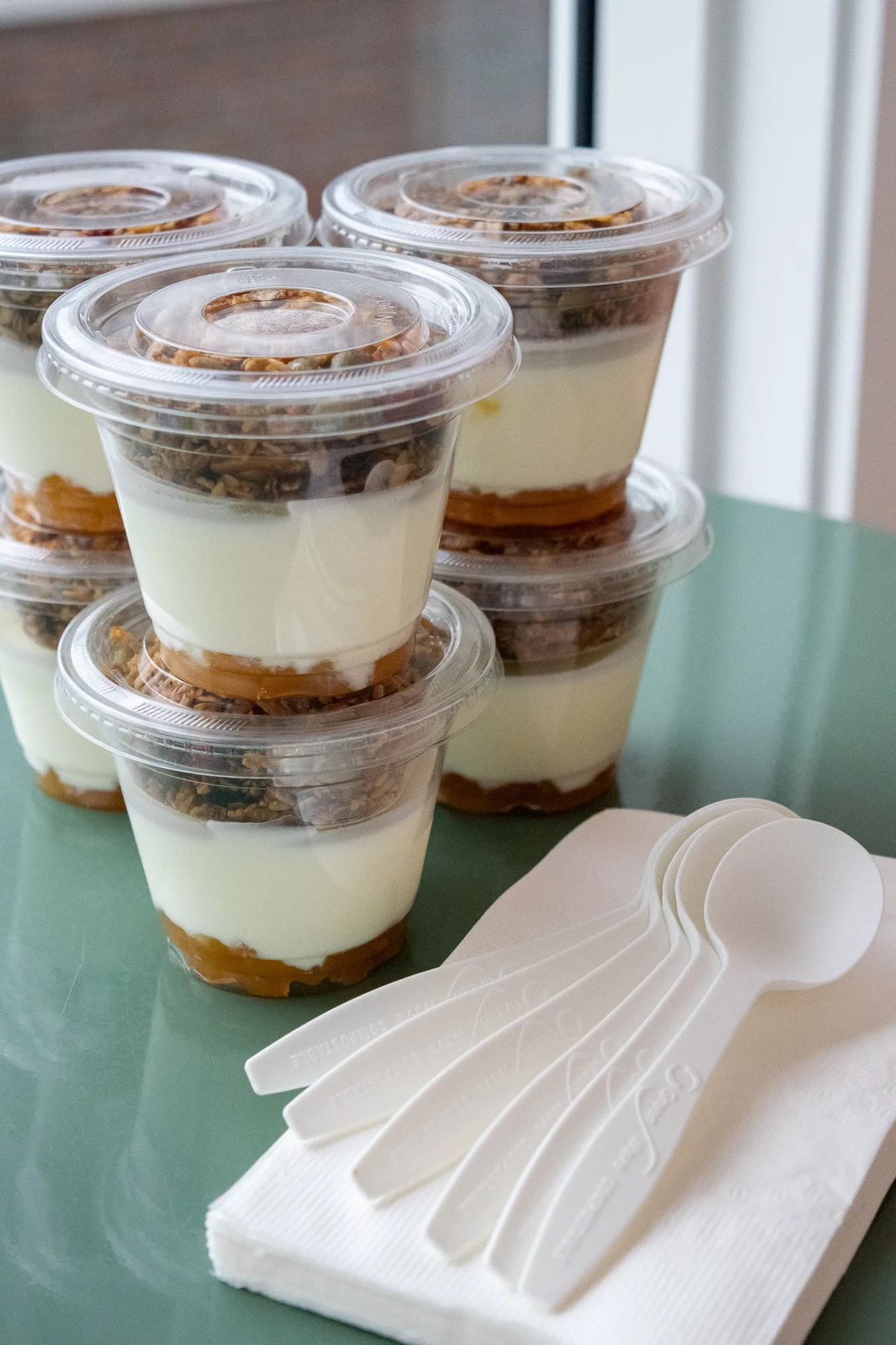
Yogurt and Granola Kit
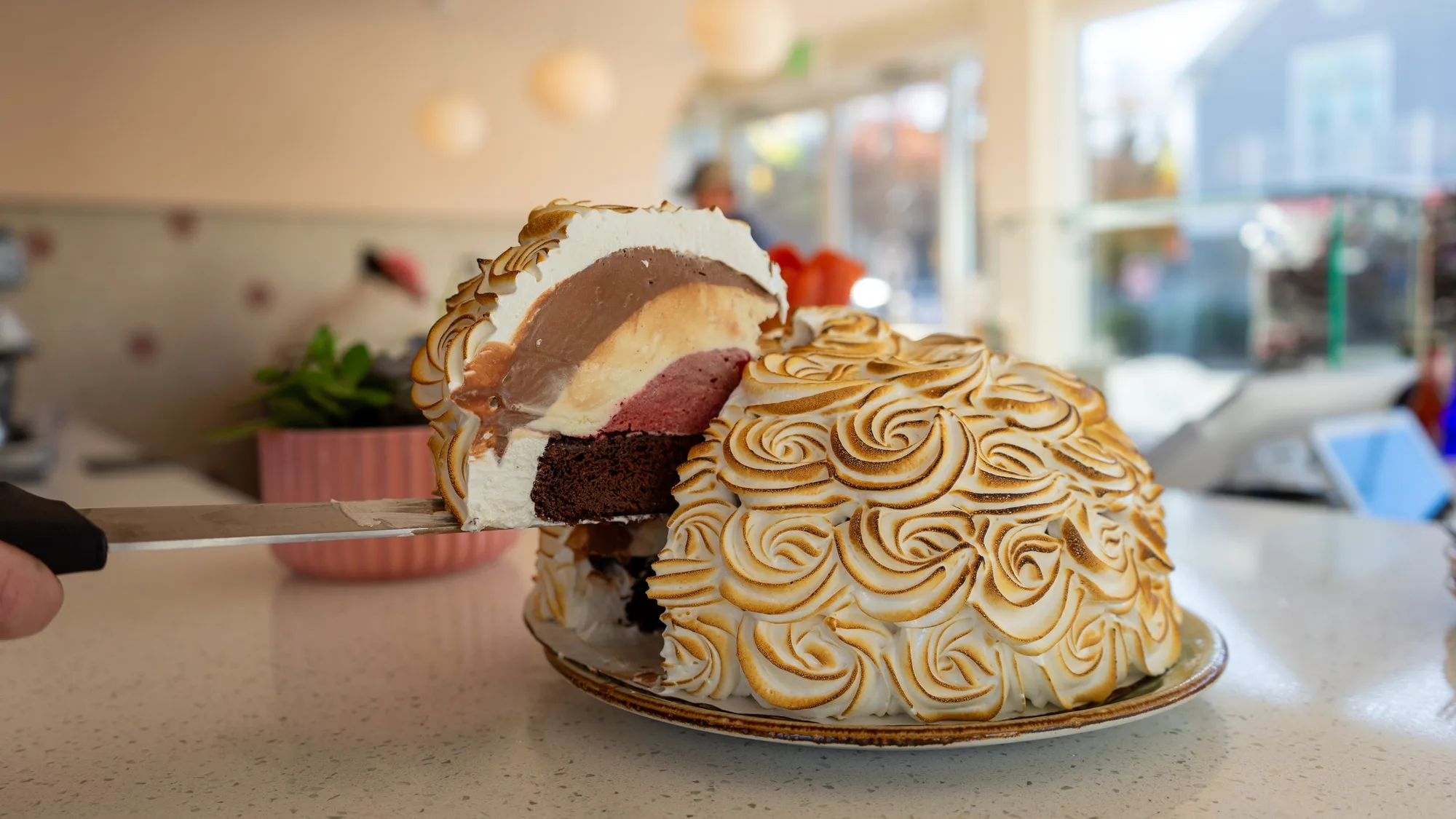
For celebrations rather than daily breakfast, MOMU Baked Alaska is a layered frozen dessert with chocolate cake, sorbet, vanilla ice cream, chocolate ice cream, and toasted meringue, offered as an 8 inch cake. It is not a breakfast swap, but it is a useful reminder that granola and cereal are everyday tools, while desserts belong to a different occasion entirely.
- A kit with pre-portioned components keeps granola from disappearing too fast.
- Check the serving count before ordering for a group so you buy enough.
- Keep dessert purchases separate from your breakfast budget.
How to choose without overthinking it
Start with your goal. If you want to stay full until lunch and you are willing to measure, granola is the stronger base. If you want a light, fast bowl and you will read labels for added sugar, cereal can be the better everyday pick. If you are feeding a group, a pre-portioned kit beats guessing how much everyone will eat.
Then look at your week. Busy weekday mornings favor cereal or a prepared kit. Weekend breakfasts, yogurt bowls, and hiking snacks favor granola. Many households keep both and use granola as a topping rather than the main event, which balances flavor, cost, and calories.
- Pick one goal for the week: fullness, speed, or budget.
- Buy the smaller granola bag first to test how fast you use it.
- Keep a low-sugar cereal on hand as a backup for rushed mornings.
Trade-offs at a glance
- Satiety vs calories: Granola's oats, nuts, and seeds bring fiber, protein, and fat that keep you full, but the same density means a small serving carries a lot of calories. Choose granola if you will measure it; otherwise its fullness advantage disappears.
- Speed vs label reading: Cereal is faster to serve and usually cheaper per calorie, but nutrition varies wildly from plain bran to frosted flakes. Cereal wins on convenience only if you check added sugar and fiber per serving.
- Everyday vs occasion: Granola and cereal are daily breakfast tools, while a layered dessert like MOMU Baked Alaska belongs to holidays and parties. Keep the categories separate so celebration food does not become the default morning meal.
Product facts
- Yogurt and Granola Kit: Includes Hawthorne Valley yogurt, apple compote, and granola, offered as a Breakfast Catering item with 8 servings. Pre-portioned components let each person control the granola-to-yogurt ratio, which is the easiest way to keep a granola breakfast from becoming calorie-heavy.
- MOMU Baked Alaska: A layered frozen dessert with chocolate cake, sorbet, vanilla ice cream, chocolate ice cream, and toasted meringue, offered as an 8 inch cake. It is a celebration centerpiece rather than a breakfast item, so it helps separate everyday breakfast choices from occasional desserts.
Which should you choose?
Best for
- People who want a filling breakfast and will measure a quarter-cup granola serving
- Group mornings where a pre-portioned kit like the Yogurt and Granola Kit simplifies serving
- Yogurt bowls, parfaits, and hiking snacks where granola works as a topping
Not for
- Anyone who pours a full bowl without measuring, since granola calories add up quickly
- Shoppers looking for the lowest cost per calorie, where standard cereal usually wins
- People who need fortified vitamins and minerals that many granolas do not provide
Granola and cereal are not rivals so much as different tools. Use granola when you want staying power and will keep the portion small, and use cereal when you want speed and a lighter bowl. If you are feeding a group, a pre-portioned kit takes the guesswork out of both.