Quick answer
Grip socks offer consistent traction and hygiene on shared reformers, while bare feet provide maximum proprioception and natural foot movement. Your choice depends on your studio environment and personal comfort.
Traction and stability
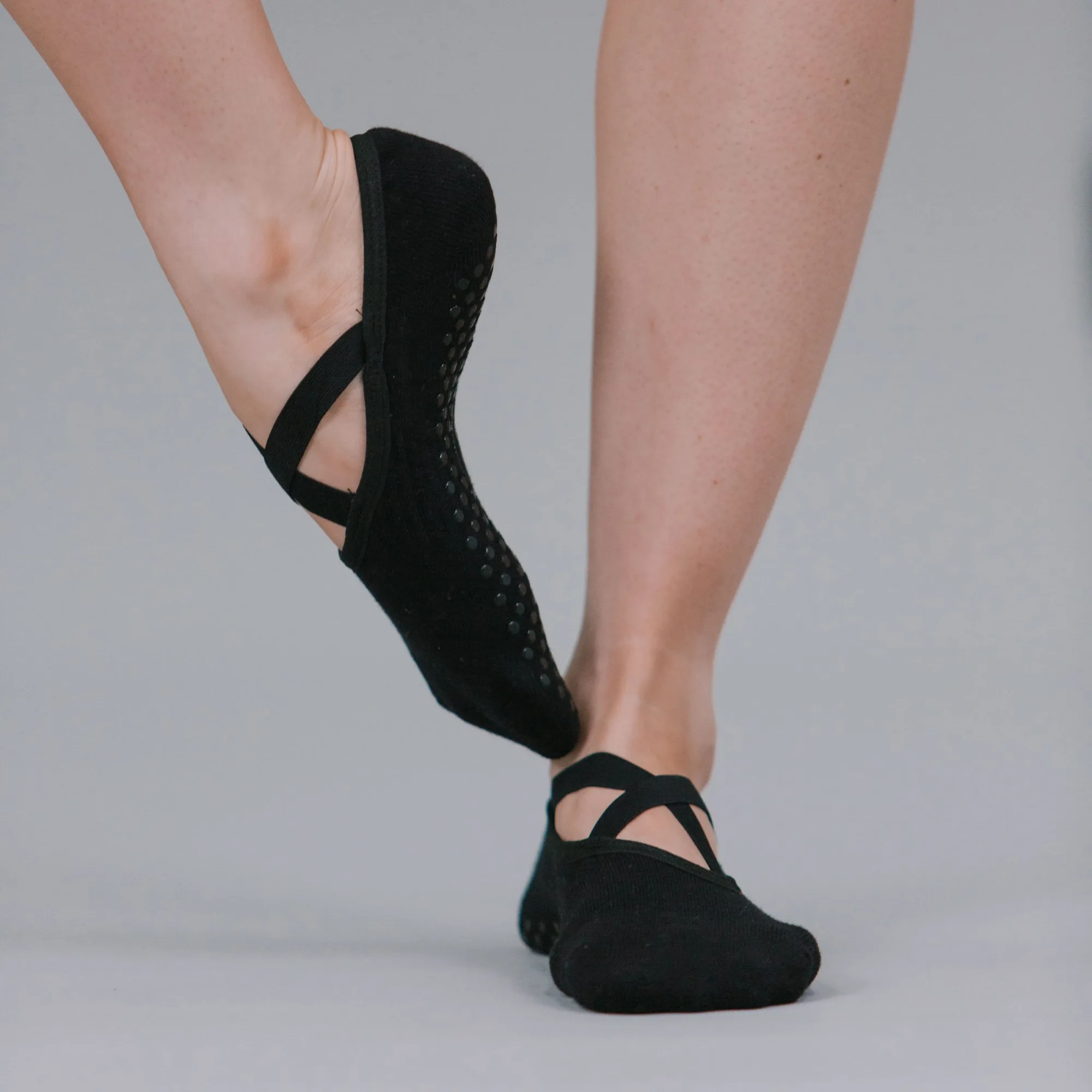
Bare feet rely on your natural skin grip and sweat, which can vary during a session. Grip socks, like the Scrunch Grip Socks, deliver full-foot traction through a non-slip sole that stays effective even when you perspire.
Hygiene and maintenance
In a shared studio, bare feet transfer oils and sweat directly to the reformer carriage. Grip socks create a clean barrier and are easy to wash after each use, reducing wear on the equipment and keeping the practice surface fresh.
Foot freedom and sensation
Bare feet allow unrestricted toe splay and direct contact with the footbar, which helps some practitioners feel more grounded. Grip socks add a thin fabric layer that slightly reduces tactile feedback but still lets your foot move naturally.
Trade-offs at a glance
- Bare feet: Choose bare feet for maximum sensory feedback and natural foot articulation. You'll feel every point of contact with the reformer, which can improve alignment cues.
- Grip socks: Choose grip socks for consistent traction, hygiene in shared studios, and warmth during cooler sessions. The Scrunch Grip Socks stay in place without pulling up mid-session.
- Hybrid approach: Some practitioners start barefoot for warm-up and put on grip socks for standing or jumping exercises. This gives you the best of both worlds without committing to one option. Try both methods and switch based on the exercise type.
Product highlights
-
Scrunch Grip Socks: The Scrunch Grip Socks are built from a soft cotton blend with full-foot traction that keeps you grounded through every footwork sequence, single-leg spring set, and standing balance series. They provide reliable slip resistance across the entire foot, so you don't have to adjust your stance mid-exercise.
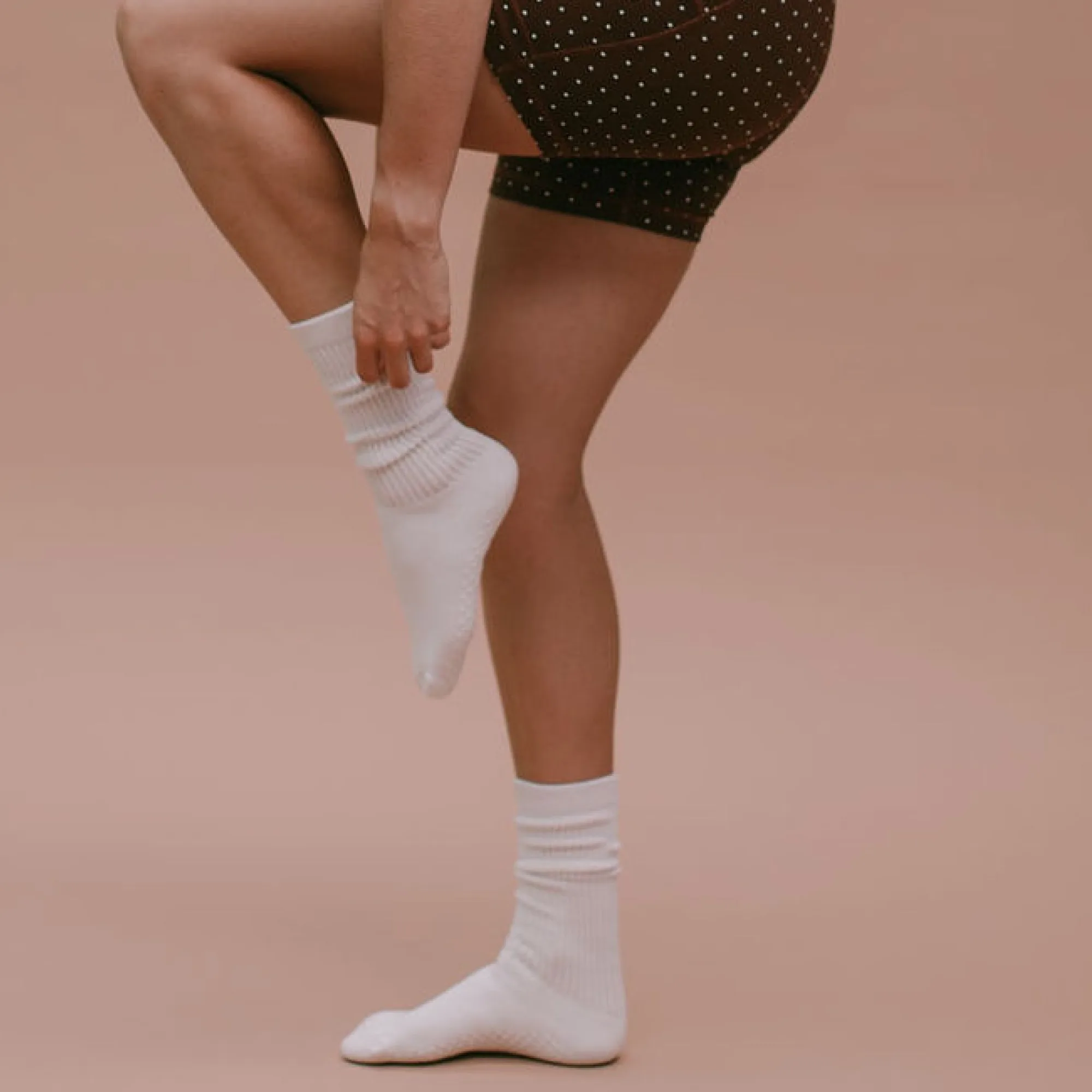
Scrunch Grip Socks
Which should you choose?
Best for
- Practitioners who share a reformer and want a clean, slip-free surface
- Anyone who experiences foot slipping during sweaty or fast-paced sequences
Not ideal for
- Those who rely on barefoot proprioception for precise foot placement and alignment feedback
- Practitioners with very wide feet who find socks restrictive