Quick answer
Start by deciding where you need the sock to stop on your ankle and how much fabric you want between your foot and the footbar. Scrunch socks offer full coverage and stay put, ballet grip socks give a low-profile, barefoot feel, and crew socks balance coverage with breathability. Choose based on your primary reformer moves and sensitivity to bunching.
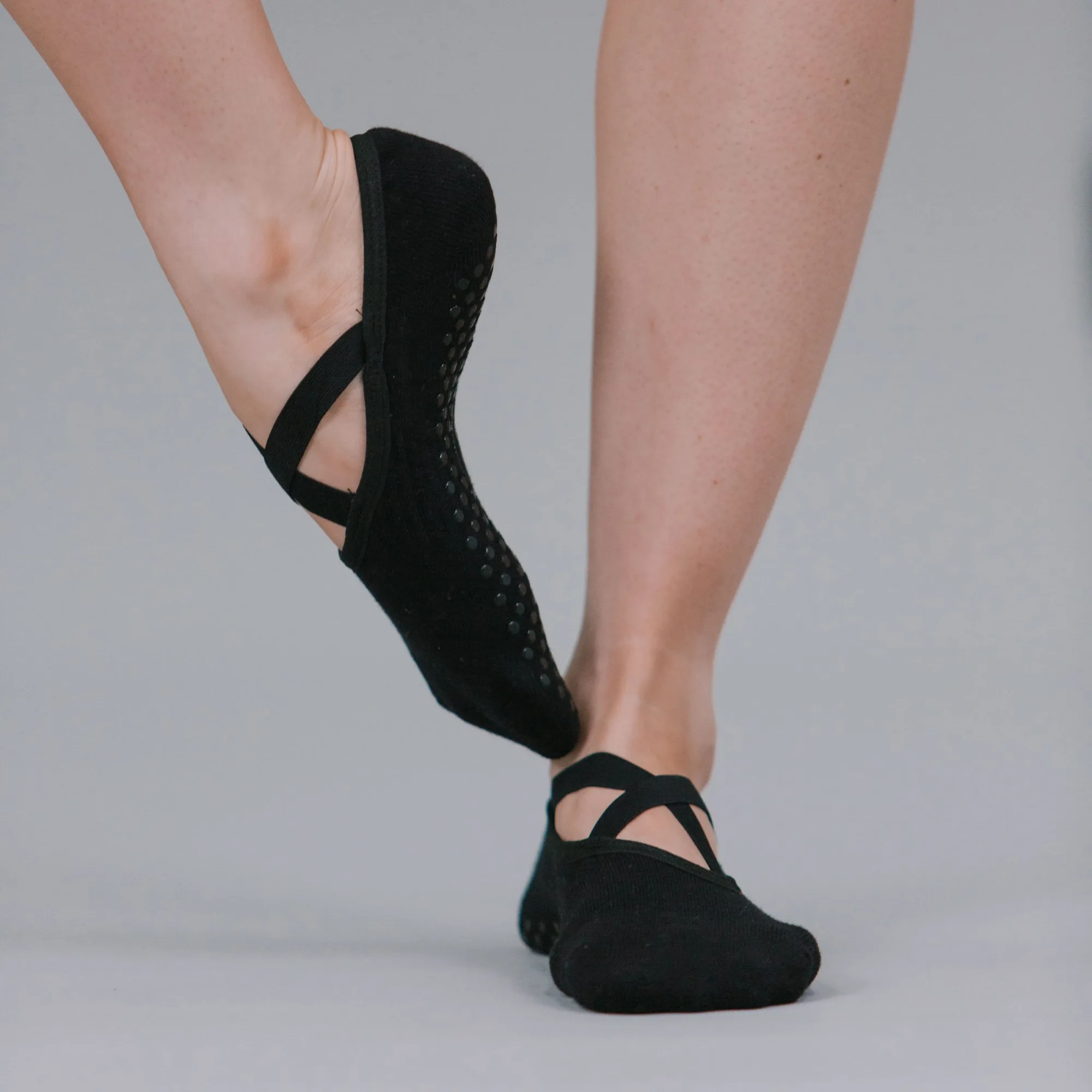
ballet grip socks
Grip socks are one of those Pilates accessories that seem simple until you try to pick a pair. The difference between a session where you forget you’re wearing socks and one where you’re constantly adjusting them comes down to two things: fit and grip placement. Whether you’re new to reformer work or a seasoned instructor, understanding the trade-offs between sock styles helps you spend your money on what actually works for your practice—not on marketing claims.
Most grip socks share the same basic job—keeping your foot stable on the carriage and footbar. But the way they achieve that stability varies in ankle height, toe coverage, and traction pattern. These differences matter a lot when you’re balancing in single-leg springs or flowing through footwork. Below, you’ll find concrete decision rules and product comparisons to simplify your choice.
What to look for in grip sock features
The primary feature of any Pilates grip sock is the traction pattern on the sole. Full-foot silicone or rubber dots provide a consistent non-slip surface across the entire footbed. This matters most for standing balance series and transitions on the reformer carriage. Some socks concentrate grip only on the heel and toe, which saves weight but can leave the midfoot sliding during side-lying work.
Fabric composition also affects performance. Cotton blends are breathable and comfortable for long sessions, but they absorb moisture and can stretch over time. Synthetic blends dry faster and hold their shape longer, but they may feel less breathable in hot studios. Check the care instructions: socks with heavy silicone patterning often require gentle washing to keep the grips intact.
- Look for full-foot grip if you do a lot of standing or side-lying work; partial grip is fine for footwork-heavy sessions.
- Cotton blends offer comfort for moderate use; synthetic blends hold shape better for frequent weekly practice.
Fit and ankle height: scrunch, ballet, crew
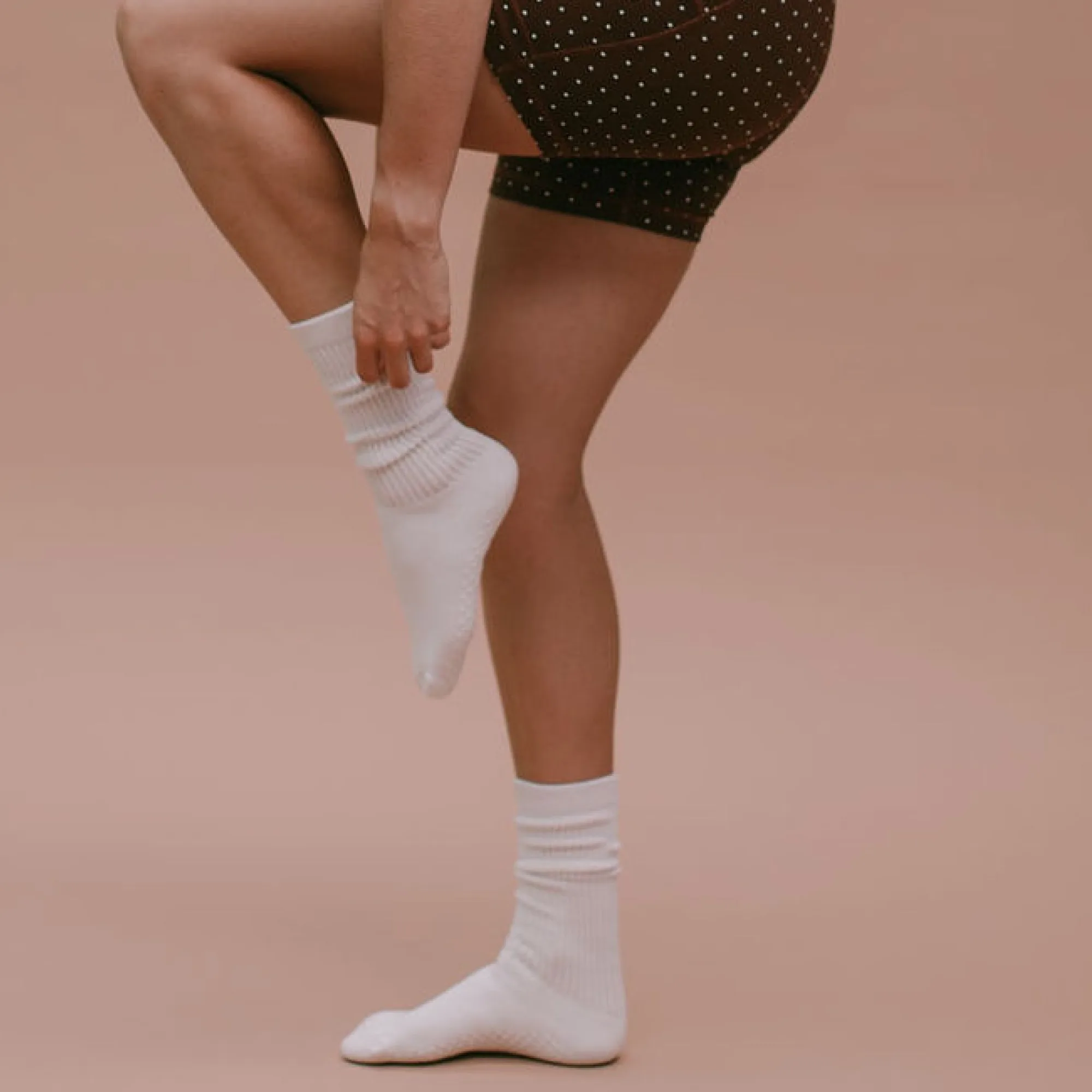
Ankle height is where most people get stuck. Scrunch socks sit gathered around the ankle with extra fabric that can be pulled up or left scrunched. Ballet grip socks are cut low and lie flat against the foot and ankle, leaving no extra fabric behind the heel. Crew socks extend up the calf and provide full coverage from toes to mid-shin. Each style changes how the sock feels during different movements.
For reformer footwork, you want minimal fabric between your foot and the footbar. Ballet grip socks are ideal here because they don’t bunch behind the heel or under the arch. Scrunch socks work well if you prefer the sensation of the fabric gathered at the ankle but should be pulled up and adjusted before each exercise set. Crew socks can feel bulky on the footbar but offer extra warmth and coverage for cooler studios or barre work.
- Scrunch socks: best for those who want adjustable coverage and a snug ankle fit.
- Ballet grip socks: best for barefoot feel and direct footbar contact.
- Crew socks: best for colder sessions or when you want calf compression.
Decision rules: picking your grip sock style
- Footbar contact is your priority: Choose a low-profile style (ballet cut) to minimize fabric between your foot and the footbar during footwork and spring work. Avoid crew or heavy scrunch socks if you do extensive footwork on the reformer.
- You practice in a cold studio or want leg coverage: A crew style offers additional warmth and a more secure fit for the calf, though it may bunch on the footbar. Consider crew socks for barre or mat Pilates where grip is still needed but footbar contact is less frequent.
- You want a adjustable, stay-put ankle: Scrunch socks provide a gathered ankle that stays in place without slipping, ideal for single-leg sequences and standing balances. Good middle ground if you can’t decide between barefoot feel and ankle coverage.
Grip socks compared
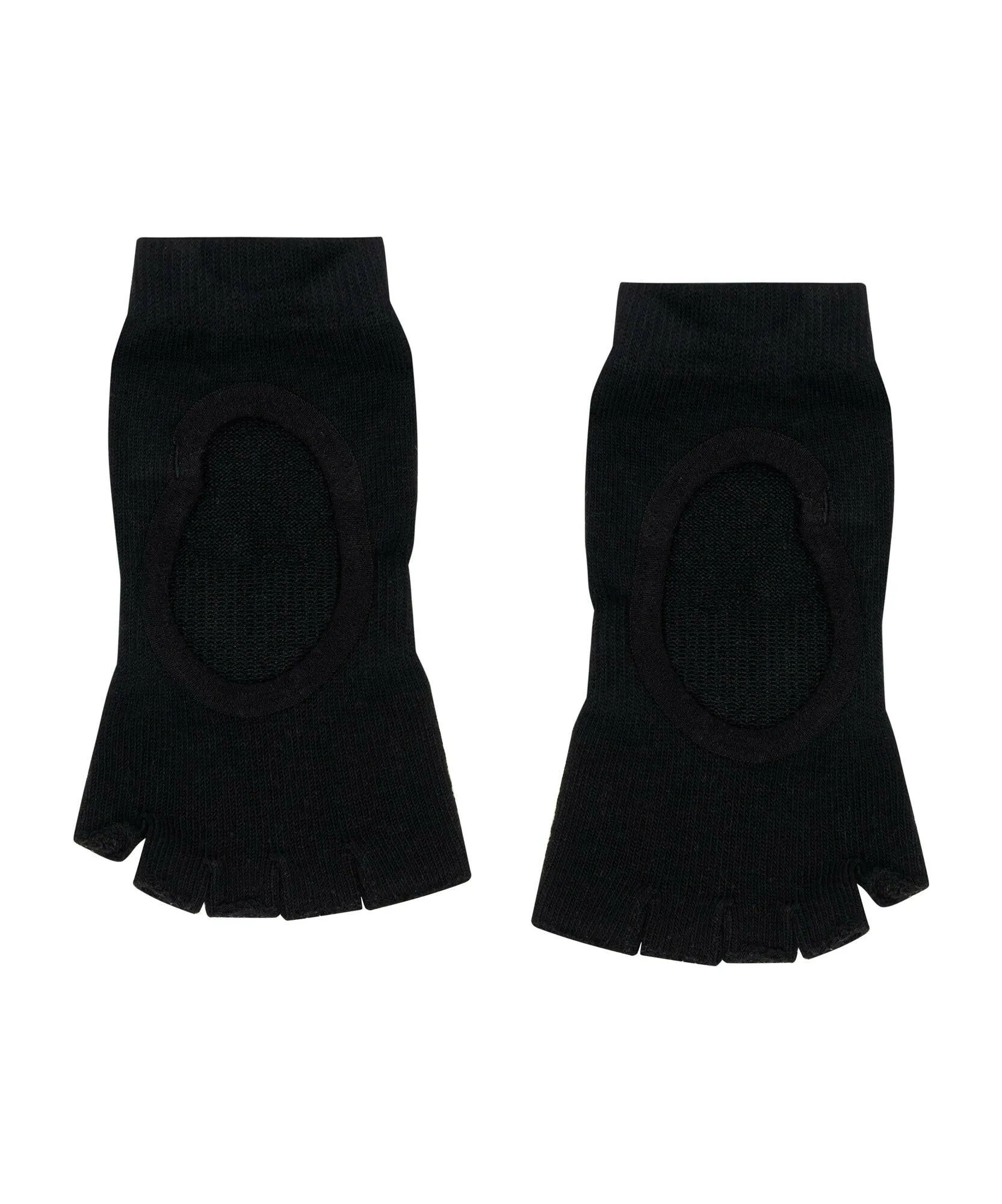
- Scrunch Grip Socks: Built from a soft cotton blend with full-foot traction that keeps you grounded through every footwork sequence, single-leg spring set, and standing balance series. The scrunched ankle sits where it’s supposed to sit. No pulling them up mid-session. If you switch between many reformer exercises, the scrunched ankle stays put without constant adjustment, and the full-foot grip gives you stability during transitions.
- Ballet Grip Socks: Cut low and close to the foot, so there’s no bunching fabric between you and the footbar, no slipping on the carriage, and nothing pulling your attention away from the movement itself. For footwork-heavy sessions, the low-profile cut eliminates fabric bunching under the arch, giving you a direct, stable connection to the footbar.
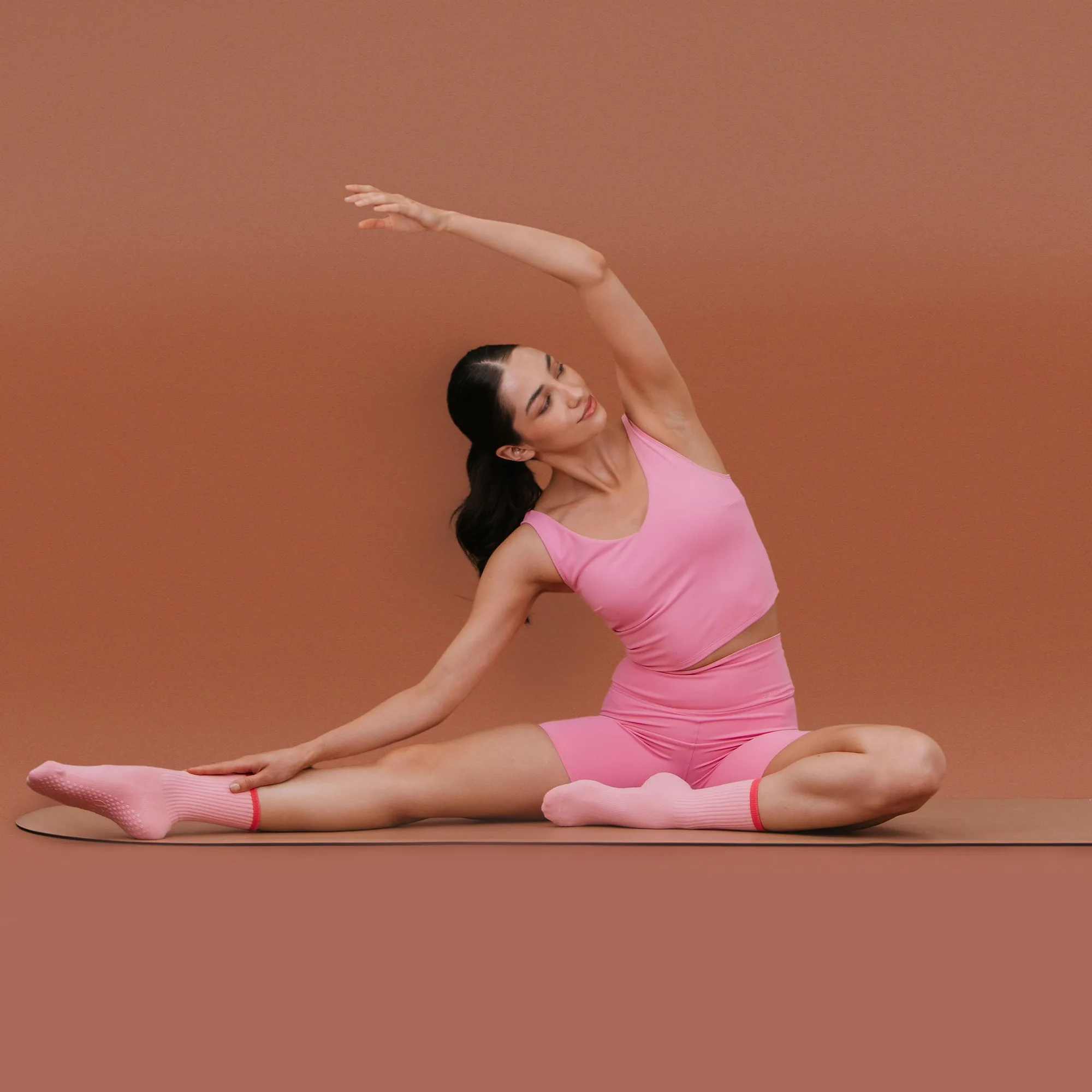
- Crew Grip Socks: Designed with a secure fit and reliable grip for enhanced stability during movement. Available in multiple color options: Hot Pink, Navy/Yellow, Cream Frill, Stone Frill, and Rust/Cream. If you prefer calf coverage or want a sock that can double as casual wear after class, the crew style gives you more flexibility without sacrificing grip.
Which grip sock fits your practice?
Best for
- Reformer users who prioritize footwork and direct footbar feel – go with ballet grip socks.
- Pilates practitioners who want minimal sock distraction and a barefoot-like connection to the carriage.
Not for
- Those who prefer the sensation of fabric gathered at the ankle – that is what scrunch socks do.
- Practitioners who need extra calf warmth or want a sock that can be worn outside the studio – a crew style matches that use case better.
The right grip sock for your Pilates practice comes down to where you need fabric, where you don’t, and how much adjustment you’re willing to make between exercises. Ballet grip socks give you a direct footbar feel for footwork, scrunch socks offer adjustable ankle coverage for varied routines, and crew socks provide warmth and coverage for cooler studios or double-duty wear. Match the style to your most common reformer moves, and you’ll slip into a pair that practically disappears while you work.