Quick answer
Choose a grocery store playset that matches your child's age, available space, and preferred play style. Look for sturdy wooden construction, realistic accessories, and open-ended features like a working scale or price tags. Sets with a market stall and a variety of play food offer the best value for expanding pretend play.
What to look for in a grocery store playset
Start with the materials. Wooden playsets last longer and feel more substantial than plastic alternatives. Check for smooth edges, non-toxic finishes, and sturdy assembly. A wooden grocery store playset typically holds up to daily use and can be passed down.
Consider the size. Measure the play area first. A compact market stall works well in a corner or against a wall, while larger sets with a counter, shelves, and a canopy need more floor space. Think about storage too—some sets fold or have built-in bins.
Accessories matter. Look for a set that includes a cash register, play money, baskets, and a variety of pretend food. Realistic details like a working scale, price tags, and reusable shopping bags add depth to the play. The more pieces, the longer the toy holds a child's interest.
Think about expandability. Some grocery store playsets are designed to pair with additional food packs or kitchen accessories. This lets you grow the setup over time without buying a whole new playset.
Age and skill considerations
For toddlers ages 2–3, look for a basic market stall with large, chunky food pieces and simple role-play elements. Avoid small accessories that could be a choking hazard. A sturdy, low-to-the-ground set works best.
For preschoolers ages 3–5, add more realistic features: a cash register with buttons, play money, a scale, and price tags. This age group enjoys sorting produce, counting coins, and taking turns as shopkeeper and customer.
For older kids ages 5–7, choose a set with more complex play options, such as a working faucet, multiple shelves, and themed food sets. They may also enjoy combining the grocery store with a play kitchen for expanded pretend scenarios.
Decision rules for choosing a grocery store playset
- Rule 1: Match the set to your child's age: Toddlers need chunky, safe pieces and a low height. Preschoolers benefit from realistic accessories like a cash register and play money. Older kids enjoy more complex features and the ability to combine with other pretend play sets. Check the recommended age range on the product page.
- Rule 2: Prioritize open-ended play: Look for a set that allows multiple play scenarios—shopping, cooking, sorting, and customer service. Avoid sets with only one fixed activity. A market stall with a scale, price tags, and reusable bags encourages creativity. More open-ended features = longer-lasting play value.
- Rule 3: Consider expandability: Some grocery store playsets accept additional food packs or can be paired with a play kitchen. This lets you refresh the play without buying a whole new setup. Check if the brand offers compatible add-ons. Buy a set that can grow with your child.
Product facts that matter
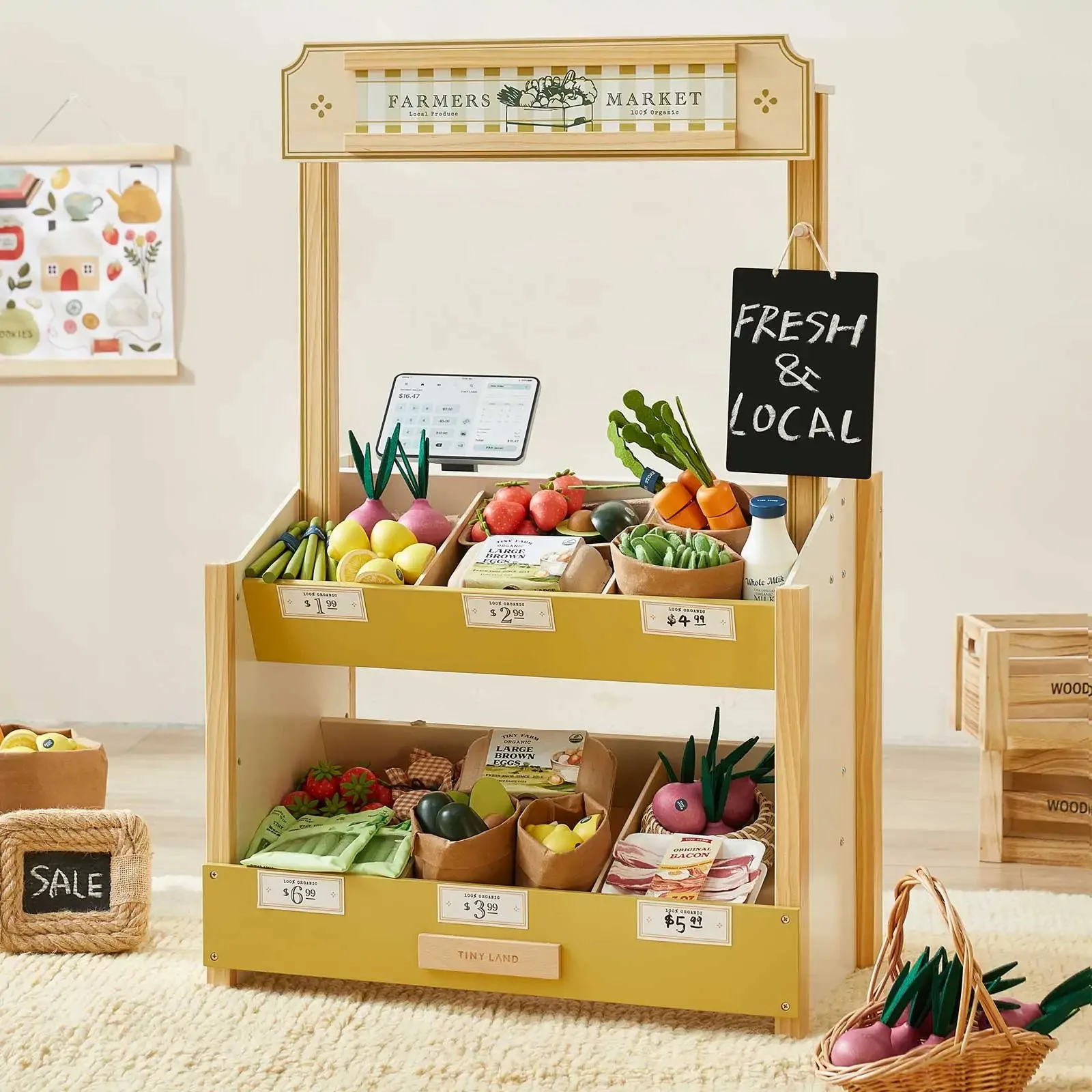
- Farmers’ Market Gift Set: Market Stall & Organic Food Collection: A wholesome pretend play world inspired by real farmers’ markets and cozy neighborhood shops. Little shopkeepers can sort colorful produce, serve happy “customers,” set prices, and ring up sales while building early life skills through imaginative play. This set combines a market stall with organic food pieces, so you don't need to buy a separate food pack. The realistic pricing and payment play supports early math and social skills.
- Tiny Land® Organic Fruit & Veggie Pack: This handpicked produce set is packed with farmer’s market favorites—from fuzzy strawberries to snappy peas. Designed with a mix of beech wood, felt, and cotton, it offers a beautiful sensory experience for little foodies. If your existing playset lacks a variety of produce, this pack adds sensory-rich pieces that feel different from standard plastic food. The mix of materials also teaches kids about texture and natural materials.
Who is this for?
Best for
- Kids ages 2–7 who enjoy role-playing shopping and customer service
- Families who want a durable wooden toy that promotes early math, language, and social skills
- Homes with enough floor space for a market stall or counter setup
Not for
- Families with very limited space (consider a compact play food set or a small cash register instead)
- Kids who prefer solo, non-interactive play (grocery store sets shine with two or more children)