Quick answer
Ground stakes anchor your swing set legs to the soil, reducing tipping and sliding during active play. Install them at every leg that touches the ground, drive them deep enough to reach firm soil, and check them monthly. For most wooden playsets, stakes plus regular tightening of hardware give you the stability you need.
A swing set that shifts or lifts during play is more than annoying; it is a safety concern. Ground stakes are the simplest, most direct way to keep the legs planted, especially on wooden playsets that see daily use.
This guide explains why swing set anchoring matters and walks you through installing ground stakes for your playset, with checkpoints to avoid the mistakes that make stakes ineffective.
Why ground stakes matter for swing set safety
Swing sets move. Kids swing, climb, and hang, and that motion transfers force into the legs. Without anchoring, a set can slide across the lawn or tip on uneven ground. Ground stakes resist that movement by tying the legs to the soil. They are not a substitute for proper assembly or level ground, but they are a critical last line of defense.
Ground stakes safety also depends on placement. Stakes work best when they are driven through the base of each leg or the frame bracket, not strapped to the side. If a stake is loose or shallow, it can pull out under load. That is why the steps below focus on depth, angle, and regular checks.
- Check your playset manual first: some sets specify stake locations or require anchoring kits.
- Never use stakes as a fix for missing hardware or a wobbly frame; tighten bolts first.
What you need before you install ground stakes
You do not need specialty tools for most ground stakes, but you do need the right conditions. Pick a day when the soil is soft but not saturated. Hard, dry clay may require pre-drilling or a metal spike to start the hole. Have a tape measure, a mallet or hammer, and work gloves ready.
If your playset sits on artificial turf, pavers, or a concrete slab, standard ground stakes may not work. In those cases, anchoring options differ, and you may need to consult the manufacturer or a professional installer. The steps below assume a soil or grass surface.
- Wear gloves and eye protection when driving stakes.
- Confirm you have enough stakes for every ground-contact leg; most sets need four or more.
How to install ground stakes: step-by-step
The process is straightforward, but small errors make stakes useless. Follow these steps in order, and pause at each checkpoint to confirm the stake is doing its job.
If you are anchoring a larger set like the Everest Elite Swing Set, which has three play decks and multiple ground-contact points, plan for more stakes and take extra time to level the frame before driving anything into the soil.
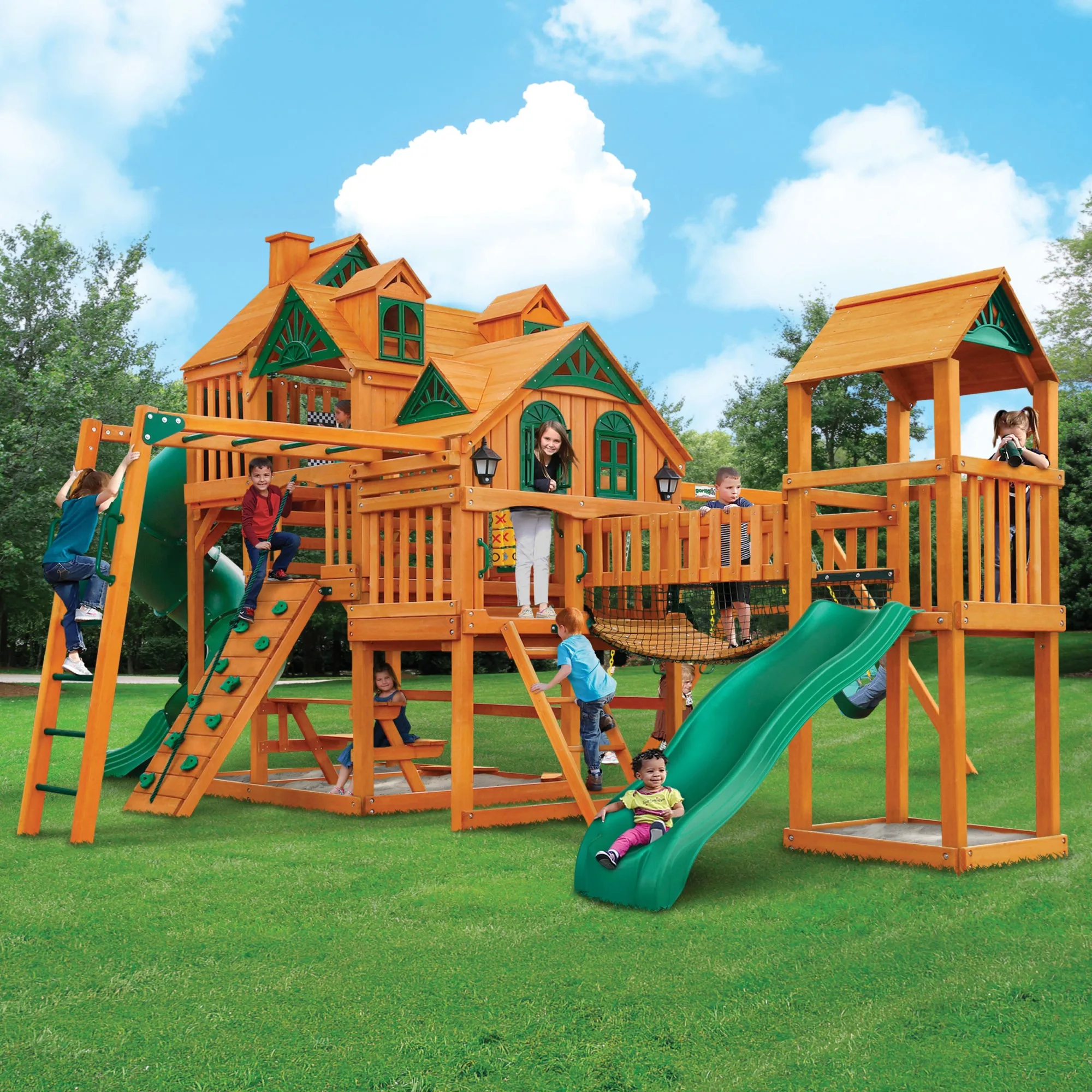
Everest Elite Swing Set
- Step 1: Position the playset on level ground and tighten all hardware. Mistake to avoid: anchoring before the frame is square and level.
- Step 2: Mark each leg that touches the ground. Checkpoint: every ground-contact leg gets a stake, not just the corners.
- Step 3: Drive the stake at a slight angle toward the center of the set. Mistake to avoid: driving straight down, which gives less resistance to tipping.
- Step 4: Stop when the stake head sits flush with the soil or the bracket. Checkpoint: the stake should not wiggle when you push it side to side.
- Step 5: Secure the stake to the leg using the supplied bracket or hardware. Mistake to avoid: using rope or zip ties that can stretch or rot.
- Step 6: Recheck after one week of play and retighten if needed. Checkpoint: monthly checks catch loosening before it becomes a hazard.
Common mistakes and how to avoid them
The most common mistake is installing stakes too shallow. A stake that only goes in a few inches will pull out. Aim for at least two-thirds of the stake length in firm soil. Another mistake is skipping stakes on legs that seem stable. If a leg touches the ground, it can move.
Using the wrong stake for your soil type also causes failures. Sandy soil holds stakes poorly, so you may need longer stakes or a different anchoring method. Rocky soil can bend stakes; pre-drill or reposition if you hit a stone.
- Do not anchor into loose mulch or gravel; remove it and drive into the soil below.
- If a stake bends, replace it; a bent stake will not hold.
When to check and replace ground stakes
Ground stakes are not install-and-forget. Frost heave, heavy rain, and repeated play can loosen them. Check them at the start of each season and after any severe weather. Push each stake; if it moves, reset it or replace it.
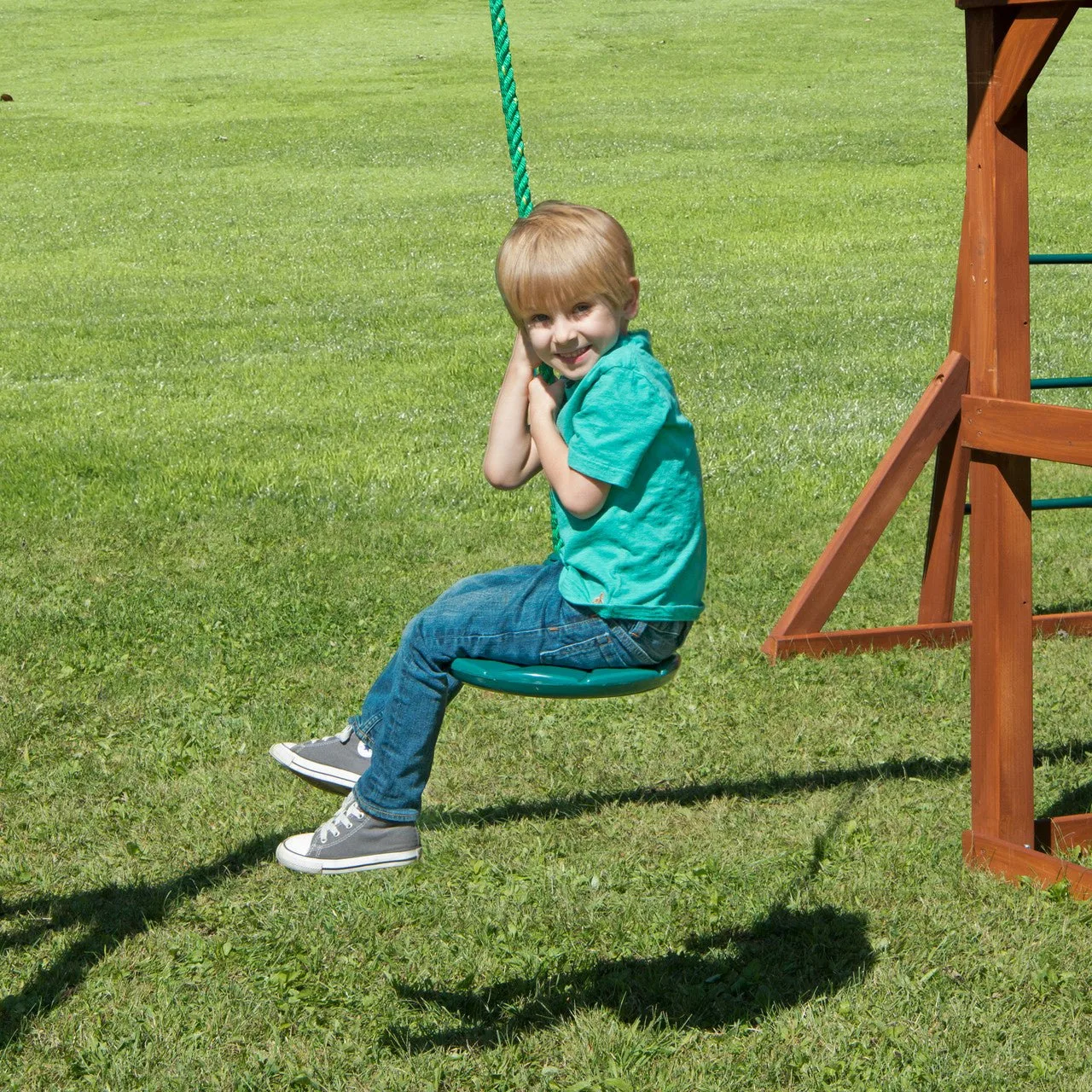
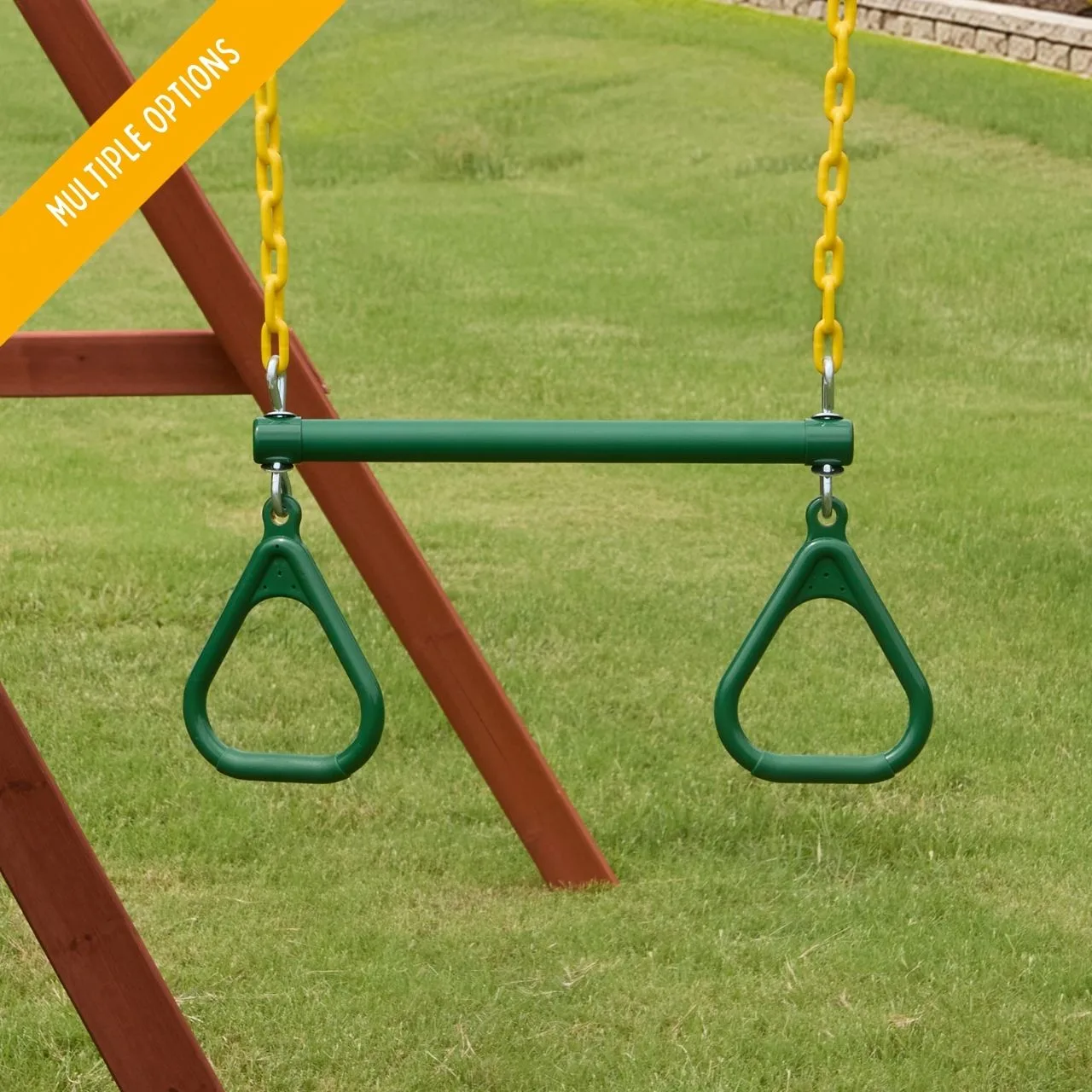
If your set includes a disc swing or trapeze bar, those add dynamic loads that can work stakes loose faster. The Disc Swing and 17 Inch Standard Trapeze Bar both encourage swinging motion, so inspect anchoring more often if you have them.
- Mark your calendar for a monthly stake check during peak play season.
- Replace any stake that is bent, rusted, or has a damaged head.
Your ground stake installation checklist
- Level and tighten the frame: Place the playset on level ground and tighten all bolts before anchoring. A wobbly frame will not be fixed by stakes.
- Mark every ground-contact leg: Identify each leg that touches the soil and plan a stake for each one. Do not skip legs that seem stable.
- Drive stakes at a slight angle: Angle the stake toward the center of the set to resist tipping. Straight-down stakes hold less effectively.
- Seat the stake head flush: Drive until the head meets the soil or bracket, then test for wiggle. If it moves, drive deeper or reposition.
- Secure with proper hardware: Use the supplied bracket or hardware to attach the stake to the leg. Rope and zip ties are not anchoring hardware.
- Recheck monthly and after storms: Push each stake and retighten hardware as needed. Seasonal checks prevent surprises.
Playset features that affect anchoring
- Everest Elite Swing Set: The Everest Elite gives your kids three play decks, two slides, a rock wall, monkey bars, a clatter bridge and tower and so much more. More play decks and active features mean more ground-contact points and more dynamic load, so use additional stakes and check them often.
- Disc Swing: The circle shape allows the swing to go in a circle motion or swing front to back. Circular motion can put sideways force on the frame, making secure anchoring especially important.
- 17 Inch Standard Trapeze Bar: It has 2 handles to hang on, that swing individually. It also has the trapeze bar that can be swung from too! A trapeze bar invites hanging and swinging, which adds load; inspect stakes and hardware regularly.
Ground stakes are a small investment that protects your playset and the kids who use it. Install them correctly, check them regularly, and your swing set will stay put through seasons of play.