Quick answer
For most residential swing sets on stable soil, ground stakes are the simpler, faster choice and can be sufficient when installed correctly. Concrete anchors offer greater holding power in loose or sandy soil, high-wind areas, or for heavier playsets, but they are permanent and harder to relocate. Your decision should hinge on soil type, climate, and whether you might move the set.
Anchoring is one of the most important safety steps when installing a swing set, yet it's often an afterthought. The two most common methods are ground stakes and concrete anchors. Each has clear advantages and trade-offs, and the right pick depends on your yard, your playset, and your long-term plans.
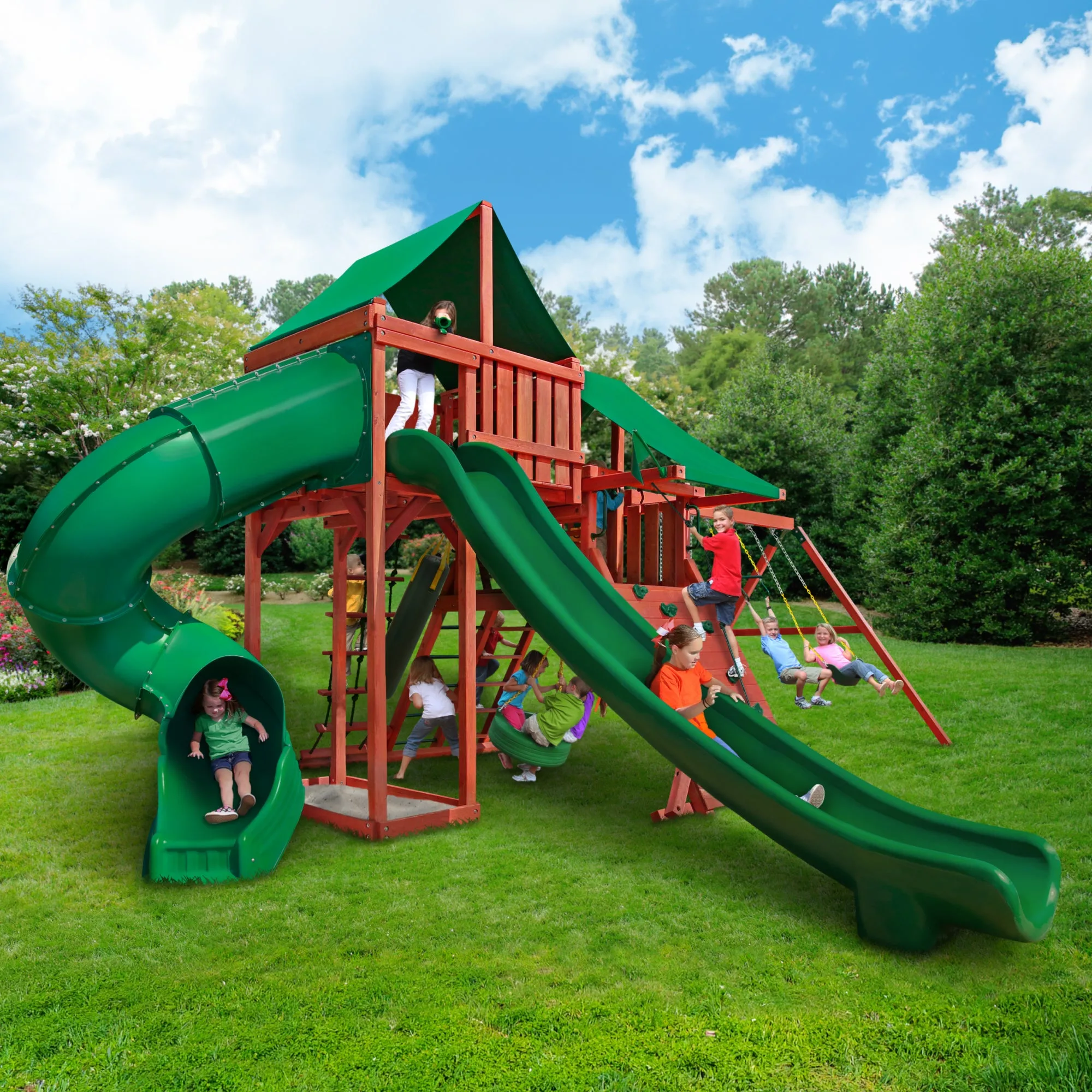
This comparison breaks down how each method works, what it's best for, and where it falls short. We'll also look at how specific playsets—like the Sun Valley Deluxe Swing Set or the Free Standing Swing Set - Hardware-Only Kit—might influence your choice.
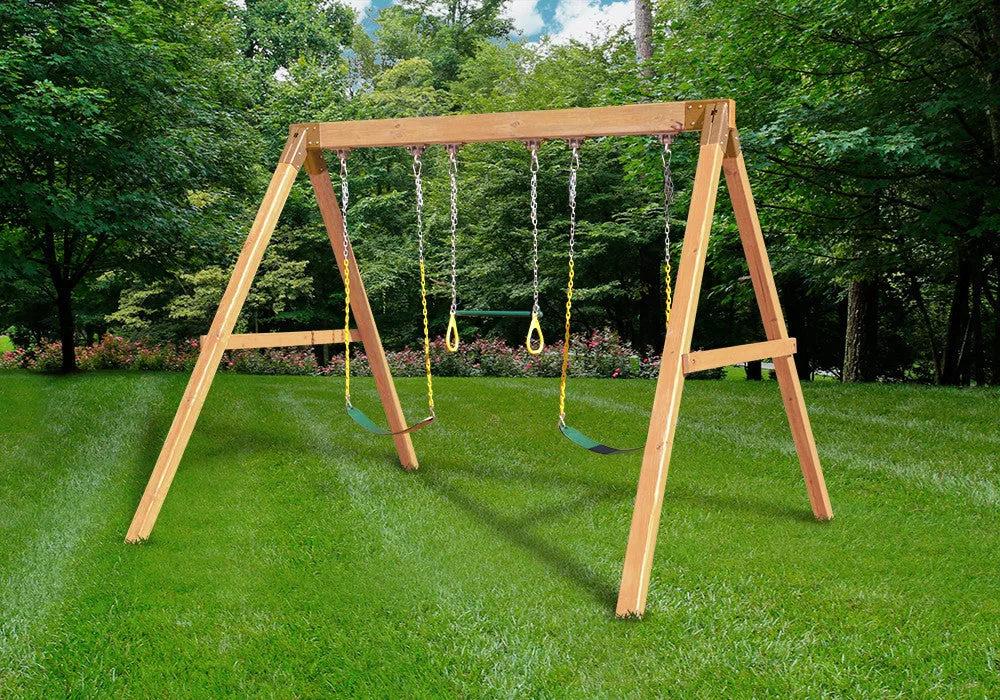
Free Standing Swing Set - Hardware-Only Kit
How ground stakes work
Ground stakes are metal rods or augers driven into the soil at each leg or anchor point of the swing set. They rely on soil friction and the stake's shape to resist upward and lateral forces. Installation is straightforward: position the stake, drive it in with a mallet or auger tool, and attach the playset leg or bracket. No mixing, waiting, or digging large holes.
The holding power of ground stakes varies with soil conditions. In firm, well-drained loam or clay, they can perform well for years. In loose sand, gravel, or constantly wet ground, they may loosen over time. Regular checks—especially after heavy rain or freeze-thaw cycles—are essential. For many homeowners, stakes are a practical DIY solution that balances effort and safety.
- Choose stakes long enough to penetrate below the frost line if you live in a freezing climate.
- Re-tighten or re-drive stakes at the start of each play season.
How concrete anchors work
Concrete anchors involve pouring concrete footings around the swing set's legs or embedding anchor bolts into cured concrete. This creates a massive, immovable base that resists uplift and lateral movement far better than stakes in most soils. The trade-off is permanence: once set, relocating the playset means breaking up the concrete and patching the ground.
Concrete is the go-to choice for heavy playsets, areas with expansive clay or sandy soil, and regions prone to high winds. It also reduces the need for periodic re-tightening. However, it requires more planning: you'll need to dig holes, mix and pour concrete, and allow curing time before use. For some, hiring a professional installer is worth the cost.
- Use a concrete mix rated for structural applications and follow the manufacturer's cure times.
- Ensure proper drainage around footings to prevent water pooling and frost heave.
Key trade-offs at a glance
The core trade-off is between ease and permanence. Ground stakes win on speed, cost, and flexibility—you can move the set or remove it without leaving a scar on your yard. Concrete wins on sheer holding power and low maintenance, but it's a commitment. Neither is universally 'better'; the right choice depends on your specific circumstances.
Consider your soil first. If you have sandy or loose soil, stakes may pull out under heavy swinging, making concrete the safer bet. If your soil is firm and you want to rearrange your yard later, stakes are more forgiving. Climate matters too: freeze-thaw cycles can heave stakes, while concrete footings must be deep enough to avoid frost damage.
What about hardware-only kits?
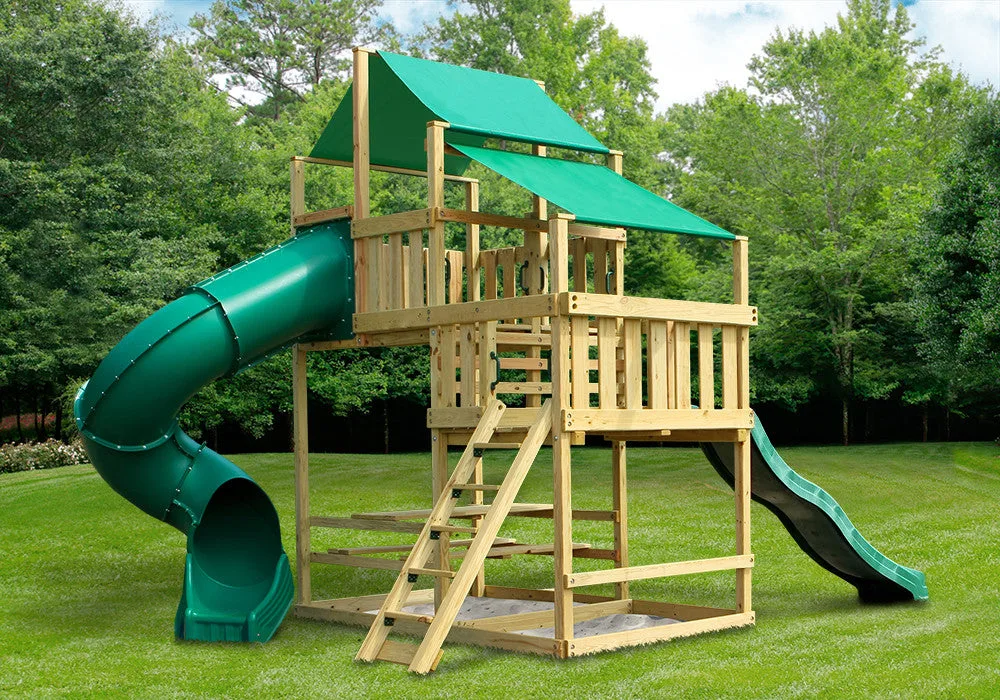
Some playsets, like the Free Standing Swing Set - Hardware-Only Kit, provide the brackets and hardware but leave lumber and swings to you. These kits often include specific anchoring recommendations. The kit's patented 7-gauge steel brackets and commercial-grade swing hangers are designed for strength, but they still need a solid foundation. Ground stakes or concrete anchors can both work, but the kit's open design may make concrete anchoring more straightforward for a permanent installation.
Similarly, the Frontier DIY Swing Set - Hardware-Only Kit includes a two-piece swingbeam bracketing system and supports two levels. Its size and weight might call for concrete in windy areas, while stakes could suffice in a sheltered yard with firm soil. Always check the kit's instructions for anchoring guidance.
Trade-offs: Ground Stakes vs Concrete Anchors
- Installation effort: Ground stakes: drive into soil with a mallet or auger; no mixing or curing. Concrete: dig holes, mix and pour concrete, wait for cure (often 24-48 hours). Choose stakes for a weekend DIY; choose concrete if you don't mind the prep for long-term stability.
- Holding power: Stakes rely on soil friction; performance varies with soil type and moisture. Concrete creates a monolithic anchor that resists uplift and lateral forces exceptionally well. In loose or sandy soil, concrete is the safer bet. In firm soil, stakes can be adequate.
- Permanence and flexibility: Stakes can be removed and relocated with minimal trace. Concrete is permanent; moving the set requires breaking up concrete and repairing the ground. If you might move or rearrange your playset, stakes offer flexibility. For a forever home, concrete is a solid choice.
- Maintenance: Stakes may loosen over time, especially after freeze-thaw or heavy rain; periodic checks and re-driving are needed. Concrete anchors generally require little to no maintenance once cured. Stakes demand seasonal attention; concrete is set-and-forget.
- Cost: Stakes are inexpensive and widely available. Concrete involves buying bags of mix (or hiring a pro) and possibly renting a mixer, raising the cost. Budget-conscious shoppers may prefer stakes, but factor in long-term safety and potential replacement costs.
Product facts that matter for anchoring
- Free Standing Swing Set - Hardware-Only Kit: Kit does NOT include lumber or swings; incorporates two patented 7-gauge steel brackets and six commercial-grade swing hangers; only zinc-plated hardware is used. The heavy-duty brackets and hangers are built to handle strong forces, but without lumber or swings, you control the total weight and anchoring needs. A sturdy foundation is critical to match the hardware's strength.
- Frontier DIY Swing Set - Hardware-Only Kit: Features two levels (5 ft and 7 ft), lower deck 4 ft x 6 ft, upper deck 6 ft x 6 ft with 7 ft head clearance; patented two-piece swingbeam bracketing system made from 7-gauge high-tensile steel. The large, two-level structure can catch more wind and generate greater leverage. In exposed locations, concrete anchoring may provide the extra stability this design benefits from.
Which anchoring method fits your situation?
Ground stakes are best for
- Homeowners with firm, well-drained soil who want a quick, low-cost DIY install.
- Renters or families who may need to move or remove the swing set later.
- Lighter playsets or those in sheltered yards with low wind exposure.
Concrete anchors are best for
- Sandy, loose, or expansive clay soils where stakes may not hold.
- High-wind areas or regions with deep frost lines that can heave stakes.
- Heavy, multi-level playsets like the Frontier DIY Swing Set - Hardware-Only Kit when maximum stability is desired.
There's no one-size-fits-all answer for swing set anchoring. Ground stakes offer speed and flexibility, while concrete anchors deliver unmatched holding power and low maintenance. Evaluate your soil, climate, and playset, and when in doubt, consult the manufacturer's guidelines or a professional installer. Whichever you choose, a properly anchored set is the foundation for safe, worry-free play.