Quick answer
Choose a rose quartz gua sha if you want a broad, sculpting stroke that works along the jaw, cheekbones and brow with one angled edge. Choose a facial acupressure tool if your main concern is releasing facial tension and tight spots rather than sculpting. Many people keep both: gua sha for a slower sculpting routine, acupressure for quick tension release.
How the two tools physically differ
A gua sha tool is a flat, hand-carved stone with specific angles and thickness designed to adapt to the contours of the face. You glide it across the skin in longer strokes, which is why it is often grouped with sculpting beauty tools. A facial acupressure tool is smaller and pointed or rounded at the tip, made to press into specific spots rather than sweep across the face. The motion is the giveaway: gua sha is a stroke, acupressure is a press. That single difference decides which tool suits your routine.
What each tool is actually good at
Gua sha is the better pick when you want a full-face pass that feels like sculpting: jawline, cheekbones, brow and neck in one continuous flow. Facial acupressure is the better pick when you can feel tension sitting in one area, like a clenched jaw or a furrowed brow, and you want to work that spot directly. If you are building a routine around lymphatic drainage tools, gua sha fits naturally into a stroke-based sequence, while acupressure works more like a targeted reset between steps.
The trade-off you are actually choosing
Gua sha asks for more time and a little technique: you need a comfortable angle, light pressure and a slip layer so the stone does not drag. Acupressure asks for precision instead of time: you need to find the right spot and hold, which is harder to learn from a video than a simple stroke. Neither tool replaces the other, and neither is a substitute for a serum or moisturizer that gives your skin slip. If you only want one tool, pick based on whether you prefer sweeping motion or targeted pressure.
How to build a routine with either tool
Start on clean skin with a light layer of serum or facial oil so the tool glides. With gua sha, work from the center of the face outward and downward toward the neck, keeping pressure gentle and strokes slow. With acupressure, press and hold each point for a few seconds rather than rubbing. Either way, keep sessions short and stop if the skin feels irritated. A radiance serum such as Clair de Lune can double as your slip layer, since it is formulated with Vitamins A, C, and E and comes in a 5ml size that is easy to keep at the mirror.
Trade-offs at a glance
- Motion: Gua sha uses broad, gliding strokes; facial acupressure uses a stationary press on specific points. Pick strokes for sculpting, presses for tension.
- Learning curve: Gua sha is easier to copy from a demonstration, while acupressure depends on locating the right point. Beginners often find gua sha more forgiving.
- Time and pressure: Gua sha rewards a slower, full-face pass; acupressure can be done in short targeted bursts. Match the tool to the time you actually have.
Products in this comparison
- Crystal Contour • Rose Quartz • Gua Sha: Hand-carved with specific angles and thickness to adapt to the morphology of the face and provide effective, easy gua sha massage, inspired by traditional Chinese medicine. The angled edges are what let you follow the jaw, cheek and brow without constantly repositioning the stone.
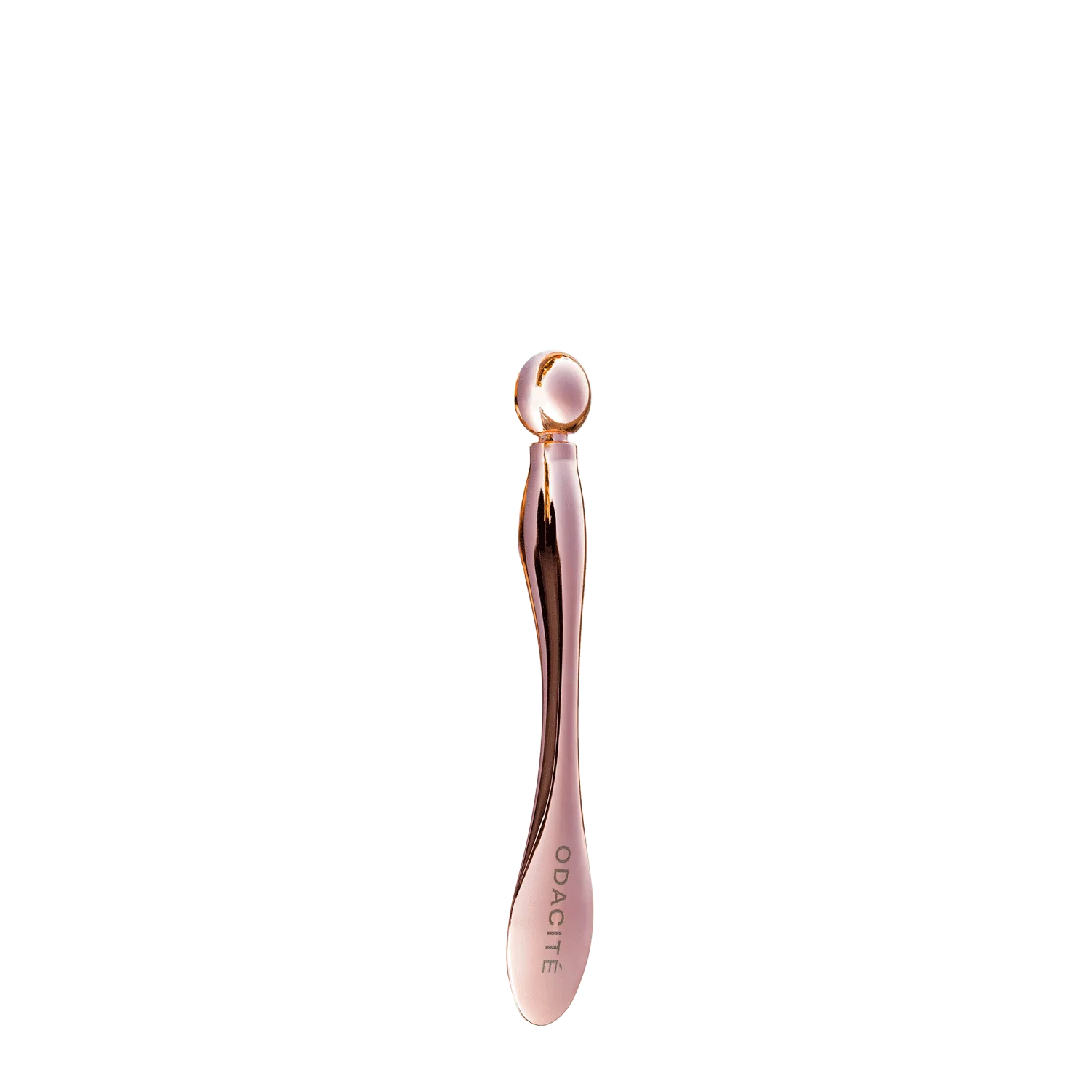
- Mon Ami • Facial Acupressure • Beauty Tool: Designed to promote facial muscle relaxation and melt away facial tensions using the Acupressure Point Technique, with roots in Chinese medicine. This is the tool to reach for when tension, squinting or repeated facial contractions are your main concern rather than sculpting.
- Clair de Lune • Radiance Serum: A radiance-boosting serum with Vitamins A, C, and E, available in a 5ml size. A serum gives the slip that makes either tool comfortable to use, so it belongs in the same routine.
Which tool should you buy?
Best for
- Anyone who wants a sculpting, stroke-based face massage routine
- People already using lymphatic drainage tools who want one continuous flow
- Those who prefer a tool that is easy to learn from a short demo
Not for
- Anyone whose main goal is releasing one specific tight spot rather than sculpting
- People who want a tool they can use in seconds with no slip product
- Shoppers looking for a single tool to replace a serum or moisturizer