Quick answer
Tighten half-rim glasses only after the lenses are seated and the frame is clean. Use a precision screwdriver that fits the hinge screw exactly, turn clockwise just until resistance is felt, and stop before the rim flexes. If a lens rattles or the frame still feels loose, treat it as a fit or lens-seating problem, not a screw problem.
What makes half-rim frames different to tighten
Half-rim glasses hold the lens with a nylon cord along the bottom and a metal or plastic browline across the top. The screws you can see usually sit at the hinge, not at the lens. Tightening those hinge screws will not fix a lens that moves inside the rim. If the lens shifts, the cord or the top mount needs attention, and forcing the hinge screw tighter can strip the thread or crack the lens edge.
Metal half rim glasses maintenance starts with knowing which part is loose. A hinge that lets the temple swing too freely is a screw issue. A lens that clicks or rotates slightly is a seating issue. A frame that slides down your nose is usually a fit issue. Each has a different fix, and mixing them up is the most common way people damage half-rim glasses.
Tools that fit half-rim hardware
You need a small Phillips or flathead screwdriver sized to the hinge screw, a microfiber cloth, and good light. A screwdriver that is too wide will chew the screw head; one that is too narrow will slip and scratch the frame. If you wear half-rim glasses with a rimless or browline design, the hinge screw is often the only user-serviceable fastener. Do not use household oil or generic lubricant on the hinge, because it can attract grit and make the screw back out again.
Work over a table covered with a light-colored cloth. Hinge screws are tiny and easy to lose. If a screw is already missing, do not substitute a random screw from a drawer. Order a replacement screw kit for eyewear, or have an optician fit one. A wrong-thread screw can cross-thread the hinge and turn a simple fix into a frame replacement.
How to check lens seating before you tighten anything
Hold the frame by the top browline and look along the lens edge. The lens should sit flush against the top mount with no gap. Gently press the lens into the rim with your thumb through the microfiber cloth. If it moves, the nylon cord may be stretched or the top mount may be bent. Tightening the hinge screw will not help here, and over-tightening can put pressure on the lens edge.
If the lens is loose and you cannot reseat it by hand, stop. Half rim lens replacement or cord replacement is best done by an optician who can heat and reshape the rim without cracking the lens. This is especially important on rimless and half-rim glasses where the lens itself carries much of the frame's structural load.
Step-by-step half-rim tightening and lens safety
- Clean the frame and hinge area: Wipe the frame with a microfiber cloth and remove any grit from around the hinge screw. Dirt in the hinge makes the screw feel tight when it is not, and it wears the thread. Checkpoint: the screw head should be visible and free of debris before you insert the screwdriver.
- Seat the lens before touching the screw: Press the lens gently into the top mount with your thumb through a cloth. If it clicks into place, the frame may no longer feel loose. If it will not seat, do not tighten the hinge screw to compensate. Checkpoint: a seated lens sits flush with no gap along the top edge.
- Tighten the hinge screw clockwise in small turns: Use a screwdriver that fills the screw slot. Turn clockwise in quarter turns and test the temple swing after each one. Stop as soon as you feel resistance. Checkpoint: the temple should move smoothly but not flop. If the screw stops turning, stop turning it.
- Check the other hinge and the bridge screws: Half-rim glasses often have a screw on each hinge and sometimes a bridge screw. Tighten each one the same way, but do not assume every screw needs turning. Some are already at the correct tension. Checkpoint: both temples should fold with similar resistance.
- Adjust temple bend only if the frame still slides: If the screws are snug but the glasses still slip, the temple bend or nose pads need adjustment. Do not keep tightening screws to fix a fit problem. Checkpoint: the frame should stay in place during a slow nod without pressing hard behind the ears.
- Know when to stop and see an optician: If a screw will not tighten, if the lens rattles after seating, or if the frame feels cracked near the hinge, stop. Half rim lens replacement and cord replacement need proper tools and heat. Checkpoint: a stripped screw or a cracked rim is a professional repair, not a home fix.
Product facts that affect tightening and care
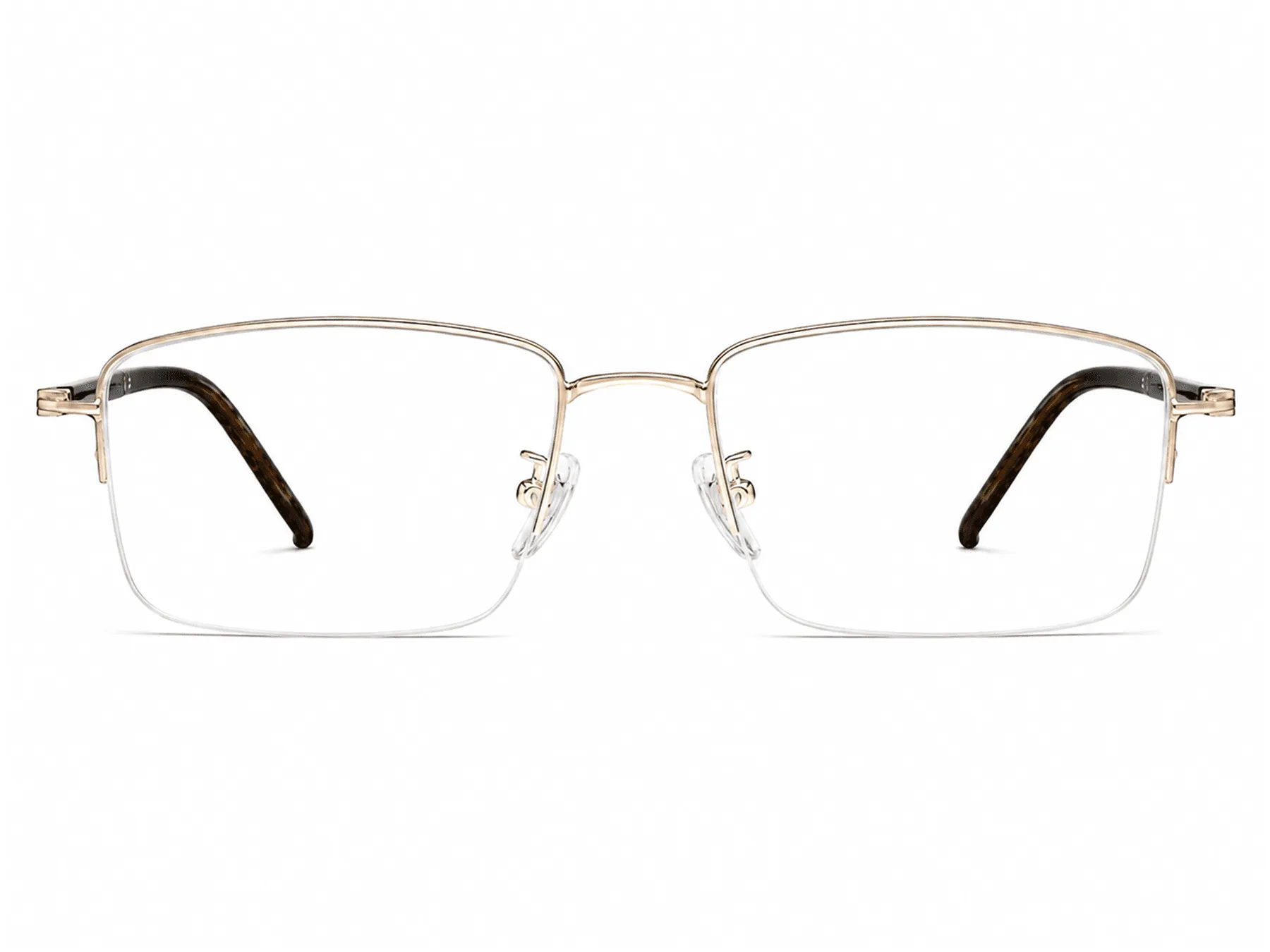
- Sophie Rectangle Metal Half-rim Glasses: Rectangle metal half-rim frame, 13 grams, medium fit, 56 mm lens width, 150 mm frame width. A lighter metal half-rim like this responds well to small screw adjustments, but the wider 150 mm frame means the hinge screws carry more leverage, so check them before the frame starts to slide.
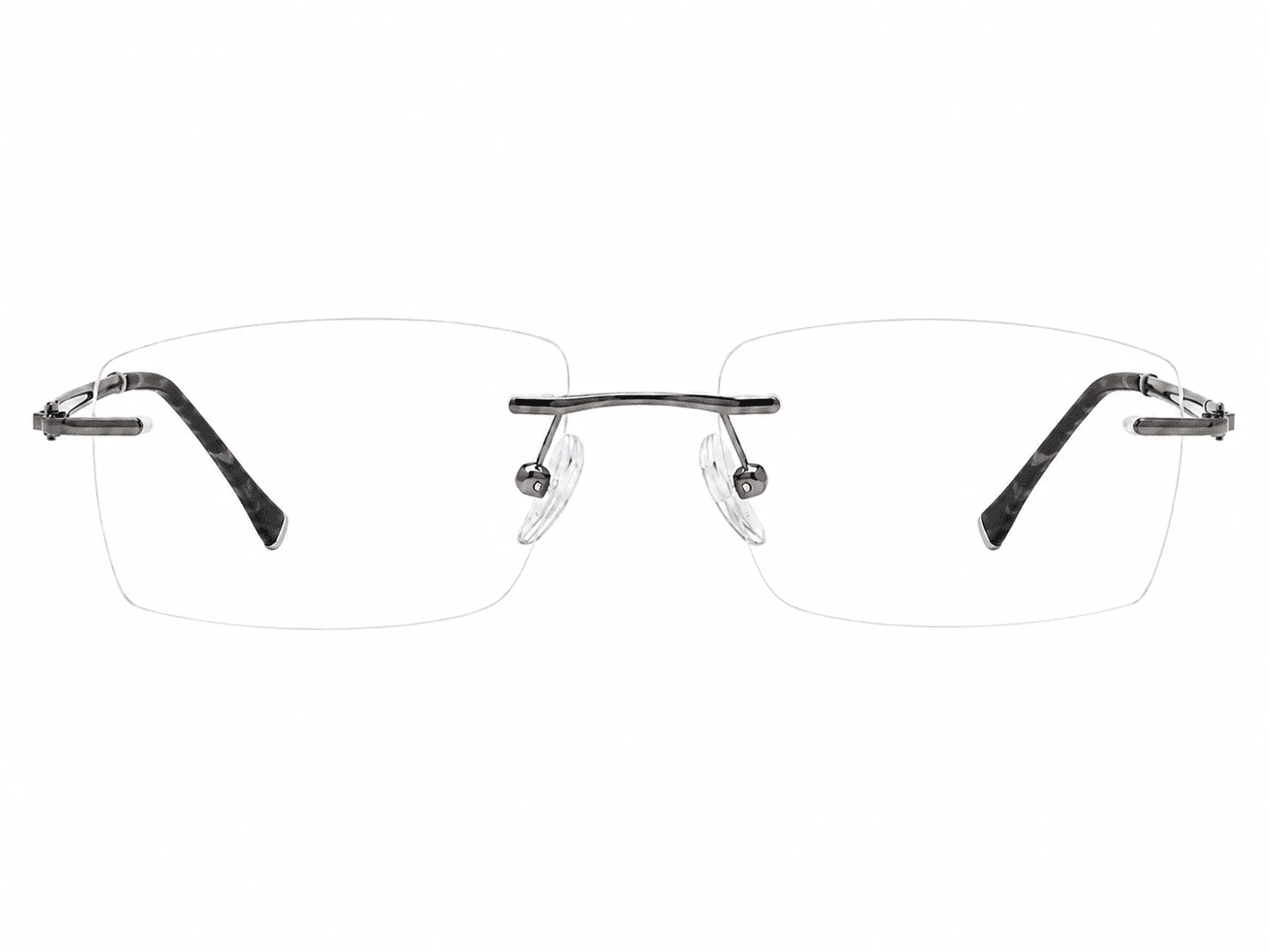
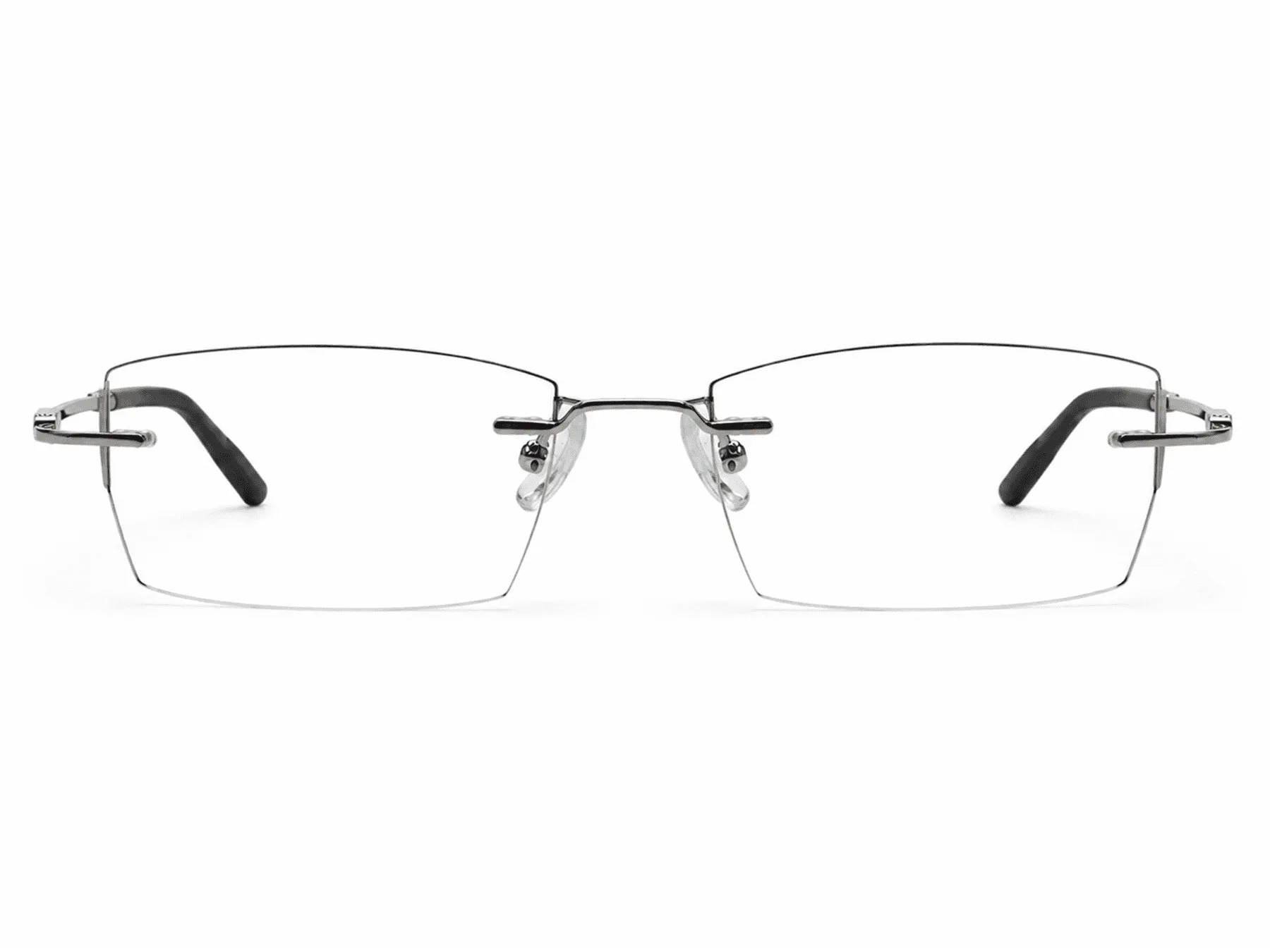
- Demetrius Rectangle Rimless Glasses: Rectangle rimless browline frame, 15 grams, medium fit, 54 mm lens width, 141 mm frame width, single vision and progressive compatible. Rimless and browline designs have less rim material to hide a loose lens, so seating and screw tension matter more. The progressive option also means the lens is thicker at the edge, so avoid forcing the mount.
- Alex Rectangle Rimless Glasses: Rectangle rimless frame, 13 grams, medium fit, 54 mm lens width, 140 mm frame width, 135 mm temple length. The shorter 135 mm temple length can make the frame feel tight behind the ears even when the hinge screws are correct. Adjust temple bend before tightening screws further.