Quick answer
Hand sewing needle sizes work on a counterintuitive scale: the higher the number, the finer and shorter the needle. For everyday hand sewing on medium-weight woven cotton, start with a size 7 or 8 sharp. Move to a larger number (10 to 12) for fine fabrics like silk or batiste, and a smaller number (1 to 5) for denim, canvas, and other heavy wovens.
If you have ever stood in a sewing aisle staring at a wall of tiny packets, you already know the frustration: the numbers on hand sewing needle sizes seem to run in the wrong direction. A size 12 is delicate and thin, while a size 1 is chunky and sturdy. That single quirk trips up more beginners than almost anything else in hand sewing.
This guide answers the questions that come up most often, from what size needle for hand sewing basic seams to how needle sizes differ for embroidery, knits, and heavy fabrics. Once you understand the numbering logic and match it to your fabric, choosing a needle becomes a two-second decision instead of a guessing game.
What do the numbers on hand sewing needle sizes actually mean?
The number refers to the needle's diameter and length together, and the scale runs opposite to what most people expect. A size 1 needle is thick and long; a size 12 is thin and short. So when a pattern or tutorial says to use a smaller needle, it usually means a higher number, not a physically smaller one.
Manufacturers group needles into types as well as sizes. Sharps are the general-purpose hand sewing needle most people keep in a basic kit. Between sizes, the practical difference is small, so you rarely need every number. Owning a range from about 3 to 10 covers the vast majority of hand sewing tasks.
- Higher number equals finer needle; lower number equals heavier needle.
- When in doubt, pick the middle of your range rather than the extreme.
What size needle should I use for hand sewing cotton and other medium wovens?
For quilting cotton, poplin, linen blends, and similar medium-weight wovens, a size 7 or 8 sharp is the sweet spot. It is sturdy enough to push through the fabric without bending and fine enough that the hole it leaves closes up after stitching. If your stitches look puckered, the needle is likely too thick for the weave.
A useful test is to push the needle through a scrap of your actual fabric before you start the project. If it takes real effort or you hear a ripping sound, go up a number. If it slides through with no resistance and the fabric feels loose around it, go down a number.
- Keep a size 7 and size 8 sharp threaded and ready for everyday mending.
- Test on a scrap of the same fabric, not a different one.
Which needle size works for denim, canvas, and heavy fabrics?
Heavy wovens need a lower number, typically size 1 to 5 sharps, because the needle has to resist bending as it passes through dense fibers. A fine needle in denim will flex, snap, or leave a permanent hole. If you are repairing a jeans hem or sewing a canvas tote, reach for the thickest needle in your kit.
Thicker needles do leave more visible holes, so they are a poor choice for lightweight fabric even when the fabric is tough. Match the needle to the fabric weight, not to how much force you think you need. If the fabric is heavy but loosely woven, a mid-range needle often works better than the heaviest one you own.
- Use a thimble with heavy fabrics to protect your fingertip.
- If the needle bends on the first stitch, stop and go heavier.
Do I need different needles for knits and stretch fabrics?
Hand sewing knits is less common than machine sewing them, but when you do it, a ballpoint or stretch needle matters more than the exact size. These needles have a rounded tip that slips between the loops of the knit instead of piercing and splitting them. A sharp needle in a knit can create a run that grows with wear.
For machine sewing stretch fabrics, the same logic applies to the needle you load into the machine. Prym's Stretch Sewing Machine Needles, 5 PC are made for elastic and knit materials and are available in multiple sizes, so you can match the needle to the fabric weight rather than forcing one size to do everything.
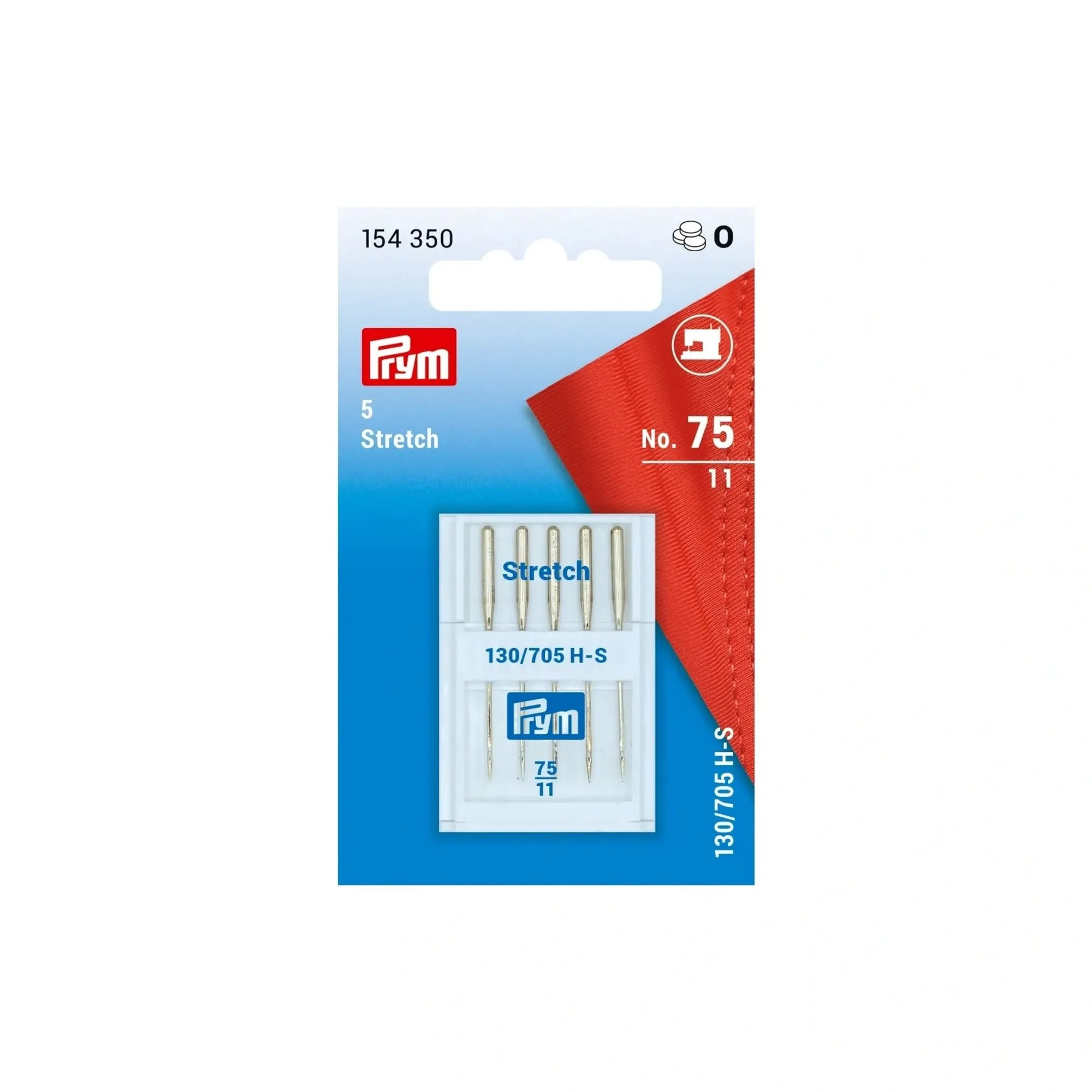
Stretch Sewing Machine Needles, 5 PC
- Rounded tips for knits; sharp points for wovens.
- Replace a bent or dull needle before it snags the fabric.
How do embroidery and specialty needles fit into the size chart?
Embroidery needles are a separate type, not just a different size. They have a longer eye that accommodates multiple strands of floss, and they are sized on their own scale. Crewel needles, for example, are sharp with a long eye and come in sizes suited to different thread counts and fabric weights. Using a standard sharp for embroidery usually means fighting the eye instead of stitching.
Specialty needles also exist for beading, tapestry work, and leather. If a project calls for one of these, the size number alone will not tell you whether the needle is right. The type name is the more important signal, and the size refines it for your specific thread and fabric.
- Long-eye needles for floss; standard sharps for thread.
- Check the needle type before the number when a pattern specifies one.
How do I organize needles so I can find the right size fast?
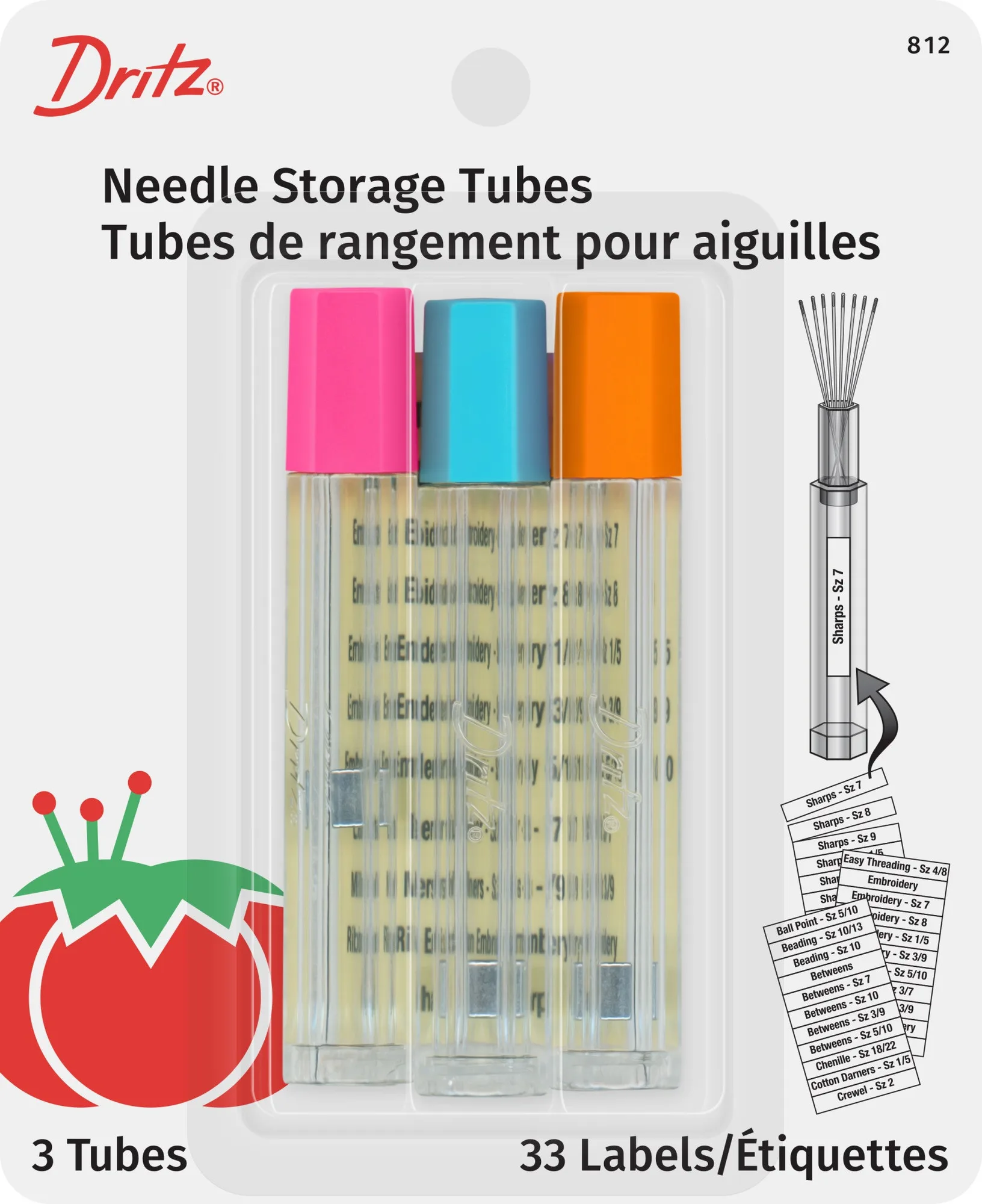
Most needle packets are not resealable, so loose needles end up mixed in a pincushion where sizes are impossible to tell apart by eye. Sorting them into labeled storage solves the problem permanently and saves you from squinting at tiny stamped numbers. Dritz https://prymamerica.com/products/812-2f35946f2a3b72cce71b534e-1316208Needle Storage Tubes, Assorted, 3 pc are magnetized, so needles fan out at the top for easy selection, and the set includes 33 clear labels for all types and sizes.
Label by type and size, not just type. Writing 'sharp 8' is more useful than writing 'sharp' because the size is the part you will forget. If you keep several projects going at once, dedicate one tube to each project's needles so you are not re-sorting every time you sit down.
- Label both the needle type and the size number.
- One tube per active project prevents mix-ups.
Needle size quick answers
What size needle for hand sewing cotton?
Use a size 7 or 8 sharp for quilting cotton, poplin, and similar medium-weight wovens. Test on a scrap first; if the fabric puckers, go up a number. Start at 7 or 8 and adjust from there.
Why is a size 12 needle thinner than a size 1?
The numbering scale runs opposite to diameter: higher numbers mean finer, shorter needles. This is standard across hand sewing needle sizes. Remember: bigger number, finer needle.
What size needle for denim or canvas?
Choose a size 1 to 5 sharp. A fine needle will bend or snap in dense fabric and can leave permanent holes. Heavy fabric, low number.
Can I use one needle size for everything?
A mid-range sharp like a size 7 or 8 handles most everyday hand sewing, but knits need a rounded ballpoint or stretch needle, and embroidery needs a long-eye type. One size covers most, not all, projects.
How do I keep needle sizes from getting mixed up?
Store needles in labeled tubes by type and size. Dritz Needle Storage Tubes include 33 clear labels and a magnetized design that fans needles out for selection. Label type and size together.
Tools that make needle sizing easier
- Needle Storage Tubes, Assorted, 3 pc: Dritz needle storage tubes with labels are a handy accessory for identifying and storing hand needles for sewing and quilting; the magnetized tube easily dispenses needles for use, and the set includes 33 clear labels for all types and sizes. Once needles leave their original packet, the size number is nearly impossible to read. Labeled tubes keep sizes separated so you grab the right needle on the first try.
- Stretch Sewing Machine Needles, 5 PC: Prym Stretch Sewing Machine Needles are available in multiple sizes and are designed for stretch and knit fabrics. If your project moves between hand and machine work on knits, having the right machine needle size on hand keeps the fabric from developing runs.
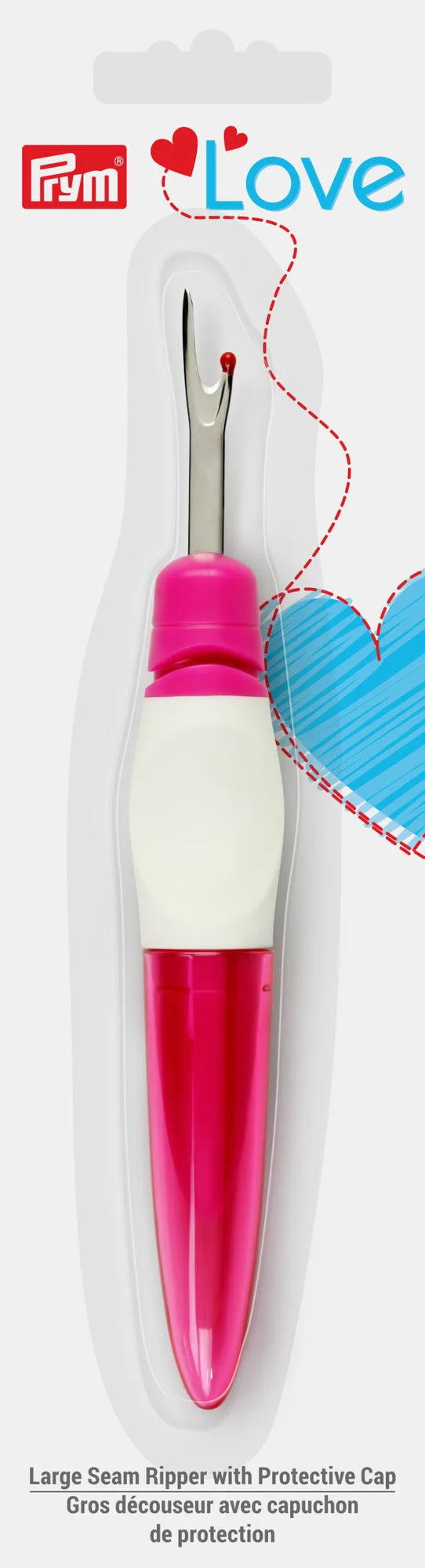
- https://prymamerica.com/products/60126-3101ab54b08ea2b46b87d05c-1315912Large Seam Ripper with Protective Cap, Pink: The Prym Love Seam Ripper has a protective cap that lengthens the handle for use and protects the blade during storage, with a soft contoured grip and a red safety ball that protects fabric as stitches are removed. When you test a needle size and the stitches pucker, you will need to undo them. A ripper with a safety ball protects the fabric you just sewed.
Needle sizing stops being confusing once you internalize the backward scale: higher numbers for fine fabrics, lower numbers for heavy ones, and a different needle type entirely for knits and embroidery. Keep a small range on hand, label them clearly, and test on a scrap before you commit. Your stitches will look cleaner, and your fingertips will thank you.