Quick answer
For most adults and children, soft bristles are the right choice. They remove plaque effectively when you brush for two minutes, twice a day, without scraping enamel or irritating gums. Choose extra soft bristles if your gums bleed easily, you've been told you brush too hard, or you're brushing a child's teeth. Hard bristles are rarely necessary and can do more harm than good.
Why bristle firmness matters more than you think
Bristle firmness affects how much pressure reaches your gums and enamel. Firm bristles don't clean better; they simply transfer more force. Over time, that force can wear down enamel at the gumline and cause gums to recede. Soft bristles flex against the tooth surface, reaching slightly under the gumline where plaque starts, while staying gentle enough for daily use. The goal isn't to scrub harder—it's to brush thoroughly with the right motion.
How to match bristles to your gums and habits
If your gums bleed when you brush or you've noticed they look lower than they used to, switch to extra soft bristles and use lighter pressure. If you wear braces, have sensitive teeth, or take blood thinners, extra soft is also a safer default. Adults with healthy gums and good brushing technique can use soft bristles for a thorough clean. Medium or hard bristles are best reserved for specific situations your dentist has identified—not as a general upgrade.
What to look for beyond firmness
Bristle material, head size, and handle design all affect how well a brush works for you. Multi-height or angled bristles can reach between teeth and along the gumline more effectively than a flat trim. A compact head makes it easier to reach back molars without bumping your cheek. If you share a bathroom, a two-pack can be a practical way to keep a fresh brush on hand. And regardless of firmness, replace your toothbrush every three months—or sooner if bristles look frayed.
Decision rules: choosing your bristle firmness
- If your gums bleed or you brush hard: Choose extra soft bristles and focus on gentle, circular motions. Bleeding often signals too much pressure, not a need for firmer bristles. Extra soft is the safer default for sensitive gums.
- If you have healthy gums and good technique: Soft bristles give you a thorough clean without risking enamel wear. Look for multi-height or angled bristles to reach between teeth. Soft bristles work for most adults.
- If you're brushing a child's teeth: Use a toothbrush labeled extra soft and sized for their age. Adult firmness can damage young enamel and irritate gums. Match the brush to the child's age and stage.
- If you're considering medium or hard bristles: Only use them if your dentist specifically recommends it for a short-term need, such as removing heavy staining. Otherwise, they're not a better clean. Firmer isn't cleaner—it's just more abrasive.
Products that fit different bristle needs
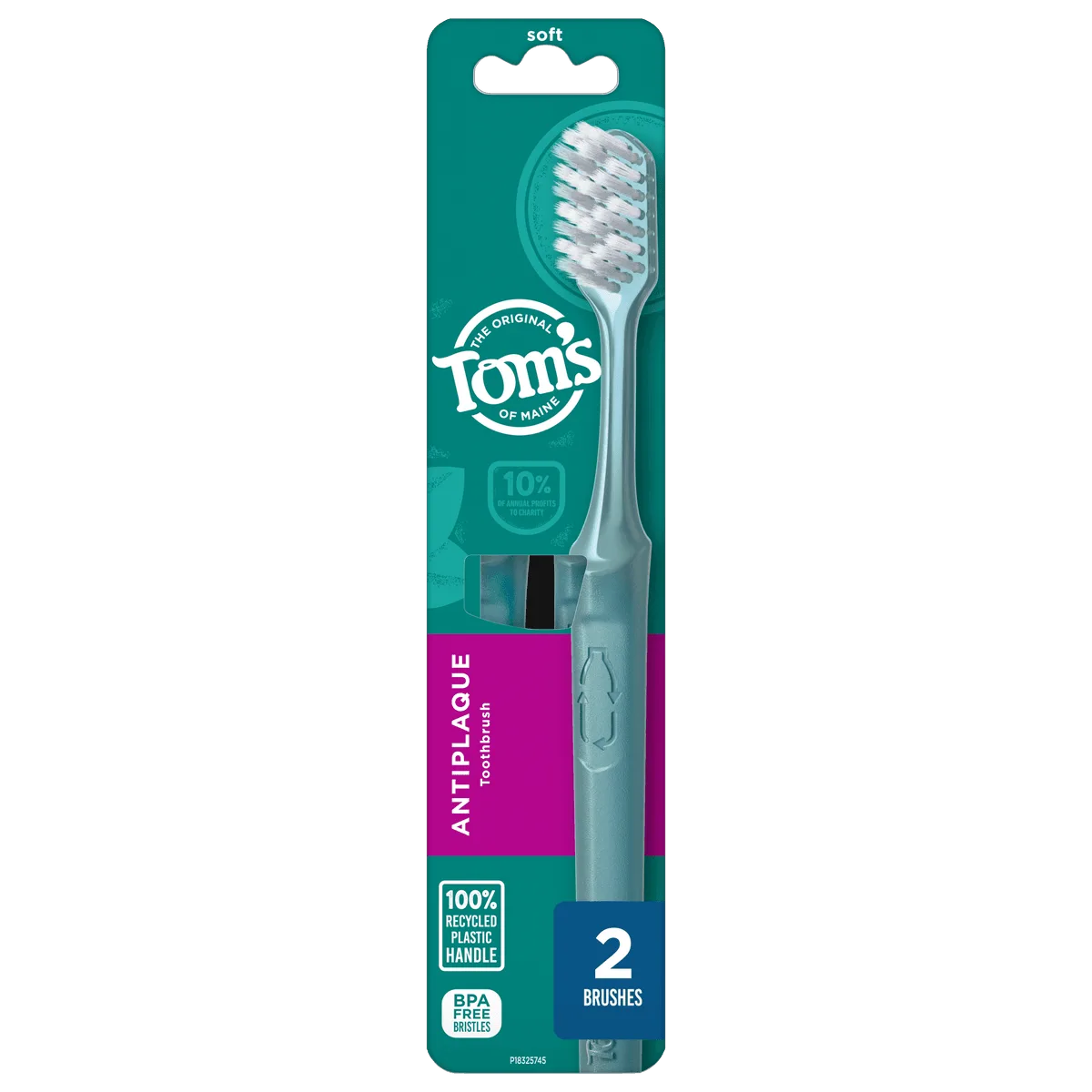
- Antiplaque Adult Soft Toothbrush, 2 Pack: Antiplaque Adult Soft Toothbrush, 2 Pack features multi-height, plant-based BPA-free bristles with a raised power tip and compact head. The soft bristles and compact head make it a strong everyday choice for adults who want a deep clean without harsh scrubbing.
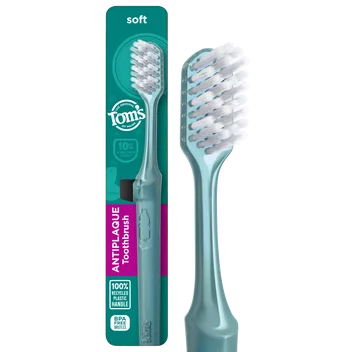
Antiplaque Adult Soft Toothbrush
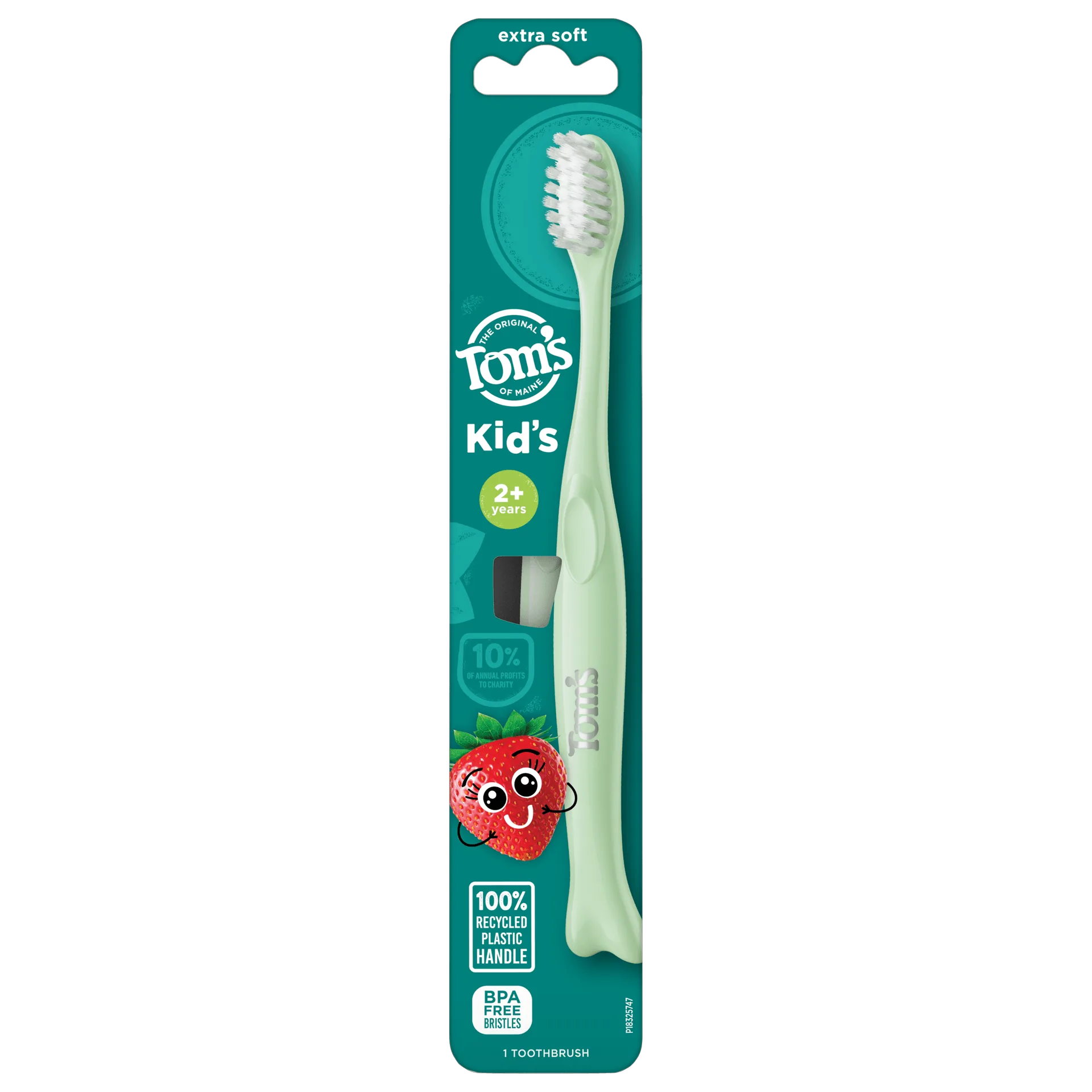
- Extra Soft Kid's Toothbrush: Extra Soft Kid's Toothbrush is designed for kids ages 2 and up with extra soft bristles and a handle made from 100% recycled plastic (over 95% recovered from PET bottles). Extra soft bristles protect young gums, and the recycled handle adds an environmental benefit for families who care about sustainability.
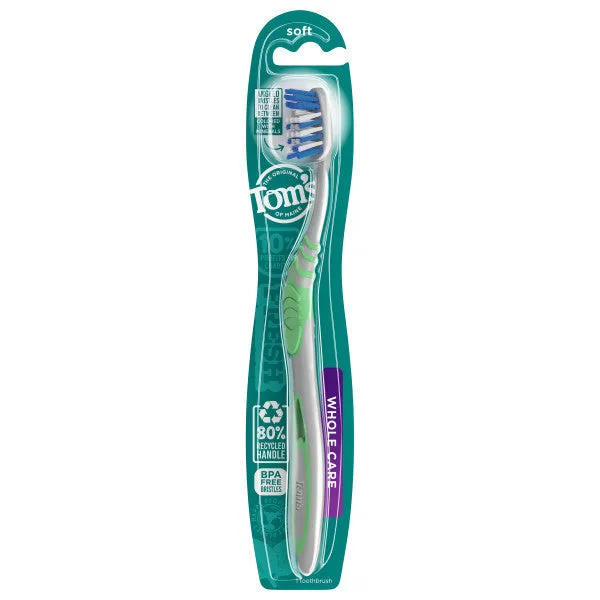
- Adult Manual Whole Care® Toothbrush: Adult Manual Whole Care® Toothbrush is a standard manual toothbrush for daily use. A straightforward option if you prefer a simple, reliable brush without extra features.
Who should choose which bristle type
Best for
- Adults with healthy gums who want an effective daily clean
- People with sensitive gums, receding gums, or a history of brushing too hard
- Children ages 2 and up who need a gentle brush for baby and adult teeth
Not for
- Anyone looking to scrub away plaque with force—soft bristles clean just as well with proper technique
- People who never replace their brush; firmness won't help if bristles are frayed
- Those who prefer medium or hard bristles without a dentist's recommendation