Quick Answer
To choose the right hazel contact lenses, match the lens shade to your natural eye color and skin tone, and decide between a subtle enhancement or a more dramatic change. For a soft, natural radiance, consider lenses like Unibling Pudding Caramel.
Why Hazel Lenses Flatter Most Eye Colors
Hazel lenses blend brown, green, and gold tones, making them versatile for many natural eye colors. If you have light brown or amber eyes, hazel lenses can add depth and warmth without looking unnatural. For blue or grey eyes, a hazel lens can introduce a unique two-tone effect that catches light.
The key is to choose a shade that complements your skin tone. Warm skin tones pair well with golden or caramel hazel shades, while cooler skin tones might prefer a greener hazel. Consider your usual makeup palette too—neutral and earthy tones work with most hazel lenses.
Understanding Hazel Lens Finishes
Hazel contacts come in different finishes: some have a simple single color, while others feature a limbal ring for definition or a multi-tone pattern for a more natural blend. A two-tone lens, like Unibling Pudding Caramel, uses multiple colors to mimic the natural complexity of hazel eyes.
If you want a subtle change, opt for a lens with a translucent pattern that lets your natural eye color show through. For a more noticeable transformation, choose a lens with a solid or opaque center. Think about whether you want your lenses to be a daily staple or for special occasions.
Decision Rules for Choosing Hazel Lenses
- Match to your natural eye color: If you have light brown or amber eyes, choose a hazel lens with golden or caramel tones for a subtle enhancement. For blue or grey eyes, pick a hazel lens with more green or gold to create contrast. Hold the lens next to your eye in natural light to see how it blends.
- Consider your skin tone: Warm skin tones (yellow or peach undertones) look best with caramel or golden hazel shades. Cool skin tones (pink or blue undertones) can pull off greener hazel lenses. If unsure, go with a neutral hazel that has both gold and green flecks.
- Decide on the finish: For a natural look, choose a two-tone lens with a translucent pattern. For a more dramatic effect, select a lens with a solid color and a darker limbal ring. Read reviews or look at photos of the lens on different eye colors before buying.
Product Spotlight
-
Unibling Pudding Caramel (1-Month): Unibling Pudding Caramel lenses have a two-tone design that creates a soft, natural hazel radiance with warm amber highlights. This makes them ideal for subtly enhancing your natural eye color without looking artificial.
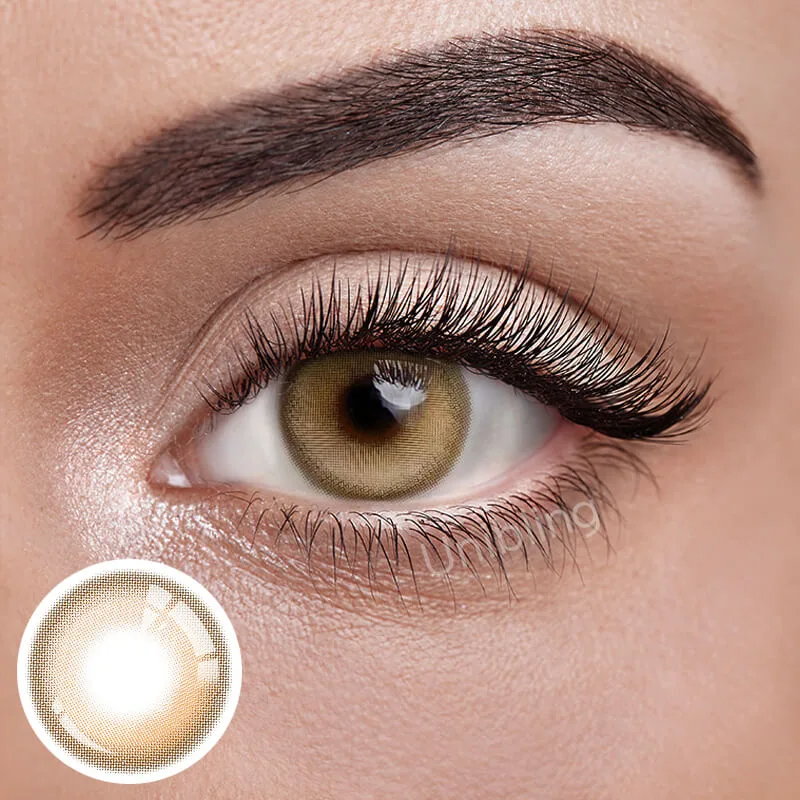
Unibling Pudding Caramel (1-Month)
Who Should Choose Hazel Lenses?
Best for
- People with light brown or amber eyes who want a subtle, natural enhancement
- Those looking for a versatile lens color that works with neutral or earthy makeup
Not for
- People seeking a dramatic color change (consider more opaque or vibrant shades)
- Those with very dark brown eyes who want a noticeable hazel effect without a bold lens