Quick Answer
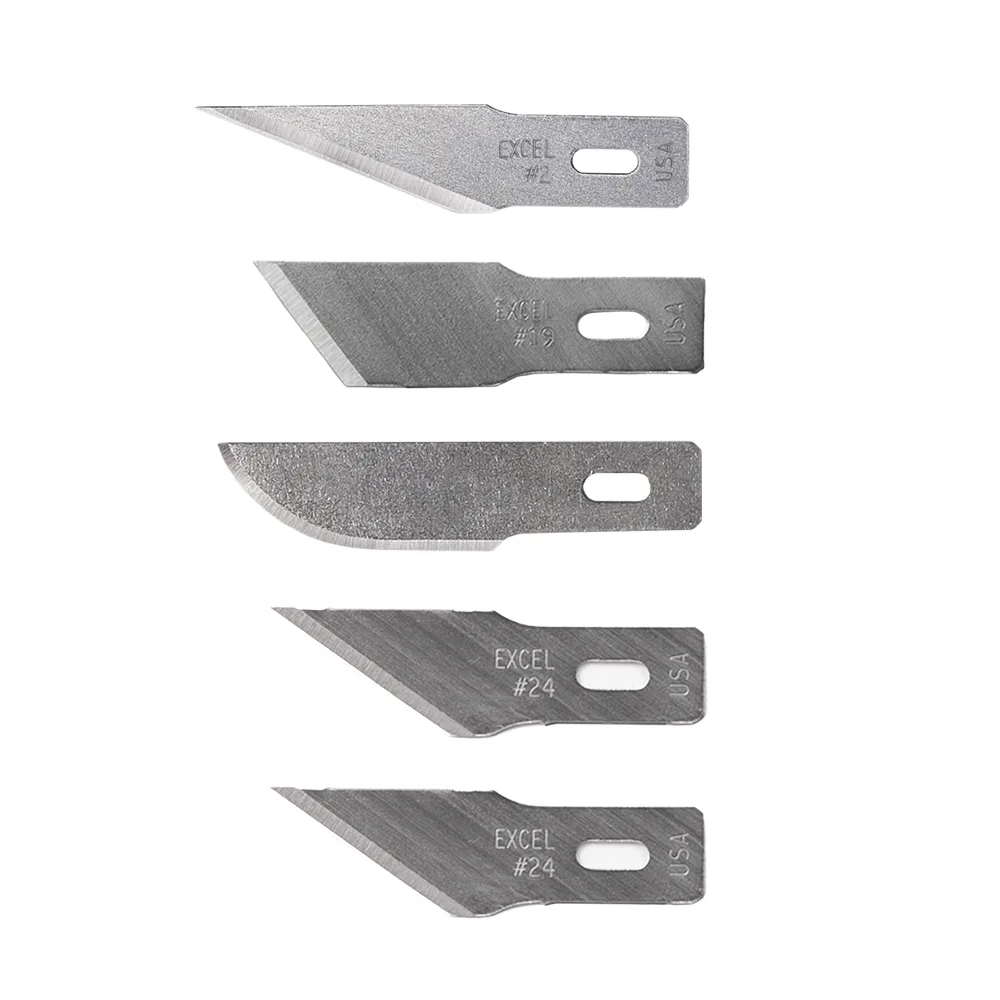
For cutting thick materials like leather, cardboard, and plastic, choose a heavy duty craft blade with a sturdy edge and a comfortable handle. The Excel Blades Heavy Duty Craft Blades set is a reliable option, but knowing when to switch to a different tool is just as important.
Why Thick Materials Need a Different Blade
Standard craft blades are designed for thin, flexible materials like paper and film. When you try to cut thicker or tougher materials, the blade can flex, dull quickly, or even snap, leading to frustration and unsafe cutting angles.
Heavy duty blades are thicker and have a more robust edge geometry, which provides the stiffness and durability needed to push through dense materials without bending. This reduces the risk of slips and makes the cut cleaner and more controlled.
Trade-Offs to Keep in Mind
Heavy duty blades are not a one-size-fits-all solution. Their thicker profile means they are less precise for fine detail work, and they can be overkill for delicate materials like tissue paper. Also, the handle you pair with the blade matters: a heavy duty blade in a lightweight handle may still feel unstable.
For very thick or rigid materials, such as thick wood or metal, a craft blade—even a heavy duty one—may not be the right choice. In those cases, consider a saw, rotary cutter, or specialized tool designed for that material.
Diagnosis: Is Your Blade the Problem?
- Symptom: Your blade bends, chips, or produces ragged edges when cutting thick materials like cardboard, leather, or plastic.
- Likely Cause: You're using a standard craft blade that isn't thick or sturdy enough for the material's density.
- Corrective Action: Switch to a heavy duty craft blade, such as the Excel Blades Heavy Duty Craft Blades set, and pair it with a comfortable, secure handle. Test on a scrap piece to confirm the cut is clean and controlled. If the blade still struggles or you feel unsafe, stop and consider a different tool.
- Stop or Choose Another Option: If the material is thicker than 1/4 inch or is very hard (like wood or metal), a craft blade is not the right tool. Use a saw, rotary cutter, or other specialized equipment instead. Always prioritize safety: replace dull blades immediately and use a cutting mat to protect your work surface.
Product Facts
-
Heavy Duty Craft Blades: This set includes 5 assorted heavy-duty blades: 1 straight edge (#2), 1 sharp edge angled (#19), 1 curved edge (#22), and 2 deburring blades (#24). The variety lets you match the blade shape to the task, such as using the curved edge for cutting leather or the deburring blade for cleaning up plastic edges.
Heavy Duty Craft Blades