Quick answer
If your skin feels tight, looks red, or breaks out more than usual, your skin barrier may be struggling. Switching to a lighter, breathable foundation for a few weeks can help it recover.
Why heavy makeup stresses the barrier
Thick, full-coverage foundations often sit on the skin for 10+ hours, trapping heat, sweat, and bacteria. Over time, this can disrupt the lipid layer that keeps moisture in and irritants out. The result: dehydration, sensitivity, and breakouts—the opposite of what you want.
Giving your skin a break doesn't mean going bare-faced forever. It means choosing a formula that lets your skin breathe while still evening out your complexion.
The trade-off: lighter coverage vs. full coverage
Lightweight foundations typically offer sheer to medium coverage. They won't hide every blemish the way a full-coverage cream might. But they reduce the daily load on your barrier, making breakouts and redness less likely over time.
If you need more coverage for a special event, you can always layer a concealer on top. For daily wear, a breathable base is the kinder choice.
Diagnose your barrier and take action
- Symptom: Your skin feels tight, looks red, or has new breakouts after a week of wearing full-coverage foundation daily.
- Likely cause: Heavy makeup traps debris and disrupts the skin's natural moisture barrier, especially if you don't double-cleanse at night.
- Corrective action: Swap your full-coverage foundation for a lightweight, breathable option like Neutrogena Mineral Sheers Loose Powder or Healthy Skin Liquid Makeup. Use it for at least 2 weeks to let your barrier recover. If redness or irritation persists after 2 weeks, consider seeing a dermatologist.
- When to stop or choose another option: If you have severe acne or scarring that requires full coverage daily, a lighter foundation may not meet your needs. In that case, focus on a gentle cleansing routine and use a non-comedogenic concealer on spots.
Products that support barrier repair
-
Neutrogena Mineral Sheers Loose Powder Makeup Foundation Lightweight Face Makeup Sheer to Medium Buildable Coverage-Sensitive Skin Foundation with Vitamin A, C, & E, Natural Ivory 20,19 oz (Pack of 2): Neutrogena Mineral Sheers Loose Powder Foundation is clinically proven to reduce the appearance of skin redness while improving skin clarity, tone, and texture. A mineral powder formula sits lightly on the skin and won't clog pores, making it ideal for a barrier-repair break.
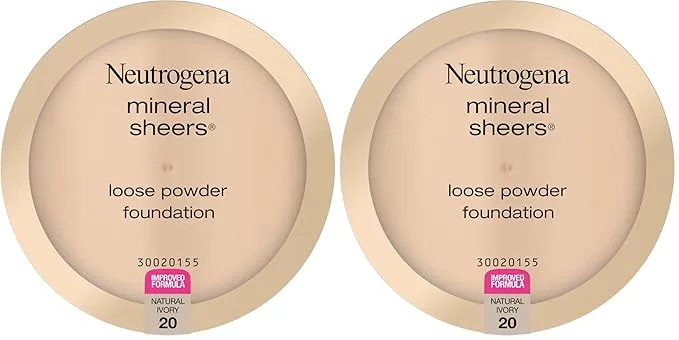
Neutrogena Mineral Sheers Loose Powder Makeup Foundation Lightweight Face Makeup Sheer to Medium Buildable Coverage-Sensitive Skin Foundation with Vitamin A, C, & E, Natural Ivory 20,19 oz (Pack of 2)
-
Neutrogena Healthy Skin Liquid Makeup Foundation with Broad Spectrum SPF 20 Sunscreen, Medium Coverage Foundation with Nourishing Pro-Vitamin B5, Chestnut 135, 1 fl. oz: Neutrogena Healthy Skin Liquid Makeup includes broad spectrum SPF 20 and Pro-Vitamin B5 to nourish skin while providing medium coverage. The added SPF and vitamin help protect and feed the barrier during the day, so you don't have to sacrifice sun protection for lighter makeup.
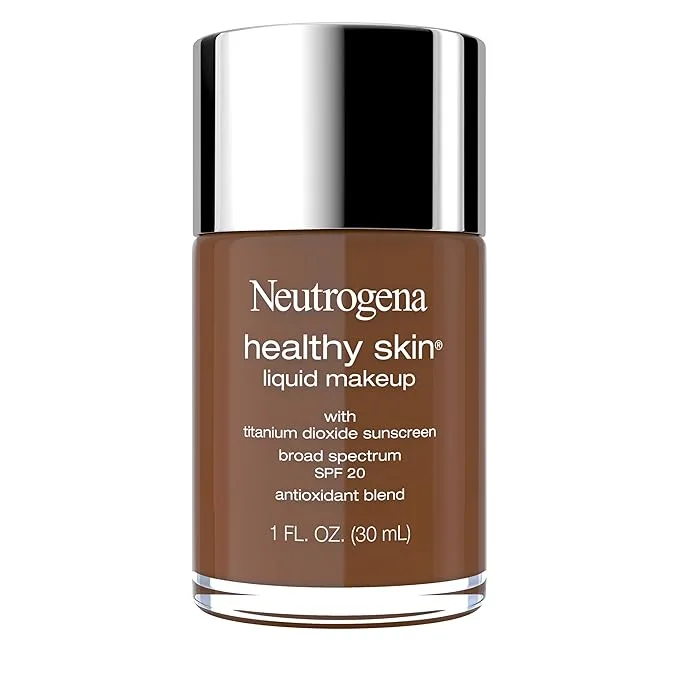
Neutrogena Healthy Skin Liquid Makeup Foundation with Broad Spectrum SPF 20 Sunscreen, Medium Coverage Foundation with Nourishing Pro-Vitamin B5, Chestnut 135, 1 fl. oz