Quick answer
For most families, the best hidden storage furniture for playrooms is a low, wooden storage bench or rack that matches your child's height and your room's layout. Prioritize open-and-close access, sturdy construction, and a footprint that leaves clear floor space for active play. If you also need climbing or movement equipment, choose pieces that can double as storage without blocking safe play zones.
Playrooms fill up fast. Blocks, books, dress-up clothes, and half-finished puzzles pile up until the floor disappears. Hidden storage furniture solves that problem by giving every item a home that looks intentional rather than utilitarian. The trick is choosing pieces that your child can actually use without help.
This guide walks through the decision rules that matter most when buying hidden storage furniture for playrooms. You will learn how to compare kids storage benches, toy storage solutions, and wooden storage furniture based on height, access, durability, and how the piece fits alongside climbing toys or a Swedish wall. No guesswork, just practical trade-offs.
Swedish wall
Start With Access, Not Aesthetics
A storage piece only works if your child can open it, reach inside, and put things back without an adult. For toddlers and preschoolers, that means low benches, shallow bins, and lids that stay open or lift off completely. Deep chests with heavy lids look tidy but often become adult-only furniture because children cannot manage them safely.
Measure your child's shoulder height before you shop. A kids storage bench that sits around knee-to-waist height usually allows independent access. If the piece is taller, check whether it has open shelves or a pull-out section at the bottom. Hidden storage furniture should reduce your workload, not create a new daily task of retrieving toys.
- Test the lid or door with one hand. If it takes two hands and a hip, it is too heavy for a young child.
- Leave the front edge of a storage bench clear so your child can sit down while putting on shoes.
- Avoid deep bins without dividers. Shallow, wide storage keeps toys visible and easier to sort.
Match the Footprint to Your Playroom Layout
Hidden storage furniture for playrooms competes with active play space. A large bench along one wall may be fine, but a freestanding unit in the middle of the room becomes an obstacle. Sketch your room on paper and mark doors, windows, radiators, and any climbing equipment. Then place storage only in zones that do not interrupt movement paths.
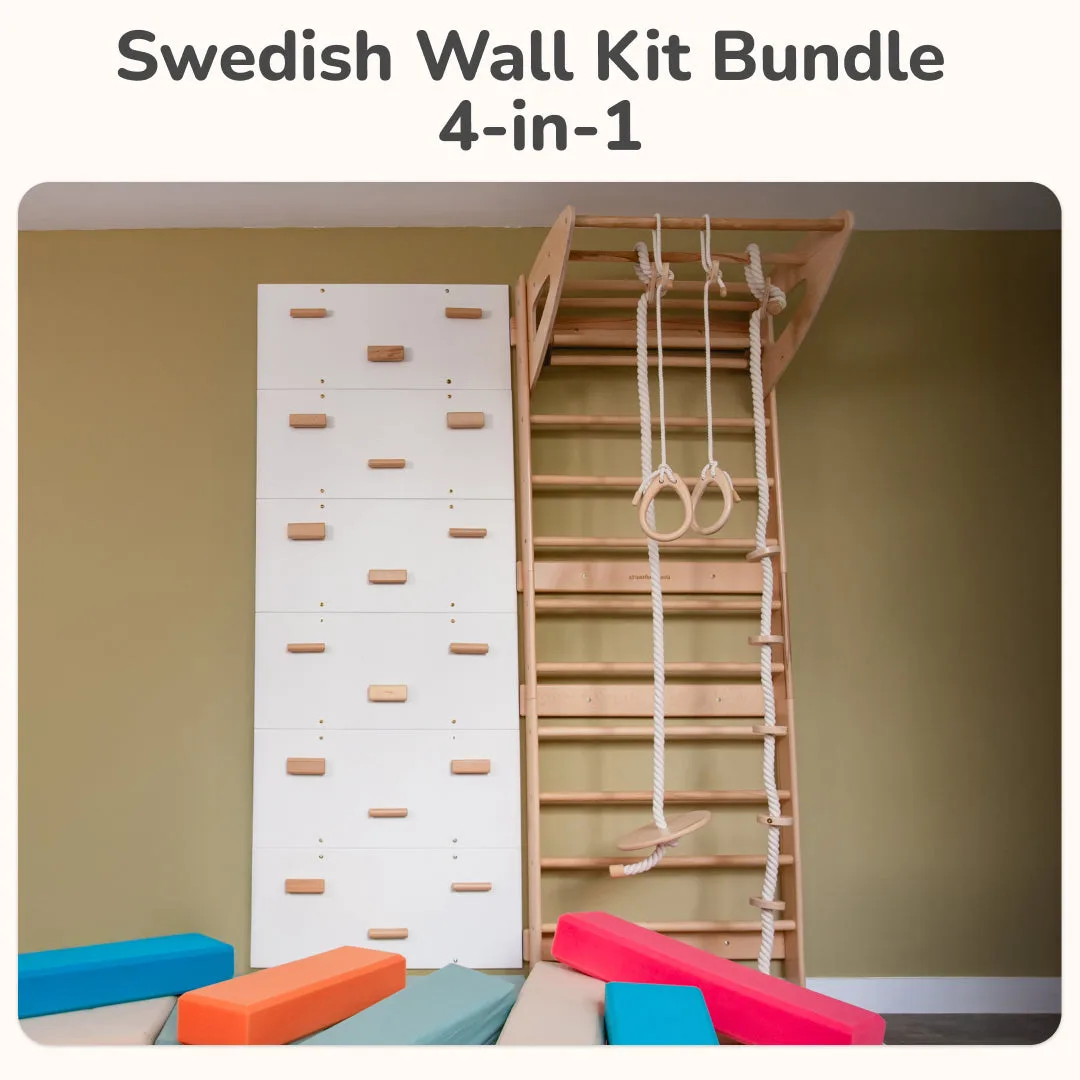
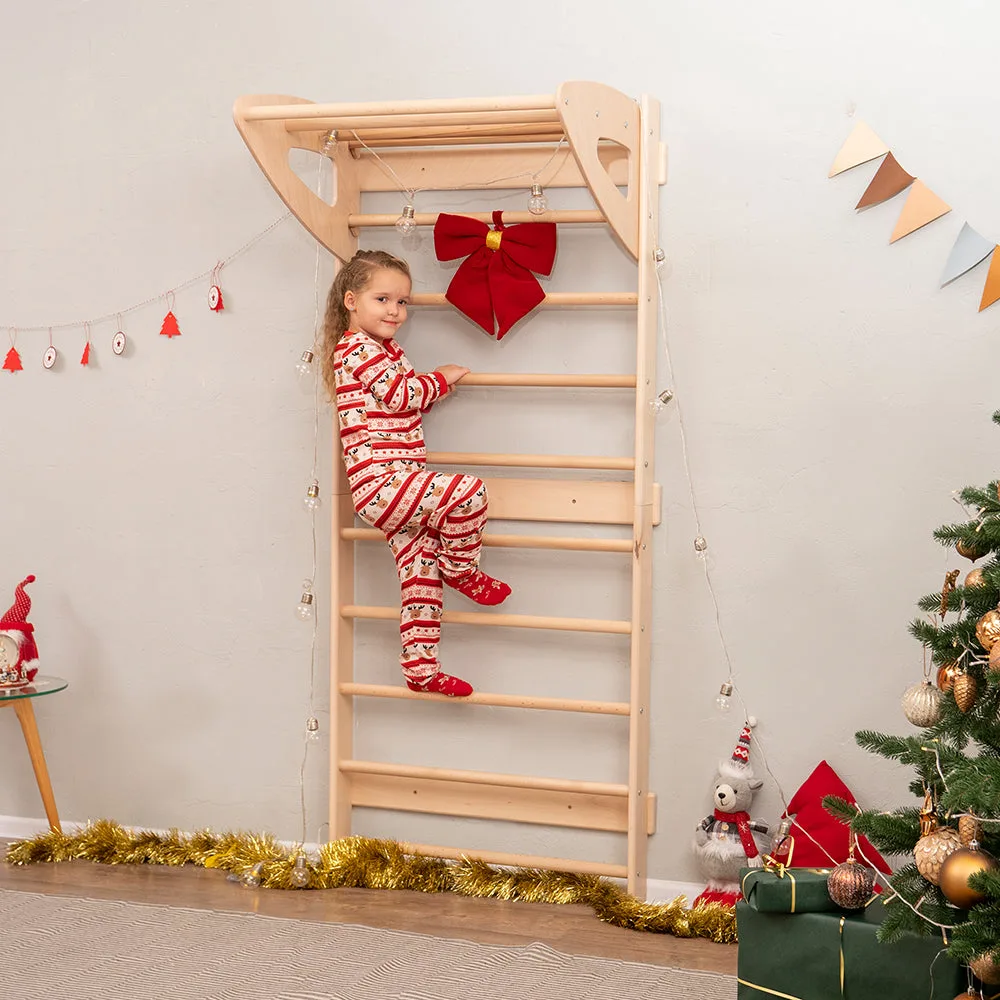
If your playroom also holds a climbing set or Swedish wall, keep a clear safety zone around that equipment. Storage should sit outside the fall zone, ideally against a wall that is not used for climbing. This is where slim racks and low benches beat bulky cabinets. They hold a surprising amount without taking over the room.
- Leave at least one full wall free of storage if you have a Swedish wall or climbing frame.
- Choose a depth under 40 cm for narrow playrooms so walkways stay open.
- Corner storage can work if the piece is angled or has a small footprint.
Choose Wood That Survives Real Play
Wooden storage furniture is a common choice for playrooms because it handles daily wear better than thin plastic or coated particleboard. Look for smooth, sanded edges and water-based finishes. If a piece is painted, ask whether the paint is child-safe and wipeable. Solid wood or high-quality plywood will resist wobbling when a child leans on it or climbs into a bench.
Joinery matters as much as material. Screws that go into end grain can loosen over time. Better pieces use dowels, bolts, or interlocking joints at stress points. If you cannot inspect the furniture in person, read the product description for construction details. When a specification is not listed, treat that as a decision limitation and ask the seller before buying.
- Wipe a hidden corner with a damp cloth. If color transfers, the finish may not be sealed.
- Check the base for floor protection. Felt pads or rounded feet reduce scratches.
- Avoid furniture with exposed screws on the inside where children reach.
Decide Between Open, Hidden, and Dual-Purpose Storage
Hidden storage furniture usually means closed compartments, lift-up seats, or doors that conceal clutter. That works well for visual calm, but it can hide mess until opening time. Open shelves and bins make cleanup faster because children can see where things go. Many families use a mix: closed storage for dress-up clothes and stuffed animals, open storage for books and daily-use toys.
Dual-purpose pieces are the most efficient in small playrooms. A rack that holds clothes, provides a place to sit, and stores toys replaces three separate items. The trade-off is capacity. A dual-purpose bench will not hold a full toy rotation. If your collection is large, pair one hidden storage piece with a simple open shelf or a second low unit.
- Use closed storage for items that look messy: costumes, plush toys, loose blocks.
- Use open storage for items your child uses every day.
- Label bins with pictures for pre-readers.
Check Safety and Stability Before You Buy
Any storage piece in a playroom must be stable enough to resist tipping if a child pulls on a drawer or climbs on a bench. Look for wide bases, anti-tip straps, and wall-anchoring hardware. If a product does not include a wall anchor, plan to buy one. This is especially important in rooms with hard floors where furniture can slide.
Also consider air circulation. Closed storage in a damp room can trap moisture and cause musty smells. Wooden storage furniture with slatted sides or ventilation gaps dries better. If the piece has a lid, check that it cannot slam shut on small fingers. Soft-close hinges or a lightweight lid are worth prioritizing over extra capacity.
- Anchor every storage unit taller than your child's waist.
- Test the lid for slam resistance before letting your child use it alone.
- Leave a small gap behind furniture for air movement if the wall is exterior.
Decision Rules for Buying Hidden Storage Furniture
- Rule 1: Child access first: If your child cannot reach inside and return items without help, the piece will become adult-managed storage. Choose low benches, open bins, or lightweight lids. Check access before you check style.
- Rule 2: Measure the play zone: Mark a clear safety zone around any climbing equipment. Storage must stay outside that zone. In small rooms, choose slim racks or wall-mounted units. A storage piece that blocks play will be moved or ignored.
- Rule 3: Match storage type to clutter type: Use closed compartments for visually messy items and open storage for daily-use toys. Mixing both types usually works better than choosing one extreme. No single storage style fits every toy.
- Rule 4: Verify stability and finish: Look for wide bases, anti-tip hardware, and sealed wood surfaces. If the product description does not list these details, ask the seller before buying. When a specification is absent, treat it as a question, not a feature.
Product Facts That Matter for Playroom Storage
- Toddler's Clothes Rack: This multifunctional rack allows children to hang their clothes, sit while putting on shoes, store toys, and engage in pretend play. It replaces a separate bench, toy bin, and dress-up station, which is useful when floor space is limited.
- 4-in-1 Swedish Wall Kit for Playroom: This multifunctional set combines climbing, swinging, and building elements for children aged 3+ and encourages independent play while promoting strength. If your playroom already includes a Swedish wall, choose storage that sits outside the climbing zone and does not block the swing path.
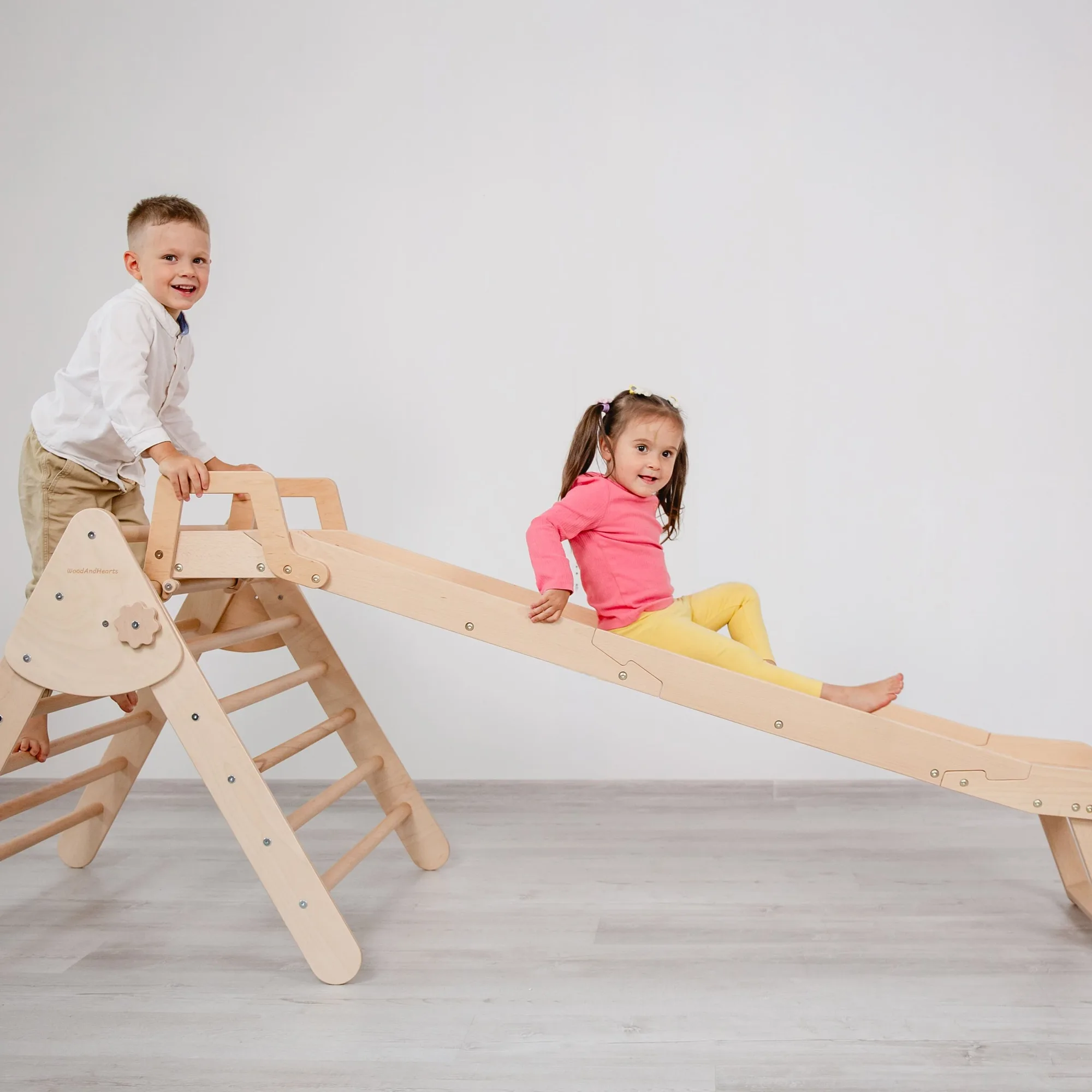
- Wooden Climbing Set: This 2-in-1 set includes a Montessori Triangle (Large size) and a Slide, transforming any play space into a safe and exciting environment for active play. Storage benches with a low profile can sit near, but not inside, the landing area of a slide or triangle.
Who Should Buy Hidden Storage Furniture for Playrooms
Best for
- Families with toddlers and preschoolers who need independent access to toys and clothes
- Small playrooms that also hold a climbing set, Swedish wall, or active play equipment
- Parents who want wooden storage furniture that doubles as a bench, rack, or pretend-play station
Not for
- Playrooms with very large toy collections that need floor-to-ceiling shelving
- Families who prefer open wire bins and do not mind visible clutter
- Rooms where children are too young to use storage without constant adult supervision
Hidden storage furniture works best when it fits your child's reach, your room's traffic flow, and your daily cleanup routine. Start with one low, sturdy piece that does more than one job, then add open storage only where it helps your child put things away. That approach keeps the playroom organized without sacrificing the space kids actually need to move.