Quick Answer
Buy high-tops in the same size you wear in low-tops from the same brand, and size up only if you plan to wear thick socks or the shoe runs narrow. Expect a short break-in period around the ankle collar, and treat the collar height as a styling choice, not a comfort upgrade. If a listing does not state the material or measurements, ask before you buy.
High-tops get treated like a personality test, but most of the questions people actually ask are practical: will they fit, will they hurt, and what do I wear them with. This FAQ answers those directly so you can shop and wear them with fewer surprises.
The answers below apply to canvas, leather, and suede high-tops alike. Where a specific pair behaves differently, the listing details matter more than general rules, so read them closely before checkout.
Sizing: How Should High-Tops Fit?
Your high-top size should match your low-top size in the same brand. The collar adds height, not length, so it rarely changes the fit through the toe box. If you are between sizes, go with the larger one only when you plan to wear thick socks, because high-tops do not stretch much across the width.
There should be roughly a thumb's width between your longest toe and the front of the shoe. Your heel should stay locked when you walk, and the collar should sit snug without pressing on your ankle bone. If the collar digs in immediately, that is a fit problem, not a break-in problem.
- Measure your foot at the end of the day, when feet are largest.
- Compare against the brand's own size chart, not a generic conversion.
- For used pairs, ask for insole measurements if the listed size is ambiguous.
Comfort: Do High-Tops Hurt at First?
A short break-in period is normal, mostly around the ankle collar and the flex point at the toe. Canvas softens fastest, leather molds to your foot over a week or two, and suede sits somewhere in between. Padding at the collar matters more than collar height for day-one comfort.
If a pair hurts after a few wears, check three things: whether the collar is too tight, whether the insole is worn flat, and whether the shoe is actually your size. A thin aftermarket insole can fix a slightly loose fit, while a tight collar usually will not fix itself.
- Wear them around the house for an hour before a full day out.
- Loosen the top eyelets if the collar presses on your ankle.
- Replace flattened insoles rather than pushing through the discomfort.
Styling: What Do You Wear With High-Tops?
The simplest rule is proportion. High-tops visually shorten the leg, so they pair best with pants that either stop above the collar or drape over it cleanly. Cropped trousers, straight-leg jeans, and joggers all work. Skinny pants that bunch at the ankle fight the shoe's shape.
Color is the second lever. A white or grey high-top reads casual and works with almost anything, while a black or green pair can anchor a darker outfit. If the shoe is the loudest piece you own, keep the rest of the outfit quiet and let it do the work.
- Cuff or hem pants so the collar stays visible.
- Match the shoe's formality to the rest of the outfit, not the other way around.
- Avoid stacking a high-top with a very long, wide pant leg.
Buying Used High-Tops: What Should You Check?
Used high-tops are a smart way to try a silhouette before committing to full price, but condition varies. Look at the collar first, since that is where wear shows up. Then check the outsole for uneven tread, the insole for compression, and the upper for cracks or deep creasing that signals the material is drying out.
Ask for measurements when the listing only gives a size label, especially on older pairs where sizing may have shifted. If the listing does not state the material, do not assume it. Material determines how the shoe ages and how you clean it.
- Prioritize pairs described as very good or good condition.
- Confirm the material before buying, since care differs by material.
- Treat a missing measurement as a question to ask, not a detail to ignore.
High-Top Sneaker Questions, Answered at a Glance
Should I size up in high-tops?
Only if you wear thick socks or the brand runs narrow. Otherwise stay with your low-top size from the same brand. When in doubt, measure your foot and compare to the brand's chart.
How long is the break-in period?
Canvas softens within a few wears, leather takes one to two weeks, and suede falls in between. If it still hurts after two weeks, the fit or the insole is the problem.
What pants work best with high-tops?
Cropped trousers, straight-leg jeans, and joggers keep the collar visible and the proportions clean. Skip pants that bunch heavily at the ankle.
Are used high-tops worth buying?
Yes, if the collar, outsole, and insole are in decent shape and the listing states the material. Ask for measurements when only a size label is given.
Catalog Examples Worth Knowing
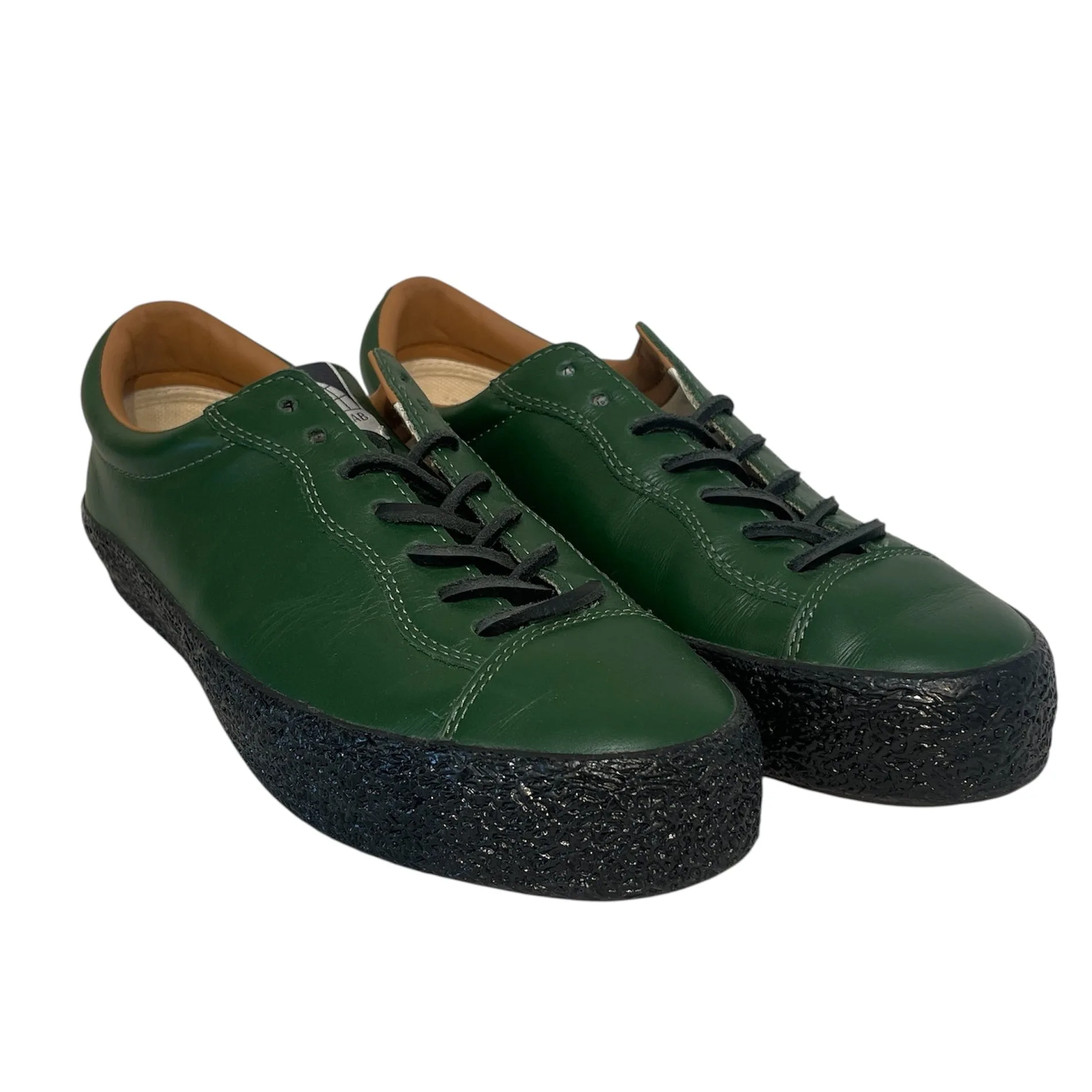
- Last Resort AB/Low-Sneakers/US 8.5/Leather/GRN/: Size US 8.5, green leather, listed as Used_Very Good at USD 24.95 against a USD 49.90 comparison price. A low-top rather than a high-top, but useful as a sizing reference if you already know your Last Resort AB size.
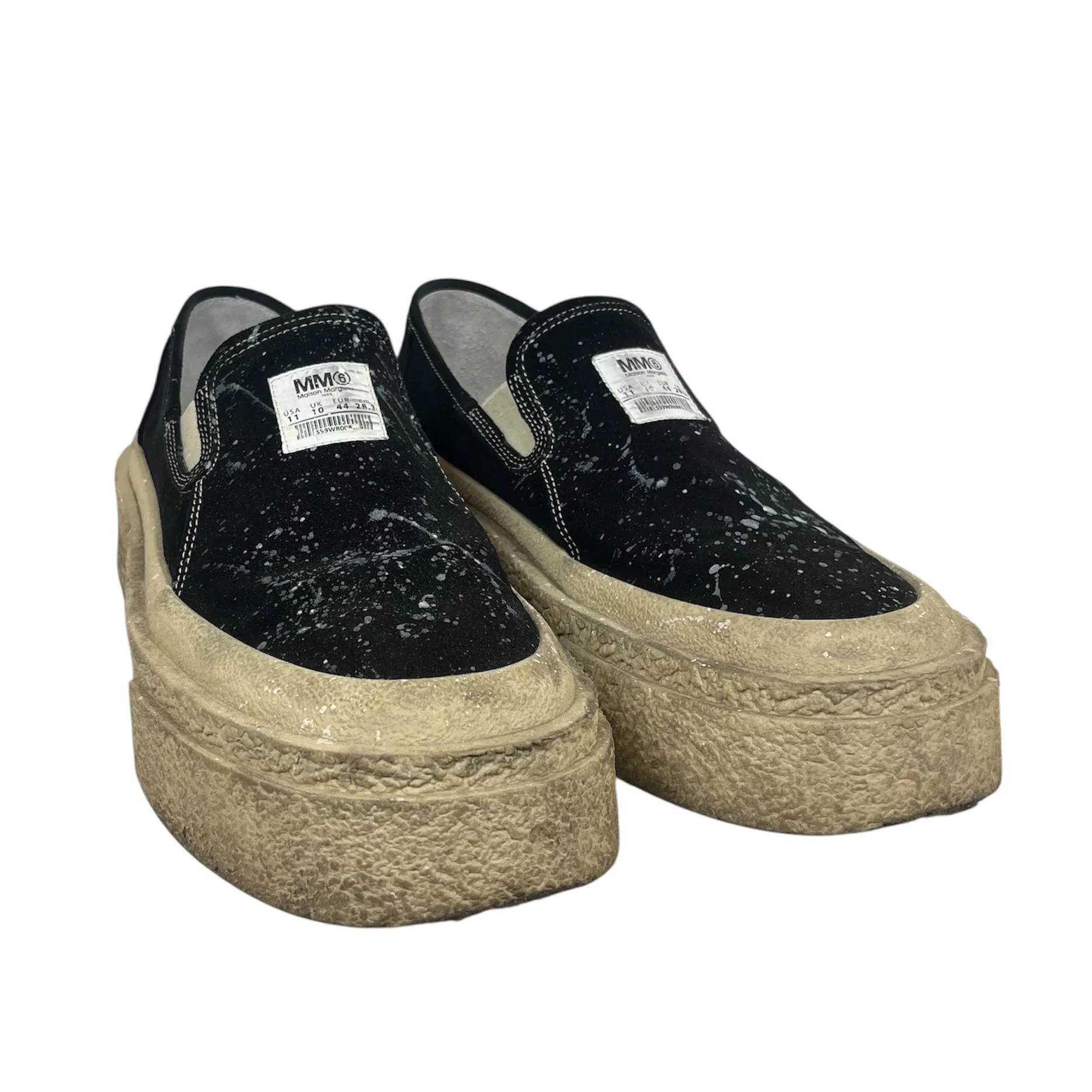
- MM6/Low-Sneakers/EU 44/BLK/paint splatter slip on: Size EU 44, black suede, listed as Used_Good at USD 99.95 against a USD 199.90 comparison price. Shows how a used pair can land well below the comparison price, though the Good condition rating means you should expect visible wear.
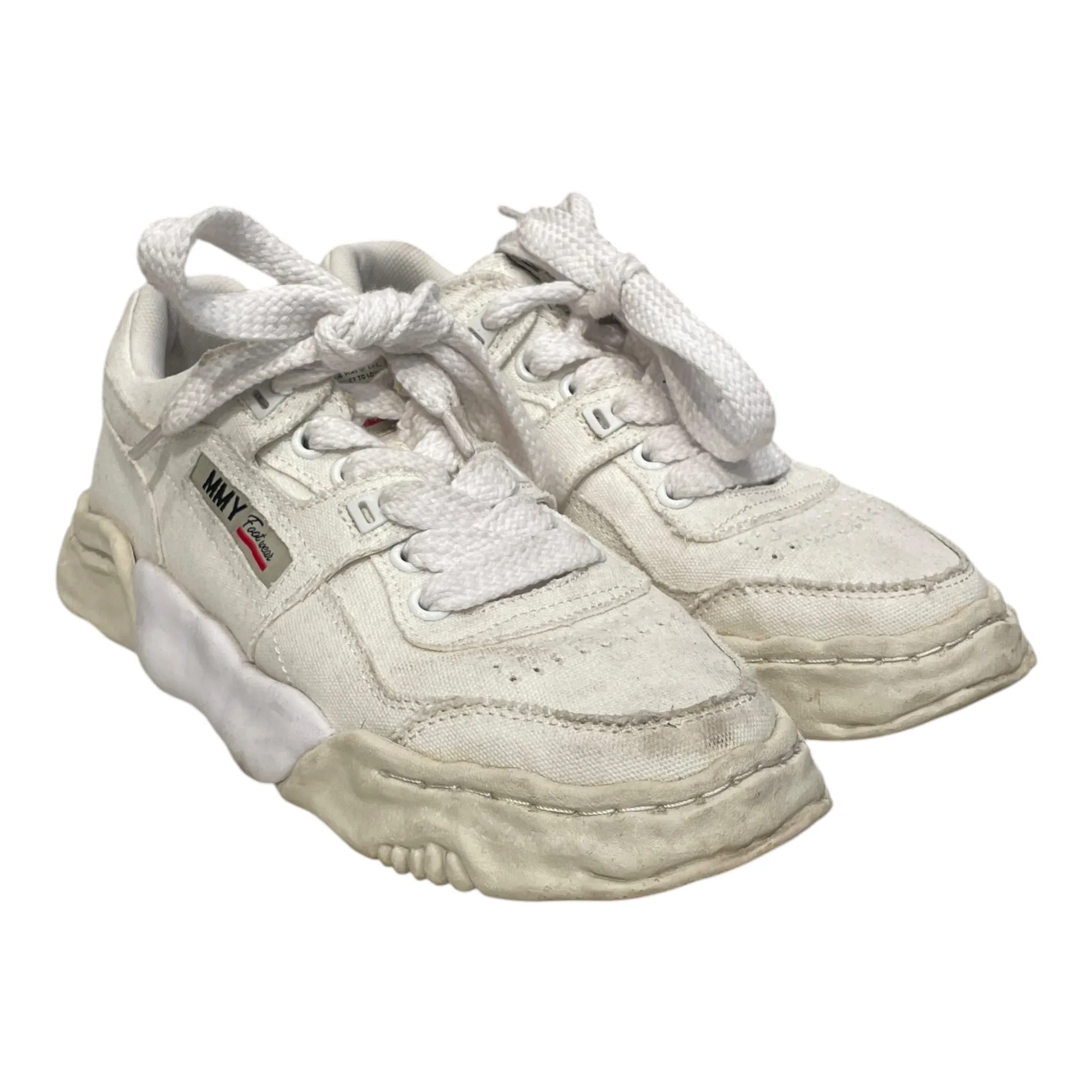
- MIHARA YASUHIRO/Low-Sneakers/EU 42/Cotton/WHT/PARKER CANVAS: Size EU 42, white cotton canvas, listed as USED_VERYGOOD at USD 54.95 against a USD 109.90 comparison price. Canvas is the material that breaks in fastest, so a very good used pair is often comfortable from the first wear.
High-tops reward a little patience: get the size right, give them a short break-in, and style them with pants that let the collar show. Read the listing details carefully, and when a measurement or material is missing, ask before you buy.