Quick answer
Start with a brush matched to your dog's coat, a sturdy metal comb, nail clippers or a grinder, dog-safe shampoo, and a few absorbent towels. Add scissors and a detangler only if your dog's coat tangles. If you are still learning, a kit that includes step-by-step education is worth more than a bigger pile of tools you have not been taught to use.
Match tools to coat before you buy anything
Coat type decides your tool list more than breed name does. Short, smooth coats need a rubber curry or bristle brush and rarely tangle. Double coats need a slicker brush plus an undercoat rake, and they should never be clipped short for convenience. Curly and doodle coats need a slicker brush, a metal comb for checking the skin line, and detangler on hand. Drop coats need a pin brush and comb, with scissors for trimming around the feet and sanitary areas.
If you are unsure which group your dog falls into, run a metal comb through the coat once. If it glides to the skin, you have a low-tangle coat. If it snags halfway, plan for detangling tools and more frequent sessions.
The beginner dog grooming tools worth buying first
A metal comb is the most underrated item on any dog grooming supplies list. It finds mats a brush glides over, and it tells you whether you actually finished the job. Buy one with rounded teeth so it does not scratch skin.
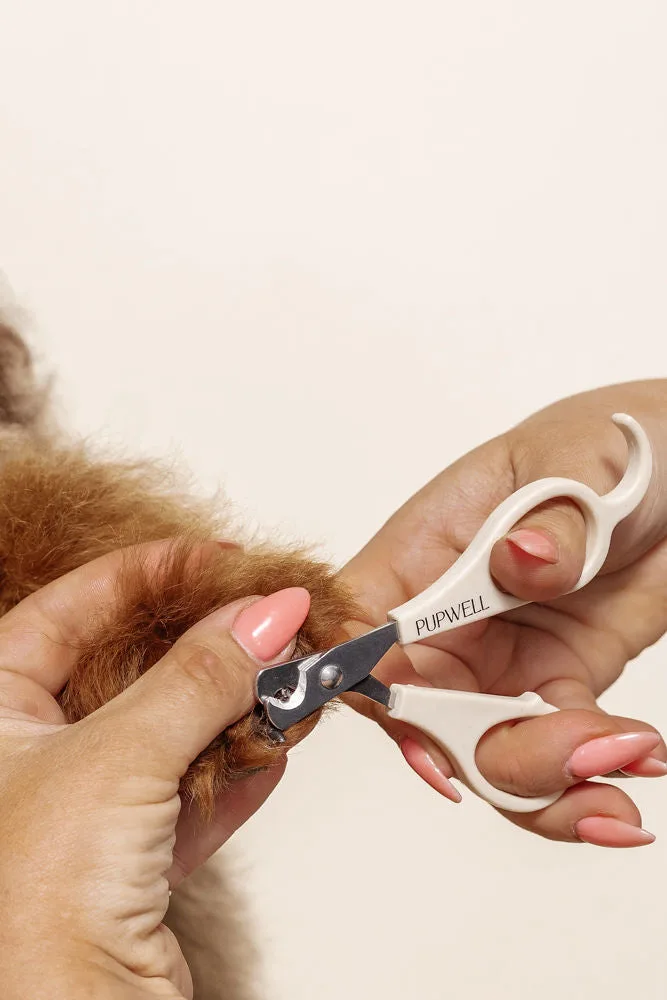
Nail care comes next. Clippers suit thick nails and quick work; a grinder suits dogs that tolerate the noise and gives a smoother finish. Whichever you choose, keep styptic powder nearby for the occasional nick. Add dog-safe shampoo, a non-slip mat for the tub, and two microfiber towels. That core set handles most weekly maintenance for a short or medium coat.
What you can delay until you need it
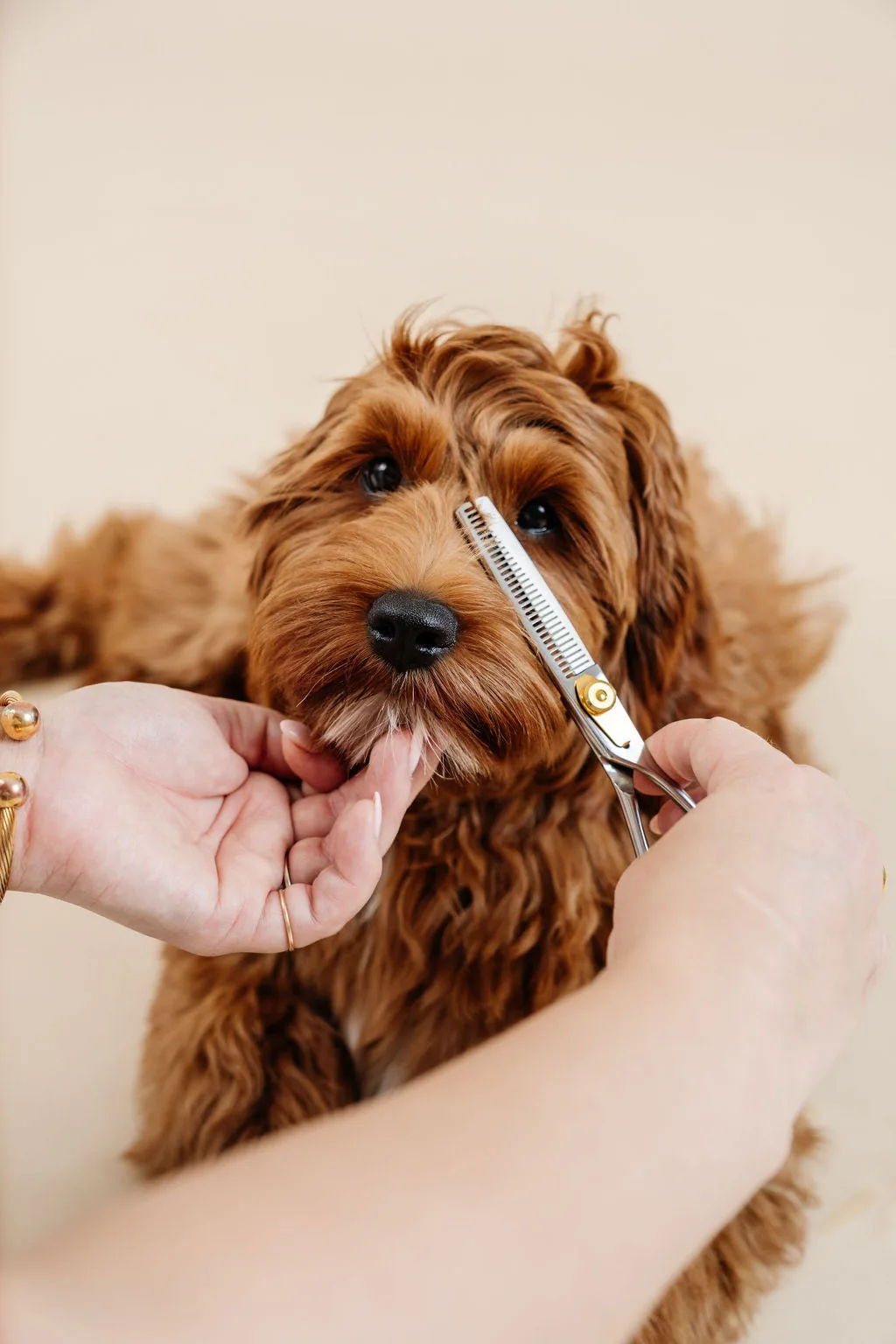
Skip clippers, thinning shears, and full grooming tables at the start unless your dog's coat genuinely requires them. Clippers are the fastest way to create a problem coat if you have not learned blade guards or body contours. Scissors are useful for feet, face, and sanitary trims, but only with blunt-tip or safety styles while you build confidence.
The same logic applies to specialty shampoos. Whitening, medicated, and color-depositing formulas solve specific problems. Until you have one, a gentle oatmeal or hypoallergenic shampoo covers most needs.
How many tools a starter set should actually contain
Tool count is a marketing number, not a quality signal. A useful dog grooming starter set has five to eight items that cover brushing, combing, nail care, bathing, and drying. Anything beyond that is either a duplicate or a specialty tool you will use rarely.
Check whether the kit explains how to use each piece. A brush you hold at the wrong angle pulls instead of detangles, and clippers used against the growth direction can irritate skin. Instruction is what turns a box of tools into a routine you can repeat.
Build the habit before you build the collection
Grooming works best in short, frequent sessions rather than one long weekend marathon. Two or three 10-minute sessions a week keep mats from forming and help your dog accept handling. Start with the areas your dog tolerates, such as the back and chest, and work toward feet, ears, and face over several weeks.
Pair each session with a treat and stop before your dog gets restless. A dog that associates the comb with calm handling is easier to groom for life than one that only sees tools during a full blowout.
Decision rules for your first grooming kit
- Puppy under six months: Choose small, low-risk tools and prioritize handling and socialization over perfect results. Mini shears and mini clippers are easier to control around a wriggling puppy. Pick a kit built for puppy parents rather than a full adult set.
- Adult dog with a matting coat: Buy a metal comb, slicker brush, and detangler first. Add scissors only if you will trim feet or sanitary areas yourself. Comb before you cut; mats hide close to the skin.
- You already own brushes but not skills: Skip another tool bundle and invest in education instead. Learning blade direction, brush angle, and bath technique changes results more than a new purchase. One course beats a third brush.
- Budget under USD 100: Cover the essentials: comb, brush, nail clippers, shampoo, and towels. Add a grinder or scissors later once you know what your dog tolerates. Buy the core, then fill gaps as they appear.
Kits that match different beginner situations
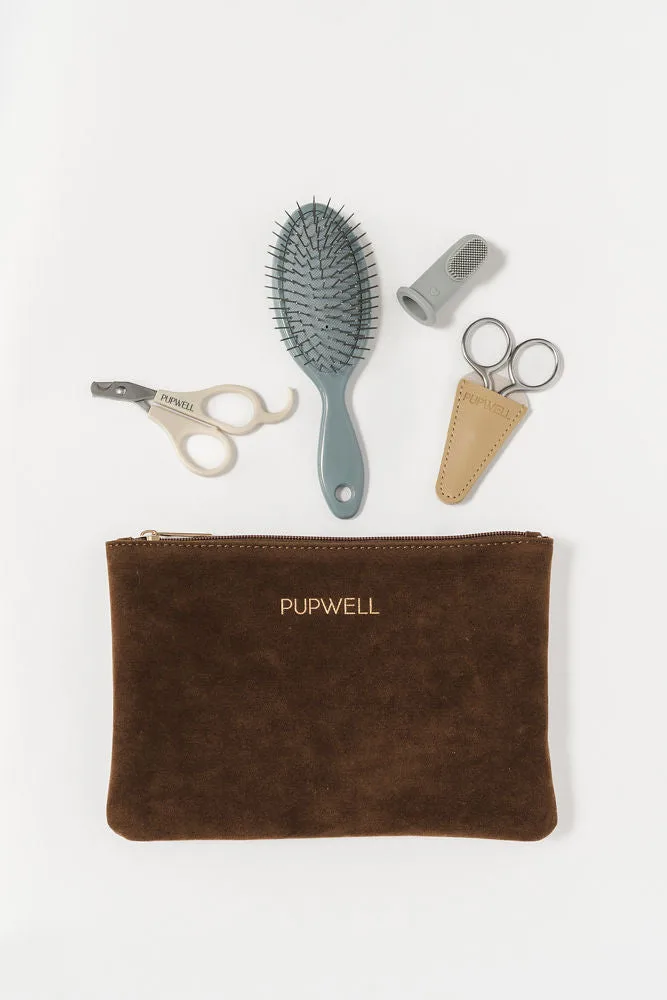
- Puppy Grooming Kit: The Puppy Grooming Kit is designed for puppy parents and includes five tools: a mini gentle detangling brush, mini safety shears, mini nail clippers, and two more items, with step-by-step guidance on puppy grooming needs, tool use, socialization, and preventing fear. It fits a first-time owner with a young dog because the tools are scaled small and the education covers handling and stress prevention, not just technique.
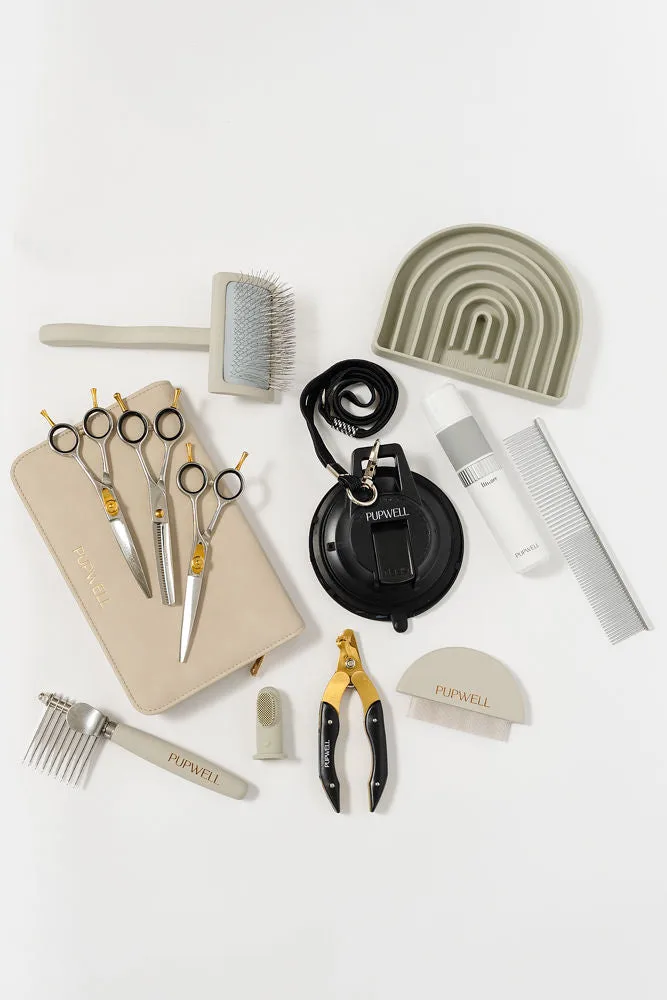
- Ultimate Dog Grooming Kit: The Ultimate Dog Grooming Kit is described as the only kit with professional tools and the only one with education, and it includes guidance on how to use the tools. It suits owners who want one purchase that covers a full coat-care routine and are willing to learn the tools rather than replace them later.
- Ultimate Dog Grooming Course: The Ultimate Dog Grooming Course is a standalone educational product for pup parents covering mat removal, bathing, product choice, nail care, and face trimming. If you already own basic tools, the course fills the knowledge gap without adding duplicate equipment.
Is a pre-built grooming kit right for you?
Best for
- First-time dog or puppy owners who want one purchase covering brushing, nails, and bathing
- Owners whose dog has a matting or curly coat and needs a comb plus detangling tools
- People who want instructions included so they use the tools correctly from day one
Not for
- Owners who already own a brush, comb, and clippers and only need technique help
- Professional groomers who need specific blade sizes and high-volume equipment
- Dogs with severe matting that requires a groomer or vet to remove safely