Quick answer
For cool morning birding, pick a pullover hoodie when you expect wind, drizzle, or a wide temperature swing and want a built-in hood plus a kangaroo pocket. Pick a crew neck sweatshirt when you plan to wear a jacket or vest over it and want less bulk at the neck. If you only buy one, a midweight hoodie covers more mornings because the hood adds on-demand warmth you can put up or drop without changing layers.
Hoodie vs sweatshirt: the real difference on a bird walk
A hoodie and a sweatshirt can be made from similar fabric, so the decision is less about warmth and more about how you manage heat and weather while standing still. Birding involves long pauses: you walk, then stop to scope a treeline or wait out a warbler wave. A hood gives you a quick way to trap heat around your head and neck when you stop, and a front pocket keeps your hands warm without gloves. A crew neck sweatshirt has a clean neckline that layers under a shell or insulated vest without bunching, and it sheds less heat when you are moving between stops.
Neither is automatically better. The right choice depends on whether your mornings are windy, whether you carry a backpack, and whether you run hot or cold when standing still.
Match the piece to your morning conditions
Use the forecast, not the season. A 50°F morning with 15 mph wind feels colder than a still 45°F morning, and a hood helps more in the first case. If rain is likely, remember that a cotton or cotton-blend hoodie is not a rain shell; plan a packable outer layer either way. If you expect full sun and a fast warm-up, a crew neck sweatshirt is easier to vent because you can push up sleeves and open a jacket without a hood flopping behind your neck.
Consider your optics and pack. A hood can interfere with binocular straps and a scope harness if it is thick, and a bulky hood adds weight at the neck when you are looking up. A crew neck stays out of the way. On the other hand, if you bird without a bag and want to carry a phone, keys, and a small notebook, a hoodie's front pocket is genuinely useful.
Fabric and construction details that matter
Look for a smooth exterior that resists burrs and seeds, and a brushed interior if you want warmth without a heavy midlayer. Air-jet spun yarn, used in some hoodies, tends to feel smooth and reduces pilling, which matters if you wash your birding layers often. Double-stitched seams and ribbed cuffs hold up better when you are pushing through brush or repeatedly taking a layer on and off. Organic cotton and recycled materials are a reasonable tiebreaker if you care about environmental impact, but they do not change how warm the piece is.
Do not assume a hoodie is warmer than a sweatshirt just because it has a hood. A midweight crew neck with a brushed fleece lining can be warmer than a lightweight hoodie. Check the listed fabric content and weight when the product page provides it, and treat missing weight specs as a reason to size with layering in mind rather than guessing.
How to layer a hoodie or sweatshirt for birding
Start with a moisture-wicking base layer, then your hoodie or sweatshirt, then a windproof or water-resistant shell if needed. If you run cold, add an insulated vest over the sweatshirt instead of a heavier hoodie; that keeps your arms free for binoculars. If you run hot, choose the crew neck and carry a lightweight shell you can put on only when you stop to scope.
Avoid cotton as a base layer in wet conditions because it holds moisture. A cotton or cotton-blend hoodie works well as a midlayer when you have a shell over it, but it is a poor standalone choice for steady rain. Pack a beanie if you choose a crew neck, since you lose the hood's adjustable head warmth.
Decision rules for your next cool morning
- If wind or drizzle is likely: Choose a hoodie so you can raise the hood when you stop to scope, and add a packable shell over it for rain. Hoodie wins when weather changes faster than you want to change layers.
- If you wear a jacket or vest over your midlayer: Choose a crew neck sweatshirt to avoid hood bulk at the neck and keep binocular straps sitting flat. Crew neck wins for clean layering under shells and harnesses.
- If you bird without a bag: Choose a hoodie with a front pocket for phone, keys, and a small notebook, and skip the extra pouch. Pocket utility can decide it when you travel light.
- If you run hot while walking: Choose a crew neck and carry a beanie; you can vent heat faster and add head warmth only when you stop. Crew neck plus beanie gives more control than a fixed hood.
Product facts that help you decide
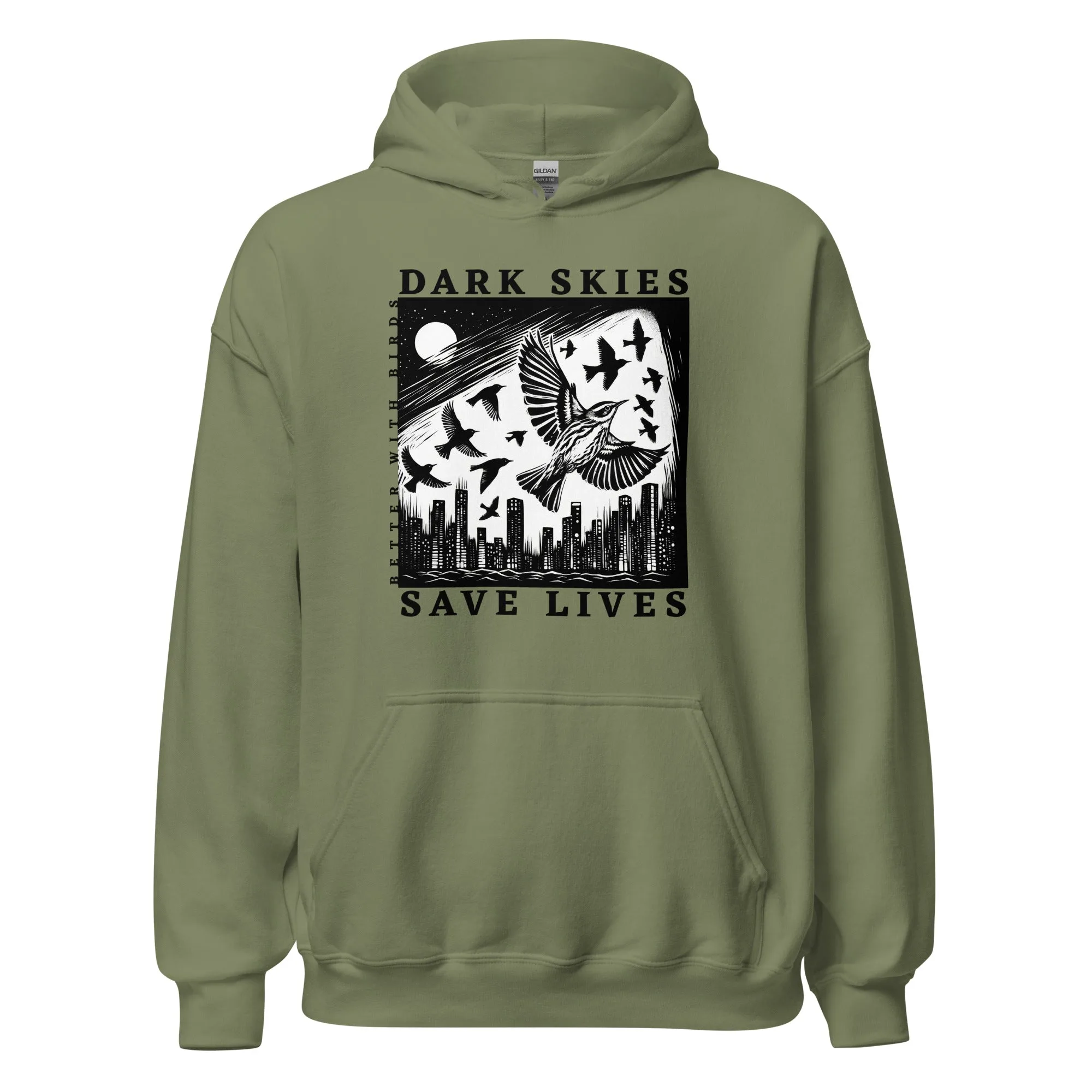
- Dark Skies Save Lives Unisex Hoodie: Soft cotton-poly blend with cozy brushed interior, double-stitched seams, and pill-resistant fabric; bold conservation artwork about light pollution and migrating birds. The brushed interior and durable seams suit cool mornings when you want warmth without bulk, and the artwork starts conversations about turning lights down for birds.
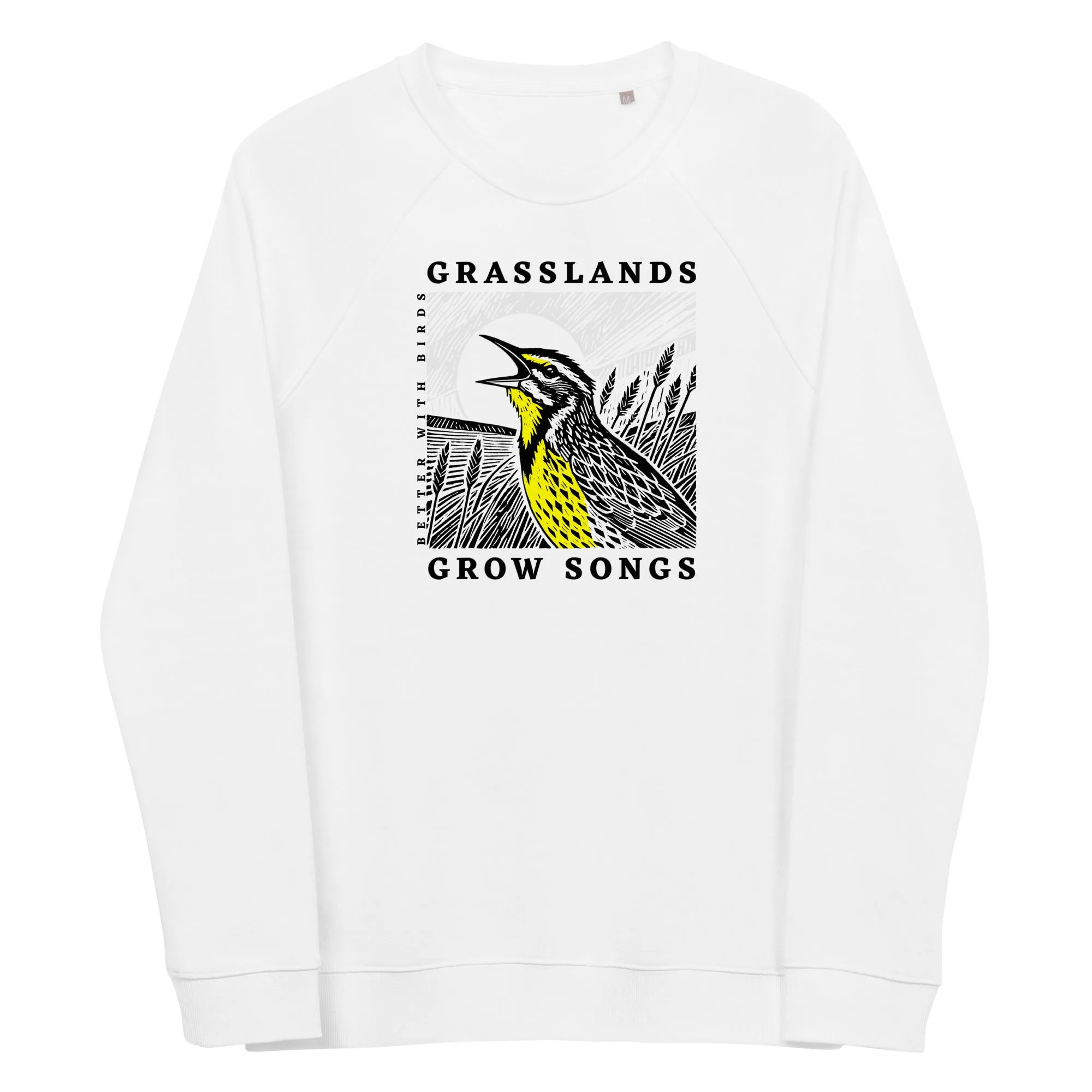
- Grasslands Grow Songs Organic Sweatshirt: Crafted from soft organic cotton and recycled materials with a relaxed fit; US customers should order a size up because EU sizes run smaller in the US market. The relaxed fit layers easily over a base layer, and sizing up matters if you plan to wear it over a flannel or thin fleece.
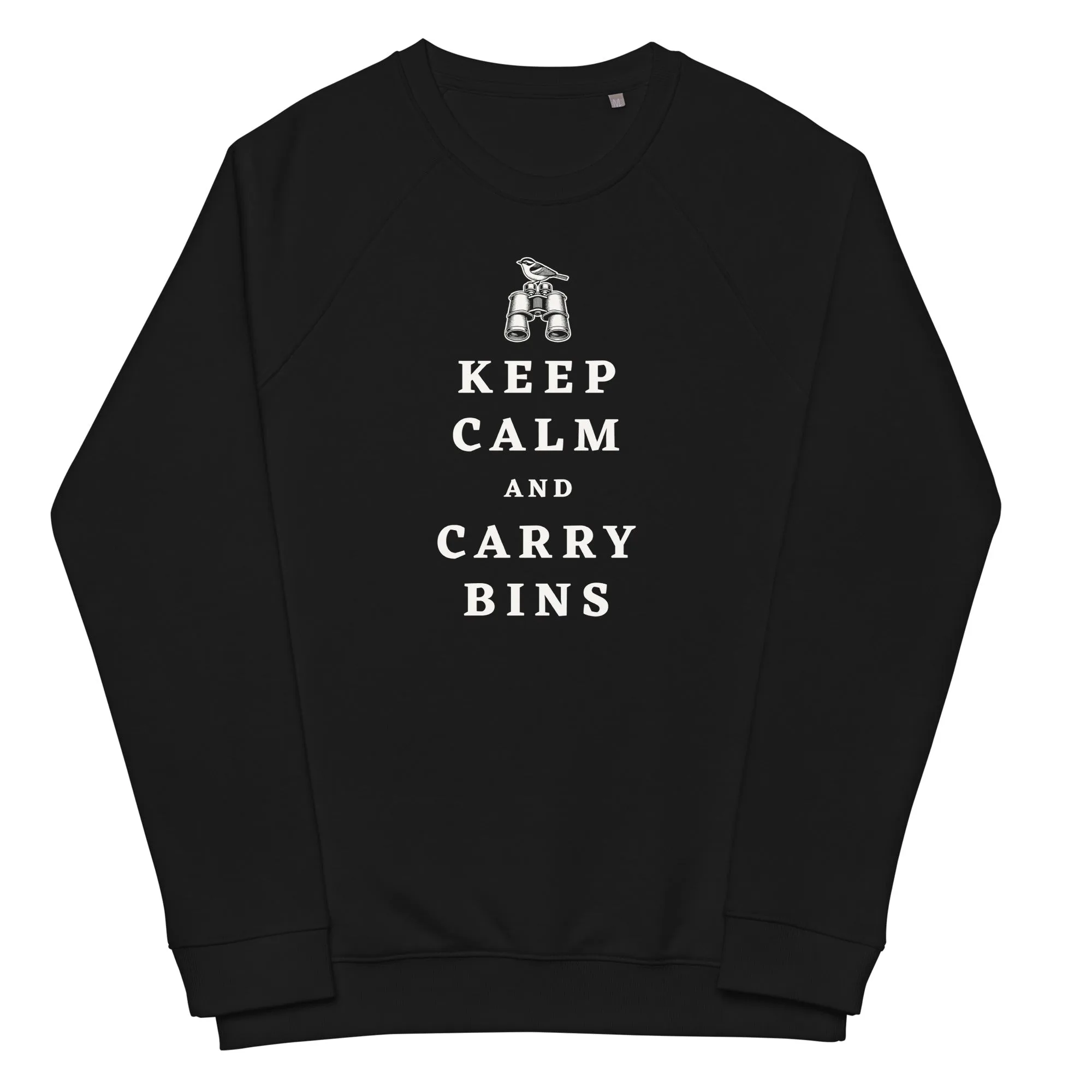
- Keep Calm and Carry Bins Organic Sweatshirt: Air-jet spun yarn, a roomy front pocket, and a weight suited to cool-weather birding; US customers should order a size up. The smooth yarn resists pilling through frequent washes, and the front pocket is useful when you bird without a pack.
Fit guidance for layering
Best for
- Birders who want one midlayer that handles wind, light drizzle, and variable temperatures
- Birders who carry a phone, keys, and small notebook without a pack
- Birders who run cold when standing still and want adjustable head warmth
Not for
- Birders who always wear a shell or vest over their midlayer and dislike hood bulk
- Birders who overheat quickly while walking and prefer to vent with a beanie instead of a hood
- Birders who need a waterproof outer layer in sustained rain