Quick Answer
A kaleidoscope works by reflecting light and colored objects between angled mirrors, creating symmetrical patterns that change as you turn the tube.
Why the Number of Mirrors Matters
The classic kaleidoscope uses two mirrors set at an angle. The angle determines how many reflections you see: a 60-degree angle creates six points of symmetry, while a 45-degree angle gives eight. More mirrors or steeper angles produce more complex, busier patterns.
For young children, a simple two-mirror design is easier to understand and less visually overwhelming. As kids grow, they can experiment with different angles to see how the pattern changes.
Light and Color: The Role of the Object Chamber
The colored jewels or beads inside the object chamber are not themselves glowing—they are illuminated by outside light. When you hold the kaleidoscope up to a light source, the light enters through the transparent end, reflects off the beads, and bounces between the mirrors. The colors you see are the result of that reflected light.
This is why kaleidoscopes look dull in dim light and vibrant in bright light. A well-lit room or a sunny window makes the colors pop, which is especially important for young children who are drawn to bright, saturated hues.
How to Explore the Science of a Kaleidoscope
-
Gather your materials: You need a kaleidoscope (like the Unicorn Magic Kaleidoscope, which features unicorns, butterflies, and shooting stars) and a bright light source, such as a sunny window or a lamp. Check that the object chamber is clean and the mirrors are not scratched for the clearest view.
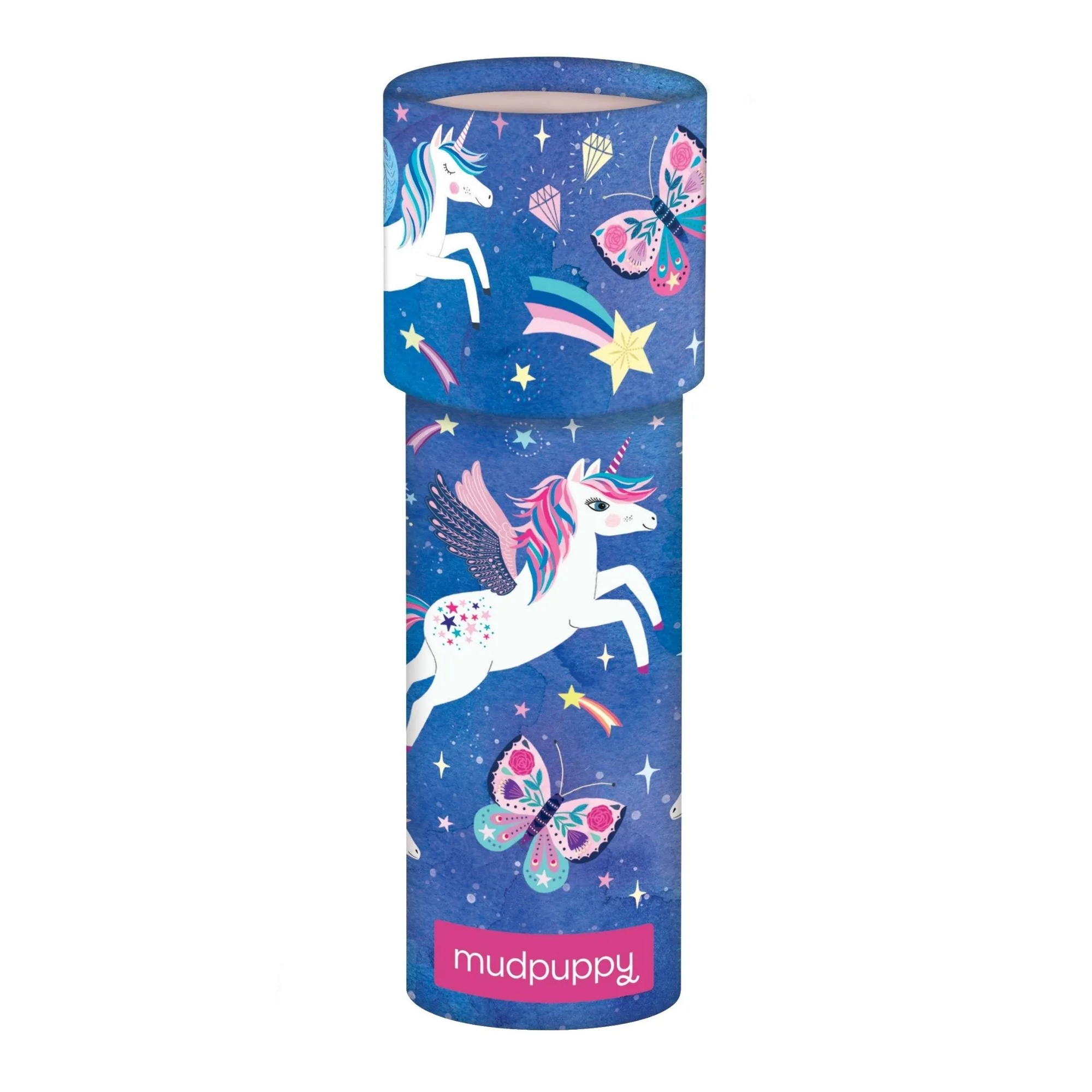
Unicorn Magic Kaleidoscope
-
Hold it up to the light: Point the eyepiece toward your eye and aim the other end at the light source. Slowly rotate the tube to see the patterns shift. If the pattern looks dark, try moving to a brighter spot—kaleidoscopes need light to work.
-
Turn the tube slowly: Rotate the kaleidoscope gently. The beads tumble and the mirrors reflect them, creating new symmetrical patterns. Notice how the pattern changes with each turn. Turn slowly to see the full range of patterns; fast turning can blur the image and make it harder to observe.
-
Experiment with angles: If you have a kaleidoscope with adjustable mirrors, change the angle between them. Compare the patterns at different angles to see how symmetry changes. Record what you see at each angle to make it a mini science experiment.
Kaleidoscopes That Spark Curiosity
-
Animals Of The World Kaleidoscope: The Animals Of The World Kaleidoscope reveals colorful jewels when you turn the viewing tube and features 3 animal friends to mix and match on the outside. The mix-and-match characters add a playful, hands-on element that encourages kids to turn the tube and observe how the patterns change.
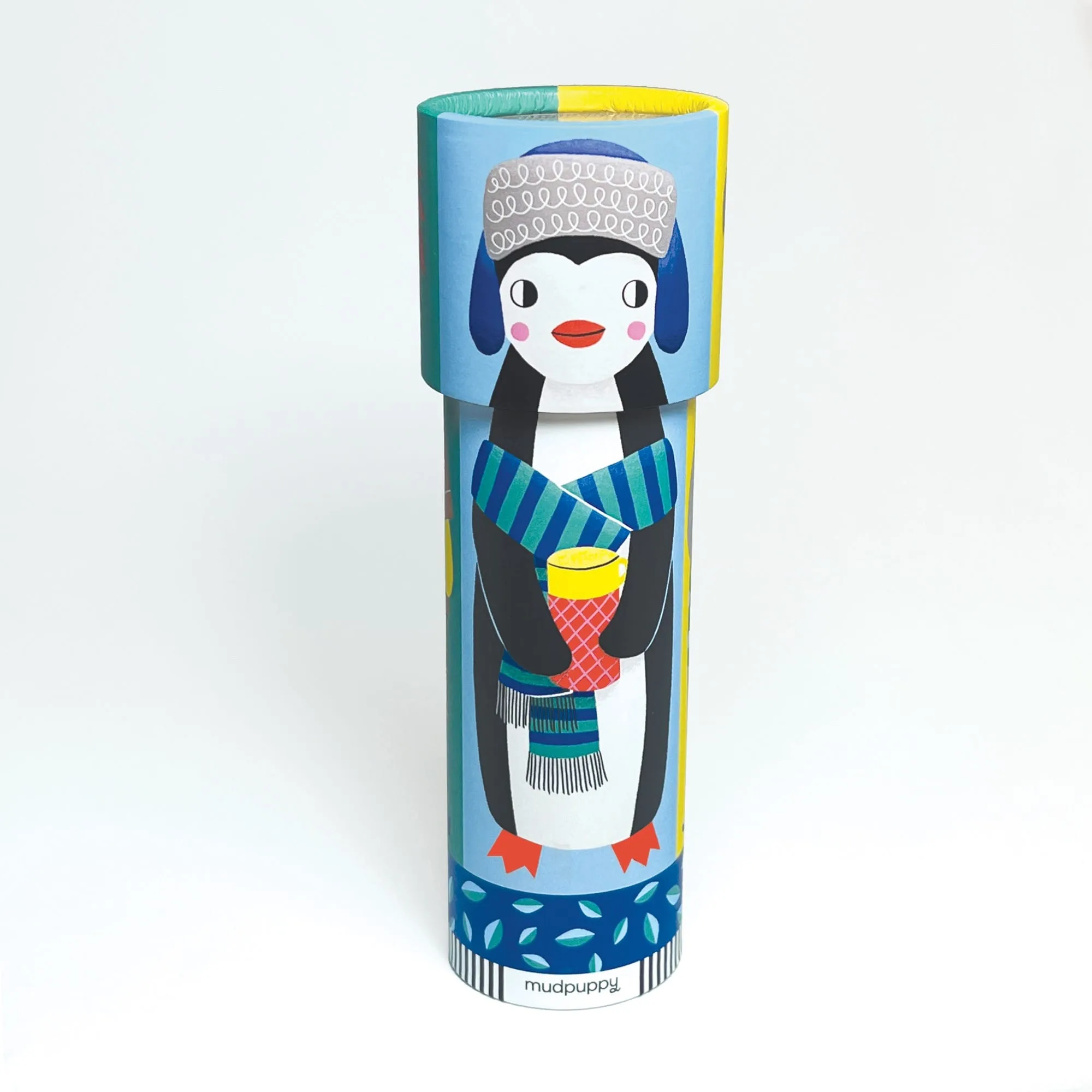
Animals Of The World Kaleidoscope
-
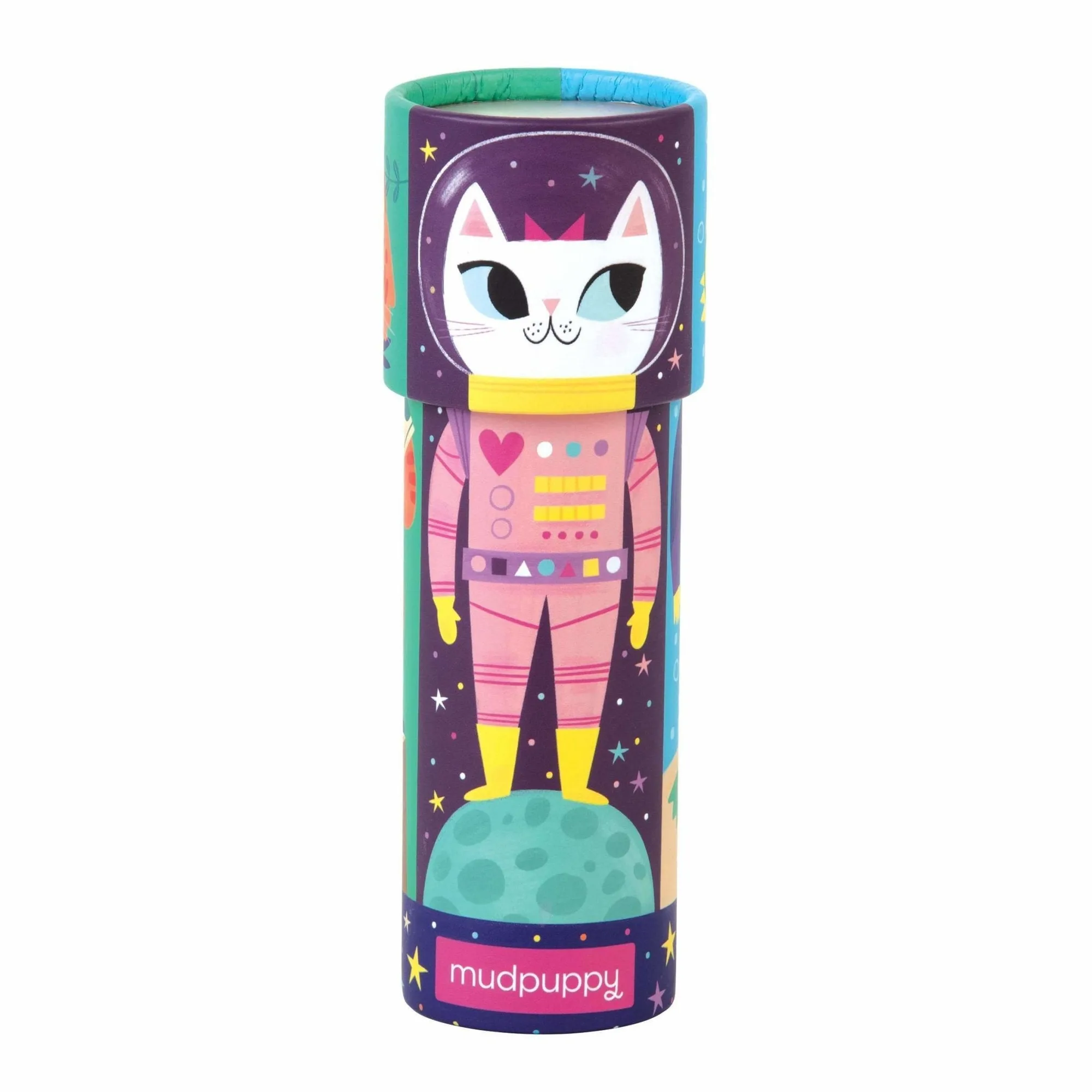
Adventure Cats Mix & Match Kaleidoscope: The Adventure Cats Mix & Match Kaleidoscope reveals colorful jewels when you turn the viewing tube and includes adorable figures to mix and match. The cat-themed design appeals to animal lovers and the turning action helps children understand the cause-and-effect relationship between movement and pattern change.