Quick answer
Give your rabbit a pile of fresh hay roughly the size of its own body every day, and expect it to eat most of it. That works out to about 80% of everything your rabbit eats, so top the rack up at least twice a day and never let it run empty. Hay is not a side dish for a rabbit; it is the main meal.
How to judge a hay portion without weighing it
You do not need scales. Use your rabbit as the measure: a loose pile that would roughly fill the space your rabbit takes up when it lies down is a good daily target. A small dwarf rabbit may eat a fist-sized bundle, while a large breed can work through several generous handfuls.
Judge by what is left, not by what you put in. If the rack is nearly bare 24 hours later and droppings are plentiful and round, the portion is about right. If hay is being trampled, soiled or ignored, you are probably overfilling, or the hay has gone stale and lost its sweet smell.
Freshness beats volume. Top up little and often so hay always looks and smells appealing, and throw away anything damp or soiled rather than leaving it in the rack.
Where hay sits in a rabbit daily food chart
Think in proportions rather than grams. Hay should make up around 80% of the diet, with the remaining 20% split between leafy greens, a measured portion of pellets and a small amount of treat food. This is why rabbit diet hay percentage matters far more than any single feeding amount.
A simple routine: refill hay morning and evening, serve a couple of handfuls of washed leafy greens once a day, and keep pellets to a small measured portion rather than a full bowl. Treats, including hay-based ones, are extras on top of the daily hay, never a replacement for it.
If you change pellets or introduce new greens, keep the hay constant. It is the one part of the diet that should never be reduced to encourage a rabbit to eat something else.
Signs your rabbit is not eating enough hay
Watch the output, not just the bowl. Small, dark or irregular droppings, a rabbit that sits hunched, or a sudden drop in appetite all point to a problem that needs a vet, not a diet tweak.
Teeth give the other clue. Hay wears down constantly growing teeth, so a rabbit that dribbles, drops food or chews only on one side may be avoiding hay because its mouth hurts. Get it checked before assuming the hay is the issue.
If your rabbit is simply fussy, try a different cut or a fresher batch before changing the portion size. Rabbits refuse dusty, musty or over-dry hay far more often than they refuse hay itself.
Making the daily portion more interesting
A rabbit that eats its hay reliably still benefits from variety in how it is offered. Stuffing hay into a rack, a cardboard tube or a paper bag turns the same portion into something to pull, tug and shred, which suits a rabbit's natural foraging behaviour.
You can also scatter a few hay-based treats through the pile so your rabbit has to search for them. This keeps the hay as the main event while adding a small amount of enrichment, and it slows down a rabbit that would otherwise bolt its pellets.
Rotate the presentation rather than the portion. The daily amount stays the same; only the way it is served changes.
Rabbit hay portion FAQ
Can a rabbit have unlimited hay?
Yes. Hay is the one food you can keep available at all times. Offer a pile about the size of your rabbit each day and refill the rack whenever it starts to look empty or stale. Unlimited hay, limited everything else.
Should I cut pellets to make my rabbit eat more hay?
Keep pellets to a small measured portion and serve hay first. If your rabbit still ignores hay, check freshness and have its teeth examined rather than removing pellets entirely on your own. Adjust the extras, not the hay.
Does hay type change the amount?
The portion stays the same whatever the hay. Timothy hay is the usual everyday choice for adult rabbits, while richer hays are often reserved for young, growing or underweight animals. Same portion, different forage.
How do I know the portion is working?
Steady appetite, plenty of round droppings and a rabbit that chews comfortably are the signs to look for. Weight loss, dribbling or a sudden refusal of hay all warrant a vet visit. Droppings are the daily report card.
Hay and enrichment that fit the daily routine
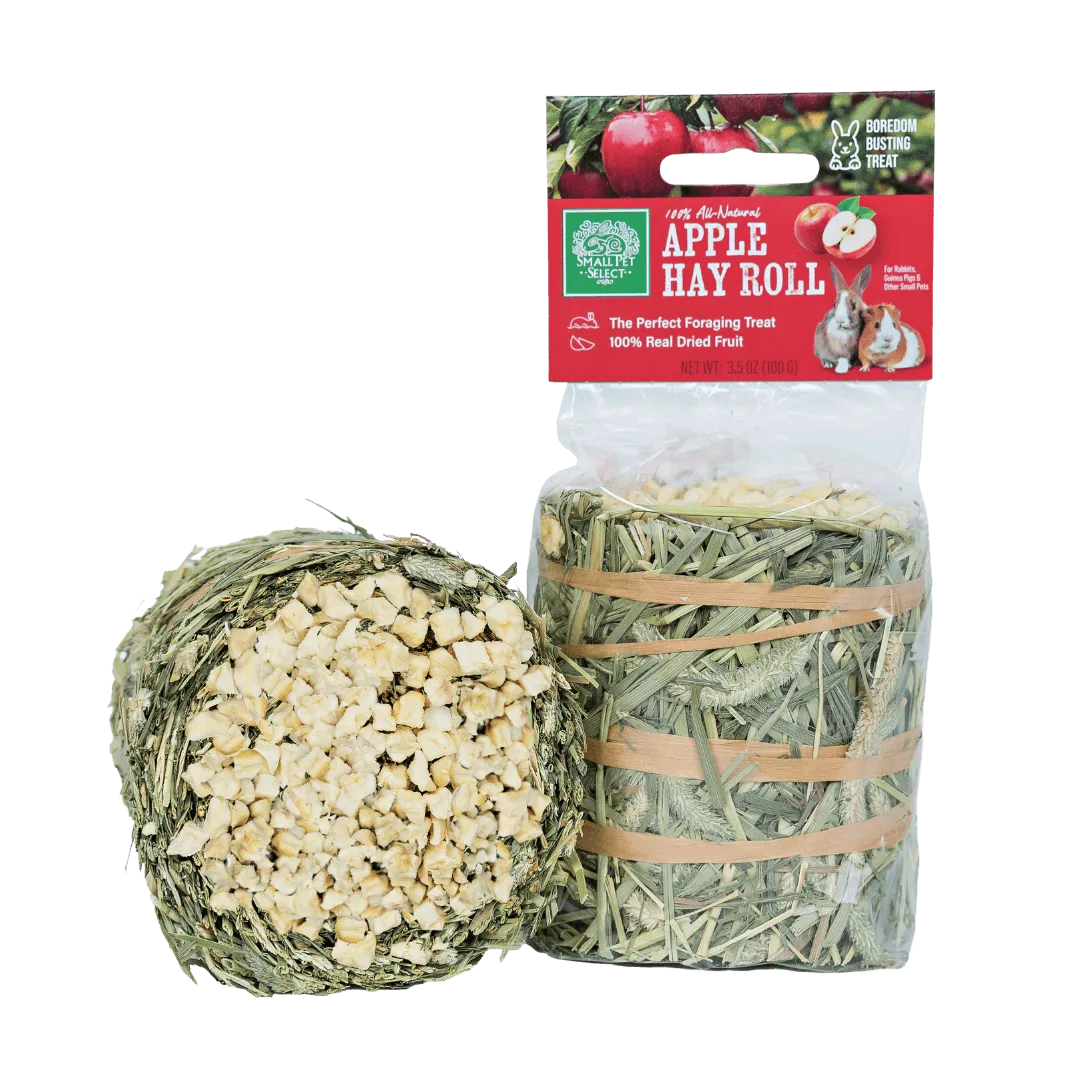
- Timothy Hay Roll Apple: Made from premium Timothy hay and topped with 100% real dried apple, bound with a 100% natural paper strap. A useful way to add a little foraging interest on top of the daily hay portion without switching your rabbit onto a different main forage.
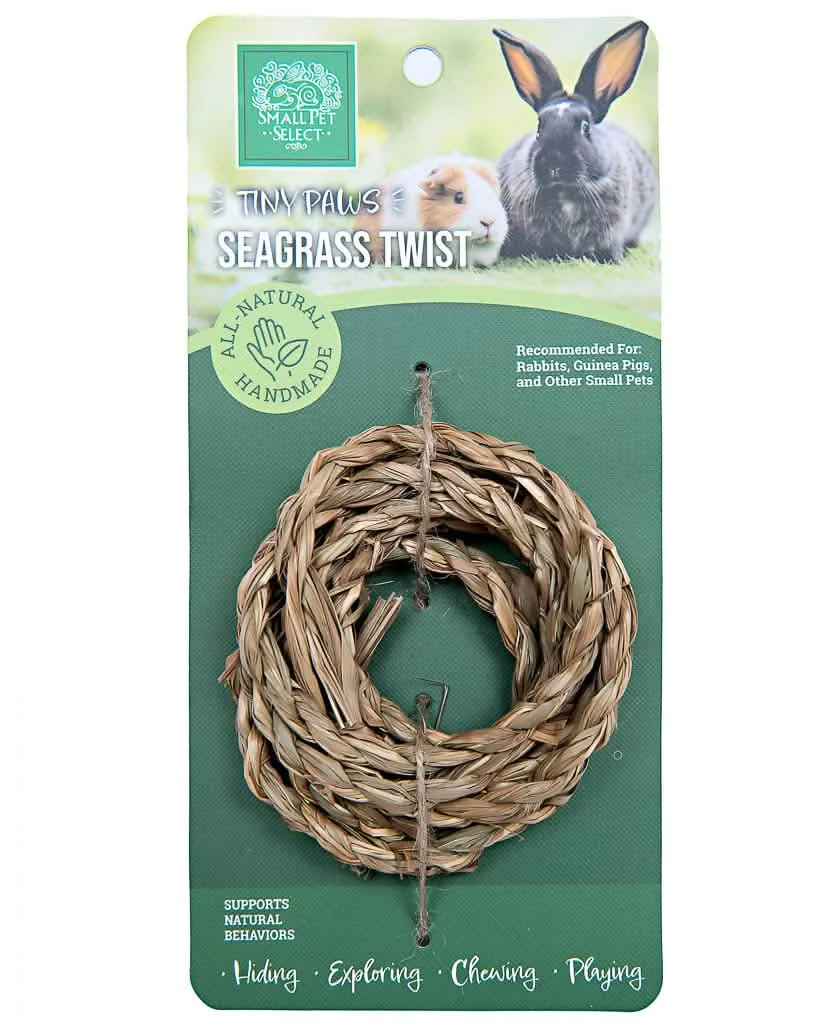
- Tiny Paws Seagrass Twist: Handwoven from 100% natural seagrass, sold as a lightweight twist for rabbits, guinea pigs and other small nibblers. Gives a hay-eating rabbit something separate to chew and carry, which supports the tooth wear that hay already does most of the work for.
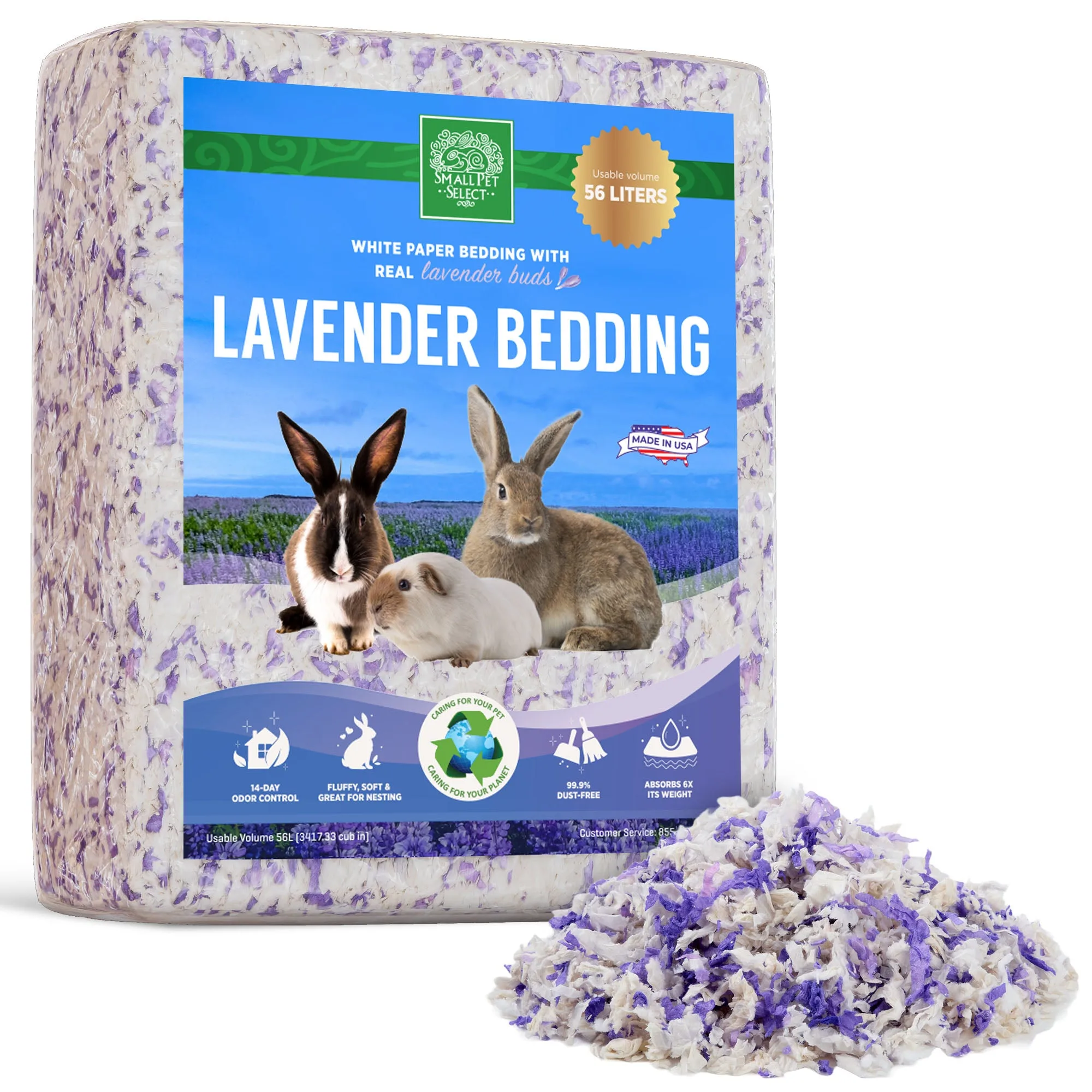
- Lavender Unbleached Paper Bedding: Paper bedding made from clean, unused remnants of food-grade packaging, with 100% real lavender buds for a natural scent. Worth knowing if your rabbit eats hay where it sleeps; bedding choice sits next to the hay rack and affects how clean the daily portion stays.