Quick answer
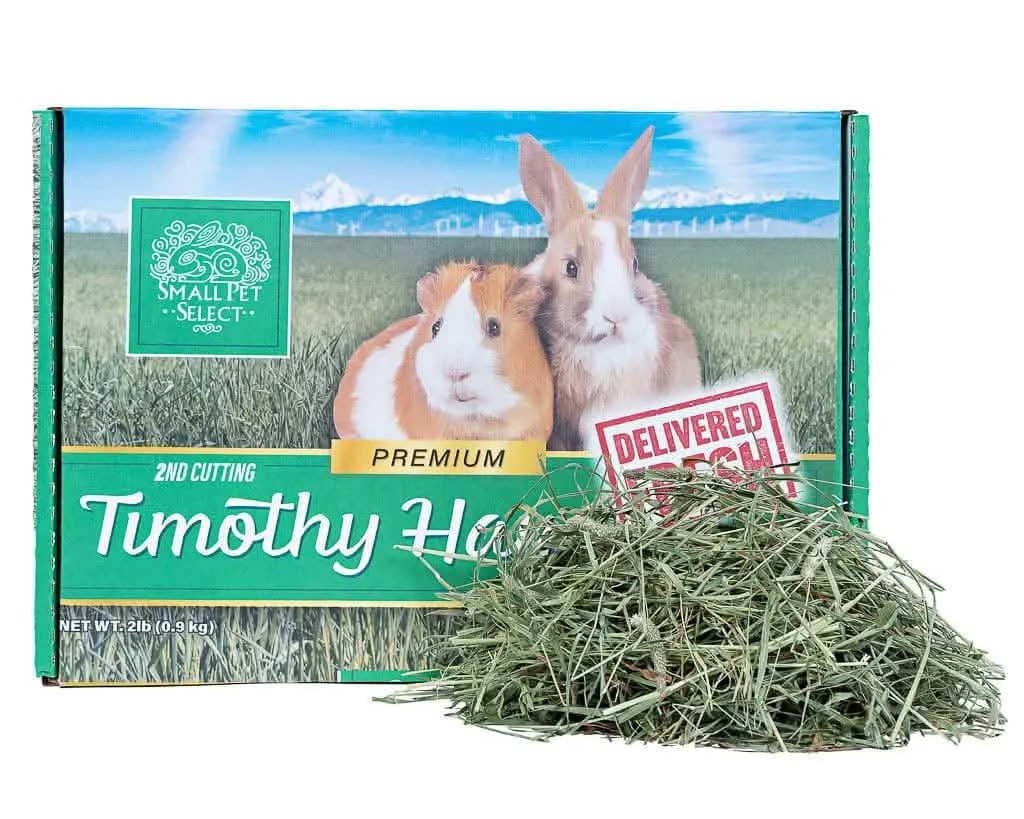
Offer unlimited fresh timothy hay every day. For an adult rabbit, that means a pile at least the size of its body; for an adult guinea pig, a pile roughly the size of its head. Hay should make up about 80% of the diet because it provides the fiber that keeps the gut moving and wears down teeth. If the hay rack is empty by evening, refill it.
Why unlimited hay is the rule, not a suggestion
Hay is not a side dish. For rabbits and guinea pigs, it is the main course. The fiber in grass hay supports healthy digestion and helps prevent gut stasis, a serious slowdown that can become an emergency. Chewing hay also files down teeth that grow continuously. Pellets and vegetables do not provide the same long-strand fiber or the same chewing time, so they cannot replace hay. Unlimited hay means the feeder should never stay empty for long, day or night.
How much hay by pet and life stage
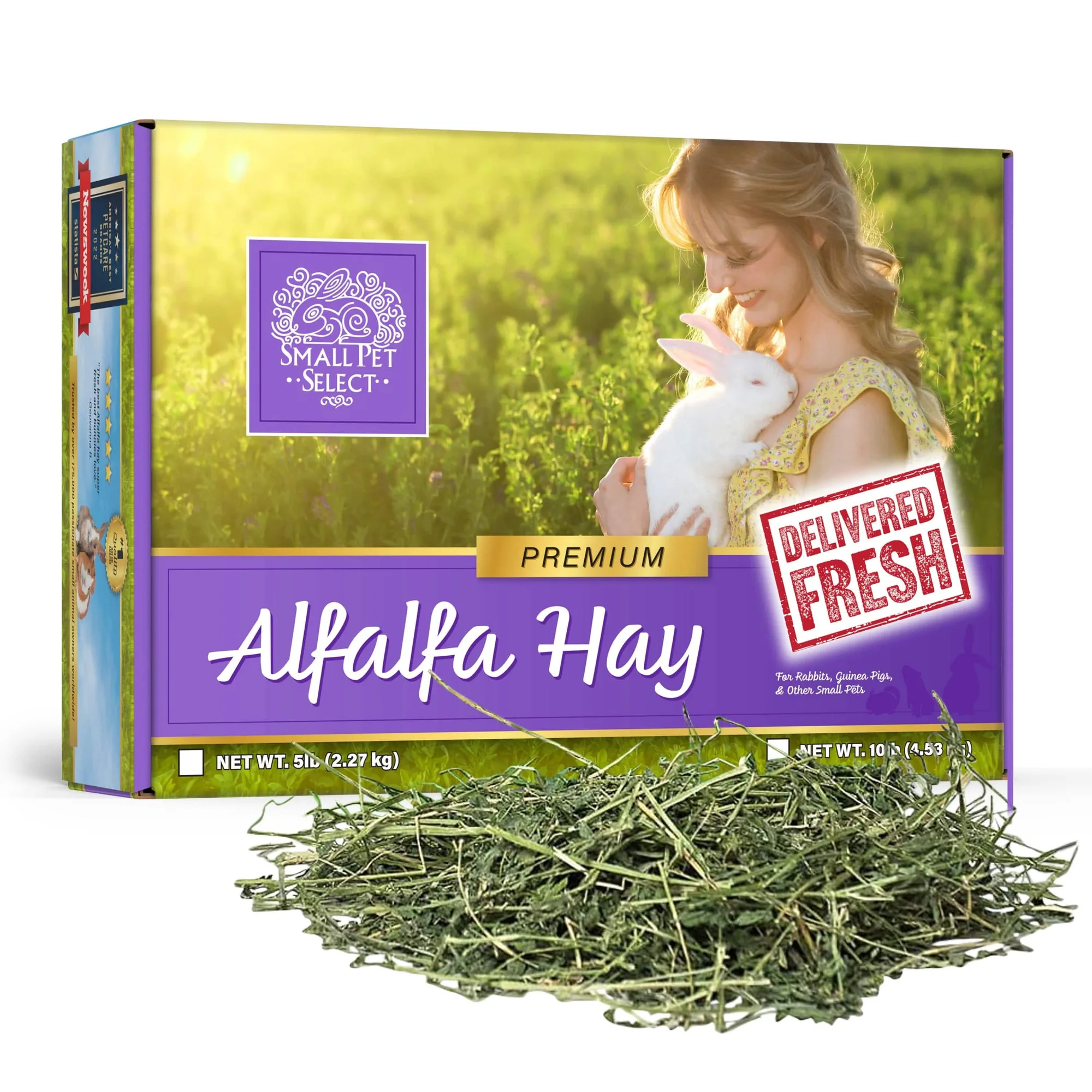
An adult rabbit typically eats a pile about its own body size each day. An adult guinea pig needs a pile about the size of its head. Young rabbits and guinea pigs still growing can eat alfalfa hay in addition to timothy, but adults should stick to timothy or another grass hay to avoid excess calcium and calories. Pregnant or nursing pets may also need alfalfa. When in doubt, offer more timothy hay than you think is needed and remove only the soiled portions.
alfalfa hay
How to set up a hay station that encourages eating
Place hay in a rack or manger rather than on the cage floor. This keeps it cleaner and lets your pet pull strands naturally. Put the rack near the litter area, because many small pets like to eat while they eliminate. Refresh hay at least twice a day, and top it off whenever it looks low. A clean, full rack is the simplest way to hit the daily hay amount without measuring.
What to do when your pet ignores hay
If your rabbit or guinea pig suddenly stops eating hay, treat it as a health concern, not a picky phase. Check for drooling, small or missing droppings, or hiding. Offer a fresh handful of a different cut or brand to see if freshness is the issue. If the refusal lasts more than a few hours, contact an exotic vet. For routine boredom, try stuffing hay into a chew toy or paper tube to make eating more interesting.
Daily hay feeding steps
- Start with a full rack each morning: Fill the hay rack until it is loosely packed. For a rabbit, aim for a pile about body size; for a guinea pig, head size. Checkpoint: the rack should look full, not stuffed tight.
- Top off at midday and evening: Remove any wet or soiled hay, then add a fresh handful. Small pets eat most actively at dawn and dusk, so the evening top-off matters most. Mistake to avoid: waiting until the rack is completely empty before refilling.
- Measure pellets and veggies against hay: Keep pellets to about 1/4 cup per 5 pounds of body weight for rabbits, and about 1/8 cup for guinea pigs, so hay stays the main food. Vegetables are a side, not a replacement. Checkpoint: if pellets disappear before hay, you are overfeeding pellets.
- Watch droppings and leftover hay: Healthy droppings should be plentiful and well-formed. If hay is consistently left untouched or droppings shrink, contact an exotic vet. Next step: adjust hay freshness or cut before assuming illness.
Hay and supplies that support daily feeding
- Small Pet Select Value Choice Timothy Hay: Small Pet Select Value Choice Timothy Hay is a budget-friendly timothy hay option. The catalog notes that fresh hay should make up about 80% of a small pet's diet and is an excellent source of fiber for gut health. It gives you a lower-cost way to keep the hay rack full, which matters when you are feeding unlimited hay every day.
- Hemp Pelleted Small Pet Litter: Hemp Pelleted Small Pet Litter is made from 100% all-natural hemp fibers and is free of pesticides. A litter area near the hay rack stays cleaner with a pelleted bedding, so you can refresh hay without fighting wet shavings.
- Rye Twists: Rye Twists are handcrafted from all-natural rye and are designed for rabbits, guinea pigs, chinchillas, and other small pets. The durable rye fibers help wear down teeth. If your pet needs more chewing time, a rye twist adds safe gnawing between hay meals.