Quick Answer
Adjust the Moover Baby Walker White by checking wheel resistance, inspecting the wooden frame for wear, and ensuring the push handle height suits your toddler's current standing posture.
Why Adjustment Matters as Your Toddler Grows
A wooden baby walker like the Moover Classic Baby Walker White is built to last through multiple stages, from sit-to-stand to confident walking. However, as your child grows taller and more mobile, the walker's settings may need small tweaks to keep it safe and comfortable.
Unlike plastic walkers with multiple height settings, this Danish-designed wooden walker has a fixed handle height. Adjustment focuses on wheel resistance, frame stability, and your child's natural gait rather than handle height.
Trade-Offs of a Fixed-Height Wooden Walker
The Moover Baby Walker White does not have adjustable handlebars. This is a deliberate design choice for durability and simplicity. For most toddlers between 9 and 18 months, the handle height works well. If your child is taller or shorter than average, you may need to monitor their posture closely.
If your toddler has to hunch or reach up, consider using the walker for shorter sessions or waiting until they grow into it. The walker's sturdy wooden frame and wide base provide excellent stability, which is a key safety benefit.
Step-by-Step Adjustment Guide
- Check Wheel Resistance: Place the walker on a flat surface and push it gently. The wheels should roll smoothly but not too fast. If the walker glides away easily, tighten the wheel axle screws slightly (usually a small hex key is needed). If it drags, loosen them a quarter turn. Test with your toddler's weight. Common mistake: Over-tightening wheels can make the walker tip-prone. Aim for a smooth, controlled roll.
- Inspect the Wooden Frame for Wear: Run your hand along all wooden edges and joints. Look for splinters, cracks, or loose dowels. The Moover Baby Walker White uses high-quality beech wood, but daily use can cause minor wear. Sand any rough spots with fine-grit sandpaper and apply a food-safe wood wax if needed. Checkpoint: If you find a loose joint, stop using the walker and apply wood glue before continuing.
- Observe Your Toddler's Posture: Have your child stand behind the walker with both hands on the handle. Their back should be straight, elbows slightly bent, and feet flat on the floor. If they are on tiptoes or bending forward significantly, the walker may be too low or too high for their current height. Common mistake: Forcing use when posture is poor can delay walking confidence. Consider pausing use for a few weeks and rechecking.
- Adjust Walking Surface and Speed: The walker works best on hard, flat floors like wood or tile. On carpet, wheels may catch or slow down. If your toddler struggles to push on carpet, move to a hard floor area. On slippery floors, ensure the walker's rubber wheel rings (if present) are clean for grip. Checkpoint: Never use the walker on uneven surfaces or near stairs, even after adjustment.
- Perform a Weekly Safety Check: Once a week, quickly test the walker: shake it gently to check for wobbles, spin each wheel to ensure they rotate freely, and verify that no small parts have come loose. The Moover Baby Walker White has no small detachable parts, but the wheels and axle should remain secure. Common mistake: Skipping checks after the first month. Regular inspection prevents accidents as wear accumulates.
Product Facts
-
Baby Walker White: The Moover CLASSIC Baby Walker is a luxury wooden mobility toy designed in Denmark, supporting your child from sit-to-stand to first steps. Its fixed-height design and sturdy construction mean you don't need to adjust handle height, but you should still check wheel resistance and frame integrity as your toddler grows.
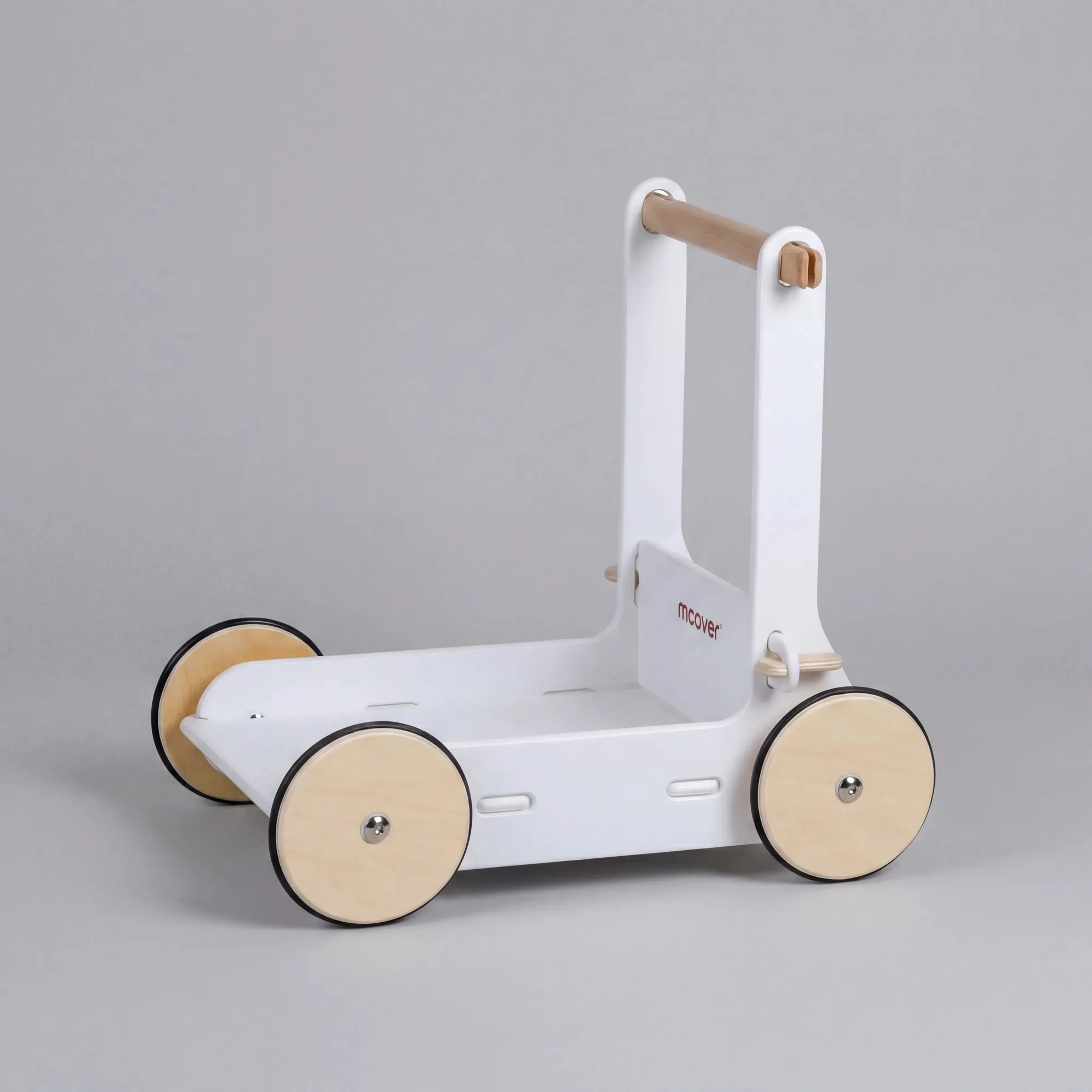
Baby Walker White