What Metoclopramide Tablets Do
Metoclopramide is a medication that helps prevent acid reflux and vomiting in dogs, cats, and small mammals. It works by stimulating the stomach and upper small intestine, which can normalize digestive system function and help with hairballs and other gastric disorders.
If your veterinarian has prescribed metoclopramide for your pet, you likely have questions about how to give it safely and what to expect. This guide walks through the key points from the product information, so you can administer the tablets with confidence.
Metoclopramide Tablets at a Glance
-
Metoclopramide Tablets: Metoclopramide is available in 5 mg and 10 mg tablet strengths, with counts ranging from 1 to 180 tablets per bottle. Knowing the available strengths and package sizes helps you choose the right supply for your pet's prescribed course and avoid overbuying.
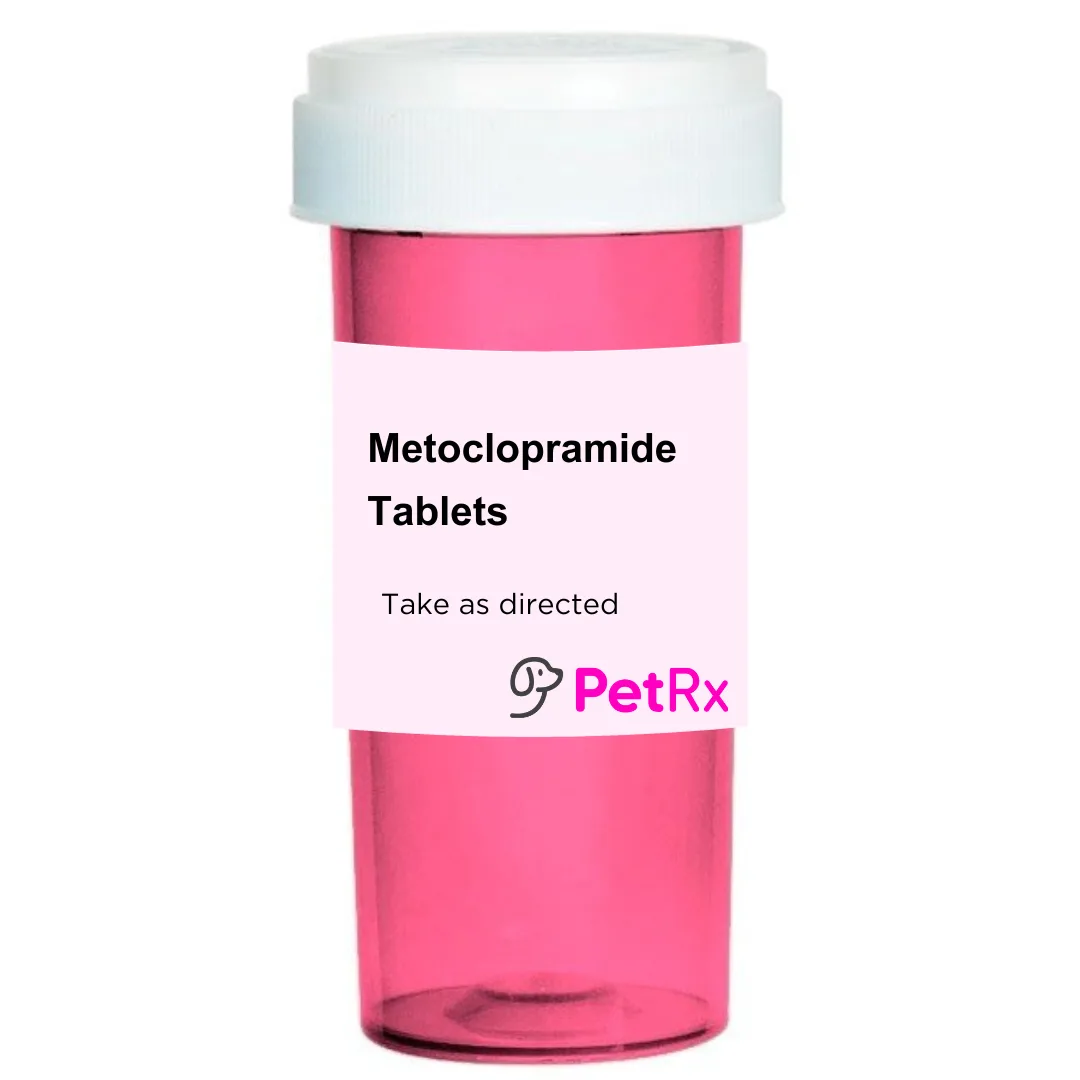
Metoclopramide Tablets
-
Metoclopramide Tablets: The medication is given orally as a tablet and may be given either with food or on an empty stomach. You have flexibility in how you administer the tablet, which can make it easier to give to a picky eater or a pet that needs a consistent routine.
-
Metoclopramide Tablets: Store this medication in the original prescription bottle at room temperature and protected from light. Proper storage keeps the medication effective and safe, so check that your storage spot is cool, dry, and away from direct sunlight.
How to Administer Metoclopramide Tablets
Always follow your veterinarian's dosage and course of treatment. Do not adjust the dose or frequency without consulting them first.
- Confirm the dose and timing: Check the prescription label for the exact strength (5 mg or 10 mg) and how many tablets to give. Your vet will tell you how often to give it and for how long.
- Give with or without food: Metoclopramide may be given with food or on an empty stomach. If your pet is prone to nausea, giving the tablet with a small meal may help.
- Administer the tablet: Place the tablet directly in your pet's mouth, or hide it in a small amount of food if your pet is cooperative. Ensure the full tablet is swallowed.
- Store the remaining tablets properly: Keep the medication in its original prescription bottle at room temperature and protected from light. Do not transfer to another container unless directed.
Important Safety Precautions
Before starting metoclopramide, tell your veterinarian about any other medications or supplements your pet is taking, because other drugs can interact with metoclopramide.
Do not give metoclopramide to pets who are allergic to sunscreen containing PABA (para-amino benzoic acid), or to pets who have pseudopregnancy (false pregnancy), a tumor called pheochromocytoma, or blockage or bleeding in the stomach or intestines.
Use metoclopramide with caution in pets with a seizure disorder, a history of seizures, or kidney disease. Your vet needs this information to decide if metoclopramide is safe for your pet.
Possible Side Effects to Watch For
In dogs and cats, metoclopramide is generally tolerated well, but some pets may experience diarrhea, restlessness, drowsiness, constipation, disorientation, or increased urinary frequency.
If you notice any of these signs, or if your pet seems unusually uncomfortable, contact your veterinarian. Do not stop the medication without their guidance.
What This Guide Does Not Cover
This guide covers the basics of giving metoclopramide tablets, but it does not replace your veterinarian's advice. Dosage, frequency, and duration of treatment must be determined by a veterinarian for your specific pet.
The product information does not include specific instructions for handling the medication beyond storing it properly. If you have questions about handling, ask your pharmacist or veterinarian.