Quick answer
The safest way to anchor a gazebo depends on your surface: use ground anchors with concrete footings on grass, expansion bolts on concrete, and heavy-duty screw anchors on pavers. Always follow the manufacturer's load and wind ratings.
Why surface matters for gazebo stability
A gazebo that isn't properly anchored can shift, tilt, or even collapse in strong wind. Different surfaces require different hardware because they hold weight and resist pull-out forces differently. Grass allows deep ground anchors, concrete needs expansion bolts, and pavers need special screw anchors that don't crack the stone.
Choosing the right anchor for your gazebo size
Larger gazebos like the Backyard Discovery Lodge 16x14 Cedar and Steel Gazebo with Steel Roof (1558685) have substantial steel roofing and oversized cedar posts, which means they need deeper footings and heavier anchors than a smaller 12x10 model. Always check the gazebo's weight and wind-load rating before selecting anchor hardware.
Step-by-step anchoring process
- 1. Prepare the site and check local codes: Clear the area of debris, level the ground, and verify if your municipality requires permits or specific anchor depths. A common mistake is skipping this step and later finding the gazebo violates setback rules.
- 2. Mark anchor points and dig footings (grass only): For grass, mark each gazebo leg position, then dig holes at least 24 inches deep (or per local frost line). Pour concrete footings and embed ground anchor brackets before the concrete sets. A common mistake is making holes too shallow — frost heave can push the gazebo out of level. On concrete or pavers, skip digging and move to step 3.
- 3. Attach anchors to the surface: For concrete: drill pilot holes and use expansion bolts or wedge anchors rated for the gazebo's weight. For pavers: use heavy-duty screw anchors designed for stone — never hammer into pavers as they crack easily. A common mistake is using concrete anchors on pavers, which can shatter the stone.
- 4. Secure the gazebo frame to anchors: Position the gazebo legs over the anchor brackets or bolts, then tighten all fasteners with a torque wrench to the manufacturer's specification. A common mistake is under-tightening, leaving the gazebo loose enough to wobble in wind. Check that every leg is flush against the anchor plate before moving to the next.
- 5. Test stability and make final adjustments: Gently push the gazebo at each corner. If any leg lifts or shifts, add additional anchors or re-tighten. A common mistake is assuming the gazebo is stable because it looks level — always test with physical pressure. Repeat the test after the first heavy rain or wind storm, as soil can settle.
Gazebos built for stability
-
14x12 Peak Roof Gazebo: Pro-Tect™ tested to withstand up to 9,000 pounds of roof weight and wind speeds up to 100 mph. This means you need anchors that can handle that load — standard ground stakes won't be enough.
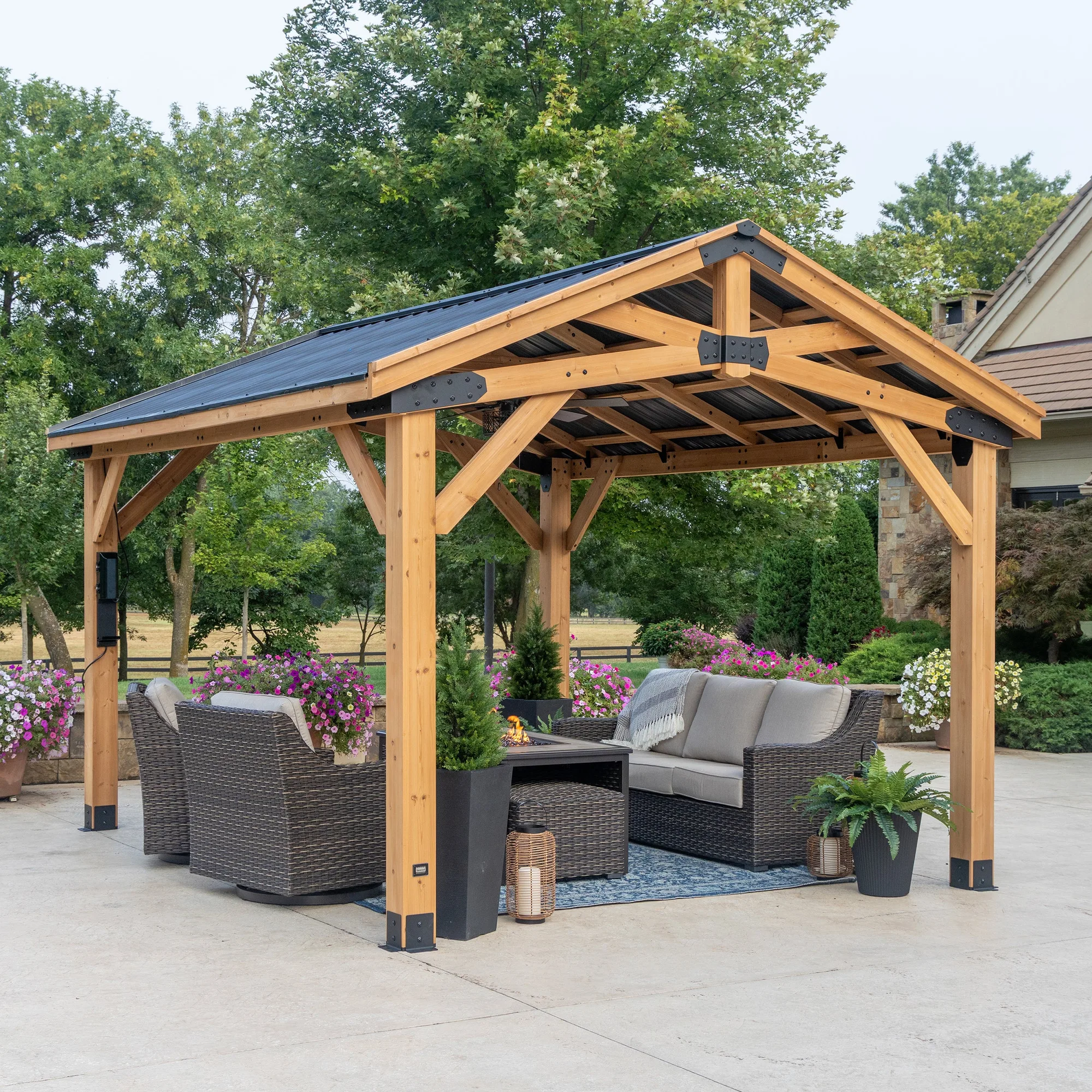
14x12 Peak Roof Gazebo