Why a leave-in conditioner turns greasy
A greasy beard after leave-in conditioner usually comes down to three things: too much product, applying to soaking-wet hair, or working it only into the surface instead of from the skin outward. The fix is not a different product category — it is a tighter application routine.
The Thickening Leave-in Beard Conditioner is formulated to be lightweight and non-greasy, absorbing without weighing the beard down or leaving a slick film. That gives you a helpful baseline: if the result feels heavy, the amount or the application method is the first place to look.
A low-grease application routine
These steps follow the product's supplied directions and add practical checkpoints for avoiding a slick finish.
- Start with a clean beard: Apply after washing. Product layered over old oils, sweat, or styling residue is a common reason a beard feels coated rather than conditioned.
- Towel to damp, not wet: The directions call for a beard that is damp rather than wet. Excess water dilutes the product and encourages you to add more than you need.
- Use about a dime-sized amount: A beard needs less than your scalp does. Begin with a dime-sized amount and add a little more at the ends only if they still feel dry.
- Work from the skin outward: Push a small amount through the beard starting at the skin, then spread it toward the ends. This reaches the skin underneath — which the formula is also designed to condition — instead of leaving a layer on the surface.
- Comb or brush into place and leave it: As a leave-in, comb or brush the product through and leave it in. The result should be a beard that combs out smoothly, not one that feels wet or slick.
What the formula is designed to do
-
Thickening Leave-in Beard Conditioner: Lightweight, non-greasy daily conditioner for beard and the skin under it, scented with sandalwood and ginger. Sets the expectation: a greasy result is an application issue to correct, not the intended finish.
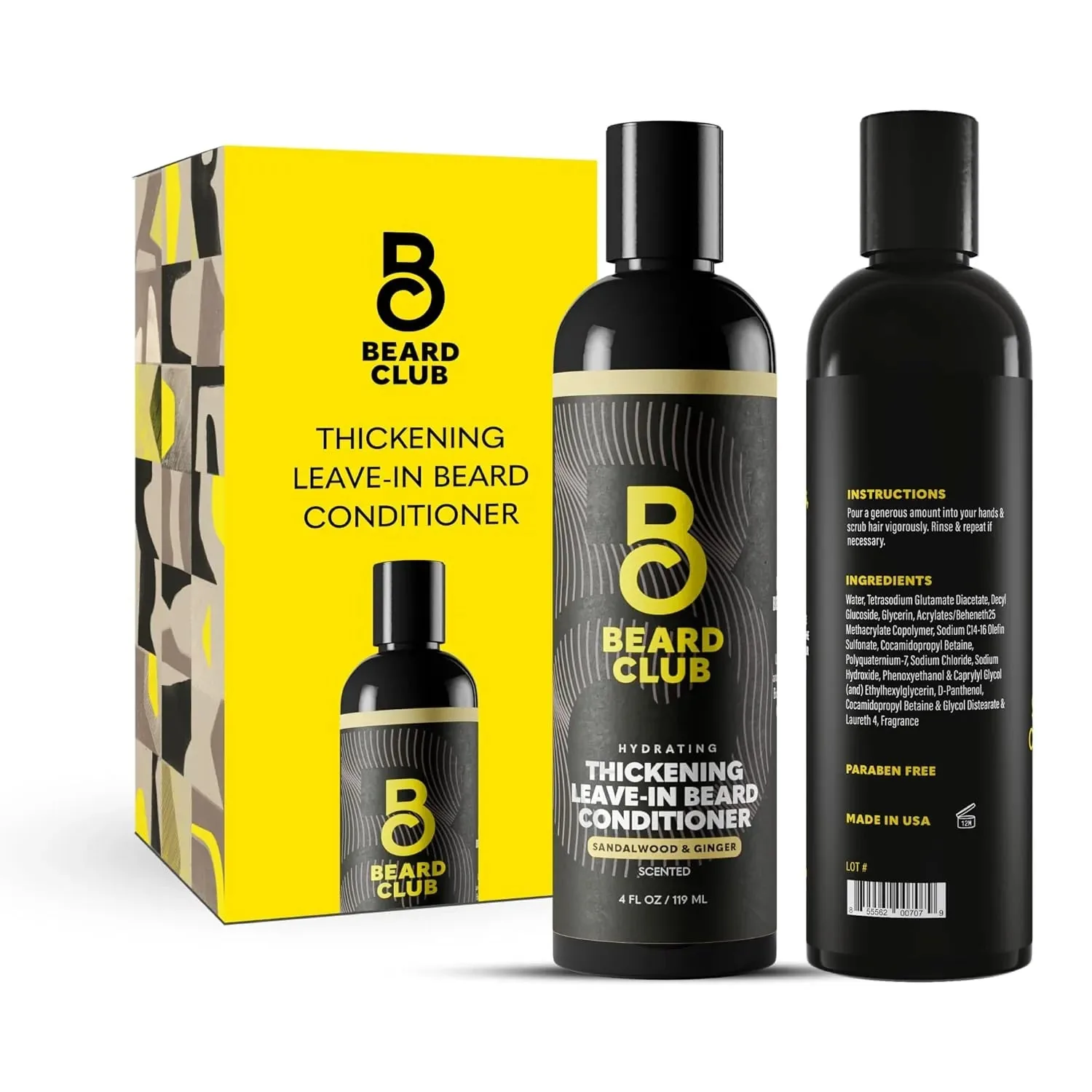
Thickening Leave-in Beard Conditioner
-
Thickening Leave-in Beard Conditioner: Hydrates and softens coarse hair so a beard combs out smoothly. Explains the benefit you are aiming for — smooth combing — so you can judge whether your routine is working.
Application mistakes that create a greasy beard
- Applying to a soaking-wet beard: The directions specify damp, not wet. Too much water can make the product feel like it disappears, prompting a second application you do not need.
- Using a scalp-sized amount: A beard needs less than your scalp does. Start with a dime-sized amount and only add more at the ends if they still feel dry.
- Skipping the skin: Working product only onto the surface leaves the skin underneath unaddressed and can leave a visible film on the outer hair.
- Reapplying without washing: Layering leave-in conditioner day after day without cleansing can build up. The product is designed as a daily conditioner applied after washing.
Using it as a rinse-out instead
If your beard still feels weighed down as a leave-in, the same product can be used as a rinse-out treatment. Apply it to a clean, wet beard, give it a couple of minutes, then rinse it out. This gives you a way to condition without any product remaining in the beard.
That dual use is worth knowing before you decide the formula is too heavy. The difference between a greasy leave-in and a clean rinse-out is often just which method you chose.
Thickening conditioner tips for thin patches
Thin patches are a coverage and appearance question as much as a conditioning one. These tips focus on getting an even, non-greasy result rather than making claims about hair growth.
- Keep the amount small and even: A dime-sized amount spread evenly is easier to distribute consistently than a larger amount concentrated in one spot.
- Work from the skin outward in thin areas: Starting at the skin helps you cover the base of the beard evenly, which supports a fuller-looking comb-out without surface buildup.
- Comb through while damp: Combing or brushing into place while the beard is damp helps distribute the product and smooth the hair so it combs out cleanly.
- Add more only at the ends: If the ends still feel dry after the first pass, add a little more there rather than adding more at the roots.
Product details worth knowing before you apply
- Thickening Leave-in Beard Conditioner: Dual-action formula: use it as a leave-in or as a rinse-out treatment. Gives you a fallback method if the leave-in feel is not right for your beard.
- Thickening Leave-in Beard Conditioner: Named ingredients include rosemary, sunflower seed oil, and black currant seed oil. Useful if you are comparing formulas or checking ingredients you already know you like.
- Thickening Leave-in Beard Conditioner: Sulfate free, paraben free, aluminum free, and cruelty free; made in USA. Relevant for readers who screen grooming products on these attributes.
Building it into a simple daily routine
A workable leave-in beard conditioner routine is short: wash, towel to damp, apply a dime-sized amount from the skin outward, comb or brush into place, and leave it. If you prefer a rinse-out, apply to a clean, wet beard, wait a couple of minutes, and rinse.
The main checkpoint is how the beard feels and combs once dry. Smooth combing without a slick film means the amount and method are working. A heavy or coated feel points back to too much product, a too-wet beard, or surface-only application — adjust one variable at a time before changing products.