Quick Answer
For clean paint lines, use masking tape on flat surfaces and masking fluid on curves or complex details. Apply both to a clean, degreased surface and burnish edges firmly.
Why Tape and Fluid Work Best Together
Masking tape is ideal for straight edges and large areas because it lays flat and cuts cleanly. Masking fluid fills the gaps where tape can't conform, such as panel lines, rivets, or curved surfaces. Using both gives you full control over your paint boundaries.
The main trade-off is drying time: masking fluid needs about 15–20 minutes to set, while tape is ready immediately. Plan your workflow so you apply fluid first, then tape while the fluid dries.
Step-by-Step: Masking for Clean Lines
- Prepare the Surface: Wipe the area with a mild detergent or isopropyl alcohol to remove oils and dust. This step is critical for adhesion – any residue will cause paint bleed. Skipping cleaning is the most common cause of fuzzy lines.
- Apply Masking Fluid to Complex Areas: Shake the bottle gently, then use a brush or the bottle tip to apply a thin, even coat over curves, panel lines, or recessed details. Let it dry completely until clear (about 15–20 minutes). Do not apply thick layers – they take longer to dry and may peel unevenly. If the fluid is still tacky, paint will lift it when you spray.
- Cut and Place Masking Tape: Lay the tape on a cutting mat and cut the shape you need with a sharp blade. For straight lines, press the tape down from one end, smoothing as you go. For curves, use narrow tape (e.g., 10mm) and stretch it slightly to follow the curve without wrinkles. Burnish the edges with a toothpick or cotton swab to seal the boundary.
- Paint and Remove Masking: Spray or brush your paint in thin coats. Wait until the paint is fully dry before removing the mask. Peel tape slowly at a 180-degree angle back over itself. For masking fluid, rub gently with a clean finger or use tweezers to lift an edge and peel it off. Removing too early can pull up fresh paint; waiting too long may make the mask brittle.
Products That Help
-
Masking Fluid 87229: This special light green fluid can be used to mask off areas that tape would struggle on – including complex or curved shapes and difficult surface finishes. It can be applied directly from the bottle, and minimal dripping makes for a clean, precise job. You can paint tricky details like cockpit rims or curved armor without worrying about paint bleeding under the mask.
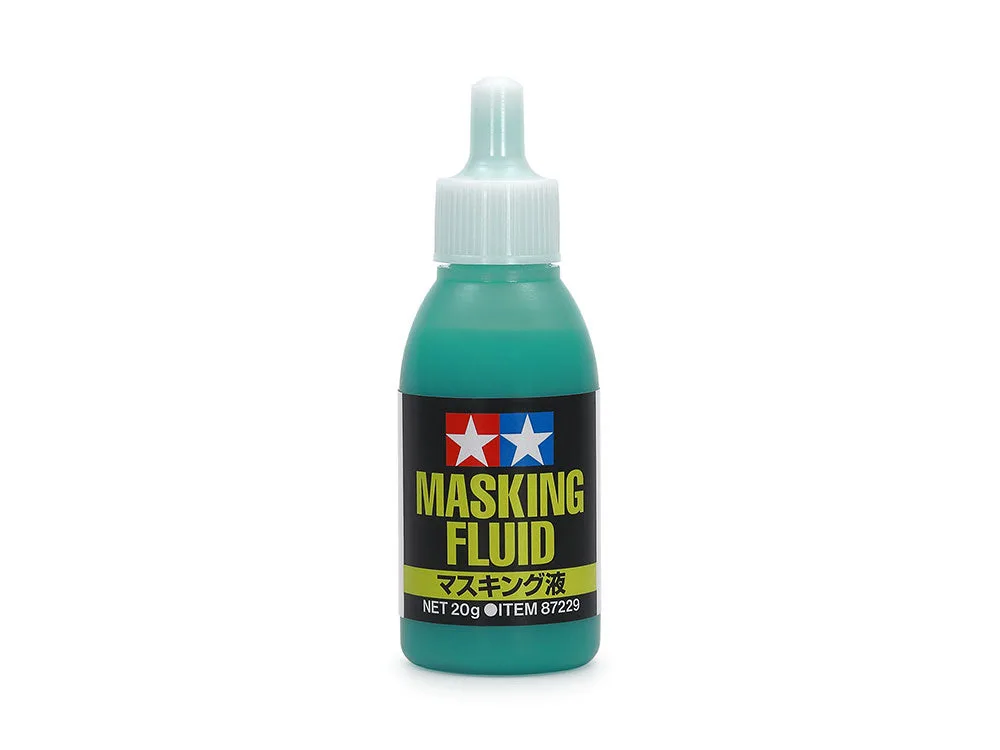
Masking Fluid 87229
-
Mr Masking Tape 10MM MT602: Mr. Masking Tape is made of ultra-thin Japanese paper, and it is difficult to remove the unevenness of the coating film after peeling it off, and because it has excellent elasticity, it is also ideal for attaching to curved parts. It leaves a smoother paint edge than standard tape and conforms to curved surfaces without lifting, reducing touch-up work.
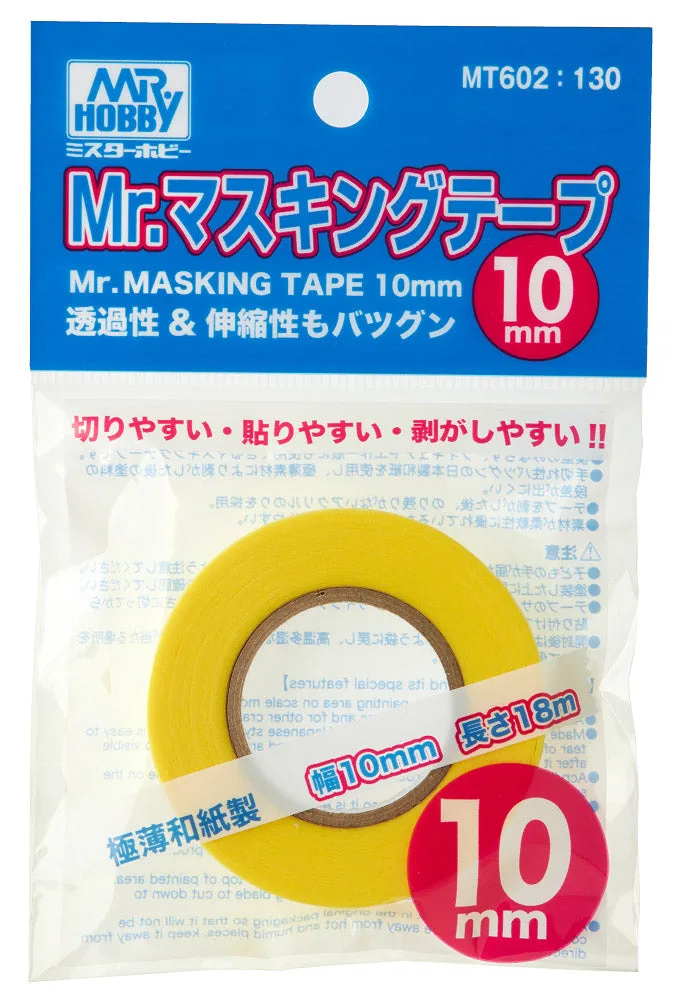
Mr Masking Tape 10MM MT602