Quick answer
To treat lice in chickens safely, dust each bird lightly with poultry louse powder, work it into the feathers near the skin, and treat the coop thoroughly—then repeat after 7–10 days to catch newly hatched lice.
Why treatment timing matters
Lice live their entire life cycle on the bird, but eggs (nits) can survive off the host for a short time. A single application kills adult lice but may miss eggs that hatch later, which is why a follow-up treatment is essential.
Treating only the birds and ignoring the coop allows re-infestation. Dust perches, nesting boxes, and floor litter at the same time to break the cycle.
Choosing the right powder
Look for a ready-to-use insecticidal powder labeled for poultry. Battles Poultry Louse Powder contains Permethrin and is effective against mites, lice, and fleas, making it a straightforward choice for a mixed infestation.
Always follow the label directions for the specific product you buy. Different formulations may have different application rates and safety precautions.
Step-by-step application
- Prepare the birds and workspace: Choose a dry, calm day. Have the powder, gloves, and a dust mask ready. Work in a well-ventilated area to avoid inhaling dust. Never apply powder to wet feathers—it won't adhere properly and reduces effectiveness.
- Dust each bird lightly: Hold the bird gently and part the feathers to expose the skin. Apply a small amount of powder along the back, under the wings, and around the vent. Use your fingers to work it down to the skin. A light dusting is enough—overdosing can stress the bird and waste product.
- Treat the coop and environment: Remove old litter and dust the floor, perches, and nesting boxes with the same powder. Pay special attention to cracks and crevices where lice may hide. Replace or clean bedding after treatment to reduce the chance of re-infestation.
- Repeat after 7–10 days: Lice eggs can hatch after the first treatment. Repeat the application on both birds and coop to catch newly emerged lice before they lay more eggs. Mark your calendar—a missed second treatment often leads to a persistent infestation.
- Monitor and maintain: Check your birds weekly for signs of lice, such as restlessness, feather damage, or visible lice near the skin. Keep the coop clean and dry to discourage future outbreaks. Early detection makes treatment faster and less stressful for your flock.
Product facts
-
Battles Poultry Louse Powder: Battles Poultry Louse Powder is a ready-to-use insecticidal powder containing Permethrin, effective against mites, lice, and fleas in animal houses. This single product can handle both the birds and the coop, simplifying your treatment routine.
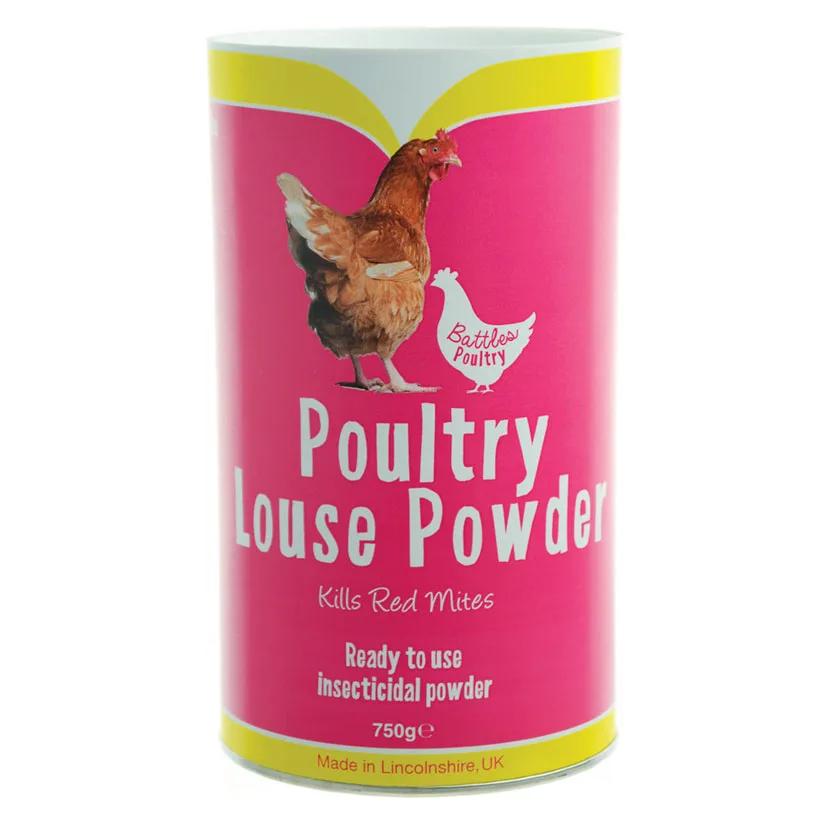
Battles Poultry Louse Powder