Quick answer
For clean, fast coverage, swipe a mineral sunscreen stick directly onto dry skin, then blend the edges with your fingertips. Sticks work best for the face, ears, neck, and quick reapplications. For full-body coverage on a beach day, start with a lotion and keep the stick for touch-ups.
Why a stick beats lotion on the face (and when it doesn't)
Sticks are the clear winner for applying sunscreen to kids' faces because they don't drip, don't require a pump, and let you target small areas like the nose, ears, and hairline without getting cream in their eyes. They're also easy for kids to help with, which can cut down on the struggle. But sticks are not ideal for large areas like the back or legs, where you'd need to swipe for a long time to build enough coverage. For those spots, use a lotion or cream first, then use the stick for touch-ups. A stick also won't tell you when you've applied enough, so you need to be deliberate about overlapping passes.
Prep the skin so the stick glides instead of drags
Sunscreen sticks are formulated to be firm so they don't melt in a hot car or beach bag. That firmness means they can tug on dry or dirty skin. Before you swipe, make sure your child's face is clean and dry. If you're reapplying after swimming or sweating, pat the skin dry with a towel first. On very dry cheeks, a thin layer of moisturizer can help the stick glide, but let it absorb for a minute so the sunscreen doesn't slide off. If the stick feels scratchy, warm the tip against your own skin for a second, not in the sun.
Cover the spots parents miss
The most common missed spots are the ears (especially the tops and behind them), the neck, the part in the hair, and the tops of the feet. With a stick, you can color these areas in directly without spraying or squirting. For the hairline, swipe along the part and then rub it in with your finger so it doesn't leave a visible line. Don't forget the lips if the stick is labeled for lips, or use a separate lip balm with SPF. Also check the eyelids, but keep the stick away from the lash line; use a small dab of lotion on a fingertip instead.
Reapply on a schedule, not just when you remember
Sunscreen sticks are convenient, but they don't last all day. The general rule is to reapply every two hours, and immediately after swimming, sweating heavily, or toweling off. Even water-resistant formulas need to be reapplied after 80 minutes in the water. Set a phone timer when you arrive at the pool or park. If your child is in and out of the water constantly, a stick makes those quick reapplication breaks much easier than wrestling with a lotion bottle. Keep the stick in a cool, shaded spot so it doesn't soften too much.
Step-by-step: mess-free stick application
- Start with dry, clean skin: Pat the face dry with a towel, especially after swimming or sweating. If skin is dirty or oily, the stick can drag and skip. Checkpoint: skin should feel dry to the touch before you swipe.
- Swipe in overlapping passes: Glide the stick back and forth over each area two to three times, overlapping like you're coloring with a crayon. Don't just do one quick streak. Common mistake: one pass leaves gaps that burn.
- Blend edges with your finger: Use your fingertip to smooth the edges and any visible white cast, especially around the hairline, eyebrows, and ears. Checkpoint: no thick white lines or clumps left behind.
- Cover the forgotten spots: Swipe the ears, back of the neck, part in the hair, and tops of the feet. For eyelids, dab a tiny amount of lotion with your finger instead of the stick. Common mistake: skipping the ears and neck, which are common burn sites.
- Reapply every two hours: Set a timer. Reapply sooner after swimming, heavy sweating, or toweling off, even if the formula is water resistant. Checkpoint: if you're not sure when you last applied, reapply now.
Product facts that make a difference
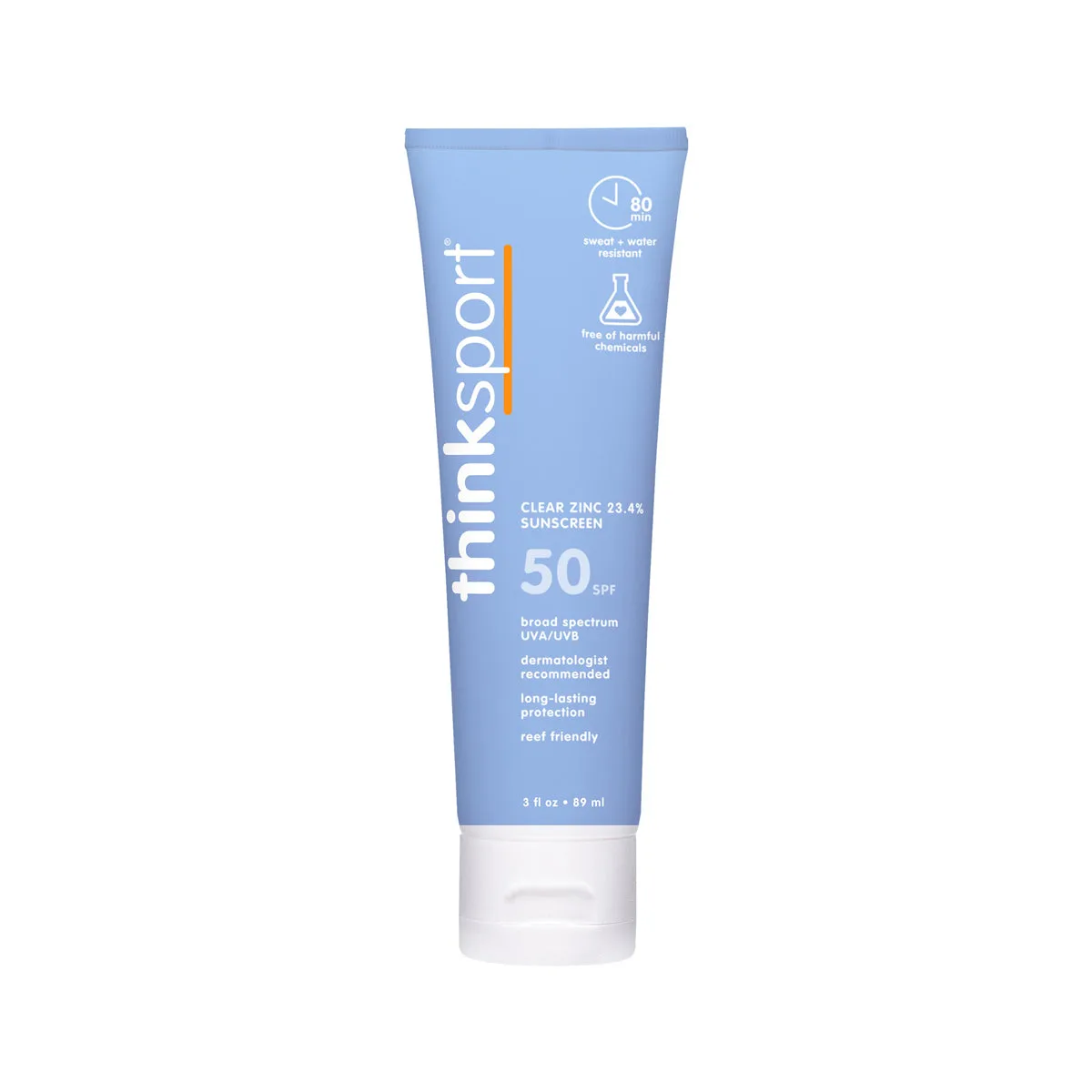
- Thinksport Sunscreen Stick SPF 30+: Thinksport Sunscreen Stick SPF 30+ is water and sweat resistant for up to 80 minutes, fragrance-free, and made for active lifestyles and on-the-go application. This makes it a practical choice for quick reapplication on the field or slopes, and the fragrance-free formula is less likely to bother kids with sensitive skin.
- Thinkkids Brush-On Sun Shield SPF 30: Thinkkids Brush-On Sun Shield SPF 30 uses a soft brush to apply a mineral SPF 30 with non-nano Zinc Oxide, Vitamin E, and Ceramides; it is reef friendly and made without certain ingredients. The brush format can be less messy than a stick for wiggly toddlers and helps cover the face and scalp without rubbing, which is useful for kids who resist hands-on application.
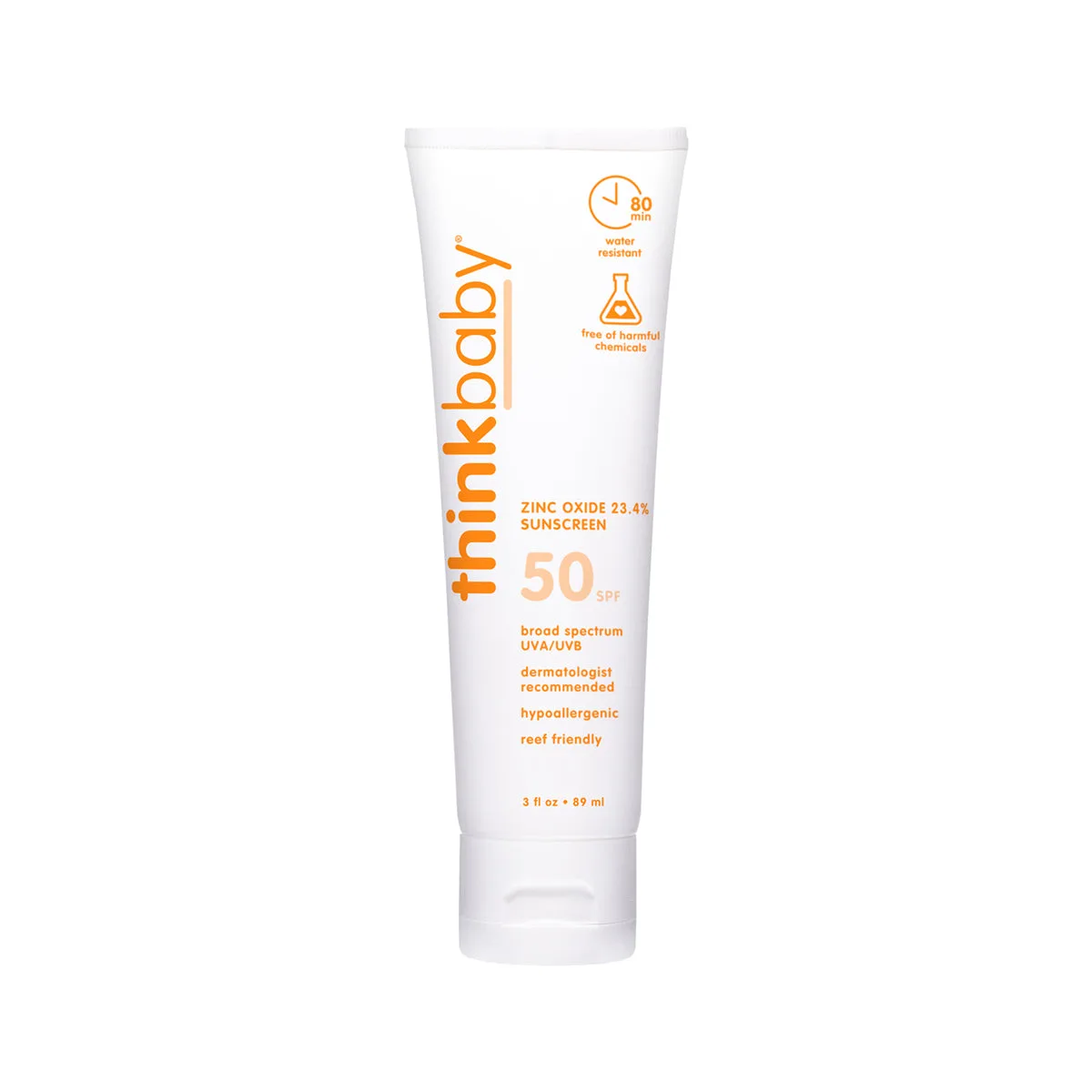
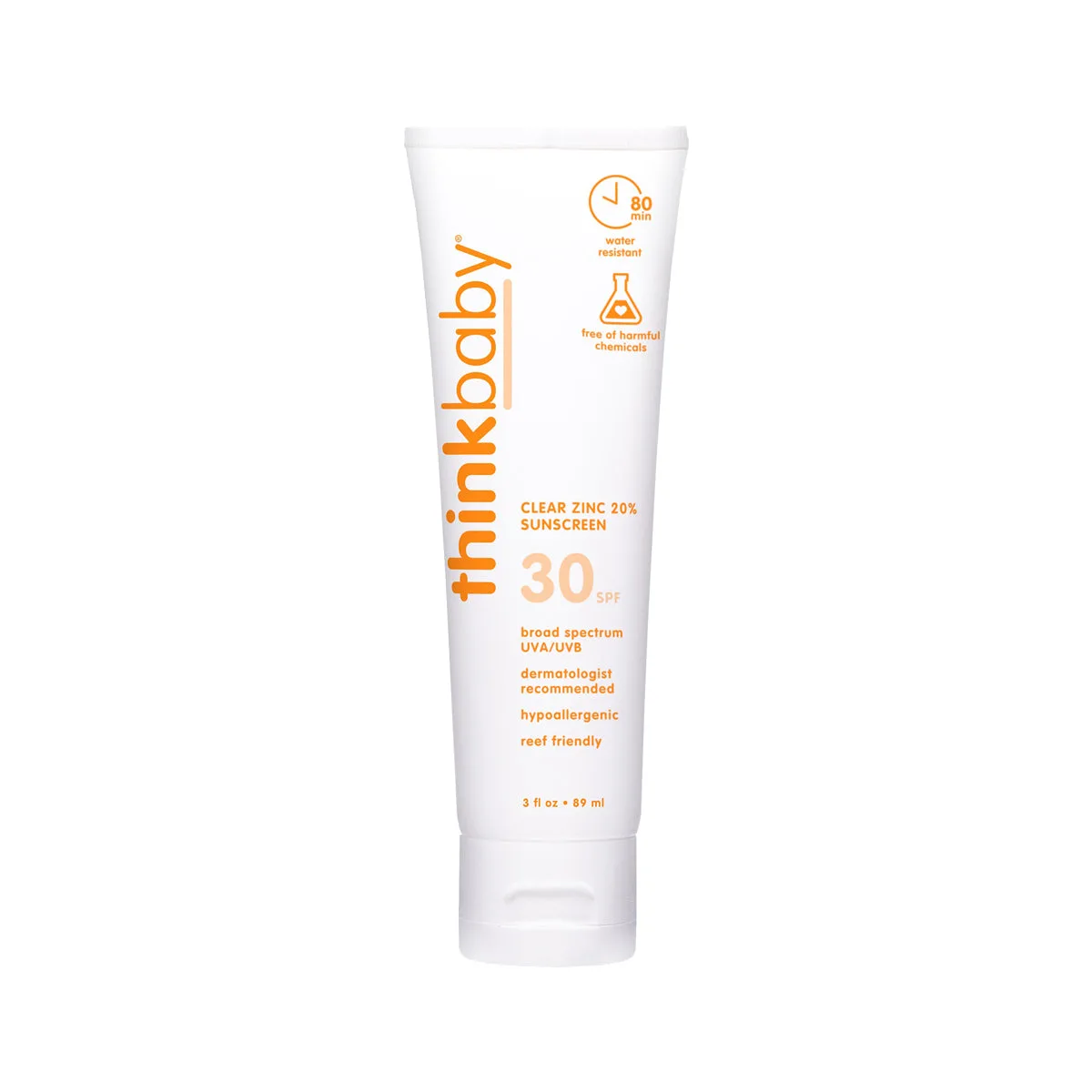
- Thinkbaby Clear Zinc Sunscreen SPF 30 (3oz): Thinkbaby Clear Zinc Sunscreen SPF 30 (3oz) is a clear Zinc Oxide formula with Aloe and Vitamin E, water-resistant for up to 80 minutes, and pediatric-dermatologist recommended. If your child has sensitive skin or you need a lotion for larger areas before using a stick for touch-ups, this provides broad-spectrum protection without a white cast.