Quick answer
To back carry with the Rodeo Lark Baby Carrier, first ensure your baby is at least 6 months old and can sit unassisted, then follow the steps below for a secure and comfortable fit.
Why back carrying with the Lark is different
Back carrying shifts your baby’s weight to your back, reducing strain on your shoulders and lower back compared to front carries. The Lark carrier is designed for this transition, with adjustable straps and a supportive waistband that works for babies from 10 to 45 lbs.
However, back carrying requires a bit more practice because you cannot see your baby’s face. The steps below help you build confidence and avoid common pitfalls.
How to back carry with the Rodeo Lark Baby Carrier
- Step 1: Prepare the carrier: Buckle the waist belt around your natural waist and tighten it snugly. The waist belt should sit high, just under your ribcage, not on your hips. Common mistake: wearing the waist belt too low, which can cause the carrier to sag and put pressure on your lower back.
- Step 2: Position your baby on your back: Hold your baby against your chest, then lean forward slightly and gently slide them onto your back. Keep one hand supporting their bottom and the other on their back. Use a mirror or ask a helper to ensure the baby is centered and their legs are in an M-shape (knees higher than bottom). Checkpoint: The baby’s knees should be bent and slightly higher than their hips, creating a deep squat position for healthy hip development.
- Step 3: Secure the shoulder straps: Reach over your shoulders, grab the shoulder straps, and bring them forward. Cross the straps behind your back (X-shape) or leave them uncrossed, depending on your comfort. Buckle the chest clip at armpit level. Common mistake: crossing the straps too high or too low; aim for the middle of your shoulder blades for even weight distribution.
- Step 4: Tighten and check fit: Pull the shoulder strap adjusters evenly until the carrier is snug but not restrictive. The baby should be close enough to kiss (their head near your chin) and the fabric should support from knee to knee. Final check: The baby’s airway must be clear—their chin should not be pressed into their chest. You should be able to fit two fingers between their chin and chest.
Product details
-
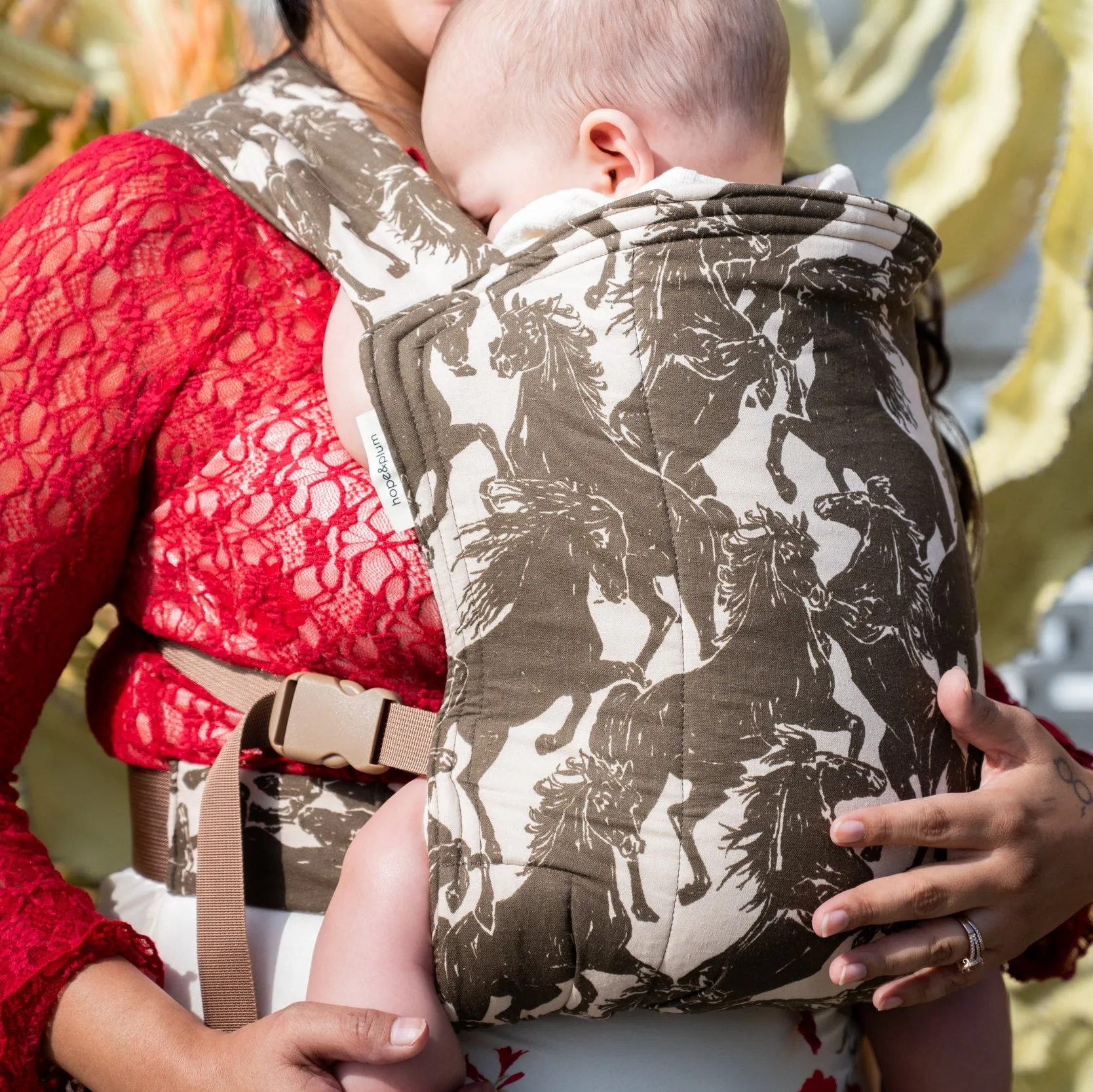
Rodeo Lark Baby Carrier: The Rodeo Lark Baby Carrier carries babies from 10 to 45 lbs, starting at size 3-6 months. This means the carrier can be used from infancy through toddlerhood, but back carry is only recommended when your baby has good head and neck control (typically around 6 months).
Rodeo Lark Baby Carrier