Quick answer
Break in a new deck gradually: start with light shuffles and small fans, increase pressure only as the cards loosen, and keep foil edges away from hard surfaces. If the deck feels stiff, work in short sessions rather than forcing it. Stop immediately if you see foil lifting.
Why new decks feel stiff and how foil changes the rules
New playing cards are coated with a thin layer of finish that makes them slide easily but also feel stiff. As you handle them, the coating wears slightly and the paper fibers relax, which improves fanning and reduces playing card stiffness. Decks with foil on the edges or tuck box need slower conditioning because foil is a thin metallic layer that can crack if bent sharply or rubbed against rough surfaces. Standard decks can take faster shuffling; foil-accented decks need a gentler ramp-up.
Set up a clean, low-risk practice space
Work on a clean, felt-covered table or a large mousepad. Avoid glass, bare wood, or textured surfaces that can catch foil edges. Wash and dry your hands completely; oils and grit are the main enemies of foil card care. Have a soft cloth nearby to wipe the table if needed. This step is not about the deck itself—it is about removing the two most common causes of foil damage: abrasive surfaces and dirty hands.
Start with overhand shuffles, not riffle shuffles
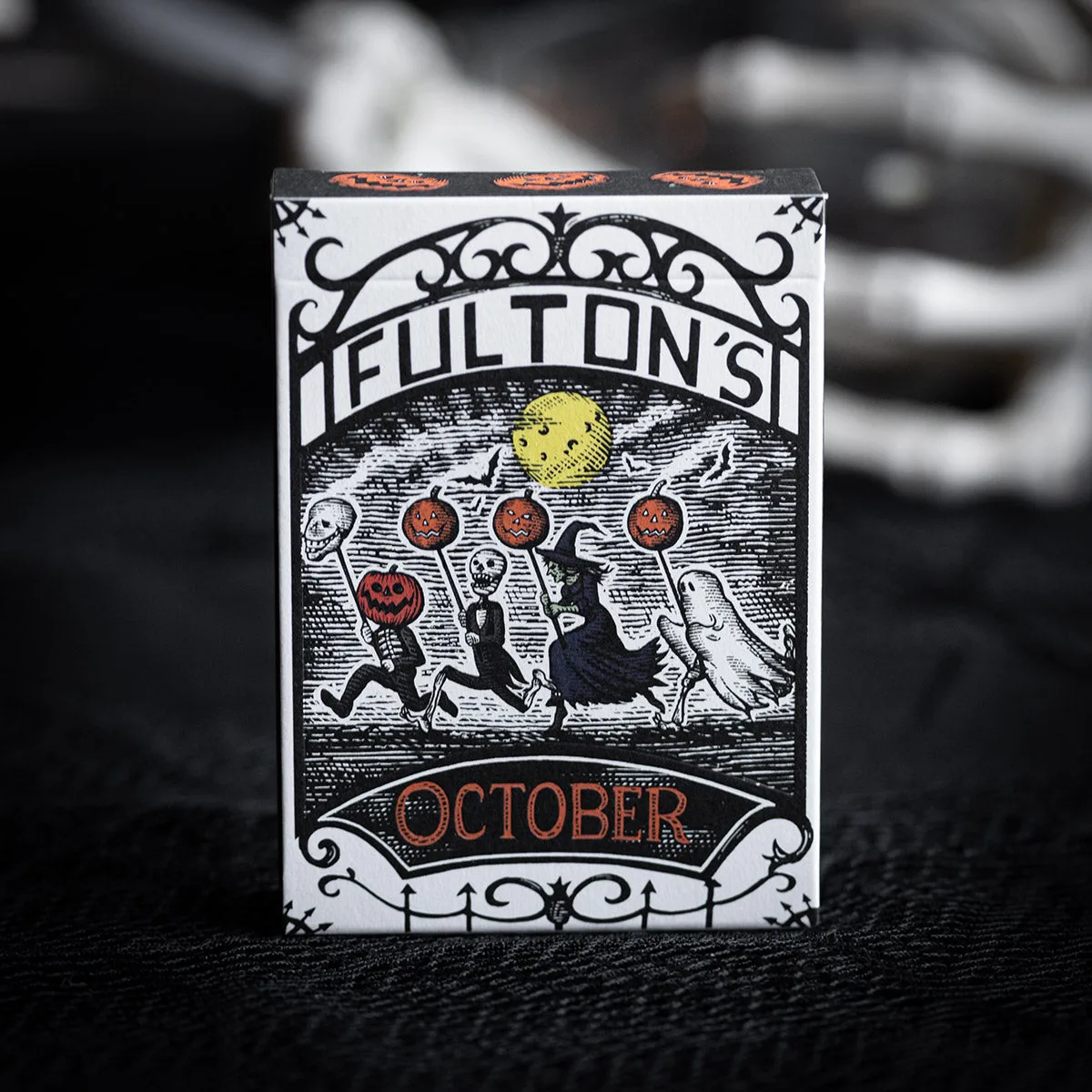
Overhand shuffles apply gentle, distributed pressure and let the cards slide against each other without bending the edges sharply. Do 20–30 overhand shuffles, then stop and check the edges. If you see any foil lifting or cracking, stop and switch to a different deck. Riffle shuffles bend the cards more aggressively and should wait until the deck has loosened. For a deck like Fulton's October Tombstone Grey, which uses a classic finish, overhand shuffles are safe from the start; for any foil-heavy deck, they are mandatory.
Add fans and spreads in short bursts
Card fanning practice is the best way to condition a deck evenly. Hold the deck in your non-dominant hand and practice small fans of 10–15 cards. Increase the fan size only when the cards move smoothly. Keep sessions to 5 minutes, then set the deck down for a few minutes. This rest period lets the paper and coating recover and prevents heat and moisture from your hands from softening the cards unevenly.
When to introduce riffle shuffles and dribbles
After 3–4 short sessions, try a gentle riffle shuffle: bend the cards just enough to interlace them, not enough to snap. If the deck still feels stiff, go back to overhand shuffles for another session. Dribbles and cascades are safe once the cards fan easily. Foil edges are most vulnerable during riffle shuffles because the corners bend; keep the riffle shallow and avoid pressing the foil edge against the table.
What to do if the deck still feels stiff after a week
Some decks, especially those with a Cambric finish on thin stock, break in faster than others. If your deck still feels stiff after a week of short sessions, it may be designed that way—thin stock can feel snappy rather than soft. Do not force it by bending the entire deck or leaving it under heavy books; that can warp the cards and damage foil. Instead, accept the stiffness or rotate the deck into a different role, such as a display piece or a collector's item.
Step-by-step break-in routine
- Step 1: Wash and dry your hands: Oils and grit transfer to the cards and can scratch foil. Dry hands completely—moisture softens paper and makes foil lift. Checkpoint: hands are clean and dry before you touch the deck.
- Step 2: Do 20–30 overhand shuffles: Overhand shuffles apply gentle pressure and let cards slide without sharp bends. This is the safest first move for any new deck. Mistake to avoid: jumping straight to riffle shuffles, which can crack foil edges.
- Step 3: Practice small fans for 5 minutes: Fan 10–15 cards at a time. Increase fan size only when the cards move smoothly. Rest the deck for a few minutes between sessions. Checkpoint: cards fan without clumping or resistance.
- Step 4: Add gentle riffle shuffles: After 3–4 sessions, try a shallow riffle shuffle. Bend the cards just enough to interlace them. If the deck still feels stiff, go back to overhand shuffles. Mistake to avoid: snapping the cards down, which bends corners and stresses foil.
- Step 5: Introduce dribbles and cascades: Once the deck fans easily, practice dribbles from a low height. Keep the cards away from hard table edges. Checkpoint: no foil lifting or cracking after each session.
- Step 6: Stop if you see foil damage: If foil starts to lift or crack, stop immediately. Further handling will make it worse. Switch to a different deck and let this one rest. Next step: if damage appears, set the deck aside for display or contact the manufacturer for guidance.
Fulton's decks and how they break in
- JEREMY KLEIN DREAM GIRL PLAYING CARDS SILVER FOIL LIMITED EDITION: Limited to 300 units, drenched in silver foil with a metallic silver embossed tuck box. The heavy foil coverage means this deck needs the gentlest break-in; avoid riffle shuffles until the cards fan easily, and never bend the foil edges.
- FULTONS OCTOBER TOMBSTONE GREY PLAYING CARDS: Fulton's October Tombstone Grey is the Steven Noble Version as presented in 2013, printed as it was. This is a classic-finish deck that responds well to standard overhand shuffles and short fanning sessions; it does not have the same foil fragility as foil-heavy editions.
- Ace Fulton's Casino Playing Cards - Twin Pack: Ace Fulton's Casino Twin Pack is printed by The United States Playing Card Co. with a Cambric finish on Thin Stock, limited to 1,200. Thin stock with Cambric finish breaks in quickly with light handling; you can introduce riffle shuffles sooner, but still avoid bending the cards sharply.