Quick answer
To brew with the Fellow Stagg EKG, fill the kettle with filtered water, set your target temperature using the variable control, wait for it to heat, then pour in a controlled gooseneck stream over your coffee grounds.
Why temperature precision matters for pour-over coffee
The Fellow Stagg EKG electric kettle lets you set water temperature in 1-degree increments from 104°F to 212°F. This precision is important because different coffee roasts extract best at different temperatures. Lighter roasts often need hotter water (around 205°F) to fully extract flavor, while darker roasts can become bitter if brewed above 195°F.
The kettle's 1200-watt heater brings water to temperature quickly, so you don't wait long between batches. The variable temperature control also holds the water at your chosen temperature for up to 60 minutes, which is helpful when brewing multiple cups.
The gooseneck spout advantage
The Stagg EKG's gooseneck spout is designed for a slow, steady pour that saturates coffee grounds evenly. This is critical for pour-over methods like the Hario V60 or Chemex, where an uneven pour can lead to channeling—water finding a path through the coffee bed and under-extracting some grounds while over-extracting others.
The spout also gives you control over pour rate, which lets you adjust your brew time. A slower pour extends contact time for more extraction; a faster pour shortens it for a lighter cup.
Step-by-step brewing guide
- Fill the kettle with fresh filtered water: Open the lid and fill the Stagg EKG with enough water for your brew. Avoid filling past the max line. Use filtered water for best taste. Common mistake: Using unfiltered tap water can add off-flavors to your coffee.
- Set your target temperature: Press the power button, then turn the dial to select your desired temperature. For most medium roasts, 200°F is a good starting point. For light roasts, try 205°F; for dark roasts, 195°F. Checkpoint: The display shows the current water temperature as it heats. Wait until it stabilizes at your set temperature before pouring.
- Prepare your coffee and filter: While the water heats, grind your coffee beans to a medium-fine consistency (similar to table salt) and place a rinsed paper filter in your pour-over dripper. Discard the rinse water. Common mistake: Not rinsing the paper filter can leave a papery taste in your coffee.
- Pour the bloom: Once the kettle reaches temperature, pour a small amount of water (about twice the weight of your coffee grounds) evenly over the grounds to saturate them. Let it sit for 30 seconds to release gases. Checkpoint: If the coffee doesn't bloom (no bubbles), your beans may be stale.
- Continue pouring in stages: After the bloom, pour the remaining water in slow, concentric circles, starting from the center and working outward. Keep the water level consistent. Aim for a total brew time of 2.5–3 minutes. Common mistake: Pouring too fast or in one spot can cause uneven extraction. Use a steady hand.
- Serve and enjoy: Once all water has passed through the grounds, remove the dripper and give the coffee a gentle swirl in the carafe to mix. Pour into your cup and enjoy.
Product details
-
Fellow Stagg EKG Electric Kettle: Variable temperature control with 1-degree precision, 1200 watts for quick heat time, and a precise gooseneck spout for optimal pour-over flow rate. You can dial in the exact water temperature your coffee needs and pour with control, avoiding under- or over-extraction.
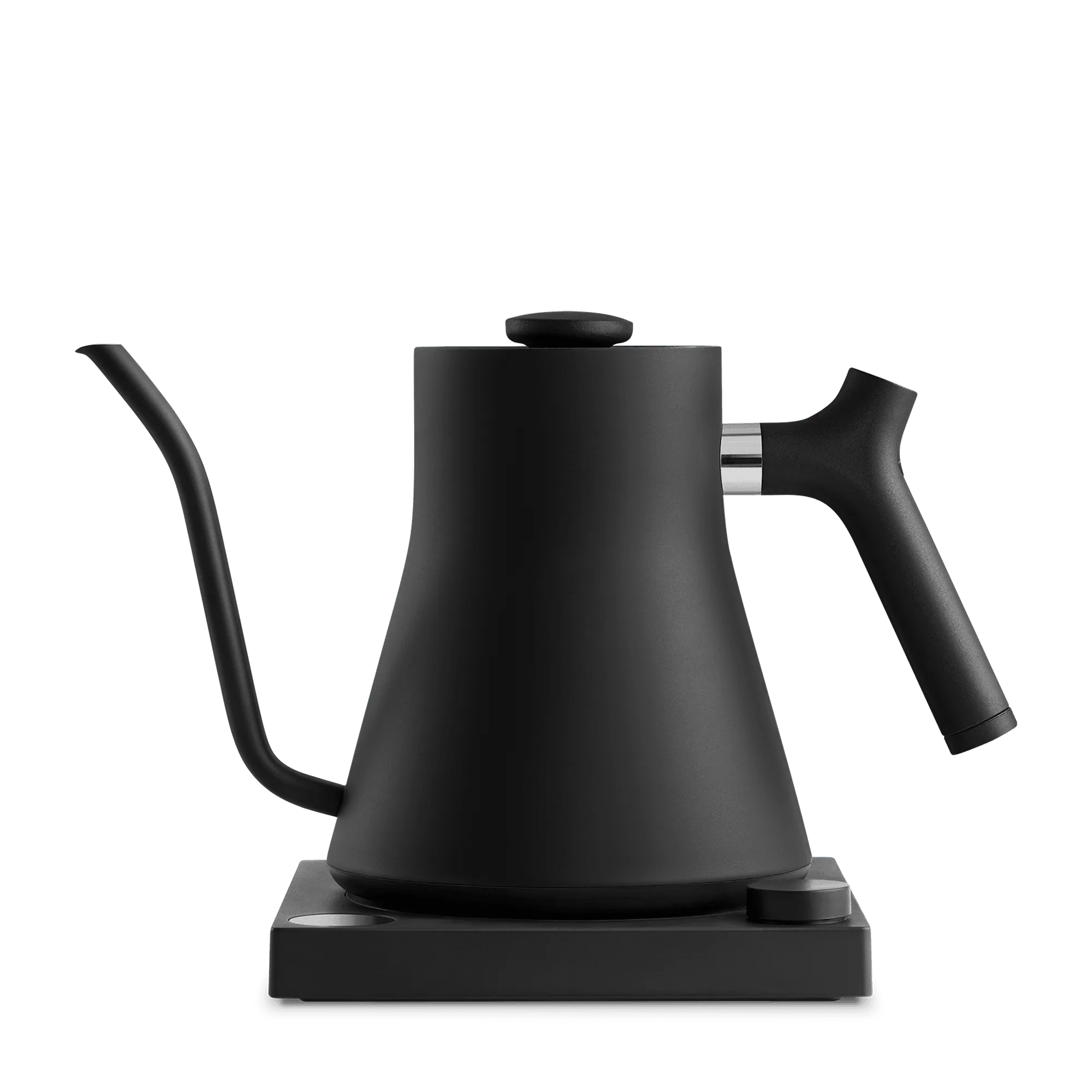
Fellow Stagg EKG Electric Kettle