Quick answer
Build your capsule lingerie collection around eight pieces: three everyday knickers, two bras, one camisole, one chemise and one pair of socks. Buy the everyday layers first in neutral colours, then add the chemise for evenings. A capsule works when each piece matches at least three outfits you already own, not when it fills a set number of drawer slots.
A capsule lingerie collection is not about owning less for its own sake. It is about opening a drawer where every piece fits, matches something you wear and gets rotated often enough to justify its space. Most overflowing drawers are full of near-duplicates: four black knickers in slightly different cuts, a bra that only works under one top, a chemise bought for an event that never happened.
The fastest way to build a minimalist lingerie wardrobe is to shop by function rather than by style. Decide how many everyday days, work days and evening occasions you actually dress for, then buy the smallest set that covers all three. The eight-piece list below does that, and the fit rules and trade-offs further down keep you from rebuying the same mistake.
Start with the eight essential lingerie pieces
A working capsule needs coverage for three situations: everyday, under clothes that show lines, and evenings. Three everyday knickers give you one on, one in the wash and one spare. Two bras cover a t-shirt bra and a second shape for lower necklines. One camisole handles layering and warm days, one chemise covers evenings, and one pair of socks rounds out the drawer for cooler months.
Resist adding a fourth knicker style or a third bra until you have worn the first eight for a full month. The gaps you notice in real wear are the only gaps worth filling. Buying ahead of that evidence is how drawers fill up with pieces that never make the rotation.
- Count your actual week: how many days are casual, how many are work, how many are evenings out.
- Choose one neutral base colour for everyday pieces so everything matches without thinking.
- Keep one accent colour or print for the piece you wear least, not the pieces you wear most.
Match the fabric to how often you will wash it
Fabric decides how a piece feels on day one and how it looks after twenty washes. Cotton is breathable and forgiving, which suits everyday knickers and camisoles you wear close to the skin. Microfibre is smooth and lightweight, so it disappears under fitted clothing and dries quickly. Lace and mesh belong on the pieces you wear for shorter periods, where the look matters more than all-day durability.
A common mistake is buying an entire capsule in one fabric. If everything is microfibre, you lose the breathability of cotton for long days. If everything is lace, you lose the smooth finish that keeps outfits looking clean. Split the capsule by purpose: cotton or cotton-blend for daily wear, microfibre for line-free days, lace for evenings.
- Cotton for breathable everyday wear and layering.
- Microfibre for smooth, lightweight coverage under fitted clothes.
- Lace and mesh for evening pieces rather than daily rotation.
Buy multipacks for the pieces you wear daily
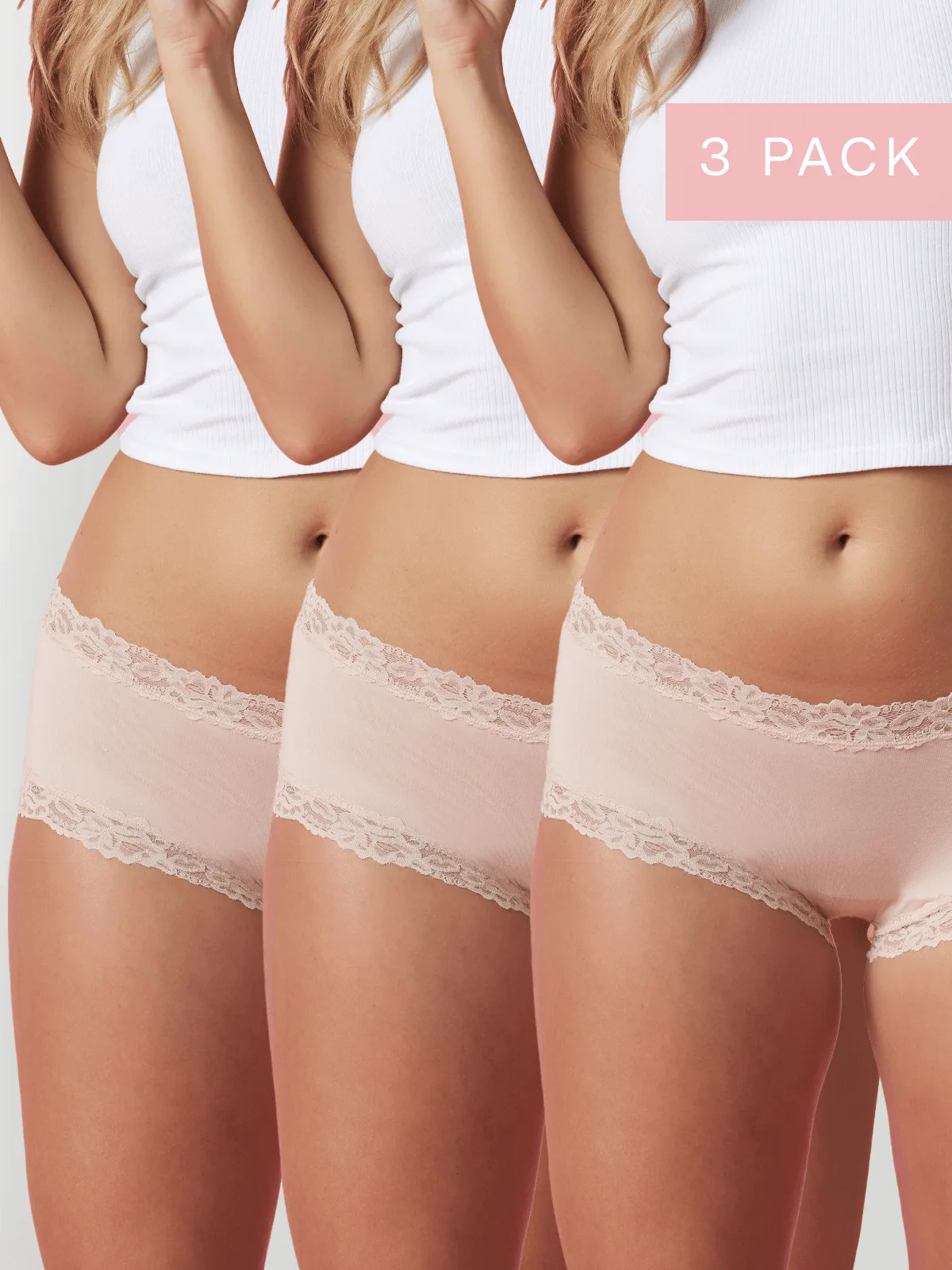
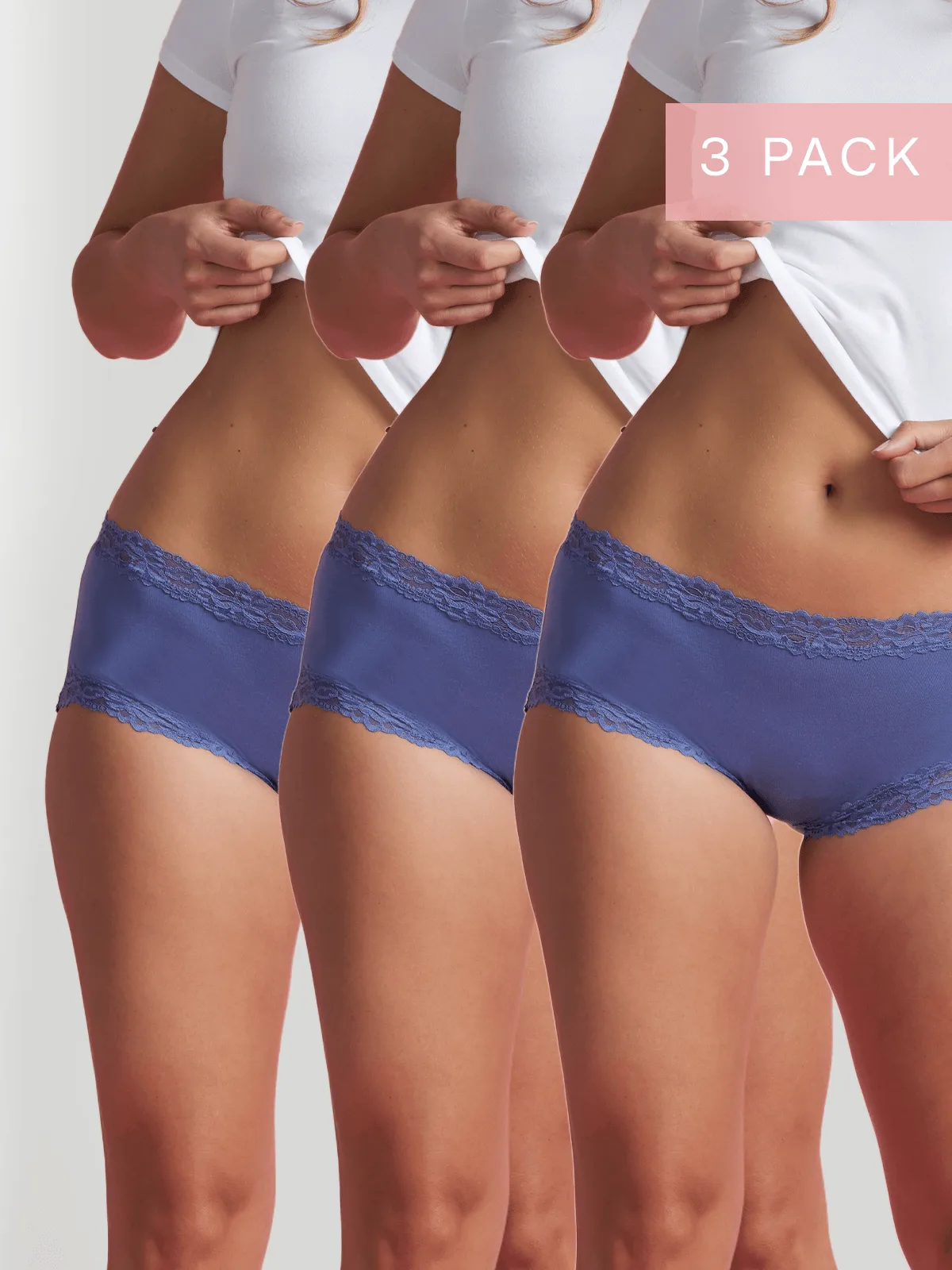
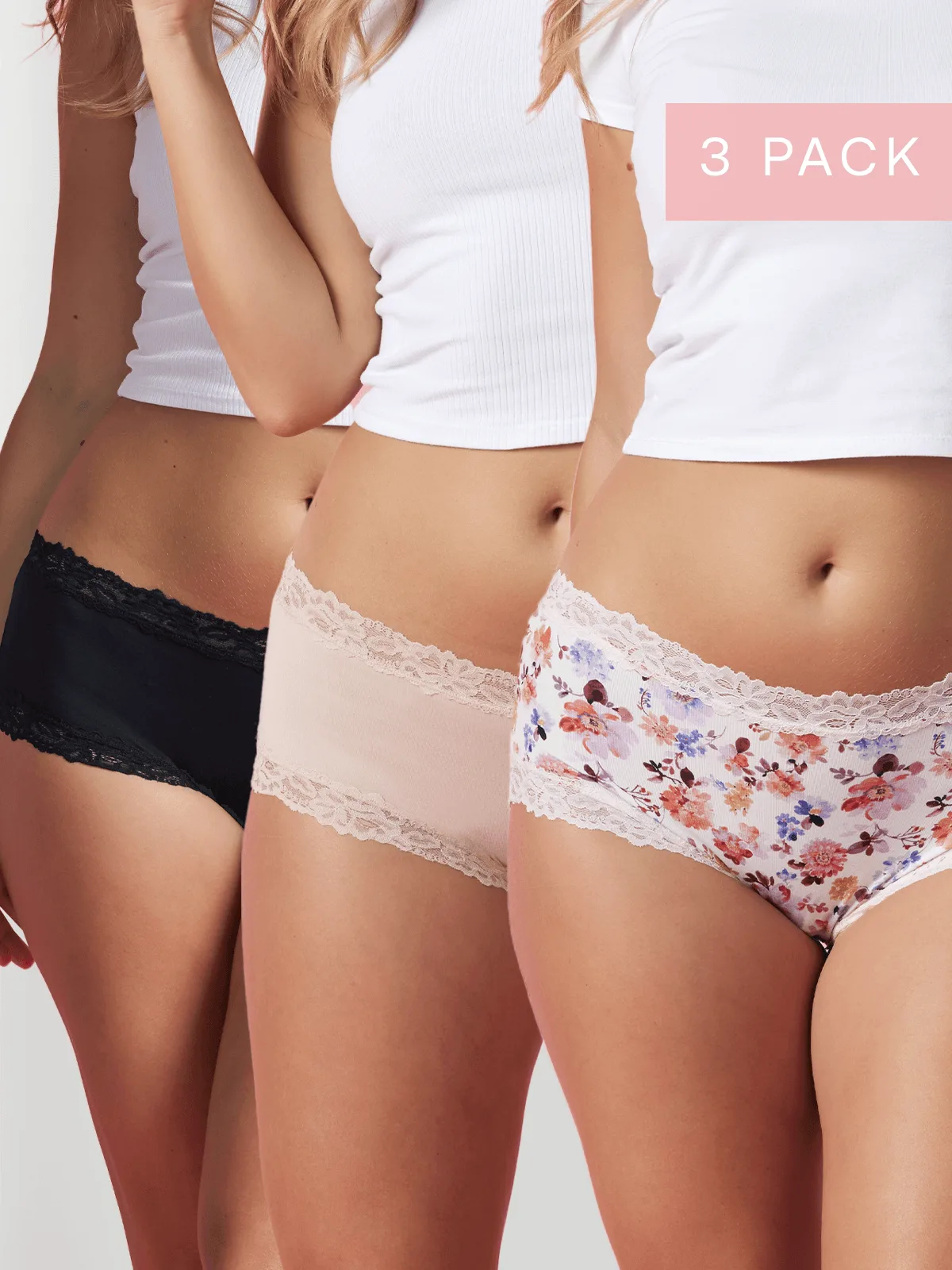
The everyday knicker is the hardest-working item in any lingerie wardrobe basics set, so it is the one worth buying in a pack. A three-pack gives you the rotation without a per-piece price penalty, and it removes the decision fatigue of matching single pairs. The trade-off is colour: packs usually lock you into one shade, so pick a neutral you can wear under everything.
Multipacks also make laundry realistic. If you wash once a week, three pairs of everyday knickers plus one or two in reserve covers the gap without panic washing. Buy single pieces for anything you wear less than twice a week, because a pack of three evening knickers is usually two pairs too many.
- Pack the daily-wear knickers; buy singles for occasional pieces.
- Check the pack contents before buying, since some packs mix colours or styles.
- Keep one spare pair unworn so a laundry delay never forces an outfit change.
Choose the rise and cut that fit your outfits
Rise and cut matter more than fabric for how a knicker looks under clothing. A low-rise boyleg sits below the waist and gives full coverage, which suits low-rise jeans and casual days. A mid-rise brief with a high-cut leg line sits higher and stays hidden under mid-rise trousers and skirts. A high-rise full brief gives the most coverage and smooth support, but it can show above low-rise waistbands.
Fit guidance for the capsule: buy the rise that matches the waistband height of the trousers you wear most, not the rise you like in isolation. If you wear a mix, let the mid-rise piece be your default and keep one low-rise option for the outfits that need it. A knicker that peeks above a waistband will sit unworn no matter how comfortable it is.
- Match knicker rise to the waistband height of your most-worn trousers.
- High-cut legs stay hidden under straight and wide-leg cuts.
- Full briefs suit high-waisted outfits and days when coverage matters most.
Add one camisole and one evening piece, then stop
The camisole is the most versatile layer in a capsule lingerie collection because it works under a jumper, under a blazer or on its own at home. Choose one in a neutral colour with a neckline that stays hidden under your usual tops. A square lace neckline can double as visible detail when you want it, but check it against your necklines before committing.
For evenings, one chemise is enough. It should feel different from your everyday pieces, otherwise you will reach for the everyday option instead. Lace, mesh and a defined detail like a keyhole or strap trim give the piece a clear job. If you already own a chemise you never wear, the problem is usually fit or occasion, not quantity, so fix that before buying a second.
- One camisole in a neutral that layers under your most-worn tops.
- One chemise reserved for evenings so it stays distinct from daily wear.
- Skip a second evening piece until the first one is genuinely in rotation.
Decision rules for building your capsule
- Buy the daily knicker first: If you wear knickers seven days a week, buy a three-pack in cotton or microfibre before anything else. Cotton for breathability, microfibre for a smooth finish under fitted clothes. Checkpoint: you should be able to get through a week with one wash cycle.
- Match rise to your trousers: Low-rise for low-rise jeans, mid-rise with a high-cut leg for mid-rise trousers and skirts, high-rise full briefs for high-waisted outfits and maximum coverage. If a rise does not match your most-worn waistbands, skip it regardless of how it looks on its own.
- One camisole, one chemise: Keep a single neutral camisole for layering and a single lace or mesh chemise for evenings. Two of either usually means one sits unworn. Replace rather than add when the first piece wears out.
- Cap the colour palette: Choose one neutral base for everyday pieces and allow one accent for the piece you wear least. Every additional colour reduces how many outfits each piece matches. If a piece only works with one outfit, it is not capsule material.
- Wait a month before expanding: Wear the first eight pieces for four weeks, then note what you actually reached for and what you avoided. Buy only to fill a gap you felt repeatedly. A gap you noticed three times is real; a gap you imagined once is not.
Capsule pieces worth knowing
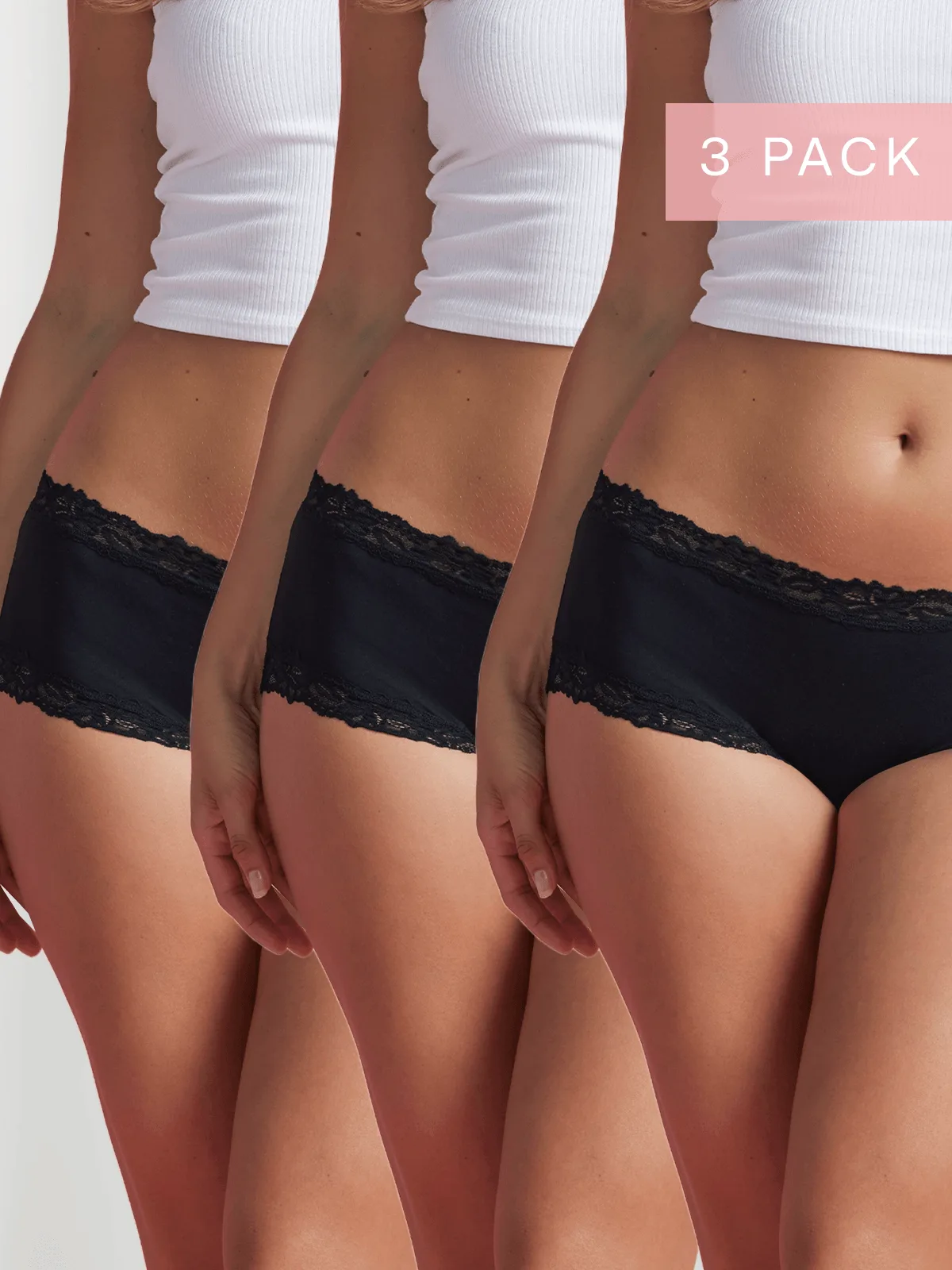
- https://kayserlingeriepkj.com/products/cotton-3-pack-boyleg-black-bc713a418d3d6e3ff041bde2-1345520https://kayserlingeriepkj.com/products/cotton-3-pack-boyleg-honey-526864dab68915cbcab7e574-1345547https://kayserlingeriepkj.com/products/cotton-boyleg-3-pack-summer-velvet-honey-48aaad8de53fae515219422a-1345640https://kayserlingeriepkj.com/products/cotton-boyleg-3-pack-summer-honey-black-9b05398d7d1b5d13ac904a4e-13456513 Pack Sukie Cotton Boyleg: Three black cotton boylegs with a soft, breathable cotton body, a low-rise fit and lace trims at the waistband and legline. This is the daily-wear slot in a capsule: breathable cotton for long days, low-rise for casual outfits, and a three-pack that covers your laundry rotation without buying singles.
- 3 Pack Sukie Micro Boyleg: Three black microfibre boylegs in a soft, lightweight fabric with a low hip fit, full-coverage support and delicate lace trims at the waistband and legline. The smooth alternative to cotton for days when you want a sleek finish under fitted clothing, while keeping the same low-rise coverage.
- Daily Essentials Cotton & Floral Lace Cami (465N): A black cotton camisole with a square lace neckline, stretch lace panelling, wide lace straps and a lightweight floral lace trim. Fills the layering slot: cotton for breathability, with a square neckline that can stay hidden under tops or show as detail when you want it.
- After Dark Out All Night Chemise: A black chemise in delicate botanical lace and mesh with a front keyhole, strap detail and gold love heart hardware. Covers the evening slot so your everyday pieces stay in the everyday rotation instead of being stretched to do both jobs.
Who this capsule approach suits
Best for
- Anyone whose lingerie drawer is full but who still feels short of everyday options
- Shoppers who want a small, neutral set that covers casual, work and evening wear
- People who wash once a week and need a rotation that survives a laundry cycle
Not for
- Shoppers who enjoy variety and rotate many colours and prints by mood
- Anyone who needs a large everyday rotation for travel, sport or shift work
- People shopping for occasion-specific lingerie rather than a core wardrobe
Build the everyday layer first, match each piece to outfits you already wear, and add the evening piece last. Eight well-chosen items will outwork a drawer of near-duplicates, and the gaps you notice after a month of real wear will tell you exactly what to buy next.