Quick answer
Start with one large statement hoop, then add smaller pieces around it. Mix in a patch or sticker only when it supports the theme. Buy pieces you will still want on your wall in five years.
A horror embroidery hoop collection works best when it looks intentional, not accidental. The difference between a spooky wall that feels curated and one that feels cluttered usually comes down to scale, spacing, and restraint.
This guide walks through the decisions that matter: what size to buy first, how to arrange hoops, and when a patch or sticker earns a spot. It is written for collectors who want horror wall art embroidery that holds up over time.
Start with scale, not quantity
Most new collectors buy several small hoops at once, then struggle to arrange them. A better approach is to anchor the wall with one large piece and build outward. Large hoops give the eye a resting point and make smaller pieces feel deliberate rather than random.
If you are drawn to detailed character work, a 12 inch hoop gives the design room to breathe. If you prefer a tighter, more graphic look, a 9 inch hoop can carry a portrait without dominating a small wall. Buy the anchor first, live with it for a week, then decide what is missing.
- Measure your wall before buying. A 12 inch hoop needs roughly 16 to 18 inches of clear space to feel uncrowded.
- Hang the anchor piece at eye level, then place smaller hoops around it rather than in a straight row.
Choose pieces that reward a second look
Horror art gets stale fast when the image is the only thing going on. Multimedia hoops hold attention longer because they combine stitching, paint, and fabric in one object. The texture changes depending on the light and where you stand, which keeps the piece interesting after the initial novelty fades.
This matters for a collection because you are not just buying a picture. You are buying an object that will sit on your wall for years. A piece with visible handwork and layered materials tends to age better than a flat print, especially in a themed collection where every item competes for attention.
- Look for hoops that mix techniques such as stitching, acrylic, and watercolor.
- Ask yourself whether the piece would still interest you if the subject were unfamiliar.
Know when to add patches and stickers
Patches and stickers are the easiest way to expand a horror collection without committing wall space. They work best as supporting pieces: a patch on a jacket, a sticker on a laptop or water bottle. They let you carry the theme outside the room where the hoops live.
The tradeoff is durability. Iron-on patches need a few stitches to stay put because the adhesive can degrade over time. Vinyl stickers are water-resistant but not UV-proof, so they will fade with prolonged sun exposure. Treat these as wearable or everyday pieces, not archival wall art.
- Add a few stitches to any iron-on patch even if the backing feels secure.
- Keep UV-sensitive stickers off car windows and surfaces that get direct sun.
Plan the wall before you buy more
A common mistake is buying pieces one at a time and hoping they will work together. Before your next purchase, sketch the wall on paper or lay the hoops on the floor. Group by theme or palette, not by whatever arrived most recently.
Leave negative space. A horror wall with gaps between pieces reads as a collection. A wall with no gaps reads as storage. If you run out of room, rotate pieces seasonally rather than cramming in one more hoop.
- Photograph your wall arrangement before hanging anything permanently.
- Rotate two or three pieces every few months to keep the collection feeling fresh.
Decision rules for building your horror hoop wall
- Buy the anchor first: Choose one large hoop, 12 inches or close to it, before adding anything else. This sets the scale for the rest of the wall. If you cannot decide on an anchor, wait. Buying small pieces first usually leads to a cluttered arrangement.
- Match medium to placement: Hang multimedia hoops on the wall where their texture can be seen. Put patches on clothing and stickers on everyday objects. Do not treat a sticker like wall art or a hoop like a bag accessory. Each format has a job.
- Cap the collection at your wall size: Measure the wall and decide on a maximum number of hoops before you buy. Rotate rather than expand once you hit that limit. A collection that fits the wall looks intentional. One that overflows looks like a pile.
Pieces that fit a horror hoop collection
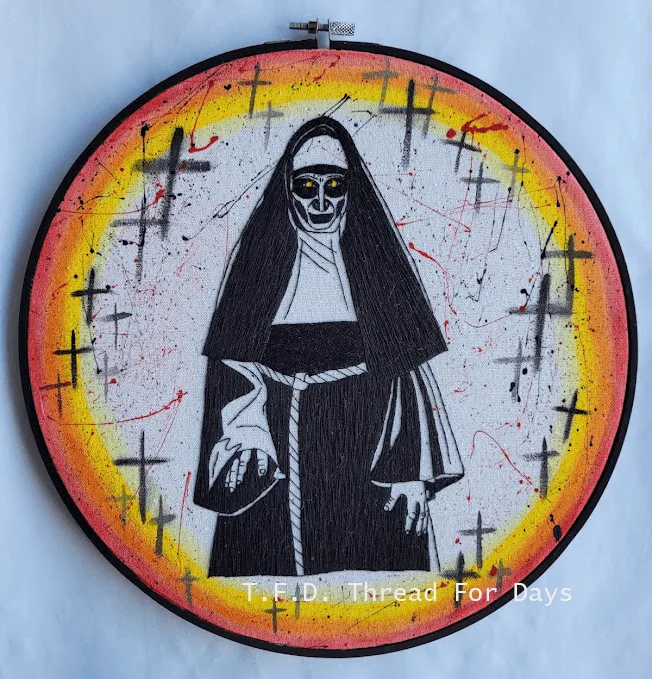
- The Nun, Valak 12 inch Embroidery Hoop: This one-of-a-kind hoop is digitally drawn, hand stitched, and painted with acrylic and watercolours, containing about 30 hours of handiwork. The 12 inch size and mixed-media finish make it a strong anchor piece for a larger wall.
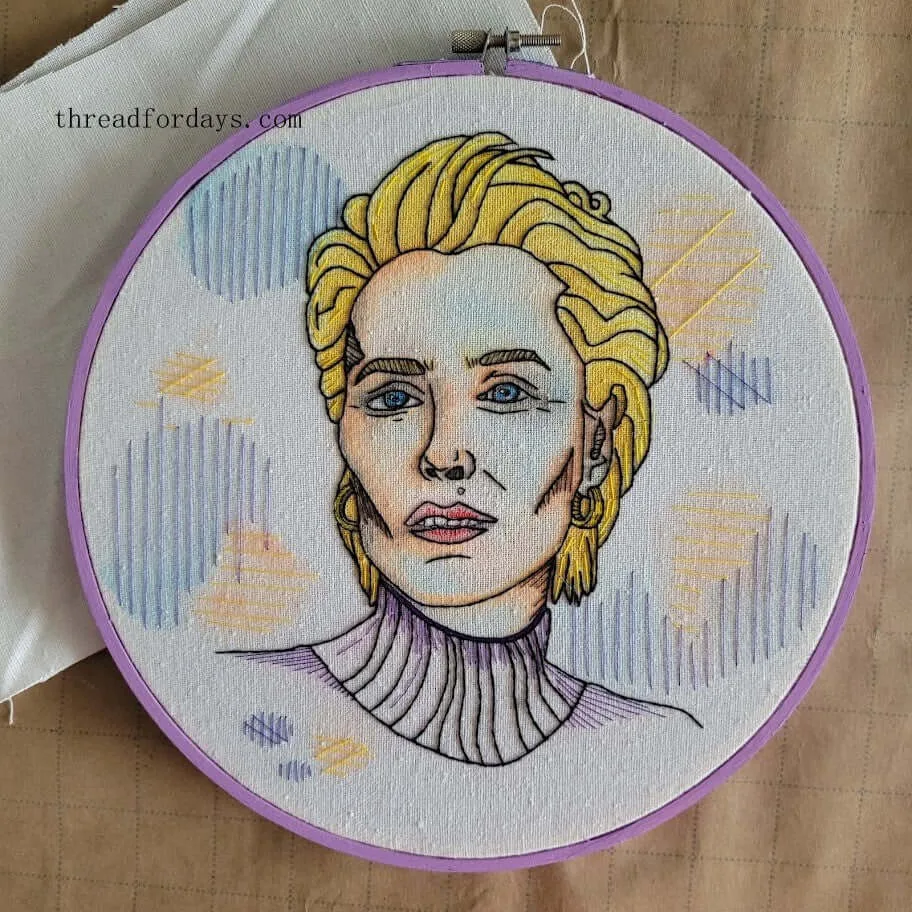
- Gillian Anderson | 9inch Embroidery Hoop: This one-of-a-kind hoop is digitally drawn, hand stitched, and painted with acrylic on the hoop and watercolours on the fabric, containing about 22 hours of handiwork. A 9 inch hoop bridges the gap between a small accent and a full statement piece, useful for filling mid-sized gaps.
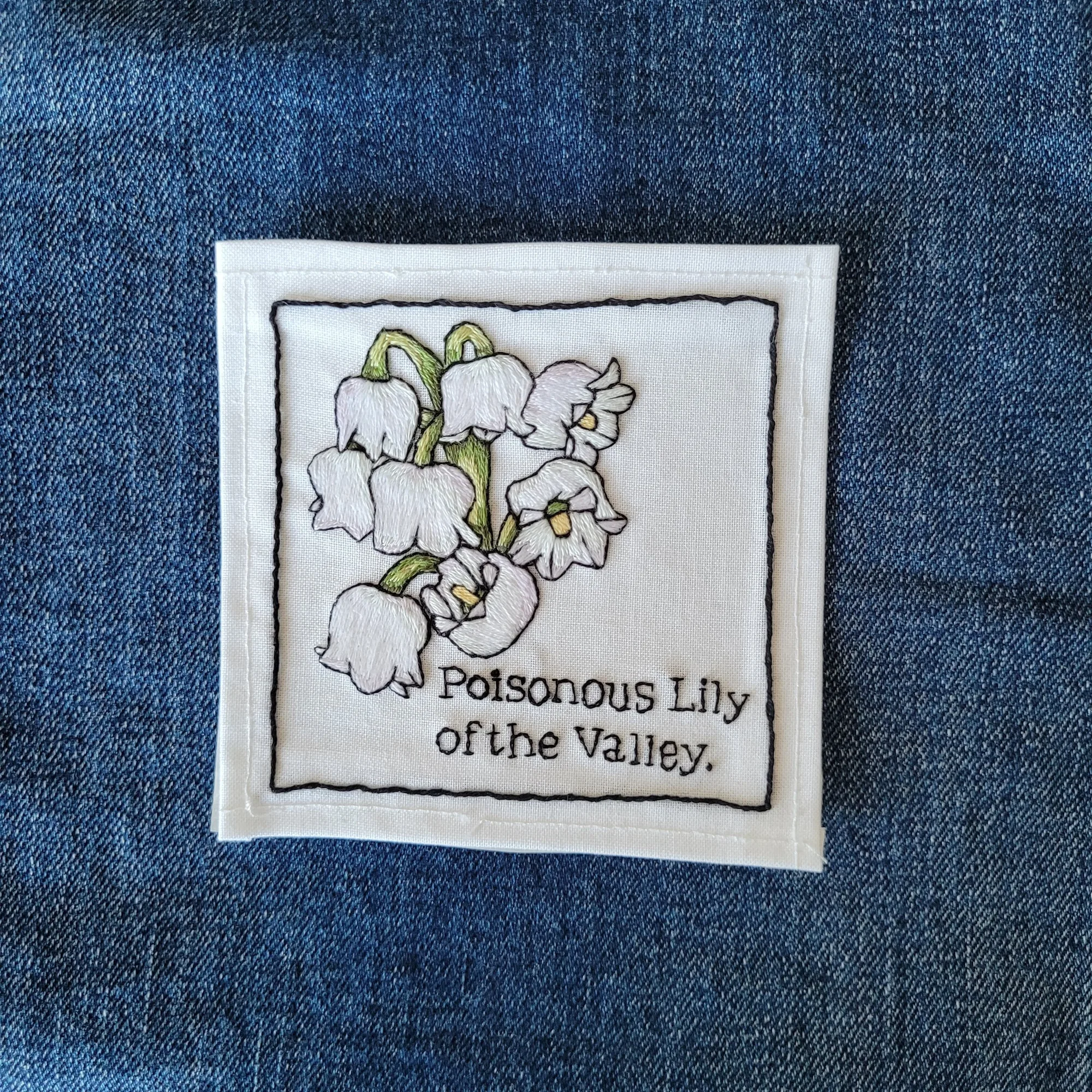
- Lily of the Valley | Hand Embroidered Iron-on Patch: This patch is designed and hand stitched on off white cotton fabric with Heat-n-Bond ultra-hold backing; adding a few stitches is recommended because the adhesive may degrade over time. A wearable piece extends the collection beyond the wall, but it needs reinforcement to stay in place long term.
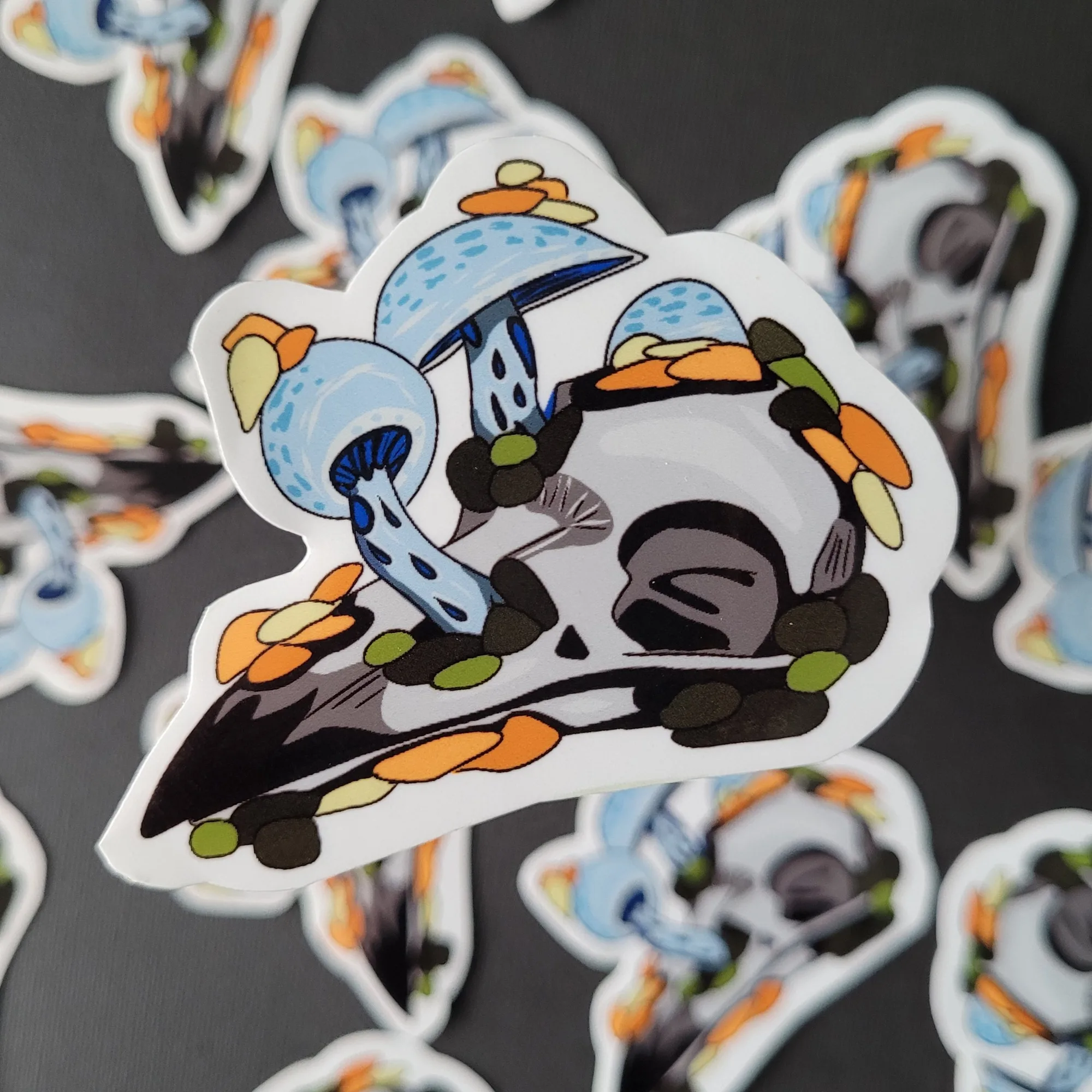
- Indigo Milkcap | Waterproof Vinyl Sticker: This sticker is printed on glossy waterproof adhesive vinyl and laminated for extra protection, but it is not UV proof and will fade a little with prolonged UV exposure. Good for laptops and water bottles, but keep it out of direct sun if you want the colors to last.
Who this approach is for
Best for
- Collectors who want a curated horror wall rather than a random assortment
- Fans of horror movie embroidery ideas who plan to display pieces long term
- People building spooky embroidery hoop decor for a dedicated room or hallway
Not for
- Shoppers looking for cheap, mass-produced wall decor
- Anyone who wants a single piece and no ongoing collection
- Buyers who prefer flat prints over textured, handmade objects
A horror embroidery hoop collection gets better when you treat it like a small gallery, not a shopping spree. Pick one anchor, add pieces that reward a close look, and use patches and stickers for the parts of your life outside the wall. That is how horror wall art embroidery stays worth looking at.