Quick answer
Choose handmade embroidery when you want one-of-a-kind texture, visible handwork, and a piece that carries the maker's time. Choose machine embroidery when you need identical repeats, tight deadlines, or a lower price per unit. If you are buying art to hang or a small wearable patch, handmade usually gives you more character; if you need fifty matching logos, machine is the practical route.
Handmade and machine embroidery are not the same product with a different price tag. They are different processes that produce different surfaces, timelines, and ownership experiences. The right choice depends on whether you value uniqueness or uniformity more.
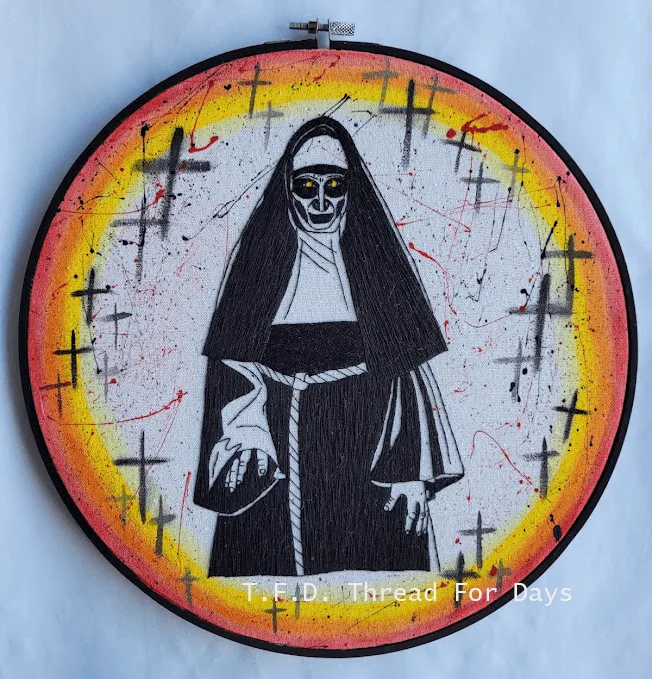
This comparison uses real pieces from T.F.D. Thread For Days to show what handmade actually looks like in practice, then lays out the trade-offs so you can decide before you buy.
What handmade embroidery actually involves
Handmade embroidery is stitched by a person, often with a design drawn first and then interpreted stitch by stitch. That means no two pieces are identical. The surface has slight variations in thread tension and stitch placement, which is exactly what gives handmade work its texture.
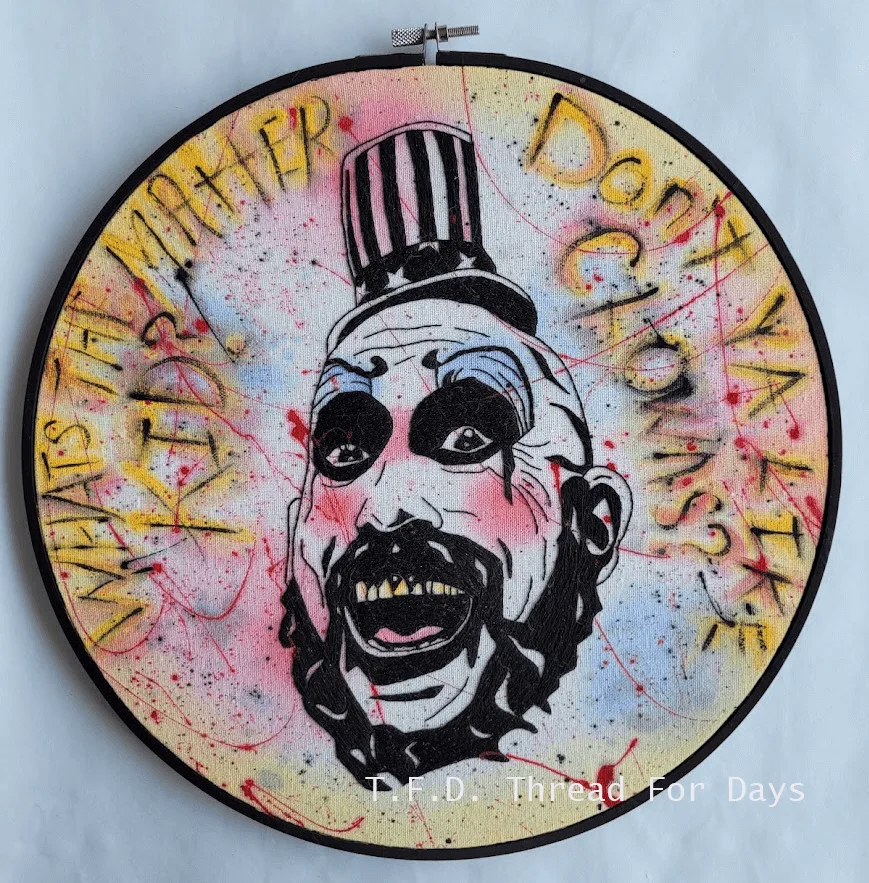
Time is the clearest difference. A piece like the Captain Spalding 12 inch Embroidery Hoop contains about 30 hours of handiwork, while the Dead Silence 9 inch Embroidery Hoop contains about 22 hours. Those hours are visible in the density and layering of the stitching, and they are also why handmade costs more per piece.

Dead Silence 9 inch Embroidery Hoop
- Look for the maker's time estimate in the listing; it is a more honest signal than the word handmade alone.
Where machine embroidery wins
Machine embroidery excels at repetition. Once a file is digitized, the machine can produce the same design dozens or hundreds of times with near-identical results. For uniforms, team gear, or branded merchandise, that consistency matters more than individual character.
Machine work is also faster and usually cheaper per unit. If you need a logo on twenty shirts by next week, hand stitching is not a realistic option. The trade-off is that machine embroidery often looks flatter and more uniform, and the design is limited to what the digitized file can execute.
- Ask for a stitch-out sample before committing to a large machine order; digitizing errors are common.
Cost, time, and what you are really paying for
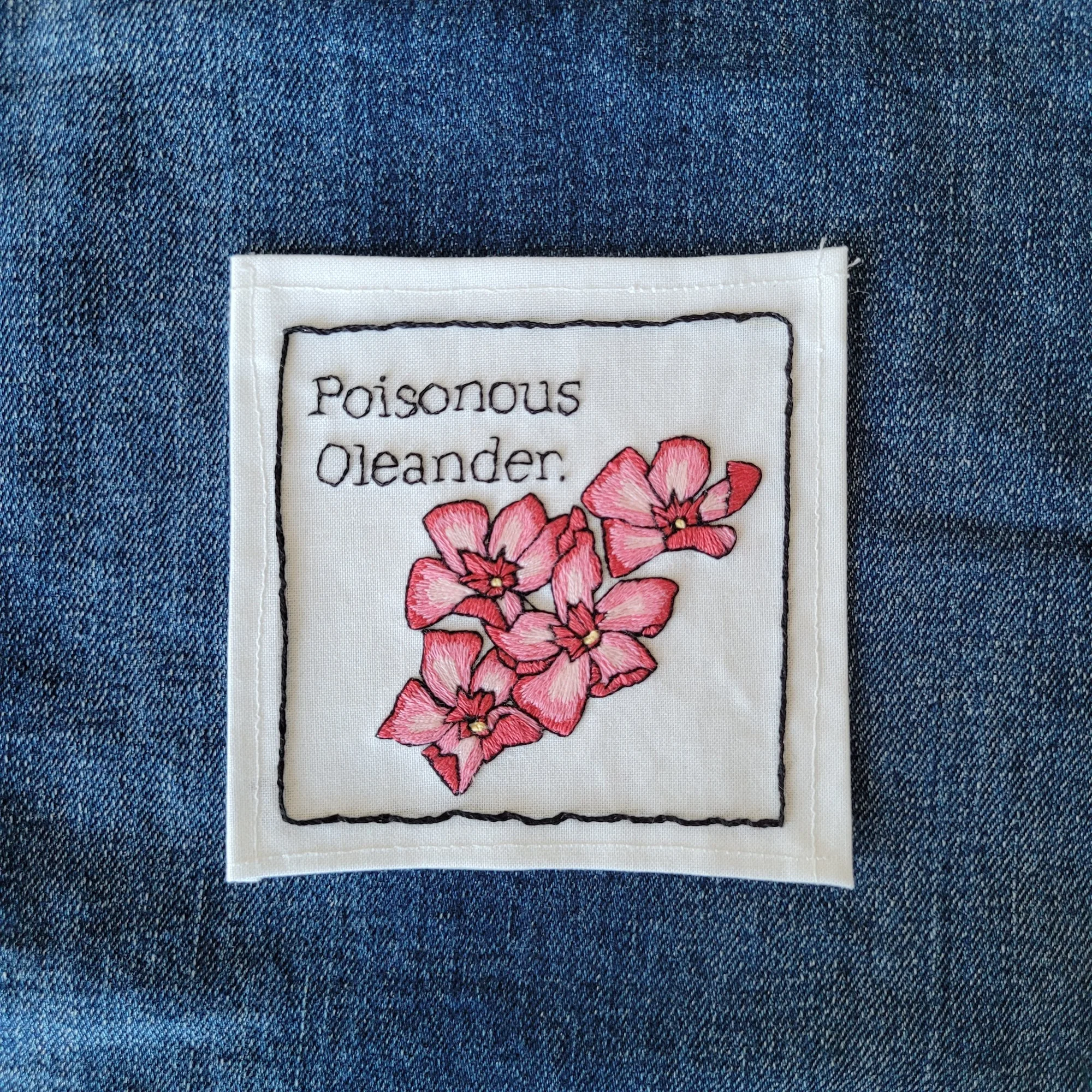
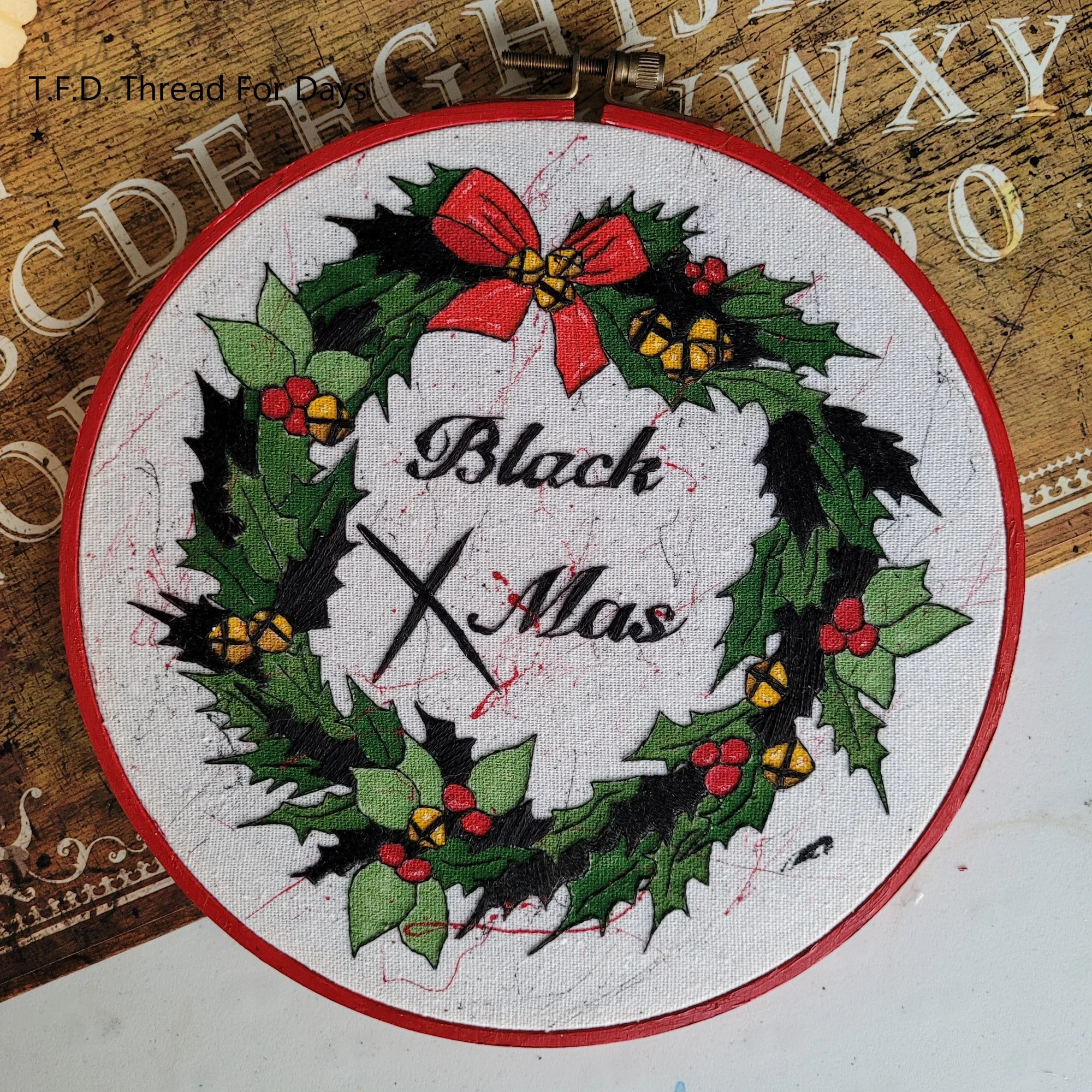
A handmade hoop can cost several times more than a machine-stitched equivalent, but you are paying for hours, not just materials. The Black Xmas 8 inch Embroidery Hoop contains about 22 hours of handiwork, and the Oleander Hand Embroidered Iron-on Patch is designed and hand stitched on off white cotton fabric. Those are labor-intensive objects.
Machine embroidery shifts the cost to setup: digitizing, testing, and thread changes. For a single item, that setup rarely makes sense. For a run of identical items, it becomes the cheaper path. The honest trade-off is uniqueness and texture versus repeatability and price per unit.
- If your budget is under $30, a handmade patch or sticker is more realistic than a large handmade hoop.
Durability and care differences
Handmade embroidery can be durable, but it needs gentler care. The Oleander patch uses Heat-n-Bond ultra-hold backing, and even with ironing, the maker recommends adding a few stitches because ultra hold may degrade over time. That is a maintenance reality of handmade wearables.
Machine embroidery on stable fabric often withstands repeated washing better because the stitching is tighter and more uniform. Neither is indestructible. For wall art, both hold up well if kept out of direct sun; for wearables, expect to reinforce handmade patches eventually.
- Follow the maker's wash instructions exactly; handmade patches often need cold water and air drying.
How to tell them apart when shopping
Look for language like designed, created and stitched by me, or a stated number of handiwork hours. Those phrases point to handmade. Machine embroidery listings usually mention digitized files, stitch counts, or production runs.
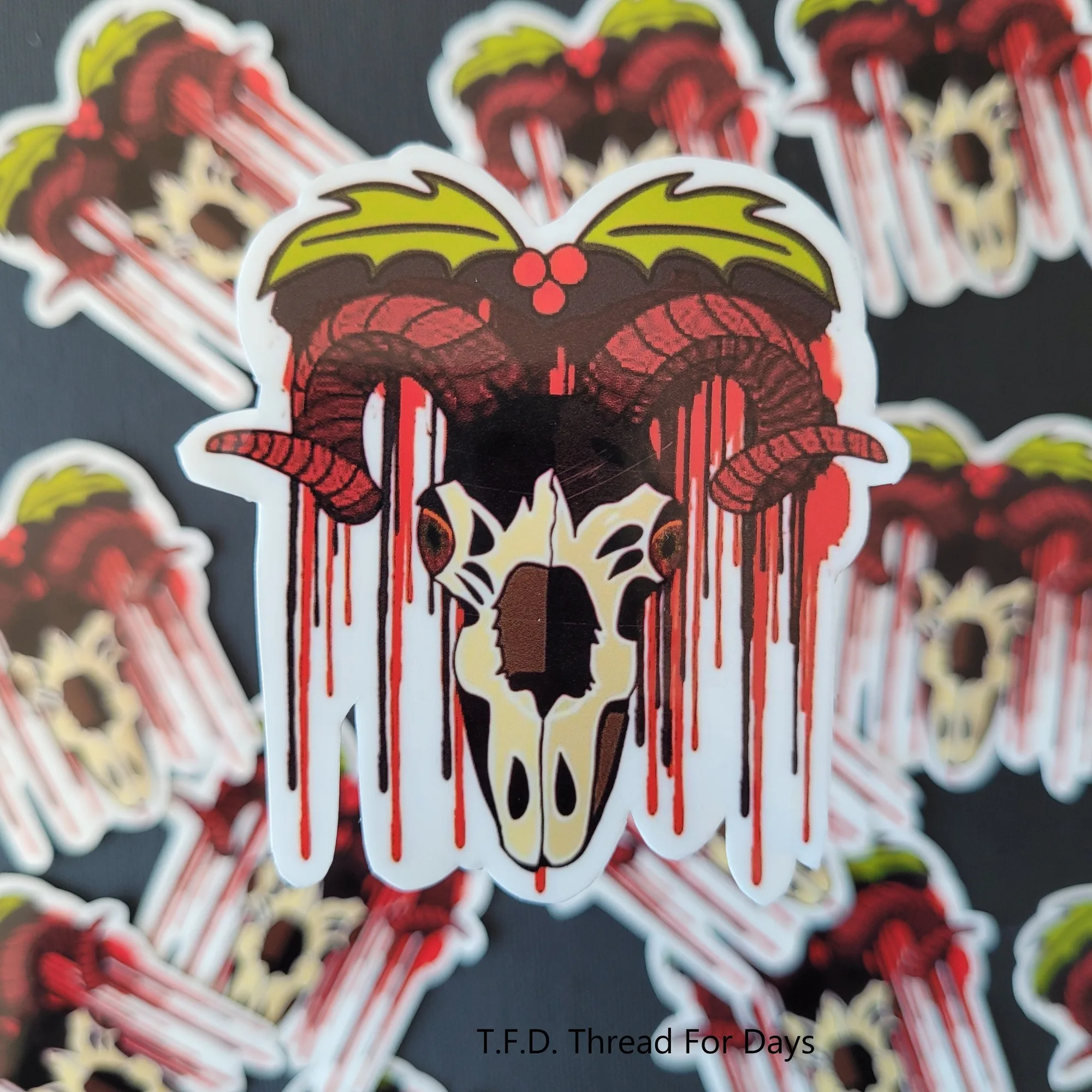
Also check the design source. The Tammie Brown 4x6 Postcard is digitally drawn and handmade, which shows that digital design and hand production can coexist. The Krampus Waterproof Vinyl Sticker is printed and laminated, not embroidered at all, so it is a different category entirely. Knowing what process produced the item prevents mismatched expectations.
- If a listing does not state handmade or machine, ask before buying; the difference affects price and care.
Trade-offs at a glance
- Uniqueness vs. repeatability: Handmade pieces like the Black Xmas 8 inch Embroidery Hoop are one-of-a-kind, so no two are identical. Machine embroidery produces the same design repeatedly. Choose handmade for a singular object; choose machine for matching sets.
- Time investment vs. speed: Handmade hoops carry stated handiwork hours such as 22 or 30. Machine embroidery can finish a run in hours once digitized. If you need it next week, machine is the realistic option.
- Texture vs. uniformity: Hand stitching shows slight variations in tension and placement. Machine stitching is tighter and more uniform. Texture is the handmade benefit; uniformity is the machine benefit.
- Cost per piece vs. setup cost: Handmade costs more per item because you pay for labor hours. Machine embroidery spreads setup costs across a run. One item favors handmade; fifty identical items favor machine.
Handmade examples and what they show
- Captain Spalding 12 inch Embroidery Hoop: One-of-a-kind hoop art in a 12 inch hoop, digitally drawn, hand stitched, and painted with acrylic and watercolours, containing about 30 hours of handiwork. The 30-hour figure explains the price and why no identical second piece exists.
- Oleander | Hand Embroidered Iron-on Patch: Hand stitched on off white cotton fabric with Heat-n-Bond ultra-hold backing; the maker recommends adding a few stitches because ultra hold may degrade over time. Handmade wearables need reinforcement and careful washing, unlike many machine-stitched patches.
- Krampus | Waterproof Vinyl Sticker: Printed on glossy waterproof adhesive vinyl and laminated, but not UV proof and will fade with prolonged UV exposure. Useful contrast: this is a printed accessory, not embroidery, so compare it only for decorative add-ons.
Which should you choose?
Choose handmade if you...
- want a one-of-a-kind wall piece or gift with visible handwork
- are buying a small wearable patch and can reinforce it with a few stitches
- value texture and slight irregularities over perfect repetition
Choose machine instead if you...
- need dozens of identical logos or uniforms on a tight deadline
- want the lowest possible cost per unit
- prefer a uniform surface with no visible stitch variation
Handmade embroidery is worth it when you want a specific object made by a person, with the time and texture that implies. Machine embroidery is worth it when you need many identical pieces fast. Match the process to the job, and you will be happy with the result.