Quick answer
Build a play kit rotation schedule by choosing a fixed rotation day, keeping only 3-5 kits accessible at once, and storing the rest out of sight. Match each kit to your child's current skills, then swap one kit at a time so the play space stays calm and predictable.
Why a play kit rotation works better than a full toy shelf
A rotation schedule is not about hiding toys to make them feel new. It is about reducing the number of choices so your child can focus on one activity long enough to master it. When every kit is out at once, toddlers often flit between toys without deep play. Rotating a small set keeps the play space organized and makes it easier to notice which skills your child is practicing.
The schedule also helps you use what you already own. If you have several Lovevery Play Kits, rotating them means you do not need to buy new toys every month to keep play interesting. You can rotate by skill instead of by age: a kit that builds fine motor skills can come back when your child is ready for a harder challenge.
How to choose kits for the first rotation
Start by pulling out three kits: one your child currently loves, one that is slightly challenging, and one that is calming or open-ended. For example, if your child is working on planning and prediction, The Planner Play Kit fits the challenging slot. If you want a kit that supports helping and imaginative play, The Helper Play Kit + Bonus Book works well in the calming slot. Keep a simple cup set like the Nesting Stacking Drip Drop Cups available as a always-out staple because it supports pouring, nesting, and stacking without much setup.
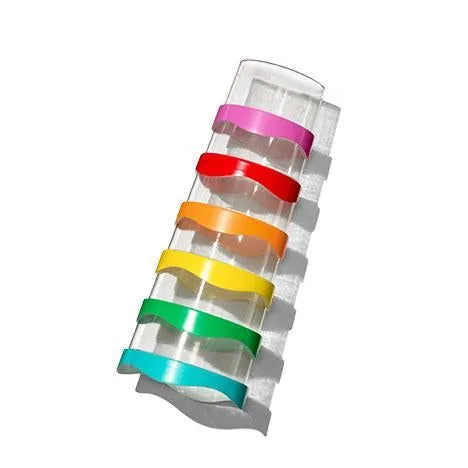
Nesting Stacking Drip Drop Cups
Do not rotate every single item. Some toys, like a favorite book or a stacking cup set, can stay out permanently. The rotation is for kits with many pieces or a specific skill focus.
Set up storage so rotation is easy
Use clear bins or labeled bags for each kit so you can swap them without sorting through loose pieces. Store out-of-rotation kits on a high shelf or in a closet, not in the same room as the play space. If your child can see the stored kits, they may ask for them constantly, which defeats the purpose of a calm rotation.
Keep a small basket for pieces that need repair or missing parts, and check each kit before it goes back into rotation. A quick inventory prevents frustration when your child opens a kit and finds a key piece missing.
Your step-by-step rotation routine
- Pick one rotation day each week or every two weeks: Choose a fixed day, like Sunday evening, and put it on your calendar. A consistent schedule prevents you from rotating too often, which can make play feel chaotic. Checkpoint: if your child is still deeply engaged with a kit, leave it out another week.
- Choose 3-5 kits to keep accessible: Select one favorite, one challenge, one calming kit, and one open-ended staple. For example, keep The Planner Play Kit, The Helper Play Kit + Bonus Book, and the Nesting Stacking Drip Drop Cups available. Common mistake: putting out too many kits at once. Fewer choices lead to deeper play.
- Store the rest out of sight: Place out-of-rotation kits in labeled bins on a high shelf or in a closet. Keep the play space itself uncluttered so your child can see what is available. Checkpoint: if your child can see stored kits and asks for them, move them to a less visible spot.
- Swap one kit at a time: On rotation day, remove one kit and replace it with one from storage. Swapping everything at once can overwhelm your child and make it harder to observe which skills they are practicing. Common mistake: rotating everything at once. One-for-one swaps keep the play space predictable.
- Observe and adjust: Watch how your child uses the new kit for a few days. If they ignore it, try again in a month. If they master it quickly, move it to the challenge slot next time. Next step: note which kits your child returns to and build your next rotation around those skills.
Products that fit a rotation schedule
- Nesting Stacking Drip Drop Cups: The Nesting Stacking Drip Drop Cups encourage tower-building, nesting, pouring, and containment. These cups are a low-setup staple that can stay out during every rotation because they support multiple foundational skills.
- The Planner Play Kit: The Planner Play Kit helps children practice thinking ahead, understanding time, logical reasoning, predicting, and identifying number patterns. Use this kit as the challenge slot in your rotation when your child is ready to connect actions to outcomes.
- The Helper Play Kit + Bonus Book: The Helper Play Kit + Bonus Book includes a curated set of play materials and a bonus book that encourage fine motor skills, problem-solving, and imaginative play. A kit with a book works well as a quiet rotation choice for days when you need calmer play.