Quick answer
Wipe your leather belt with a dry cloth after each wear, clean it every few months with a barely damp cloth and mild soap, then apply a thin layer of leather conditioner and buff off the excess. Store it rolled or hanging on a wide hook instead of folded, and keep it away from direct heat and prolonged sun. That routine is what keeps a belt supple, stops cracking at the buckle holes, and gets you years of wear instead of one season.
A leather belt takes more daily abuse than almost anything else you own. It bends at the same spot every time you sit down, absorbs sweat and rain, and rubs against denim or a buckle all day. None of that has to shorten its life, but it does mean leather belt care is less about occasional deep cleaning and more about a few small habits repeated often.
The good news is that a belt is one of the easiest leather items to maintain. You do not need a shelf of products, and you do not need to baby it. You need to remove grit before it grinds into the grain, replace the oils that sweat and sun strip out, and stop storing the belt in a way that trains a permanent crease into it.
Start with the right tools, not more of them
You can handle almost all leather belt maintenance with four things: a soft dry cloth, a second cloth you can dampen, a mild pH-neutral soap, and a small amount of leather conditioner. A soft brush helps for textured leather, and a dedicated leather cleaner is fine if you already own one, but dish soap, alcohol, and household disinfectant sprays are the wrong tools. They strip the oils that keep the leather flexible and leave it dry and prone to cracking.
Match the product to the finish. Smooth finished leather takes a light conditioner well. Pebbled or full-grain leather with a visible grain also benefits, but use less and work it in gently so you do not flatten the texture. If your belt has a coated or patent finish, skip conditioner entirely and stick to wiping with a dry cloth, because oils sit on the surface and cloud it.
- Keep a dedicated cloth for leather so you are not wiping it with a towel that still holds detergent residue.
- Test any new product on the back of the belt near the tip, where a slight change in color will not show.
Clean a leather belt without soaking it
Dampen a cloth, add a drop of mild soap, and wring the cloth out until it is barely moist. Wipe the full length of the belt in one direction, paying extra attention to the area around the buckle holes and the tip, which collect the most sweat and grime. Do not scrub back and forth, and never dunk the belt in water or run it under a tap. Leather is skin: too much water swells the fibers, and as it dries it can stiffen and shrink.
Wipe off the soap residue with a clean damp cloth, then let the belt air-dry flat and away from radiators, hair dryers, or direct sun. Heat dries leather faster than the oils can redistribute, which is exactly how a belt ends up brittle. If the belt got genuinely soaked in rain, blot it, reshape it flat, and give it a full day to dry before you wear it again.
- Clean the buckle separately with a dry cloth; moisture trapped between metal and leather is what causes greenish staining.
- If the belt is only lightly dusty, a dry wipe is enough. Do not clean on a schedule just because time has passed.
Condition leather belt leather so it stays flexible
Conditioning is the step most people skip, and it is the one that decides whether the belt bends smoothly or cracks at the fold. Put a small amount of conditioner on a cloth, not directly on the belt, and work it along the length in thin layers. Let it absorb for a few minutes, then buff off anything still sitting on the surface. A belt should feel supple, not greasy.
Twice a year is a reasonable baseline for a belt worn daily, and more often if you wear it in dry winter air, near salt, or in heavy sweat. The back of the belt, which touches your shirt and waistband, needs the same attention as the front. If the leather still feels stiff after it has absorbed the conditioner, wait a day and add one more thin layer rather than applying a heavy coat all at once.
- Over-conditioning is a real mistake: too much oil softens the leather until it stretches and sags.
- Condition before storage if the belt will sit unused for a season, so it does not dry out in the drawer.
Fix the small problems before they become replacements
Check the stitching and the fold at the buckle every few months. If a thread is fraying, a repair now costs far less than a new belt later. If the leather around a hole is stretching, stop using that hole and let a cobbler add a new one, or move to a belt with a different adjustment system. On a ratchet belt, the track does the adjusting, so a stretched hole is not part of the equation.
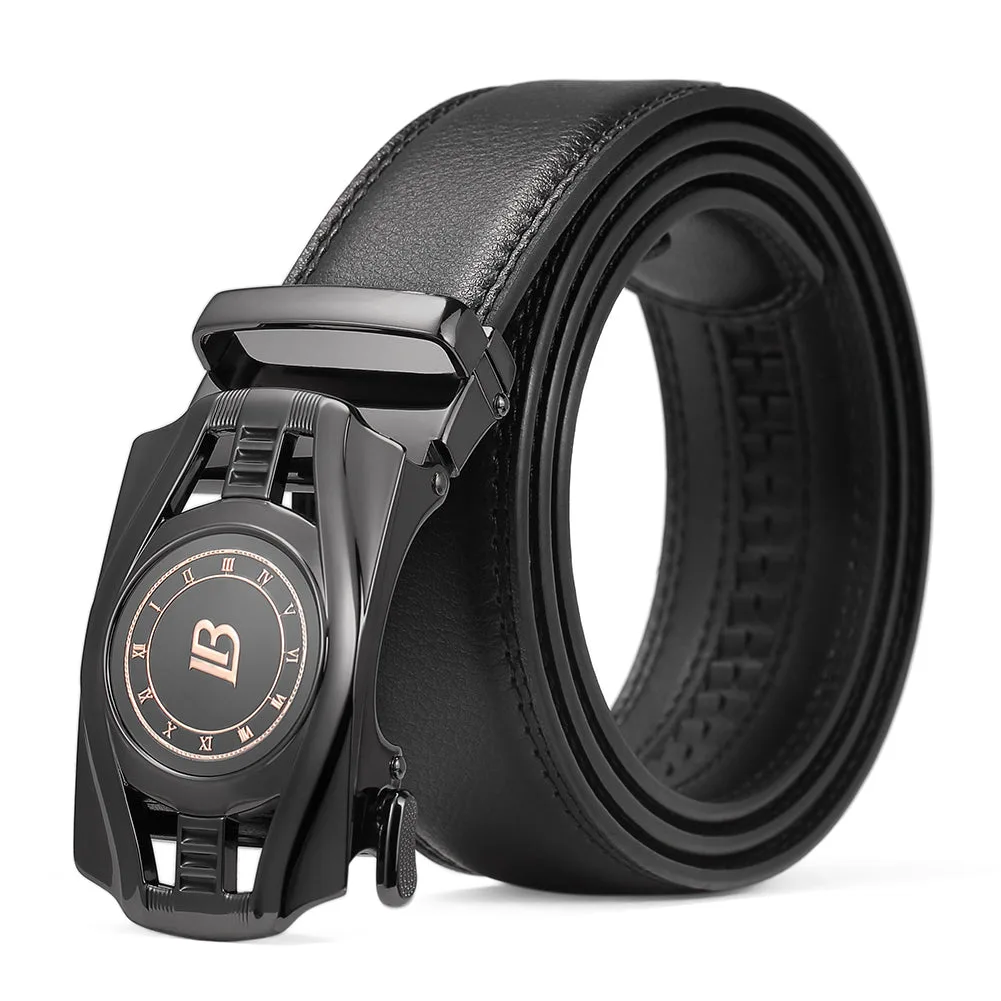
This is where a ratchet design changes the maintenance math. The BOSTANTEN Leather Ratchet Belt For Men Dress and Casual with Adjustable Buckle, Trim to Fit uses an auto-lock buckle for instant adjustment and a cuttable design for a custom fit, so you set the length once and trim the tail rather than punching new holes as your waist changes. The trade-off is that you should trim conservatively, because you cannot add length back.
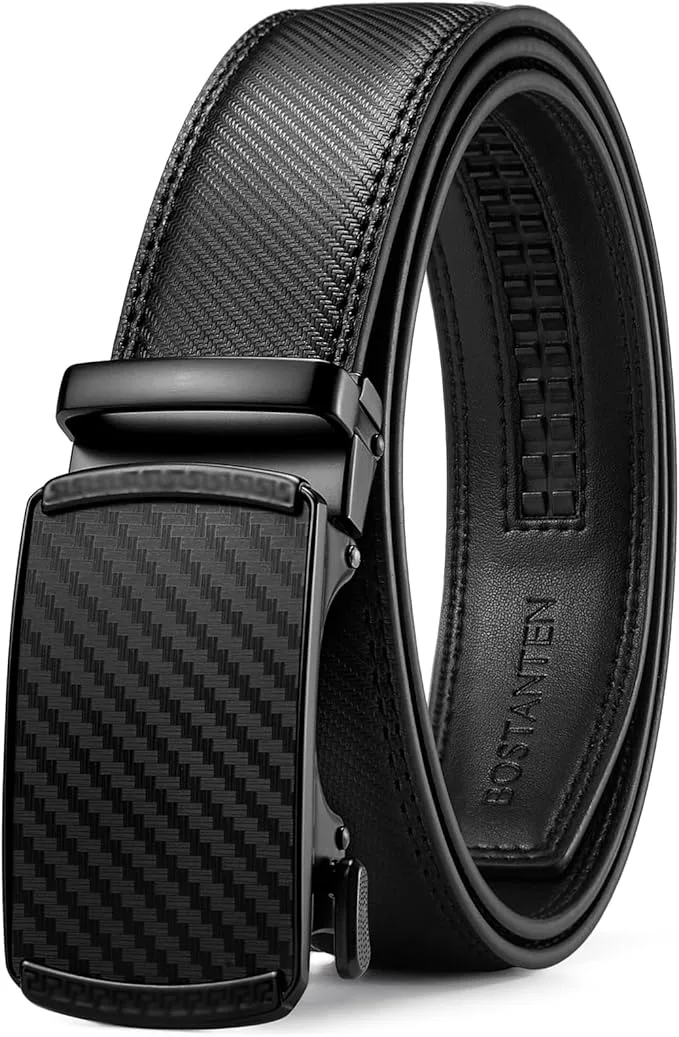
BOSTANTEN Leather Ratchet Belt For Men Dress and Casual with Adjustable Buckle, Trim to Fit
- If the buckle feels loose or the keeper slides, address it before the leather wears unevenly around it.
- Rotate between two belts if you wear one daily; giving leather a rest day genuinely extends its life.
Store a leather belt so it keeps its shape
Leather belt storage matters more than most people expect, because a belt remembers how it was left. Roll it loosely with the buckle on the outside and stand it in a drawer, or hang it from the buckle on a wide, smooth hook. Avoid tight folding over a thin hanger or a nail, and avoid coiling it so tightly that the roll presses a crease into the leather. A belt that lives folded in the same spot will develop a weak point there.
Keep stored belts out of damp basements, hot cars, and direct sunlight. If you live somewhere humid, a breathable cotton bag is better than a sealed plastic one, which can trap moisture against the leather. For belts you wear often, a simple hook inside the closet is enough, as long as the hook is wide enough that the belt is not bent sharply at a single point.
- Never store a damp belt. Let it dry completely first, or it can grow mildew.
- If you stack belts, put the heaviest one at the bottom so buckles do not press into softer leather.
Your leather belt care routine, step by step
- 1. Wipe after every wear: Run a dry soft cloth along the belt, front and back, to lift sweat and dust before it works into the grain. This takes ten seconds and prevents most of the grime that later needs soap. Checkpoint: if the cloth comes away visibly dirty, plan a proper clean soon rather than waiting for the next season.
- 2. Clean gently every few months: Use a barely damp cloth with a drop of mild soap, wipe in one direction, then remove residue with a clean damp cloth. Never soak the belt or scrub the holes. Common mistake: using too much water. Leather that dries stiff was usually too wet, not too dirty.
- 3. Air-dry flat, away from heat: Lay the belt flat and let it dry at room temperature. Keep it off radiators, out of direct sun, and away from hair dryers, which dry the surface faster than the core. Checkpoint: the belt should feel dry and room temperature before you condition it.
- 4. Condition in thin layers: Apply a small amount of leather conditioner with a cloth, let it absorb, then buff off the excess. Cover the back of the belt and the fold at the buckle, not just the visible side. Common mistake: over-conditioning. If the belt feels greasy or floppy, you used too much; wipe it down and wait.
- 5. Inspect the buckle, holes, and stitching: Look for frayed thread, a loose keeper, or leather stretching around a hole. Fix small issues early, and if you use a ratchet belt, adjust the track rather than forcing a worn spot. Next step: a repair now is cheaper than replacing a belt that fails at the fold.
- 6. Store rolled or hung, never folded tight: Roll the belt loosely with the buckle outside, or hang it from the buckle on a wide smooth hook. Keep it dry, out of sunlight, and away from humid or hot storage. Checkpoint: if the belt has a visible crease when you pick it up, change how you store it.
Product facts worth knowing
- BOSTANTEN Leather Ratchet Belt For Men Dress and Casual with Adjustable Buckle, Trim to Fit: Made from Italian leather with a scratch-resistant buckle, it has an auto-lock buckle for instant adjustment and a cuttable design for a custom fit. You set the fit once by trimming the tail instead of adding holes, so there is no stretched hole to maintain later. Trim a little at a time, since cut leather cannot be lengthened again.
- Handcrafted Leather Belts for the Discerning Shopper: Made from Italian leather with an easy-to-fasten and unfasten buckle, the ratchet design allows adjustment to your exact, comfortable fit, and the belt is 1 1/4 inch (3.5 cm) wide and suitable for waist sizes 28-45. A ratchet track spreads wear along the strap instead of concentrating it at one hole, which is easier on the leather over years of daily use. The width also tells you how it will sit with your trouser loops before you buy.
- LuxeClip Genuine Leather Glasses Case - Sleek & Portable: Made from pebbled full-grain leather with a smooth metal zipper, it is designed as compact protection that can be clipped to a bag. The same care rules apply to small leather goods: wipe, condition lightly, and keep them dry. If you already maintain a belt, extending that routine to a case or wallet takes almost no extra effort.
Leather belt care comes down to a short, repeatable routine: wipe it, clean it gently when it needs it, condition it in thin layers, and store it without a hard fold. Do that, and the belt will stay comfortable at the waist, hold its shape at the buckle, and look presentable for years rather than months.