Quick answer
Care for a Swiss watch by keeping it clean, dry, and consistently stored. Wipe the case and band after wear, avoid chemicals and extreme temperatures, respect the water resistance rating, and service the movement or battery before problems start. These habits take seconds a day but prevent the wear that shortens a watch's life.
A Swiss watch is built to last, but it does not maintain itself. The daily grit, sweat, and knocks it collects matter more over years than any single accident. The good news is that proper care is mostly about small, repeatable habits rather than expensive products or complicated routines.
This guide walks through a practical order of operations: what to do after each wear, how to clean the band without damaging it, how to think about water resistance, when to replace a battery, and how to store the watch when it is off your wrist. Each step includes the mistake that most often undoes the benefit.
Start with a daily wipe-down
The single most effective habit is a ten-second wipe after you take the watch off. Skin oils, sunscreen, and dust collect on the case and band and slowly work into crevices. A dry microfiber cloth removes most of it before it hardens or migrates toward the caseback.
Pay attention to the clasp, the caseback, and the gaps where the band meets the lugs. These are the spots where residue builds up and where a soft brush will eventually be needed. If you wore the watch during exercise or in hot weather, wipe it before it goes back in storage.
- Keep a microfiber cloth where you normally remove the watch so the habit is easy to repeat.
- Never use paper towels on polished or coated surfaces; they can leave fine scratches.
Clean the band without soaking the case
How you clean a watch band depends on the material. A silicone strap, like the one on the Wenger Terragraph Swiss Watch in Bronze with Black Dial and Black Silicone Strap, handles lukewarm water and a drop of mild soap well. Rinse it thoroughly and dry it completely before reattaching. Silicone does not absorb moisture, so it dries quickly and resists odors better than porous materials.
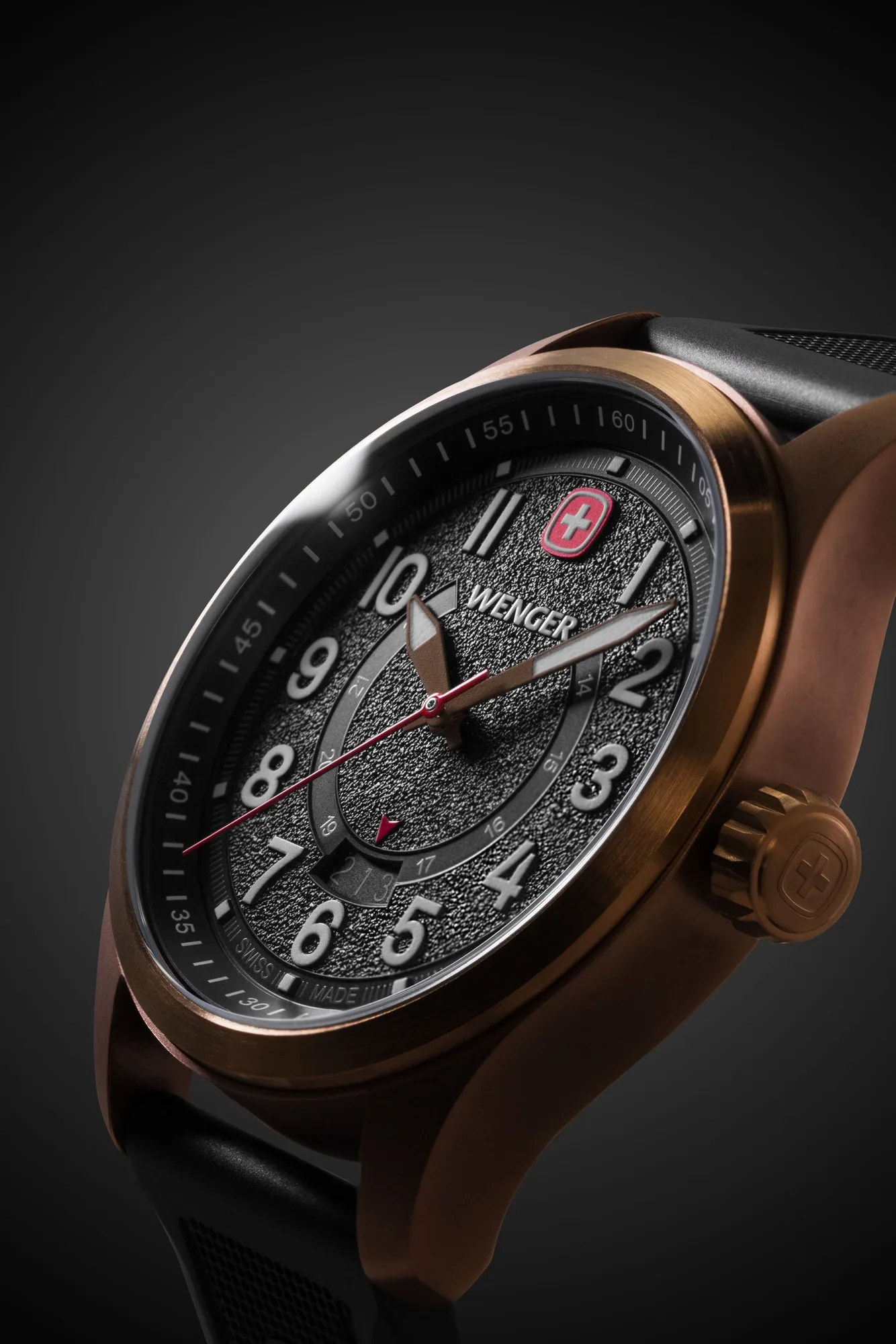
Wenger Terragraph Swiss Watch in Bronze with Black Dial and Black Silicone Strap
For leather or fabric bands, avoid soaking. Wipe with a barely damp cloth and let the band air-dry away from direct heat. Water and heat break down leather fibers and adhesives, which is why a leather band often ages faster than the watch itself. If your watch has a metal bracelet, a soft toothbrush helps clear links, but do not submerge the case unless the water resistance rating allows it.
- Remove the band from the watch before cleaning it whenever the design allows; this keeps water away from the case.
- Let bands dry fully before wearing. Trapped moisture is the main cause of odor and skin irritation.
Respect the water resistance rating
Water resistance care is about matching the rating to the activity, not testing the limit. A watch rated for splashes is fine for handwashing but not for swimming. A higher rating may handle pool water, but chlorine and salt still need to be rinsed off afterward. Heat, steam, and rapid temperature changes are the real enemies because they stress gaskets.
Gaskets age. A watch that was water resistant when new can lose that protection after years of exposure to soap, sweat, and temperature swings. Have the seals checked during service, and never operate the crown or pushers while the watch is wet. If moisture ever appears under the crystal, stop wearing it and get it inspected promptly.
- Rinse with fresh water after contact with pool or sea water, then dry with a soft cloth.
- Avoid wearing any watch in a hot shower or sauna, even a dive-rated model.
Handle the crown and avoid magnetic fields
Push or screw the crown back in after setting the time. A crown left pulled out is an open door for dust and moisture. On screw-down crowns, tighten gently; overtightening wears the threads and can damage the seal. This is one of the simplest watch maintenance tips and one of the most commonly skipped.
Magnetic fields are another quiet threat. Laptops, tablets, speakers, and some bag closures contain magnets that can cause a watch to run fast or slow. If your watch suddenly gains or loses time without a physical shock, demagnetizing is a quick fix a watchmaker can perform.
- Set the time, then confirm the crown is fully seated before you start moving.
- Keep the watch away from strong magnets, including the magnetic closure on some bags.
Replace the battery before it leaks
Watch battery replacement is not just about keeping time. A dying battery can leak and damage the movement. If the second hand starts jumping in larger increments or the watch loses time, replace the battery soon rather than waiting for it to stop. Have a professional do it so the caseback gasket is reseated correctly.
Battery life varies with the movement and the functions the watch performs, so there is no universal schedule. A watchmaker can test the battery and tell you whether it is near the end of its life. When the battery is replaced, ask them to check the gasket at the same time; this is the cheapest moment to protect water resistance.
- Do not open the caseback yourself; improper resealing is a common cause of moisture damage.
- Note the date of each battery change so you can spot unusually short battery life.
Store the watch where it can breathe
Watch storage tips matter more than most people expect. A watch tossed loose in a drawer collects scratches and dust. A watch sealed in a damp box can corrode. The middle ground is a dry, room-temperature spot with a soft pouch or a lined watch box that keeps the watch from rubbing against other objects.
If you rotate several watches, store each one separately and keep the crown seated. For automatic watches, a watch winder is optional; it keeps the movement running but adds wear. For quartz watches, removing the battery during very long storage prevents leakage. Either way, avoid attics, bathrooms, and anywhere humidity swings.
- Store watches away from direct sunlight, which can fade dials and degrade straps.
- If you store a watch for months, check it periodically for condensation or battery leakage.
Your 7-step Swiss watch care routine
- Wipe after every wear: Use a dry microfiber cloth on the case, crystal, and band before the watch goes back in storage. Checkpoint: if the cloth comes away visibly soiled, your cleaning interval is too long.
- Clean the band by material: Rinse silicone with mild soap and water, wipe leather with a barely damp cloth, and brush metal links gently. Mistake to avoid: soaking a leather band or submerging a case that is not rated for it.
- Match water resistance to activity: Treat the rating as a limit, not a challenge, and rinse off chlorine or salt water afterward. Checkpoint: if moisture appears under the crystal, stop wearing the watch and get it inspected.
- Seat the crown and dodge magnets: Push or screw the crown in fully after setting the time and keep the watch away from laptops, speakers, and magnetic closures. Mistake to avoid: leaving the crown out, which invites dust and moisture into the movement.
- Replace the battery early: Swap the battery when the watch starts losing time or the second hand jumps, and have the gasket checked at the same time. Checkpoint: a leaking battery can damage the movement, so do not wait for the watch to stop.
- Store dry and separate: Keep each watch in a soft pouch or lined box in a dry, room-temperature spot away from sunlight. Mistake to avoid: storing watches loose together, which causes scratches and strap wear.
- Schedule periodic service: Have a watchmaker inspect gaskets, battery condition, and timekeeping every few years or whenever you notice a change. Next step: book service before a small issue becomes a movement repair.
Product facts that support better watch care
- Wenger Terragraph Swiss Watch in Bronze with Black Dial and Black Silicone Strap: Swiss-made quartz watch with a black textured dial, large black Arabic numerals, a date window at 6 o'clock, a Swiss-red second hand, and Super-Luminova coated numerals, hour and minute hands, and hour markers. A quartz movement means battery replacement is part of ownership, and the silicone strap is the easiest band material to clean with mild soap and water.
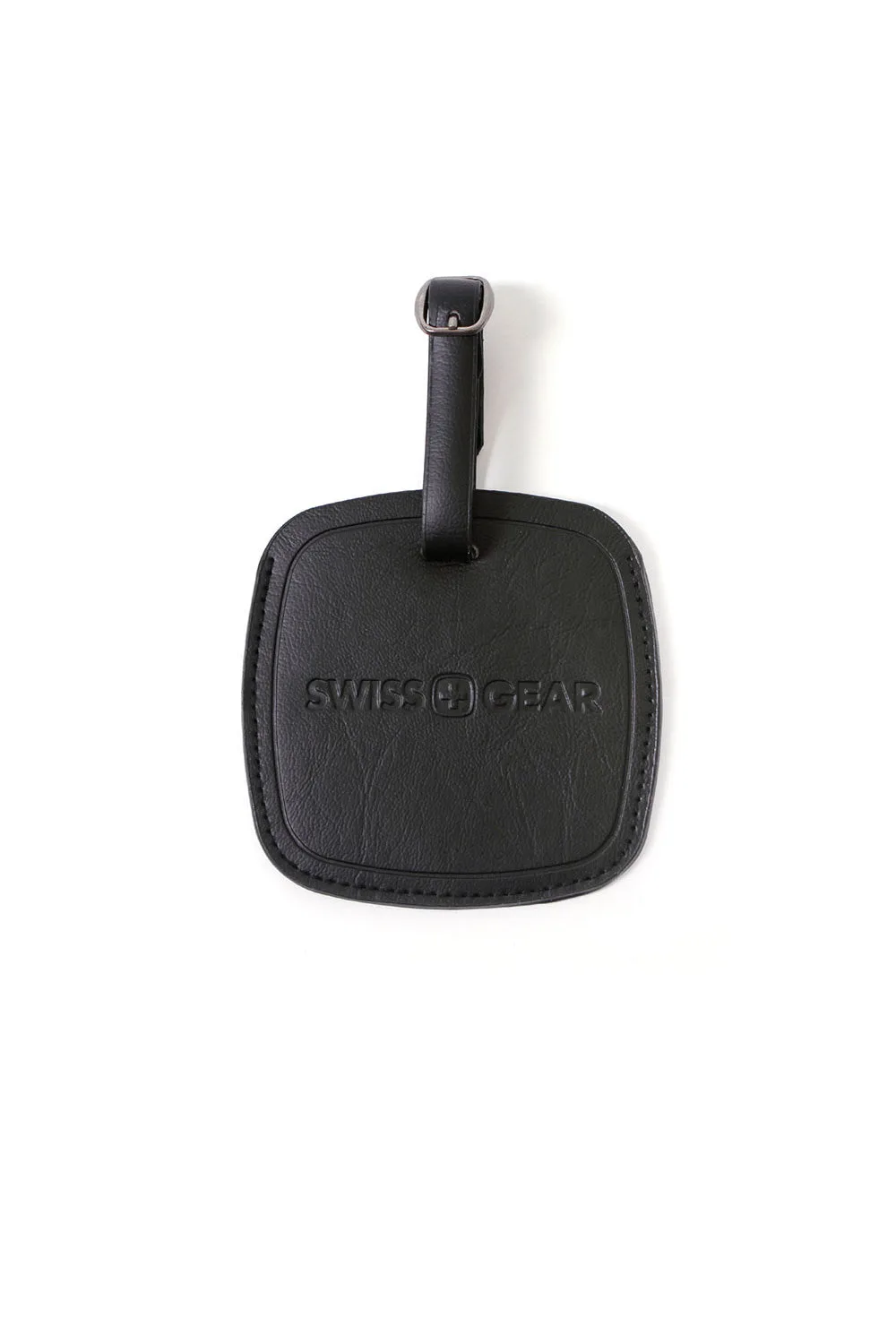
- SWISSGEAR Core Jumbo Luggage Tag: Made from rugged PVC with an adjustable metal buckle and a covered ID panel. A covered ID panel keeps your contact details private while still labeling your bag, which is useful when you travel with a watch and want your luggage easy to spot without exposing personal information.
Swiss watch care comes down to consistency, not complexity. Wipe the watch daily, clean the band by its material, respect the water resistance rating, replace the battery before it leaks, and store the watch dry and separate. Do those things and the watch will keep time and look sharp for far longer than one that is only cleaned when something goes wrong.