Quick answer
Wash cotton socks inside out in cold or lukewarm water on a gentle cycle, then air-dry them flat or hung by the toe. Skip the dryer and fabric softener, which break down elastic fibers and cause socks to lose their shape. Store them loosely paired, not rolled into tight balls.
Cotton socks should be the easiest thing in your laundry basket, yet they're often the first to go baggy, thin, or missing a partner. The problem usually isn't the socks themselves. It's heat, friction, and how you store them.
Whether you wear them for work, workouts, or lounging, a few small changes to your routine can keep cotton socks soft, stretchy, and true to size. Here's a step-by-step process that works for everyday cotton and cotton-blend socks, including modal blends.
Why cotton socks lose their shape
Cotton is a durable natural fiber, but it has little natural stretch. To make socks fit and stay up, manufacturers blend cotton with elastane or modal, or knit in ribbing and stretch zones. Those elastic fibers are what keep a sock snug at the cuff and smooth across the foot.
Heat and agitation are the enemies. Hot water and a hot dryer can shrink cotton and degrade elastane, so cuffs loosen and the sock twists. Fabric softener leaves a coating that reduces absorbency and can weaken elastic over time. Even how you store socks matters: rolling them into tight balls stretches the cuff and traps moisture.
- Check the label: if elastane, modal, or polyamide is listed, treat the sock as a stretch item, not just cotton.
- New socks with a wide, ribbed cuff often hold shape better because the knit has more room to flex.
Step 1: Sort and turn socks inside out
Before washing, separate socks from heavy items like jeans and towels. Zippers, buttons, and rough fabrics rub against socks and cause pilling. Turn each sock inside out so the part that touches your skin gets the most cleaning action, and so lint and dead skin cells release more easily.
This is also the moment to check for small holes or loose threads. A quick repair now prevents a tiny snag from becoming a run. If a sock is stretched out or the cuff is already loose, set it aside for a gentler wash rather than mixing it with heavy loads.
- Common mistake: leaving socks inside out for drying. Turn them right side out after washing to help them dry evenly and look neat.
Step 2: Wash in cold or lukewarm water on a gentle cycle
Use cold or lukewarm water (up to 30°C / 86°F) on a gentle or delicate cycle. Hot water is the fastest way to shrink cotton and wear out elastic. If your machine has a dedicated hand-wash or wool cycle, that's even better for thin or modal-blend socks.
Use a mild liquid detergent and skip fabric softener and chlorine bleach. Softener coats fibers and reduces stretch; bleach weakens cotton over time. For heavily soiled sports socks, a short pre-soak in cool water with a little detergent is safer than a hot wash.
- Checkpoint: if you can't remember the last time you cleaned your washing machine, run a hot empty cycle with a machine cleaner. Residue can transfer to socks and cause odors.
Step 3: Air-dry flat or hang by the toe
The dryer is the biggest threat to sock shape. High heat breaks down elastane and can shrink cotton, leaving you with stiff, short socks. Instead, reshape each sock by hand and lay it flat on a drying rack, or hang it by the toe with a clip. Avoid hanging by the cuff, which stretches the elastic.
If you must use a dryer, choose the lowest heat setting and remove socks while they're still slightly damp. Never dry socks on a radiator or in direct sun for long periods, as intense heat and UV can fade colors and weaken fibers.
- Common mistake: drying socks on a warm radiator. It feels efficient but cooks the elastic and makes cuffs brittle.
Step 4: Store socks loosely paired
Once socks are completely dry, pair them and fold them loosely. Don't roll them into tight balls or knot the cuffs together. That stretches the opening and creates pressure points that weaken the knit. If you have drawer space, lay pairs flat in a row or use a simple drawer divider.
For long-term storage, keep socks away from damp areas. A small cedar block or moisture absorber can help if your drawers feel humid. Rotate your socks so the same pairs aren't worn and washed constantly; giving elastic a rest between wears helps it recover.
- Checkpoint: if a sock still feels damp after drying, give it more time. Storing damp socks encourages mildew and odors.
How to spot socks that are past saving
Even with perfect care, socks eventually wear out. Replace them when the heel or toe is thin enough to see light through, when the cuff no longer stays up, or when the fabric feels stiff and rough. Worn-out elastic can't be restored by washing, and stretched socks can cause blisters or discomfort in shoes.
If only one sock in a pair has failed, keep the good one as a spare for matching later, or use it for dusting. But don't keep uncomfortable socks in rotation just because they're still in the drawer.
- A simple test: stretch the cuff gently. If it doesn't spring back, the elastic is gone.
Your 5-step sock care routine
- Turn inside out and check: Turn each sock inside out and look for holes or loose threads. Repair small snags before washing. Checkpoint: if the cuff is already loose, wash it separately on a gentle cycle.
- Wash cold on gentle: Use cold or lukewarm water (max 30°C) with mild detergent. Skip fabric softener and bleach. Common mistake: hot water and heavy loads shrink cotton and wear out elastic.
- Air-dry flat or by the toe: Reshape socks and lay flat or hang by the toe. Avoid the dryer and direct heat. Checkpoint: socks should be completely dry before storing.
- Store loosely paired: Fold pairs loosely and lay flat. Don't roll into tight balls or knot cuffs. Common mistake: tight rolling stretches the cuff and weakens the knit.
- Rotate and replace when needed: Give socks a rest between wears. Replace when heels thin or cuffs won't stay up. A simple stretch test tells you when a sock is past saving.
DIM socks that respond well to this care routine
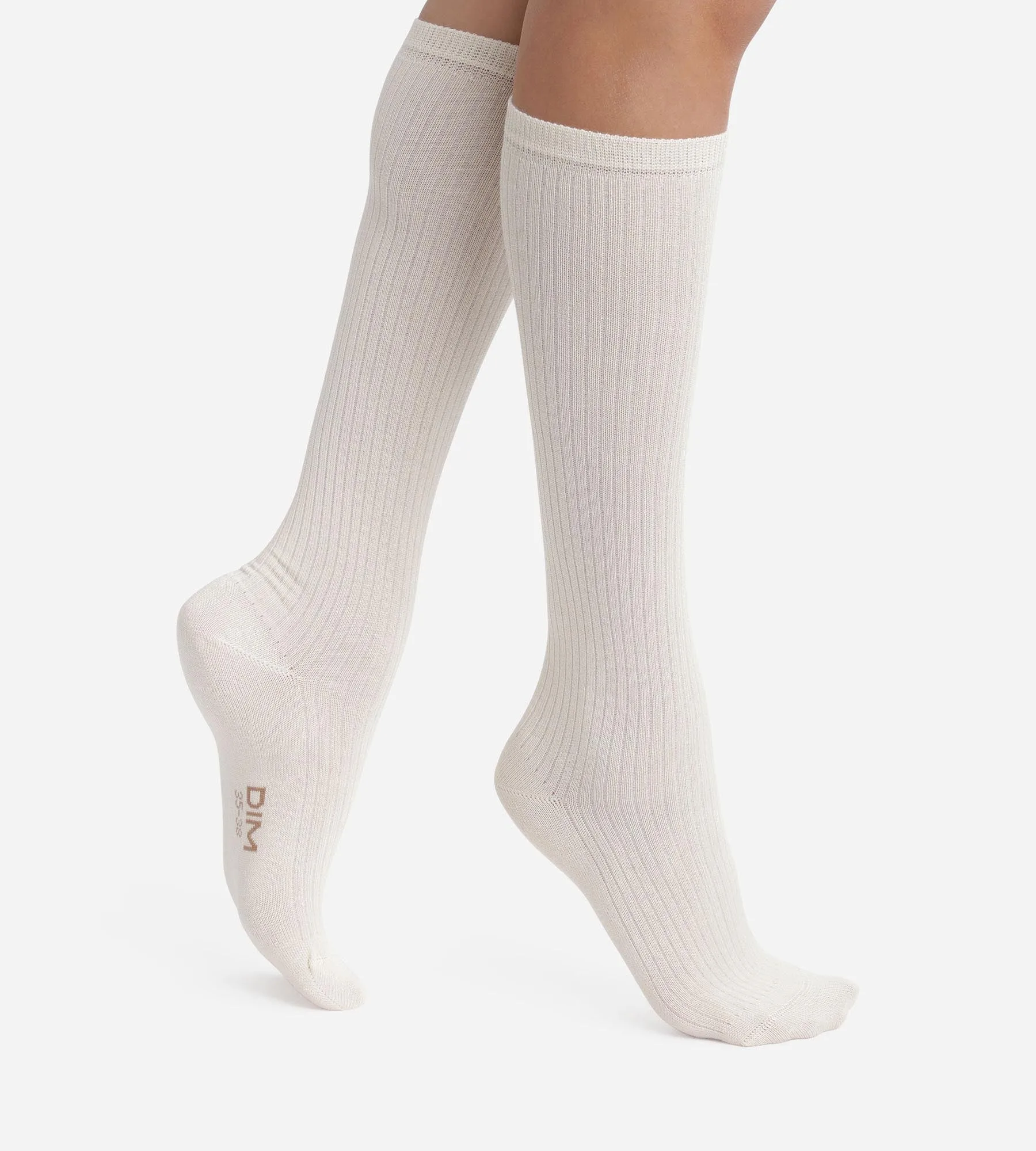
- Chaussettes haute côtelée en coton Ivoire Dim Modal: Avec sa maille coton ivoire et son format mi-bas, la chaussette haute Dim Modal apporte une touche mode lumineuse aux silhouettes d’hiver. Le coton modal doux et chaud, pensé pour des superpositions élégantes. La ligne haute de ces chaussettes femme qui allongent la jambe et signe une allure affirmée. L’aspect côtelé et la nuance Ivoire moderne, parfaite pour créer du contraste. Le bord extensible large. The wide ribbed cuff and modal blend benefit from cold washing and air-drying to keep the ribbing springy and the ivory color bright.
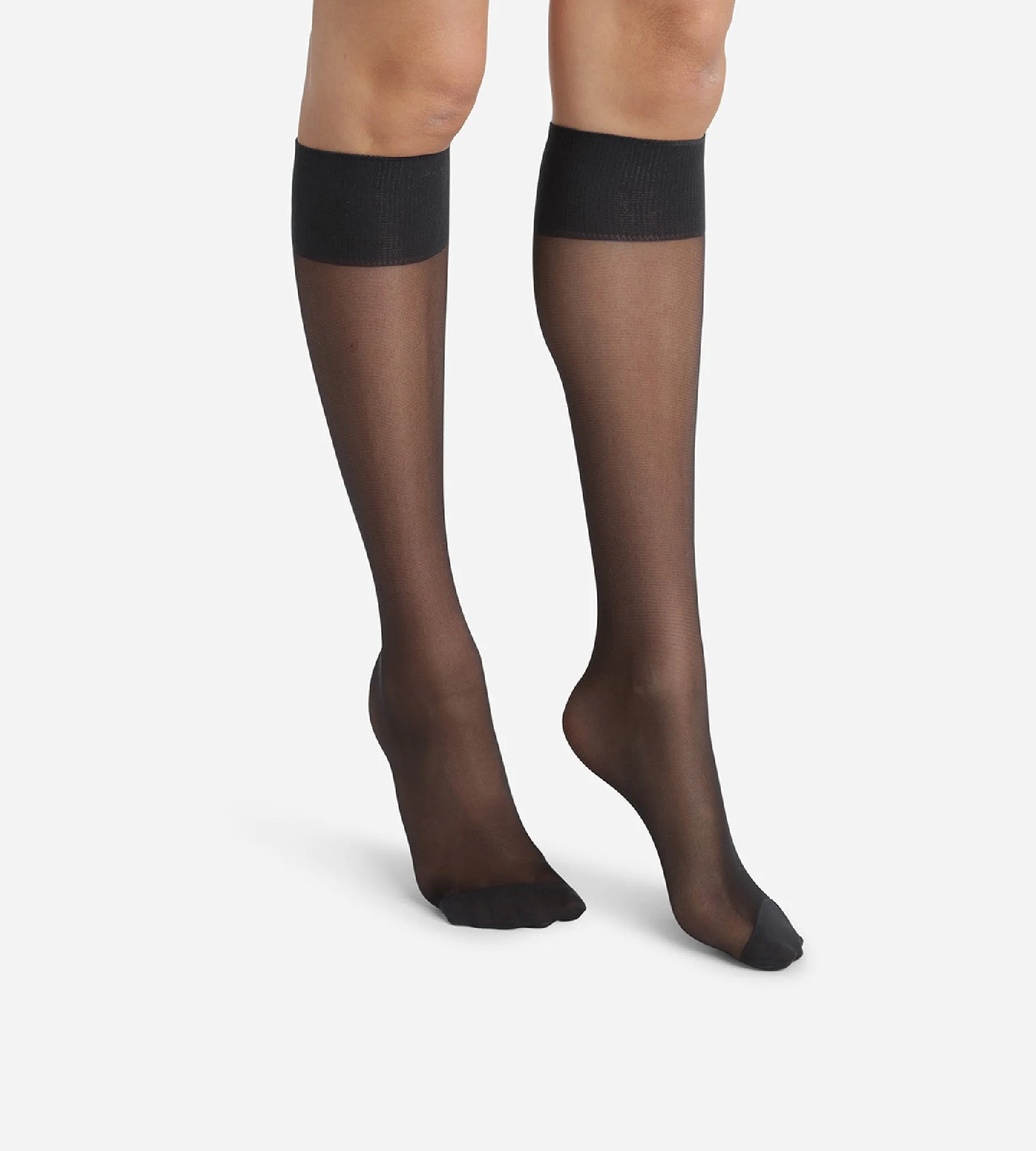
- Lot de 2 paires de mi-bas en voile Lycra renforcé Noir Ultra Resist: Le voilage 20D noir translucide qui met en valeur vos chevilles avec élégance. La composition en Lycra élasthanne pour un maintien parfait. Le tricotage soigné qui assure un confort optimal. Les pointes renforcées pour une finition délicate et résistante. Le coloris Noir, intemporel et raffiné. Lycra and reinforced toes need gentle handling; washing in a mesh bag and skipping the dryer protects the sheer knit and elasticity.
Good cotton socks care comes down to avoiding heat, friction, and tight storage. Wash them cool, dry them gently, and store them loosely. Your socks will keep their shape, feel softer, and last through more wears, whether you're wearing a ribbed modal pair or a sheer Lycra blend.