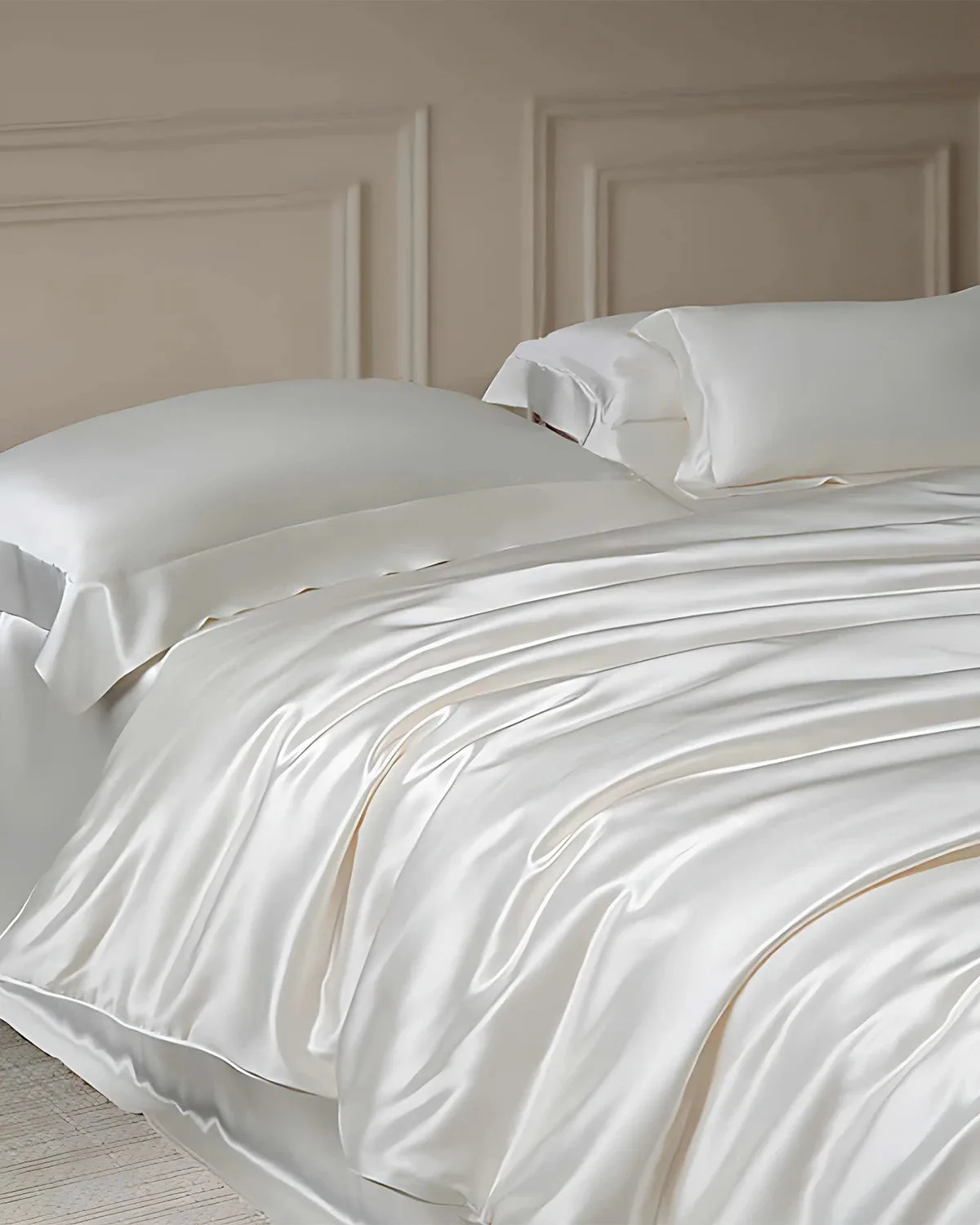
Quick answer
Treat the duvet cover and the comforter as two different jobs. Wash the silk duvet cover by hand or on a delicate cycle in cool water with a pH-neutral silk detergent, then air-dry it away from direct sun. Spot-clean the silk comforter and air it out instead of washing it; if it truly needs a full wash, use a professional silk cleaner. Store both flat or loosely folded in a breathable cotton bag, never in plastic.
Why silk bedding needs a gentler routine than cotton
Silk is a protein fiber, so it reacts badly to the same things cotton shrugs off: hot water, alkaline detergent, chlorine bleach, and rough agitation. Those break down the fiber over time, which shows up as dullness, stiffness, and weakened seams rather than an obvious stain or tear. The practical rule is to keep water cool, keep the detergent neutral, and keep mechanical friction low.
The two pieces in a set also age differently. A duvet cover touches skin and hair every night, so it picks up body oils and needs washing more often. A filled silk comforter spends most of its life inside that cover, so it mostly needs airing and spot treatment. Separating those two routines is the single biggest thing you can do to make silk bedding last.
What you need before you start
Gather a pH-neutral silk or wool detergent, two clean white towels, a drying rack, and a breathable cotton storage bag. Skip oxygen bleach, fabric softener, and enzyme-heavy stain sprays; enzymes are designed to break down protein, and silk is protein.
Check the care label on your specific set first, because momme weight changes how much handling the silk tolerates. A 22 momme charmeuse, for example, is a mid-weight bedding silk that holds up to gentle hand washing better than a very lightweight silk, but it still should never go in a hot dryer.
How often to wash each piece
Wash the duvet cover every one to two weeks if you sleep under it directly, or every two to three weeks if you always use a top sheet underneath. Spot-clean the comforter as soon as you notice a mark, and air it for 20 to 30 minutes in indirect light once a month to refresh it.
If anyone in the household has allergies or night sweats, shorten those intervals rather than washing hotter. More frequent cool, gentle washing is safer for silk than less frequent hot washing.
Your step-by-step silk bedding care routine
- 1. Remove the cover and shake out the comforter: Unzip or unbutton the duvet cover and take the comforter out. Shake the comforter gently outdoors or near an open window for a few minutes to release dust and let it breathe. Checkpoint: if the comforter smells musty even after airing, that is a sign it needs professional cleaning, not a home wash.
- 2. Spot-clean marks on the comforter first: Dab the stain with a cloth wrung out in cool water and a drop of pH-neutral silk detergent. Work from the outside of the stain inward so you do not spread it, then blot with a clean damp cloth. Common mistake: rubbing the stain. Friction can pill and dull the charmeuse surface permanently.
- 3. Wash the duvet cover by hand or on delicate: Fill a basin with cool water and a small amount of pH-neutral detergent. Submerge the cover, press it gently with your hands for two to three minutes, then rinse in cool water until no suds remain. If your machine has a true delicate cycle, use it with a low spin speed and a mesh bag. Checkpoint: never use hot water or chlorine bleach, and never let the cover soak for more than about 15 minutes.
- 4. Remove water without wringing: Lift the cover out supporting it with both hands, then roll it in a clean white towel and press down to absorb excess water. Repeat with a second towel if it still feels heavy. Common mistake: wringing or twisting. That stretches the weave and can pull seams out of alignment.
- 5. Air-dry away from direct sun: Lay the cover flat on a drying rack or hang it in the shade with good airflow. Turn it once halfway through so both sides dry evenly. A fan speeds this up without adding heat. Checkpoint: silk should be slightly damp, not bone-dry, when you take it down; that makes the next step easier.
- 6. Press on low heat if needed: If the cover looks creased, iron it inside out on the lowest silk setting while it is still slightly damp, or use a handheld steamer held a few inches away. Common mistake: ironing the face side directly. Always work on the reverse and keep the iron moving.
- 7. Store folded, not compressed: Once fully dry, fold the cover and comforter loosely and place them in a breathable cotton bag or pillowcase. Store them flat on a shelf rather than in a vacuum bag or a sealed plastic bin. Checkpoint: add a cedar block or lavender sachet nearby, but never place mothballs directly against silk.
Product facts worth knowing
- 22 Momme Luxury Silk Bedding Set 4PCS: 22 Momme Luxury Silk Bedding Set 4PCS is made from premium mulberry silk charmeuse and includes a champagne sheet, light pink pillowcases, and a reversible light pink and champagne duvet cover. Because the duvet cover is reversible and color-paired, wash it as a single piece and dry it flat or line-dry so both faces keep matching color depth; a hot dryer can fade one side faster than the other.