Quick answer
Keep stretch bracelets dry, roll them on and off instead of pulling, and store them flat when you're not wearing them. For rhinestone styles, wipe with a soft dry cloth rather than soaking them. These habits protect the elastic cord, which is the part that usually fails first.
Stretch bracelets are the easiest jewelry you own: no clasp, no fuss, and they slip on in a second. That convenience comes from an elastic cord, and elastic is the one part of the bracelet you can't see and can't easily replace. Most stretch bracelets don't break because the stones fall out. They break because the cord stretches, dries out, or snaps.
The good news is that stretch bracelet maintenance takes seconds, not hours. A few consistent habits around water, storage, and how you put the bracelet on will keep the cord springy and the finish bright. Below is a simple order of operations, from daily wear to occasional cleaning, plus the mistakes that quietly shorten a bracelet's life.
Start with daily habits that protect the cord
The single biggest factor in how long a stretch bracelet lasts is what it's exposed to. Water, lotion, perfume, hairspray, and sunscreen all work their way into the elastic and gradually break down its stretch. Make the bracelet the last thing you put on when getting ready and the first thing you take off at night. That one swap keeps most of your skincare and fragrance away from the cord.
Heat matters too. Don't leave stretch bracelets on a sunny windowsill, a hot car dashboard, or near a radiator, because heat makes elastic lose its snap faster. If you wear your bracelet to the gym, the pool, or the beach, take it off first. Chlorine and salt water are especially hard on both cord and metal finishes.
- Put jewelry on after lotion, perfume, and hairspray have dried.
- Remove stretch bracelets before showers, swimming, dishes, and workouts.
- Keep them out of hot cars and away from direct sun when stored.
Put them on and take them off the right way
Most people tug a stretch bracelet over their knuckles, which over-stretches the cord every single time. Instead, roll it on: place the bracelet against your wrist and gently roll it upward over your hand, letting the elastic do the work gradually. To remove it, roll it back down the same way rather than pulling it off by one edge.
Rolling also protects the stones and finish. Pulling a beaded or rhinestone bracelet sideways puts stress on the stringing holes and the settings, which is how stones loosen over time. If a bracelet feels tight going on, size up rather than forcing it. A slightly looser fit is easier on the cord than a bracelet that has to stretch hard twice a day.
- Roll over the hand; never yank straight off the wrist.
- If it fights your hand, the size is wrong, not the technique.
Clean rhinestone and beaded bracelets safely
When you clean a rhinestone bracelet, skip the jewelry dip and the ultrasonic cleaner. Both can loosen adhesive-set stones and dull foiled crystal. A soft, dry microfiber cloth is enough for routine touch-ups, and it removes skin oils that make sparkle look flat. Wipe gently between the stones rather than scrubbing across them.
For a deeper clean, dampen a cotton swab with plain water, wring it out well, and dab around the settings, then dry immediately with a soft cloth. Never soak a stretch bracelet, and never stretch it while it's wet, because wet elastic is at its most vulnerable. For metal components, a dry polish cloth is safer than liquid polish, which can seep into the cord.
- Dry cloth first; it handles most everyday dullness.
- One damp swab, then dry right away. No soaking, no stretching while wet.
- Avoid alcohol, acetone, and ammonia-based cleaners on rhinestones and elastic.
Store stretch bracelets so they keep their shape
How you store a stretch bracelet decides whether it relaxes or stays snug. Hanging a stretch bracelet on a hook or a jewelry stand lets gravity pull the elastic out of shape over months. Instead, lay stretch bracelets flat in a lined jewelry box or a soft pouch, ideally not stretched around a display roll. Keep each piece separate so metal doesn't scratch metal and stones don't chip against each other.
A small pouch per bracelet is the simplest system, and it also makes travel easy. If you stack several stretch bracelets, put the heavier or textured ones on the bottom and lighter rhinestone pieces on top. Check your collection every few months: if a cord looks frayed, feels limp, or shows a visible gap between beads, that bracelet is close to failing and should be restrung before you lose it.
- Store flat, not hanging.
- Separate pieces to prevent scratches and chips.
- Retire or restring any bracelet with a frayed or slack cord.
Rotate your bracelets and know when to let go
Elastic needs recovery time. Wearing the same stretch bracelet every day means the cord never fully returns to its original length, so it loosens faster. Rotating two or three favorites through the week gives each cord a rest and spreads the wear. This is also a good reason to own a couple of similar styles rather than one everyday piece.
Even with perfect care, elastic has a lifespan, and no cleaning routine makes it permanent. Expect to restring or replace stretch bracelets periodically, especially ones worn daily. Treating them well simply stretches that timeline. The goal isn't a bracelet that lasts forever; it's one that still looks and fits right for as long as possible.
- Rotate daily-wear pieces to let elastic recover.
- Plan on occasional restringing; it's normal, not a defect.
Your stretch bracelet care routine, step by step
- 1. Make it the last thing on, first thing off: Apply lotion, perfume, and hairspray first, let them dry, then put the bracelet on. Remove it before bed, showers, dishes, and workouts. Checkpoint: if your bracelet smells faintly of perfume or sunscreen, it's absorbing products that shorten cord life.
- 2. Roll it on and off: Press the bracelet against your wrist and roll it over your hand instead of tugging it straight on or off. Checkpoint: if you hear the elastic creak or the beads shift, you're stretching too hard.
- 3. Wipe with a soft dry cloth after wear: A quick pass with a microfiber cloth removes skin oils and keeps rhinestones bright. For deeper cleaning, use one barely damp cotton swab around the settings, then dry immediately. Checkpoint: never soak a stretch bracelet, and never stretch it while wet.
- 4. Store flat and separated: Lay bracelets in a lined box or individual pouches rather than hanging them on a hook or stretching them over a display roll. Checkpoint: no visible gap between beads and no kinks in the cord when you take it out.
- 5. Rotate and inspect monthly: Give each stretch bracelet rest days, and check cords for fraying, limpness, or slack. Restring or replace anything that looks worn before it snaps. Next step: if a cord is failing, restring it with fresh elastic or replace the piece while your favorites are still available.
Products where these habits pay off
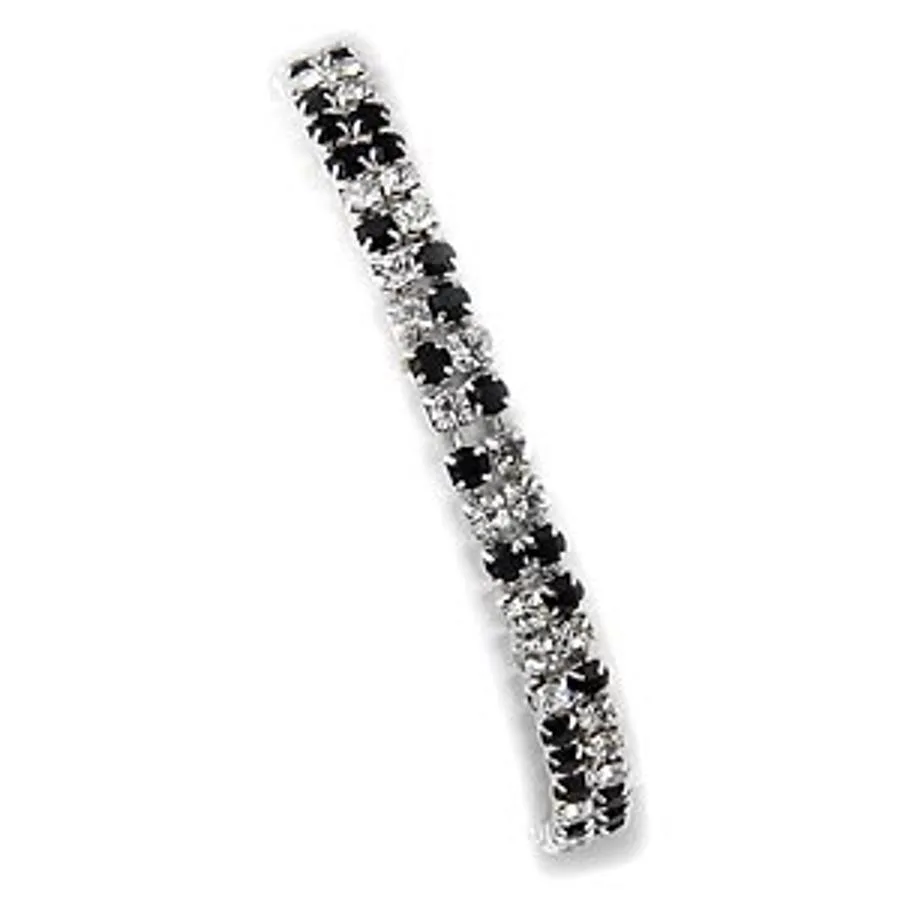
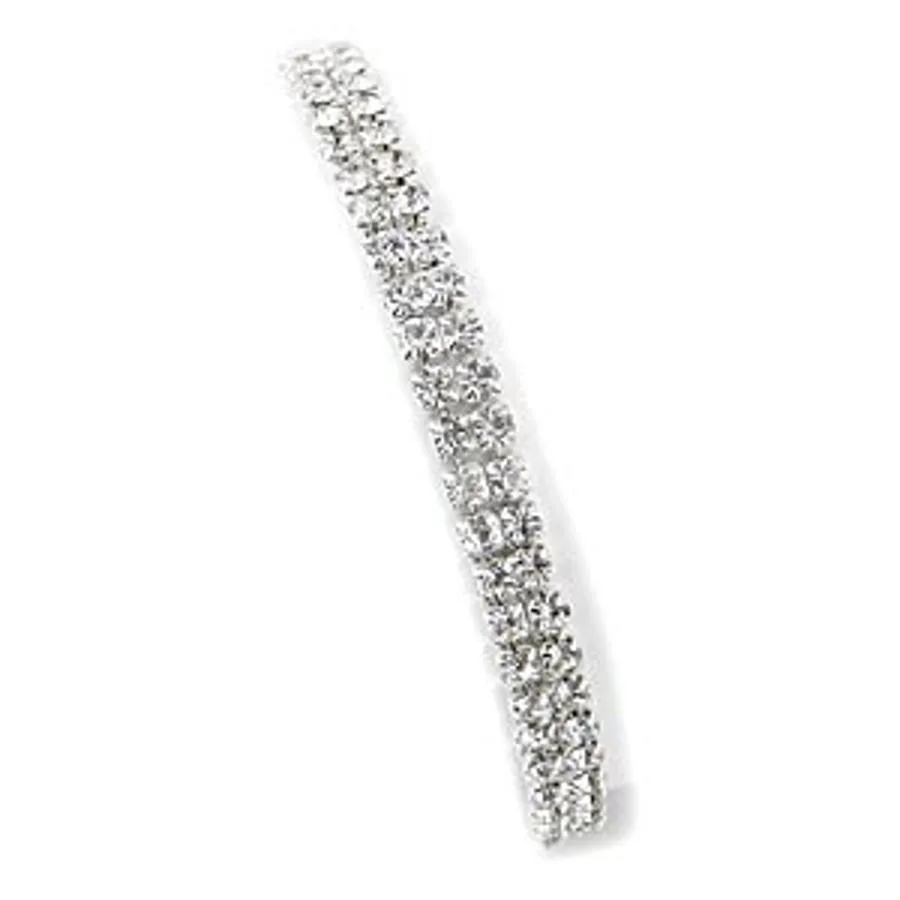
- Rosa Rhinestones 2-Row Stretch Bracelet: Silver-tone two-row stretch design set with genuine Austrian crystal and rhinestone detailing. The two-row construction means more weight on the cord, so rolling it on and storing it flat matters even more than with a single-row bracelet.
- Rosa Rhinestones 2-Row Jet Stretch Bracelet: Silver-tone stretch bracelet with two rows of genuine Austrian crystal and jet stones. Darker jet stones show skin oils and lotion residue quickly, so a regular dry-cloth wipe keeps the contrast crisp.
- Mens Jones New York Suit Solid Stretch Jacket: Stretch texture woven jacket in 52% wool, 44% polyester, and 4% spandex; dry clean only. A reminder that stretch fabrics and stretch cord both respond well to gentle, low-heat care and poorly to harsh chemicals.
Stretch bracelet care comes down to three things: keep the cord dry, roll instead of pull, and store flat. Do that, and your rhinestone and beaded pieces will keep their sparkle and their snap far longer than a bracelet left on a hook by the sink.