Quick answer
Care for a tarot deck by keeping it clean and dry, cleansing it with a method that suits its finish, shuffling gently in small batches, and storing it away from sun, heat, and moisture. A simple monthly reset plus careful handling will protect both the artwork and your readings far better than any single ritual.
Handle with clean, dry hands
Oils, lotion, and food residue are the most common causes of stained edges and sticking cards. Wash and dry your hands before a reading, and keep drinks on a side table rather than next to the spread. If a card does pick up a smudge, wipe it lightly with a dry, lint-free cloth instead of a wet wipe, which can lift the coating and warp the paper.
Choose a cleansing method that matches the deck
Cleansing is about resetting your attention as much as the cards. For matte or borderless decks, smoke or sound is safer than anything wet. For standard coated decks, a barely damp cloth on the edges is usually fine, but test one card first. Moonlight, salt bowls, and crystal placement are popular, yet salt can scratch and moisture can swell paper, so keep salt in a separate dish rather than on the cards.
Shuffle in small, even batches
Riffle shuffling bends the whole deck at once, which is how corners soften and crease. Overhand shuffling in piles of 10 to 15 cards, then a gentle bridge, spreads the wear. If a deck feels stiff, break it in slowly over several sessions instead of forcing a full riffle on day one. For large oracle decks, deal into three piles, shuffle each, then restack.
Store flat, dark, and dry
Cards warp when they are stored upright, stacked unevenly, or left in humid air. Keep the deck in its box or a cloth bag, lay it flat, and avoid windowsills, radiators, and bathrooms. If you keep a deck on an altar, rotate it monthly so the same cards are not always pressed against the bottom of the box. A silica packet in the storage drawer helps in damp climates, but do not place it directly against the cards.
Know when a deck is retired, not ruined
A working deck will eventually show soft edges and a slightly bowed shape. That is normal. Retire a deck from client or public readings when cards stick together, when print rubs off, or when the deck no longer feels comfortable to shuffle. A worn deck can still be kept for personal study or as a reference copy.
Your monthly deck care routine
- 1. Wash and dry your hands: Before any reading, wash with mild soap and dry completely. This prevents oil transfer to card faces and edges. Checkpoint: if your hands feel tacky, wash again before touching the deck.
- 2. Clear the reading surface: Wipe the table with a dry or barely damp cloth and let it dry fully. Crumbs and grit scratch card faces during a spread. Checkpoint: run a finger across the surface; if you feel grit, wipe again.
- 3. Cleanse with a dry method first: Pass the deck through incense smoke, ring a bell, or knock once on the top card. Save damp cloths for coated decks only. Mistake to avoid: never soak cards or use wet wipes on borderless or matte decks.
- 4. Shuffle in small batches: Split the deck into three piles of roughly equal size, overhand shuffle each, then restack. Repeat twice. Checkpoint: if any card catches or bends, stop and separate the stuck cards gently.
- 5. Store flat in the box or bag: Return the deck to its box or a cloth bag, lay it flat, and keep it out of direct sun and damp air. Checkpoint: a deck stored upright will bow; store it flat.
- 6. Rotate and inspect monthly: Once a month, fan the deck and check for bent corners, sticky edges, or fading print. Rotate which cards sit at the bottom of the box. Next step: retire the deck from public readings if cards stick or print rubs off.
Decks that reward careful handling
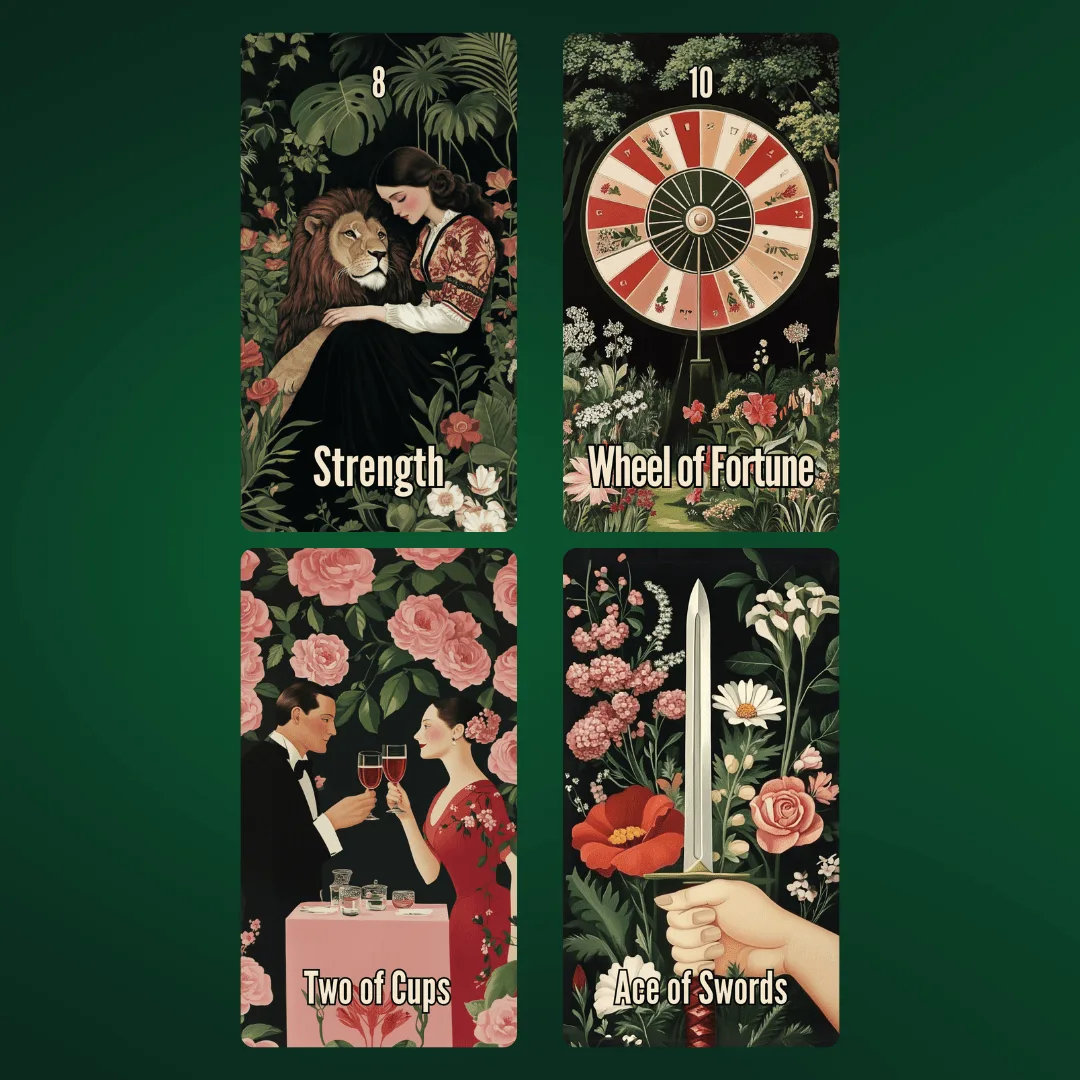
- Nightshade Tarot 🌿 A 78-card journey through bloom, decay, and the wisdom hidden in shadow: Nightshade Tarot is a 78-card deck inspired by the balance between bloom and decay, weaving flower language with shadow work. Its dark, detailed artwork benefits from a dry, flat storage spot and gentle overhand shuffling so the imagery stays legible.
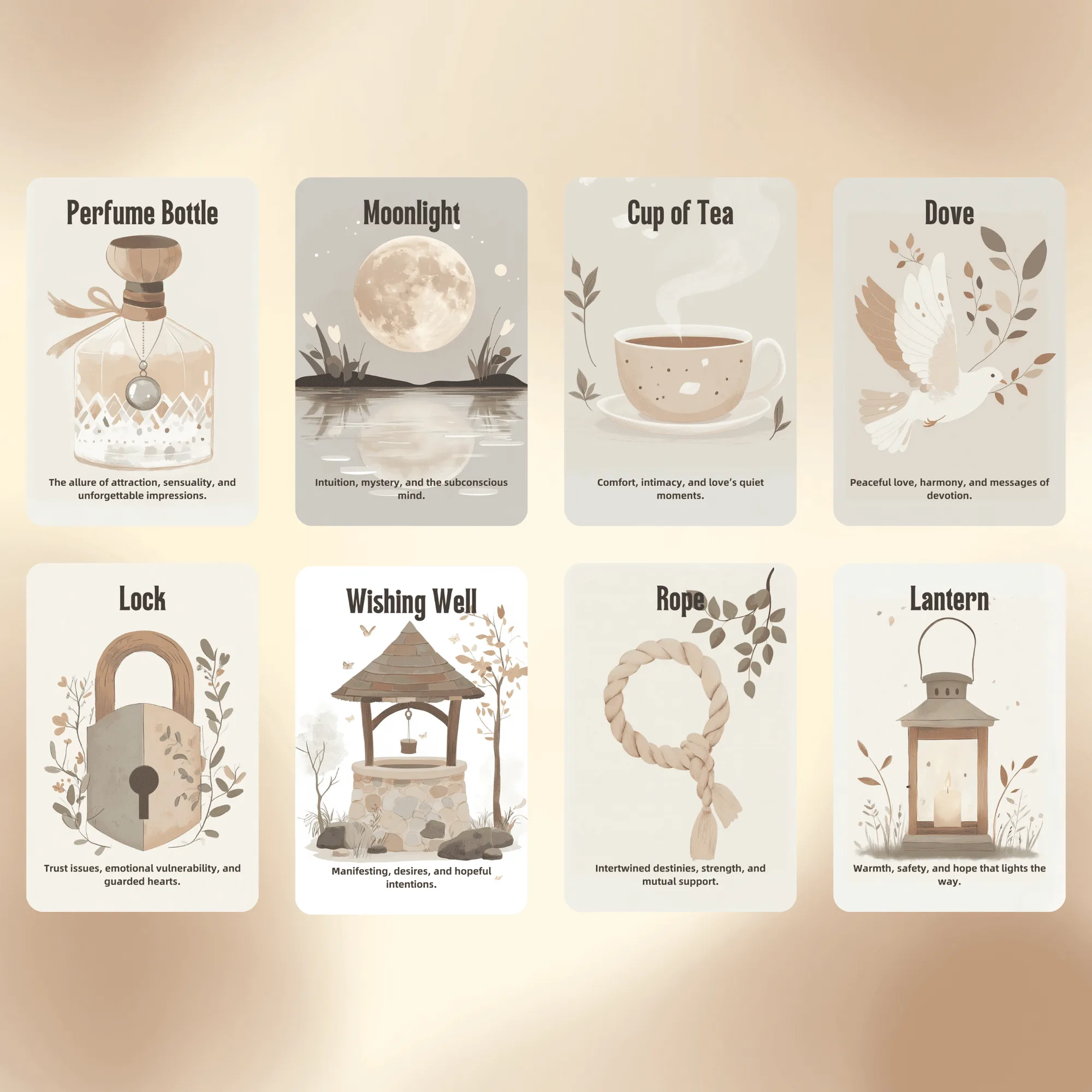
- Kindred Spirit Oracle ☕ A 50-card oracle deck of warmth, simplicity, and gentle, present-moment truth: Kindred Spirit Oracle is a 50-card deck in soft beige and neutral tones, designed for comfort and present-moment readings. Light-colored card stock shows smudges quickly, so clean hands and a dry cloth are especially useful here.
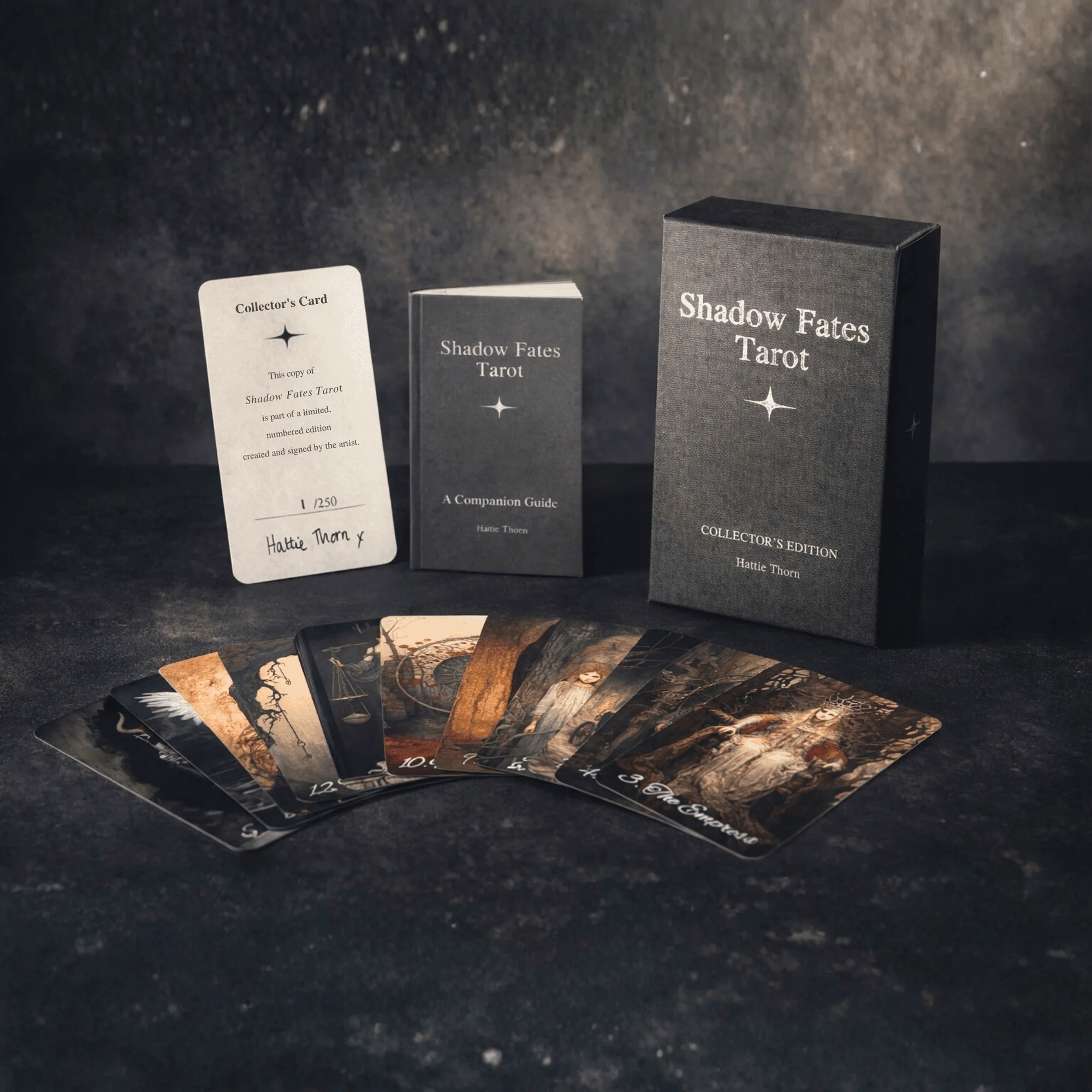
- Shadow Fates Tarot 🌑 A limited Collector’s Edition tarot deck featuring exclusive borderless artwork, a foiled rigid box, and a signed numbered card.: Shadow Fates Tarot Collector's Edition is a limited, signed 78-card deck with borderless artwork and a foiled rigid box. Because it is a numbered collector's item, store it flat inside its box and avoid smoke or salt cleansing that could mark the borderless edges.